That annoying chill creeping under your door isn’t just uncomfortable—it’s costing you money. Every gap under a standard interior door can let through the equivalent of a 3-inch hole in your wall, wasting up to 15% of your heating and cooling energy. Learning how to install a door draft stopper properly solves this problem quickly and affordably. Whether you’re battling winter drafts, summer heat, or constant dust infiltration, the right draft stopper installation can transform your home’s comfort and energy efficiency. This guide walks you through every critical step of how to install a door draft stopper for permanent results, whether you’re working with interior doors, exterior entryways, or sliding glass doors.
Why 70% of Door Draft Stopper Installations Fail (And How to Avoid It)
Most homeowners install draft stoppers only to find they slip, leave gaps, or fail within weeks. The primary reason? Skipping proper surface preparation and measurement. A draft stopper only works when it perfectly matches your door’s gap size and is installed on a clean, dry surface. Before you begin how to install a door draft stopper, identify your specific failure points.
Your Door Gap Measurement Determines Everything

The height of your door gap dictates which draft stopper type will work. Use a ruler or gap gauge to measure precisely at multiple points along the door’s width. Most interior doors have gaps between 1/4 and 3/4 inch, while exterior doors often have larger gaps. If your gap exceeds 1 inch, standard draft stoppers won’t seal effectively—you’ll need an adjustable door sweep instead. Pro Tip: Measure when the door is closed to get the most accurate reading of the actual gap.
Common Installation Failure Points to Avoid
- Surface contamination: Dust, oil, or moisture prevents adhesives from bonding properly
- Incorrect sizing: A stopper that’s too short leaves gaps at the door edges
- Improper alignment: Even a 1/8-inch misalignment creates draft channels
- Rushing the curing time: Adhesives need 24 hours to reach full strength
Choosing Between Fabric Snakes, Adhesive Strips, and Door Sweeps for Your Door

Your door type determines the best draft stopper solution. Don’t waste time and money installing the wrong type—match your stopper to your specific door situation for lasting results.
Interior Doors: Fabric Snakes vs. Adhesive Strips
For interior doors where permanent modification isn’t desired, fabric door snakes provide flexible, removable protection. Choose weighted snakes (filled with sand or plastic pellets) that are 2-3 inches longer than your door width. Look for: Non-slip bottoms and machine-washable covers for easy maintenance. For a cleaner, more permanent solution on interior doors, adhesive strips work well but require perfect surface prep.
Exterior Doors: Screw-On Sweeps for Maximum Protection
Exterior doors demand more robust solutions. Screw-mounted door sweeps create the tightest seal against wind, rain, and pests. Aluminum sweeps with vinyl or rubber seals withstand weather extremes better than plastic alternatives. Critical detail: Install exterior sweeps on the inside of the door to prevent rain from being driven underneath during storms.
Must-Have Tools for Installing a Door Draft Stopper Like a Pro
Gather these specific tools before starting how to install a door draft stopper to avoid mid-project frustrations:
- Tape measure (metal, not cloth for precision)
- Level (4-inch for small jobs)
- Rubbing alcohol and lint-free cloths
- Sharp utility knife or scissors
- Drill with 1/8-inch drill bit (for screw installations)
- Pencil with fine point
- Gap gauge (or stack of business cards as makeshift gauge)
Time estimate: Proper tool preparation takes 10 minutes but saves 30+ minutes of troubleshooting later.
Measuring Your Door Gap: The Critical First Step Many Skip
Accurate measurements prevent the most common installation failures. Follow this precise measurement protocol:
- Close the door completely
- At the left edge, center, and right edge, insert business cards vertically into the gap until snug
- Count how many cards fit at each point (each card = approximately 1/32 inch)
- Record the largest measurement as your gap height
Visual cue: If you can see light under the door when closed, your gap exceeds 1/4 inch and requires a taller draft stopper. For gaps over 1/2 inch, you’ll need an adjustable door sweep rather than a standard stopper.
How to Install Fabric Door Snakes That Stay Perfectly in Place
Fabric snakes are the simplest how to install a door draft stopper solution for renters or temporary use, but they only work when positioned correctly.
Positioning for Maximum Effectiveness
Place the snake against the door jamb on the interior side of the door. The weighted bottom must face downward, and the snake should extend 1-2 inches beyond each door edge. When the door closes, the snake should compress visibly but not bulge outward. Test method: Slide a piece of paper under the closed door—if it meets resistance throughout its length, your snake is positioned correctly.
Preventing Slippage on Hardwood or Tile Floors
For slippery surfaces, place non-slip rug pads underneath the snake. Cut the pad to match the snake’s length and position both together. This creates friction against the floor while remaining removable. Avoid using double-sided tape directly on floors as it can leave residue.
Adhesive Draft Stopper Installation: The 4-Step Process for Permanent Bonding
Adhesive strips provide a clean, low-profile solution but fail when installed incorrectly. Follow this exact process for a bond that lasts years.
Surface Preparation That Makes the Difference
- Vacuum the door bottom thoroughly
- Wipe with rubbing alcohol using a lint-free cloth
- Allow 5 minutes for the surface to dry completely
- Repeat the cleaning process for absolute assurance
Warning: Never skip the second cleaning—oils from your hands transfer during measurement and ruin adhesion.
Precise Application Technique for Flawless Results
Cut your adhesive strip 1/8 inch shorter than your door width to prevent bulging at the edges. Peel 2 inches of backing, align perfectly with the door edge, then slowly peel and press the remainder while applying firm pressure. Use a credit card to rub along the entire length, eliminating air bubbles. Critical step: Hold pressure on each section for 15 seconds minimum.
Installing Screw-On Door Sweeps Without Damaging Your Door Frame
Screw-mounted sweeps provide the most durable seal but require careful installation to avoid splitting wood or misalignment.
Perfect Alignment Method for Complete Sealing
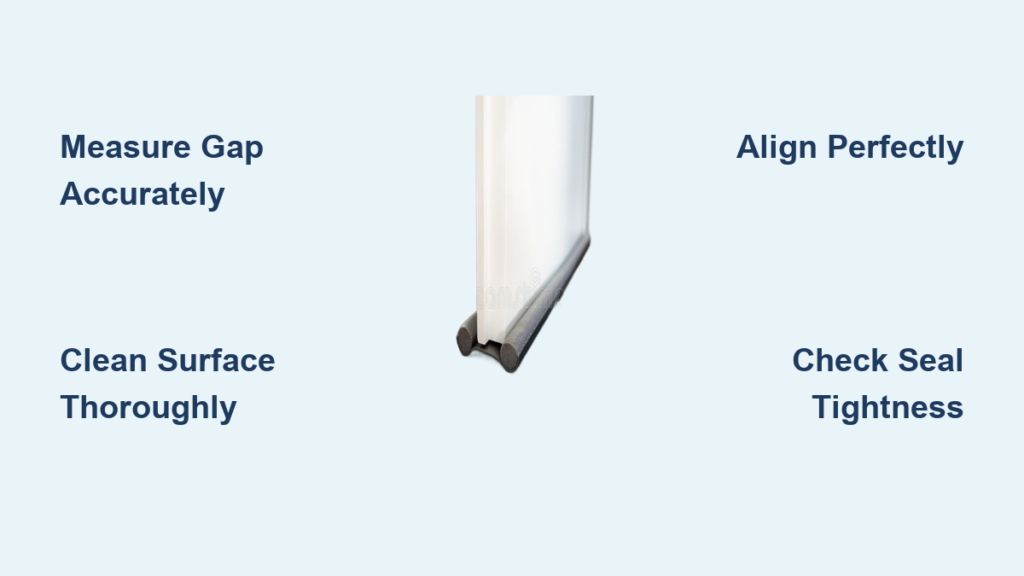
Hold the sweep against the door bottom and close the door gently. Mark where the sweep contacts the threshold with a pencil. Open the door and position the sweep so it aligns with these marks. The sweep should just kiss the threshold—not press hard enough to resist door movement. Visual check: When closed, you should see a slight compression of the sweep’s seal material.
Preventing Wood Splitting During Installation
Drill pilot holes 90% through the door bottom using a bit slightly smaller than your screws. This prevents the wood from splitting, especially on hollow-core doors. For exterior doors, use stainless steel screws to prevent rust from moisture exposure.
Magnetic Draft Stoppers: Getting the Perfect Seal on Exterior Doors
Magnetic draft stoppers create the tightest seal for exterior doors but require precise installation to function properly.
Achieving Proper Magnetic Alignment
Install the magnetic strip on the door bottom first, then position the metal threshold strip to align perfectly. Close the door and check for even magnetic pull along the entire length. Troubleshooting tip: If the door sticks in one spot, slightly bend the metal strip until pull force feels uniform.
Weatherproofing for Long-Term Performance
Apply a thin bead of silicone caulk along the top edge where the magnetic strip meets the door. This prevents moisture from seeping behind the strip and causing wood rot over time. Use clear silicone for minimal visual impact.
5-Minute Draft Stopper Troubleshooting Guide for Common Problems
Even perfect installations sometimes develop issues. Fix these common problems quickly:
Drafts Persisting After Installation
If you still feel air movement, perform the tissue test: Hold a tissue against the closed door bottom. If it moves, check for:
– Gaps at door edges (stopper too short)
– Inconsistent pressure (uneven floor)
– Compressed seal material (needs replacement)
Solution: For edge gaps, add small fabric patches. For uneven floors, use a flexible brush-style stopper.
Door Dragging or Hard to Open
This means your sweep is too low. For adjustable sweeps, loosen the mounting screws and raise the sweep 1/16 inch at a time until the door operates smoothly while maintaining a seal. For non-adjustable sweeps, you may need to sand the bottom edge slightly.
Monthly Maintenance Routine: Keeping Your Draft Stopper Effective for Years
Proper maintenance doubles your draft stopper’s lifespan and effectiveness. Add these quick checks to your monthly home maintenance:
- Vacuum fabric snakes to remove dust buildup
- Wipe adhesive strips with damp cloth to maintain flexibility
- Check screw tension on door sweeps (quarter-turn tightening as needed)
- Inspect for wear patterns that indicate misalignment
Seasonal adjustment: Switch to thicker, insulated stoppers in winter and lighter materials in summer for optimal performance without compromising door operation.
By following these precise steps for how to install a door draft stopper, you’ll eliminate drafts permanently while protecting your floors and door mechanisms. The key is matching the right stopper type to your specific door gap and following the exact installation protocols for that type. Within an hour of starting, you’ll feel the difference in comfort and notice lower energy bills within the first month. For exterior doors experiencing significant drafts, consider pairing your draft stopper with weatherstripping around the door frame for complete air sealing. Remember that proper installation—not just the product itself—determines whether your draft stopper works effectively for years or fails within weeks.