
Nothing ruins a perfect summer breeze like swarms of mosquitoes invading your home the moment you open the door. A magnetic screen door mesh curtain solves this problem instantly—it creates an invisible barrier that seals shut behind you, keeping bugs out while letting fresh air flow freely. This no-drill solution works for renters and homeowners alike, requiring minimal tools and taking under an hour to complete. By the time you finish this guide, you’ll know exactly how to install magnetic screen door mesh curtain systems that stay taut, seal tightly, and withstand daily use without damaging your door frame.
Unlike permanent screen doors, magnetic mesh curtains attach temporarily using industrial-strength adhesive or removable hardware. The secret lies in strategically placed neodymium magnets that snap shut automatically after you pass through. Whether you’re battling fruit flies in your kitchen or no-see-ums on your patio, this guide covers every detail—from precise measurements to tension adjustments—so your installation works flawlessly from day one. Let’s transform your doorway into a bug-free zone with professional results.
Measure Your Doorway for Perfect Magnetic Screen Door Fit
Skipping accurate measurements guarantees gaps where insects slip through. Grab a metal tape measure and record the exact width and height of your doorway opening—not the door itself—starting from the inner edge of the frame on both sides. For standard exterior doors, this typically ranges from 30-36 inches wide and 78-80 inches tall. Purchase a magnetic mesh curtain 2-3 inches larger than your measurements; excess material can be trimmed later, but undersized screens leave critical gaps at the edges.
Consider your traffic patterns when selecting mesh density. High-traffic interior doors like kitchen entries demand heavy-duty reinforced mesh with 18×16 thread count to resist snags from frequent use. Porch or balcony doors benefit from lighter 14×14 mesh that maintains visibility while blocking mosquitoes. Crucially, verify the magnet strength—look for neodymium magnets spaced every 4-6 inches along the closure seam. Weak ceramic magnets fail to reseal properly, especially in drafty areas. Always check the product specifications for “no-see-um proof” claims if dealing with tiny biting insects.
Gather Essential Tools for Magnetic Screen Door Installation
Avoid mid-installation delays by assembling all components before starting. Your magnetic screen kit should include the mesh panel, fiberglass or telescoping rods, adhesive strips or screws, and mounting brackets. Supplement these with five critical tools: a stepladder for overhead work, metal tape measure for precision, sharp utility knife for trimming, carpenter’s level to prevent crooked installation, and isopropyl alcohol for surface prep. Never substitute rubbing alcohol with vinegar or window cleaner—residues compromise adhesive bonds.
Inspect every piece against the manufacturer’s diagram. Confirm you have door-frame-specific hardware: double-sided outdoor mounting tape for painted wood or vinyl frames, or plastic anchors for hollow-core doors. Renter-friendly kits often include removable adhesive hooks that won’t peel paint. If your doorway exceeds 36 inches wide, ensure the kit contains reinforcement bars for the top frame—standard kits sag under their own weight on wider openings. Discard any bent rods immediately; they’ll create uneven tension that strains the mesh.
Mount the Magnetic Screen Door Top Frame Securely
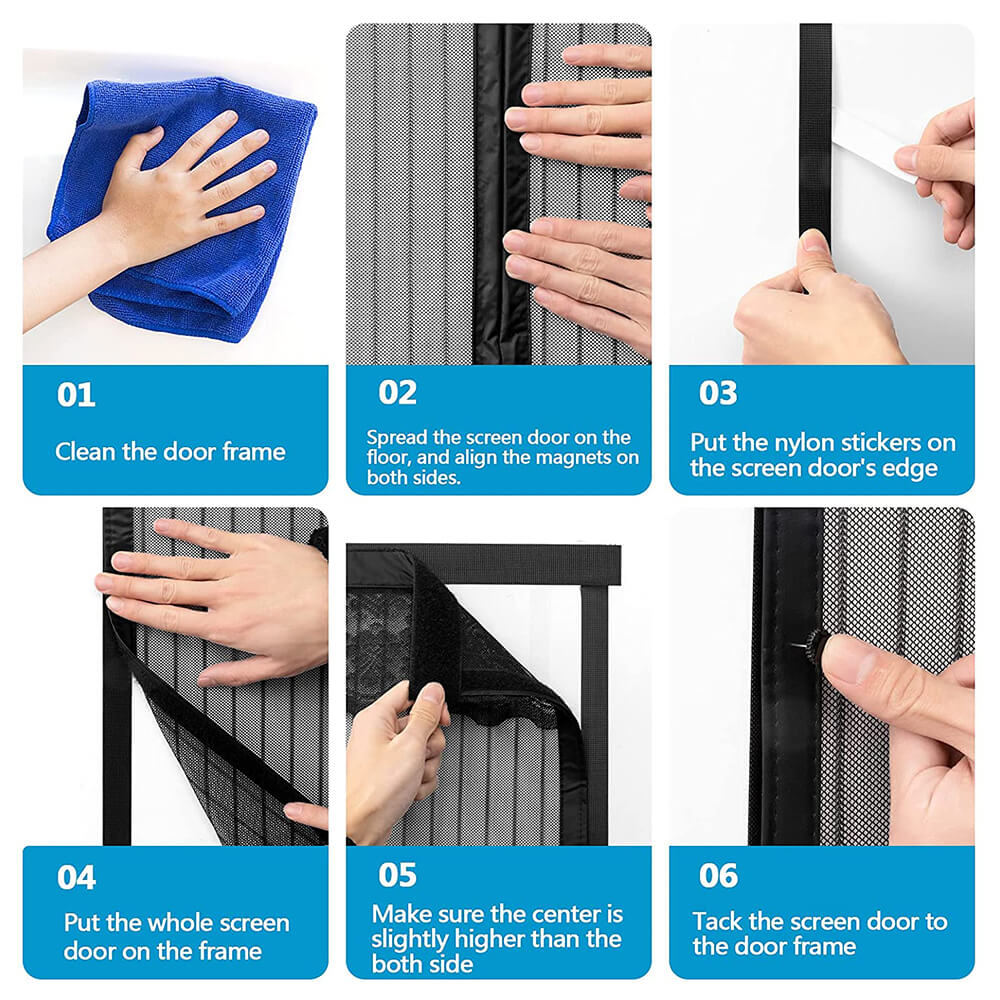
Your entire installation hinges on a level, firmly attached top frame. Begin by thoroughly cleaning the door header with isopropyl alcohol and a lint-free cloth—grease or dust causes adhesive failure within weeks. For tape-mounted systems, peel backing from the top fabric strip and align it 1/4 inch below the header molding. Press firmly along its entire length for 30 continuous seconds, applying extra pressure at corners where peeling starts. Use your level to verify it’s perfectly horizontal; a 2-degree tilt creates a 1-inch gap at the bottom.
Screw-mounted installations require more precision. Pre-drill 1/8-inch pilot holes through the fabric strip into solid wood molding, spacing screws 6 inches apart. Drive #6 x 1-inch screws until snug—but never overtighten, as this warps the strip and misaligns magnets. For metal or composite frames, substitute with #8 self-tapping screws designed for your material. The top frame must support 8-10 pounds of hanging mesh; if screws feel loose during installation, insert plastic wall anchors immediately. Test stability by gently tugging downward before proceeding.
Apply Adhesive Correctly for Renters’ Safety
Install Screw Mounts for Permanent Hold
Insert Fiberglass Rods for Side Panel Tension
Side rods maintain the curtain’s shape and prevent billowing. For rod-and-sleeve systems, thread flexible fiberglass rods through channels sewn into the mesh edges. Start at the bottom, inserting rods upward while smoothing out wrinkles—never force kinked rods as they may snap inside the sleeve. When rods reach the top frame, press their ends firmly into corner brackets until you hear a distinct click. Telescoping models require extending rods to 1 inch longer than your doorway width, then twisting to lock. This creates the critical tension that keeps panels flat against the frame.
Achieving ideal tension separates functional installations from frustrating failures. The mesh should feel drum-tight but not stretched—if you pluck it like a guitar string, it should produce a high-pitched tone. Over-tightening pulls adhesive mounts loose over time, while slack mesh creates gaps at corners. Stand back and sight down the panel; visible sagging means rods are too short. For wide doors (over 32 inches), install center support clips every 16 inches along the header to prevent mid-panel bowing. Never step through the curtain during adjustment—you’ll permanently deform the mesh.
Thread Rods Without Damaging Mesh Fabric
Adjust Tension for Drafty Doorways
Check Bottom Seal and Eliminate Light Gaps

The bottom edge determines whether your screen actually blocks insects. After mounting sides, let the weighted hem hang freely—most kits include steel ball-chain weights sewn into the bottom seam. Stand inside your home with lights on at dusk and inspect for pinpoint light leaks around the perimeter. Even 1/8-inch gaps let in mosquitoes; focus especially on corner junctions where rods meet the floor. If light penetrates, slightly loosen the top frame screws and shift the entire assembly toward the gap until light disappears.
For adhesive-mounted systems, repositioning requires strategic heat application. Use a hairdryer on low setting 6 inches away for 15 seconds to soften the tape, then gently peel and reattach. Never yank the strip vertically—this shears the adhesive bond. Test the seal by sliding a business card along gaps; if it moves freely, add supplemental mounting points with outdoor-rated Velcro strips. In high-wind areas, attach magnetic sweep seals to the door bottom that engage with the screen’s weighted edge for airtight closure. Recheck seals weekly for the first month as materials settle.
Verify Magnetic Closure with Real-World Testing
Magnets must release with a light touch yet seal reliably. Walk through the curtain at normal walking speed 10 times while observing the closure seam. Properly installed magnets should separate cleanly without snagging and reconnect within 0.5 seconds. If panels stick together, gently rub the magnet strips with a dry cloth to remove static. For slow resealing, increase overlap by shifting side rods inward 1/4 inch—this boosts magnetic attraction without straining mounts. Never pull the mesh sideways; always push straight through the center to avoid tearing.
Test extreme scenarios before declaring success. Have someone walk through while you blow air from a hairdryer at the seam—this simulates windy conditions. The magnets must resist separating under 5 mph airflow. For households with pets, simulate a dog’s entry by having someone crouch and pass through low. If magnets fail at knee height, add supplemental magnet strips every 8 inches along that zone. Remember: magnetic strength degrades in temperatures below 20°F; if you live in cold climates, choose kits with cold-weather rated magnets.
Trim Excess Mesh and Maintain Your Screen Door Long-Term
Final trimming prevents fraying and ensures clean edges. With the curtain fully installed, use sharp fabric scissors to cut excess mesh 1/2 inch from the frame on all sides. Never cut while the screen is taut—slack mesh creates dangerous tripping hazards at the bottom. For adhesive-mounted systems, leave 3/4 inch extra at the top to accommodate future removal for cleaning. Roll cut edges inward and secure with clear hemming tape to prevent unraveling, especially on polyester mesh.
Monthly maintenance preserves performance. Clean mesh with a soft brush and mild soapy water—never use pressure washers or abrasive cleaners that degrade magnet coatings. For stubborn pollen, rinse vertically while the screen hangs to avoid distorting the frame. Every three months, inspect magnet strips for embedded debris; use tweezers to remove trapped leaves or threads. In direct sunlight areas, replace adhesive mounts every 6 months with UV-resistant outdoor mounting tape—standard tapes yellow and lose grip within 4 months. If magnets weaken over time, realign strips by removing and reapplying them with 20% more overlap.
A properly installed magnetic screen door mesh curtain delivers years of bug-free enjoyment with minimal upkeep. By measuring precisely, applying tension correctly, and verifying seals, you’ve created an invisible barrier that works harder than traditional screens. Remember to trim excess mesh conservatively and refresh adhesive mounts before summer peaks. Within minutes of completing these steps, you’ll experience that first glorious breeze without the swarm—proof that the simplest solutions often solve our most persistent problems. Ready to enjoy your fresh-air sanctuary? Your bug-free summer starts now.