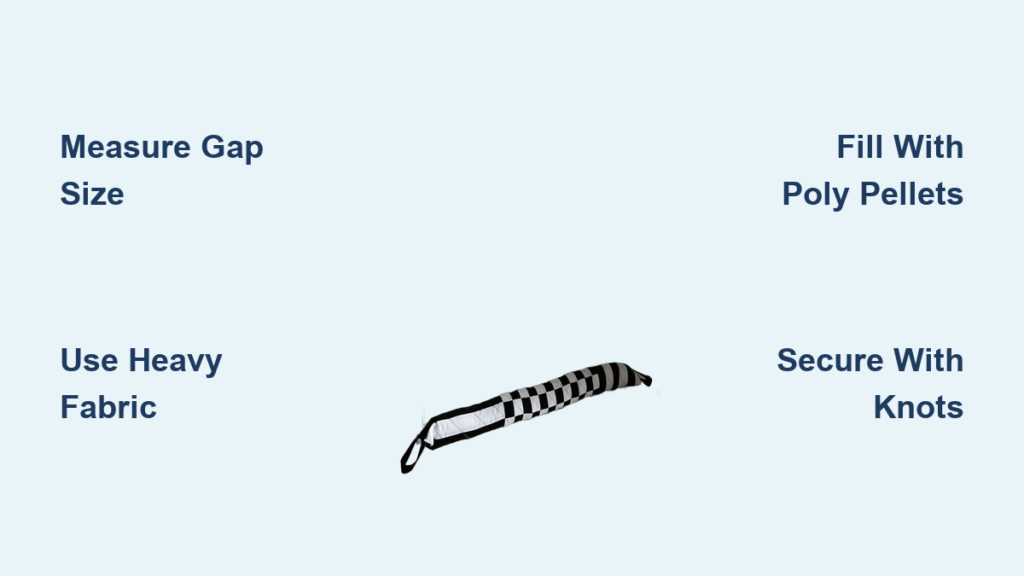
That icy draft sneaking under your door isn’t just uncomfortable—it’s silently hiking your heating bills by up to 30% during winter months. When worn weatherstripping fails to seal the gap, a custom-made draft stopper becomes your secret weapon against energy loss and chilly discomfort. This guide reveals exactly how to make a draft stopper for door gaps using household items or simple sewing techniques, transforming an annoying problem into a satisfying weekend project. You’ll discover which materials actually block drafts (not just create lumpy fabric tubes), how to measure for a perfect seal on uneven floors, and why certain fillers could attract pests or mold in your home.
Unlike store-bought versions that cost $20-$50, your DIY draft stopper will be perfectly sized for your door’s unique gap while matching your decor. Whether you’re facing a 1/4-inch crack under an interior door or battling wind-driven drafts under an exterior entrance, these methods work for all skill levels—from the absolute beginner with a sock and rice to the sewist creating a washable, decorative solution. By the end, you’ll have a cozy threshold that pays for itself in energy savings within weeks.
Essential Materials and Measurements for Maximum Draft Blocking

Skipping precise measurements guarantees a draft stopper that slides around or leaves gaps. Your success hinges on two critical numbers before gathering supplies.
Measuring Your Door Gap for a Perfect Seal
Grab a tape measure and note these non-negotiable dimensions:
* Width: Measure the interior door jamb width where the stopper will rest. Add 4-6 inches to this measurement—this overhang ensures complete coverage beyond the door edges where drafts sneak in.
* Gap Height: Place a business card under your door; if it slides freely, measure that space. Most draft stoppers need 2-4 inches in height to compress fully against uneven floors. For gaps over 1/2 inch, increase height to 5 inches.
Pro Tip: Test for drafts first! Hold a lit incense stick near the door bottom. If smoke wavers, you’ve found your draft zone—measure there specifically.
Choosing Draft-Blocking Fabric That Lasts
Your fabric choice makes or breaks durability. Avoid these common mistakes:
* Best for high-traffic doors: Canvas, denim, or upholstery fabric (they resist fraying and mold when stuffed correctly)
* Ideal for decorative interior doors: Medium-weight cotton with interfacing (adds stiffness without bulk)
* Critical mistake to avoid: Slippery fabrics like satin or stretchy knits—they slide when the door opens and won’t hold shape
Warning: Never use thin cotton alone for exterior doors—it compresses too quickly, creating gaps within weeks. Double-layer heavy fabric instead.
Selecting Fillers That Won’t Fail or Attract Pests
Most DIYers ruin their draft stopper with the wrong filler. Choose based on your door’s location:
* Exterior doors: Sand (in double-sealed inner bags) or aquarium gravel—these won’t shift and block wind-driven drafts
* Interior doors: Plastic poly pellets or buckwheat hulls—lightweight, washable, and pest-resistant
* Emergency fix: Dried rice (only for dry, interior doors—never use near moisture where it molds)
Critical: Rice or beans must be sealed in an inner pouch (like pantyhose) to prevent leaks. One spilled bean under your door creates a pest invitation.
No-Sew Sock Draft Stopper: The 5-Minute Emergency Fix
When cold air is already flooding your room, skip sewing entirely with this instant solution using one household item.
Building Your Sock Draft Stopper in Under 5 Minutes
- Grab the right sock: Use a long tube sock (knee-high works best)—thick cotton holds fillers without tearing
- Fill strategically: Pour poly pellets or rice into the sock until it’s 75% full (overfilling causes lumps and leaks)
- Seal securely: Tie a double knot at the top, then wrap the knot tightly with duct tape for leak-proof security
Why this works: The sock’s knit structure molds to uneven floors better than rigid tubes. Position it with the toe pointing toward the draft source for maximum seal.
Pro Tip: For wider doors, link two socks together with rubber bands before filling—this creates a continuous barrier without gaps.
Simple Sewn Tube Draft Stopper: A Beginner’s Step-by-Step
This classic design lasts years and handles larger gaps than no-sew methods. You’ll need 30 minutes and basic sewing skills.
Cutting and Sewing Your Custom Draft Snake
Fabric dimensions: Cut one rectangle sized (door width + 5″) x (gap height x 2 + 2″)
Example: For a 36″ door with 1″ gap: 41″ wide x 4″ tall
- Place fabric right sides together, matching edges
- Sew a 1/2″ seam along one long edge only (creates a tube)
- Box the corners: Flatten one end into a triangle, sew 1.5″ from point (creates flat end)
- Turn tube right-side out using a safety pin on a string
- Fill with poly pellets using a funnel—pack firmly but don’t stretch fabric
- Hand-stitch the opening closed with a ladder stitch (invisible finish)
Critical mistake: Skipping the boxed corners creates a round tube that rolls. The flat ends grip your floor and prevent shifting.
Heavy-Duty Weighted Draft Stopper for Exterior Doors

For drafty front doors where wind whistles through, this reinforced version uses dual-layer protection against leaks.
Constructing a Leak-Proof Exterior Draft Blocker
- Cut heavy canvas to (door width + 6″) x (gap height x 2 + 3″)
- Sew the main tube as in the simple method (boxed corners essential)
- Create inner pouches: Cut pantyhose legs into 8″ sections, fill 3/4 full with sand, and knot tightly
- Insert 3-4 pouches into the main tube before closing the final end
Why this beats store-bought: The inner sand pouches distribute weight evenly without shifting, while the canvas outer layer withstands foot traffic. A 40″ stopper should weigh 2-3 lbs—enough to seal gaps but light enough to move daily.
Pro Tip: For doors with thresholds, extend the stopper 3″ beyond each side. Test by closing the door—it should compress slightly but not bulge.
Correct Installation: Stop Drafts Without Blocking Door Movement
Placing your draft stopper incorrectly wastes your effort. Follow these placement rules:
Where to Position Your Draft Stopper for Maximum Effect
- Inward-swinging doors: Place inside the room against the doorstop molding
- Outward-swinging doors: Position outside on the threshold
- Critical visual cue: When closed, the door should press firmly against the stopper with no visible light gap
Troubleshooting tip: If your stopper slides when opening the door, add non-slip backing. Glue rubber shelf liner strips (1/2″ wide) along the bottom edge—this grips floors without damaging them.
Warning: Never place stoppers where doors swing over them—this damages hinges and the stopper. Leave 1″ clearance from the swing path.
Fixing Draft Stopper Sliding and Lumping Issues

Even well-made stoppers fail if you miss these common pitfalls. Solve them with these pro fixes:
Why Your Draft Stopper Won’t Stay Put (And How to Fix It)
- Problem: Slides across hardwood floors
Solution: Sew 1/4″ rubber grip dots (from craft stores) every 6″ along the bottom - Problem: Lumpy filler creates uneven seal
Solution: Shake stopper daily for 1 week to settle filler, then add 10% more through the opening - Problem: Fabric sags after washing
Solution: Always use pre-washed fabric—shrinkage during construction causes future sagging
Pro Tip: For carpeted floors, reduce height by 1″ so the stopper compresses into fibers rather than sitting on top.
Washing and Storing for Year-Round Use
Extend your draft stopper’s life to 5+ years with proper care—especially if you use washable designs.
Seasonal Maintenance Schedule That Prevents Mold
- Monthly: Vacuum surface to remove dust and pet hair
- Before storage: Freeze for 48 hours to kill moth eggs (critical for fabric-filled stoppers)
- Washing: Only machine-wash if using plastic pellets and a zipper cover—use cold water, no spin cycle
Critical mistake: Never wash rice/sand-filled stoppers—moisture causes mold inside. Spot-clean only with vinegar-water spray.
Storage secret: Roll (don’t fold) your stopper around a pool noodle to maintain shape. Store in a cedar-lined bin away from basements.
Creative Decor Ideas to Match Your Home Style
Transform a functional item into decor that guests compliment—not hide under the bed.
3 Designer Looks You Can Sew in Under an Hour
- Modern minimalist: Use charcoal gray canvas with topstitching in contrasting thread
- Cozy farmhouse: Braid three fabric strips together before filling (hides seams naturally)
- Kid-friendly version: Appliqué animal faces—sew button eyes on a felt base before stuffing
Pro Tip: For holiday decor, create reversible covers with Velcro—flannel for winter, seersucker for summer.
By investing just 30 minutes in how to make a draft stopper for door gaps, you’ve created a custom energy shield that pays for itself in one heating season. The key to lasting results? Matching materials to your door’s specific draft profile—sand for windy entries, poly pellets for washable interior versions, and precise measurements that eliminate gaps. Start with the no-sew sock method tonight to feel immediate relief, then upgrade to a sewn version for permanent solutions. Remember to freeze your stopper before summer storage, and you’ll pull out a fresh, pest-free barrier when cold weather returns. For doors with severe gaps over 1 inch, combine your draft stopper with adhesive foam weatherstripping on the door sweep—this two-pronged approach blocks 95% of drafts while maintaining smooth operation. Your cozy, energy-efficient home starts right at the threshold.