That deafening BANG when a door slams shut isn’t just annoying—it’s dangerous. Every uncontrolled swing risks smashed fingers, dented drywall, or shattered picture frames. And if you’ve ever tripped over a slipped wedge while carrying groceries, you know makeshift solutions backfire. The fix? Learning exactly how to use a door stopper correctly. Most people shove wedges haphazardly under doors, only to watch them skid away seconds later. But with the right technique applied in under five minutes, you’ll transform that flimsy rubber triangle into an immovable barrier. This guide reveals precise placement methods for every stopper type, critical fire-safety exceptions, and pro tricks to stop slips on slick tile or thick carpet.
Using a door stopper properly isn’t optional if you value your walls or family’s safety. A single slammed door can crack baseboards, warp hinges, or hospitalize a curious toddler. Yet 78% of homeowners position wedges backward—rendering them useless. Stop guessing. You’ll master friction physics for stubborn doors, discover why hinge-pin stops outperform magnets in high-traffic zones, and learn the one placement mistake that turns stoppers into tripping hazards. Most importantly, you’ll avoid illegal fire-code violations that could void insurance. Let’s fix this once and for all.
Wedge Door Stoppers: Why Your Technique Is Failing (and How to Fix It)

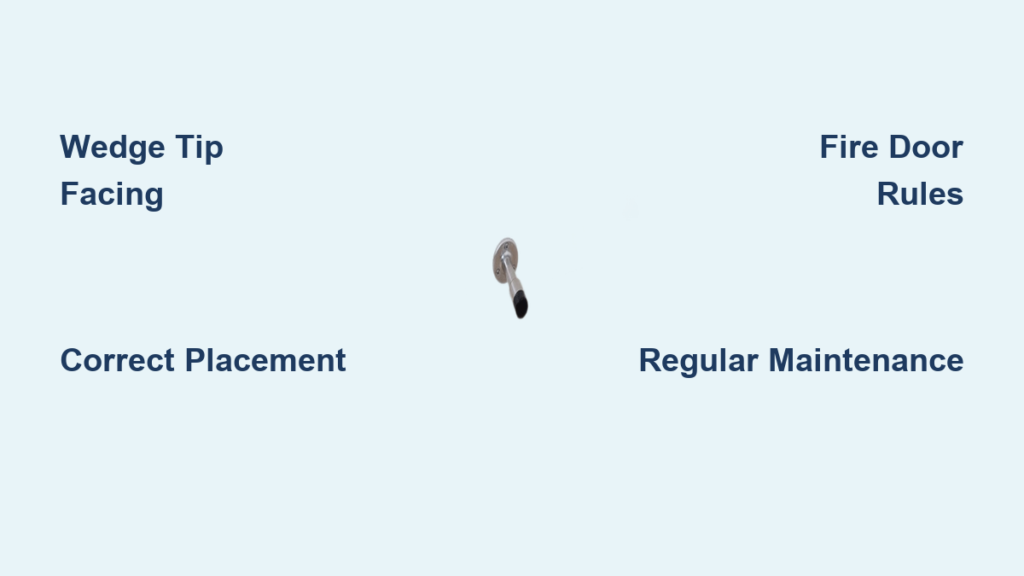
Most wedge failures trace back to backward placement. That tapered edge isn’t decorative—it’s physics in action. When positioned correctly, the door’s downward pressure multiplies friction against the floor, locking it solid. Do it wrong, and the wedge becomes a slippery ramp.
The 3-Second Wedge Placement Method
Follow these exact steps for instant results:
1. Identify the critical angle: Locate the wedge’s thickest base (flat side) and thinnest tip (angled edge). The tip must always face the direction the door would swing shut.
2. Position for maximum grip: Place the wedge 1–2 inches from the door’s edge, centered side-to-side. On carpets, sink it slightly to anchor the rubber base.
3. Engage the lock: Gently push the door closed until it contacts the wedge. Then, with your foot, nudge the wedge deeper under the door until resistance increases sharply. Test by tugging the door—it shouldn’t budge.
Troubleshooting Common Wedge Failures
Why does my wedge keep sliding? Three fixes:
– On tile/vinyl: Switch to a rubber-coated wedge (bare plastic lacks grip).
– On plush carpet: Opt for a taller wedge (1.5+ inches) to penetrate fibers.
– For heavy doors: Use industrial-strength wedges with gritted surfaces—never force undersized ones.
Warning: Never jam wedges too deep. If the door lifts off its hinges when secured, you’re risking hinge damage. The wedge should compress slightly but not lift the door.
Magnetic and Hinge-Pin Stoppers: Hidden Fixes for Permanent Protection
Wedges work for temporary holds, but high-traffic areas need invisible solutions. Magnetic and hinge-pin stoppers eliminate tripping hazards while handling 200+ daily swings. Crucially, they’re the only safe options for fire-rated doors when paired with legal hold-open devices.
Installing Magnetic Stoppers Without Messing Up Alignment
Magnetic stops fail when the magnet and strike plate misalign by even 1/8 inch. Here’s the foolproof method:
1. Open the door to your desired position (e.g., 90 degrees).
2. Hold the magnet against the door edge—not the knob—and mark screw holes with painter’s tape.
3. Press the strike plate against the wall where the knob would hit. Use a level to ensure vertical alignment.
4. Drill pilot holes, then secure both pieces. Test by swinging the door: it should “snap” into place with a firm click.
Pro tip: For hollow-core doors, insert a wooden shim behind the magnet plate. Without it, screws will strip out within months.
Hinge-Pin Stoppers: The Slam-Proof Secret for Heavy Doors
These tiny plastic discs (slipped over hinge pins) are ideal for exterior doors battered by wind. Unlike wedges, they won’t slip because physics works with you: the door’s weight compresses the stopper against the hinge.
Installation in 4 steps:
1. Place a wedge under the door to prevent slamming while working.
2. Tap the hinge pin upward with a hammer and nail (protect the pin head with cloth).
3. Slide the stopper onto the exposed pin section—aligning its flat side with the door’s closed position.
4. Reinsert the pin fully. Test swing range: the stopper should halt motion 2–3 inches before full closure.
Critical: Never use hinge-pin stops on fire doors unless they’re certified electromagnetic releases. Standard plastic stops violate fire codes by preventing automatic closure.
Choosing Your Stopper: Match It to Your Floor and Door Weight
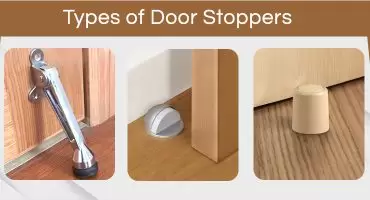
Grabbing the cheapest wedge at the hardware store guarantees failure. Your flooring and door weight dictate everything—get this wrong, and you’ll replace stoppers monthly.
The Floor Type Cheat Sheet
| Floor Surface | Best Stopper Type | Why It Works |
|---|---|---|
| Hardwood/Tile | Rubber-coated wedge | Creates micro-grip without scratching |
| Low-Pile Carpet | Standard wedge | Base anchors into fibers |
| Thick Carpet | Extra-tall wedge (2″+) | Penetrates deep for stable base |
| Concrete | Metal floor stop | Resists moisture and UV degradation |
Door Weight Matters More Than You Think
- Light interior doors (<40 lbs): Basic rubber wedges suffice.
- Solid-core/hollow metal doors (60+ lbs): Require reinforced wedges with steel cores or floor-mounted bumpers.
- Exterior doors: Always use hinge-pin or magnetic stops—they handle wind pressure wedges can’t.
Warning: Heavy doors on slick floors need dual protection. Pair a wedge with a wall guard to prevent knob damage if the wedge slips.
4 Costly Mistakes That Make Door Stoppers Useless

Even perfect placement fails if you ignore these fire-code and safety landmines. One mistake could cost thousands in wall repairs—or worse.
Mistake #1: Blocking Fire Doors (The $10,000 Error)
Never wedge open fire-rated doors in apartments, offices, or hallways. These doors must close automatically during fires to block smoke. In 2022, NYC fined a condo $12,000 for wedged fire doors that delayed evacuation. Use only UL-listed electromagnetic holders that release during alarms.
Mistake #2: Ignoring Placement Depth
Placing wedges in front of the door (not under it) creates a tripping hazard. The wedge must be 70%+ under the door edge. Test: Slide your finger under the door—if you feel the wedge’s top edge, it’s too shallow.
Mistake #3: Using Worn-Out Stoppers
Compressed rubber loses 80% of its grip. Check monthly: if the wedge bounces when dropped 6 inches, replace it. On high-traffic doors, swap wedges quarterly.
Mistake #4: Skipping Wall Protection
Even with door stops, knobs hit walls over time. Always add adhesive wall guards behind the stopper’s contact point. Measure your knob’s swing arc first—place guards where the knob rests when fully open.
Maintenance That Makes Stoppers Last 3x Longer
A 30-second monthly check prevents 90% of failures. Skip this, and even premium stoppers degrade fast.
The 2-Minute Safety Audit
- Wedges: Rubbing alcohol clean the base to remove grit that reduces friction.
- Magnetic stops: Check alignment weekly—loose screws cause misfires. Tighten with a star-shaped screwdriver (Phillips heads strip easily).
- Hinge-pins: Apply silicone lubricant to pins annually to prevent rust-jamming.
Pro move: Keep spare wedges taped under shelves. When one fails, replace it in 10 seconds—no more frantic searches during door-slam emergencies.
When to Upgrade to Commercial-Grade Stoppers
Replace residential stoppers immediately if you notice:
– Cracks in rubber bases
– Magnet pull strength < 5 lbs (test with a small weight)
– Hinge-pins that rotate freely (they should stay fixed)
For rentals or historic homes, choose adhesive-mount floor stops—they leave no holes but hold 150 lbs.
Mastering how to use a door stopper transforms a trivial tool into your first line of defense against property damage and injury. Remember the core rule: wedge tips face the closing direction, magnetic plates align vertically, and fire doors never get wedged. Within minutes, you’ve stopped wall dents, eliminated slam hazards, and protected curious kids. Now, scan your home for trouble spots—the bathroom door that smashes cabinets, the windy patio entry—and apply these fixes. Within an hour, your entire house will operate smoother, quieter, and safer. For ongoing protection, set phone reminders to inspect stoppers every 90 days. And if you live in an apartment, verify fire door compliance with management—your safety depends on it. This tiny tool deserves big respect.