Your bathroom door handle just snapped off in your hand, or you’re trying to replace outdated hardware but can’t figure out how to remove the stubborn knob. You’re not alone—nearly 70% of homeowners struggle with hidden-release door handles lacking visible screws. This guide solves that exact problem. Whether you’re dealing with a modern lever handle, a vintage doorknob, or a privacy lock with secret mechanisms, you’ll learn exactly how to remove a door handle safely in under 15 minutes. No more forcing parts or damaging your door—we’ll cover every common type with foolproof methods verified by professional locksmiths.
Identify Your Door Handle Type in 60 Seconds
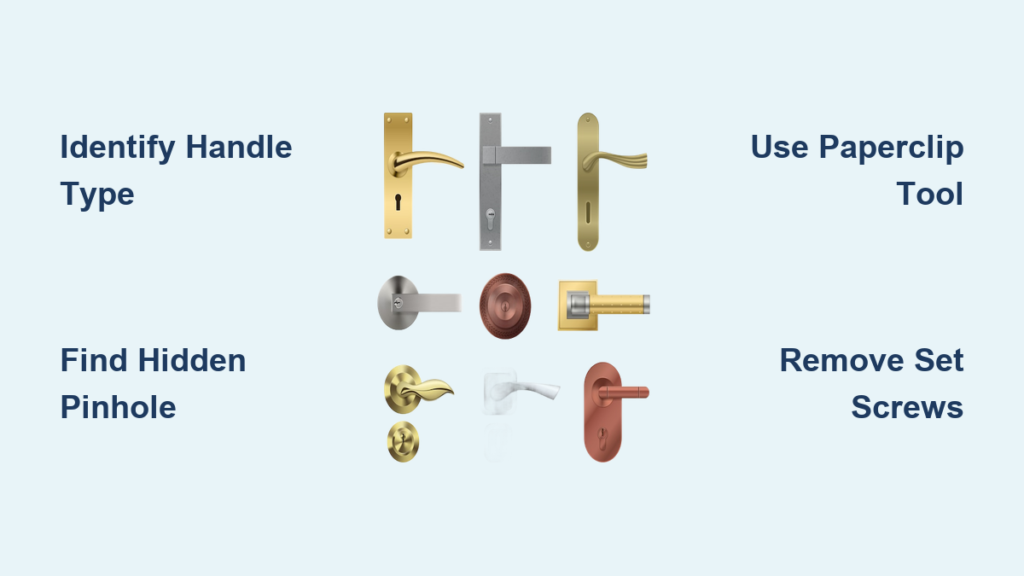
Before touching tools, pinpointing your handle’s fastening system prevents costly mistakes. Forcing a pinhole-release handle like it has visible screws will crack the rosette. Spend 60 seconds inspecting these critical areas with a flashlight:
Spotting Visible Screw Rosettes on Standard Handles
Check the decorative rosette (the circular plate against the door). If you see two small screws on its face, you have a visible-screw model. But don’t grab your screwdriver yet—most have a snap-on cover hiding the screws. Run your fingernail along the rosette’s edge; if you feel a seam, insert a flathead screwdriver gently at the seam and twist to pop it off. Underneath, you’ll find Phillips-head screws securing the handle. This common design appears on 40% of interior doors but is often mistaken for hidden-screw types.
Finding Hidden Pinholes on Modern Lever Handles
Modern minimalist handles hide release mechanisms. Rotate the lever handle slowly while examining its base. Look for a tiny pinhole (1-2mm wide) on the shank—the cylindrical stem connecting handle to door. It’s often at the 6 o’clock position near the rosette. Some brands like Schlage use a discreet slot instead; insert a coin to twist off the decorative cap revealing set screws. If you see neither, check the opposite side of the handle—many have dual release points.
Locating Set Screws on Knob Shanks
For round doorknobs, focus on the shank underneath the knob. Feel for a small indentation or hole along its side. This usually hides a 2-3mm Allen screw requiring a hex key. Turn the knob to different positions; some set screws only align with access holes at specific angles. If you see a small slot instead of a hex hole, use a precision flathead screwdriver—this indicates a flat-head set screw common on older hardware.
Gather These 5 Tools Before Removing Any Door Handle
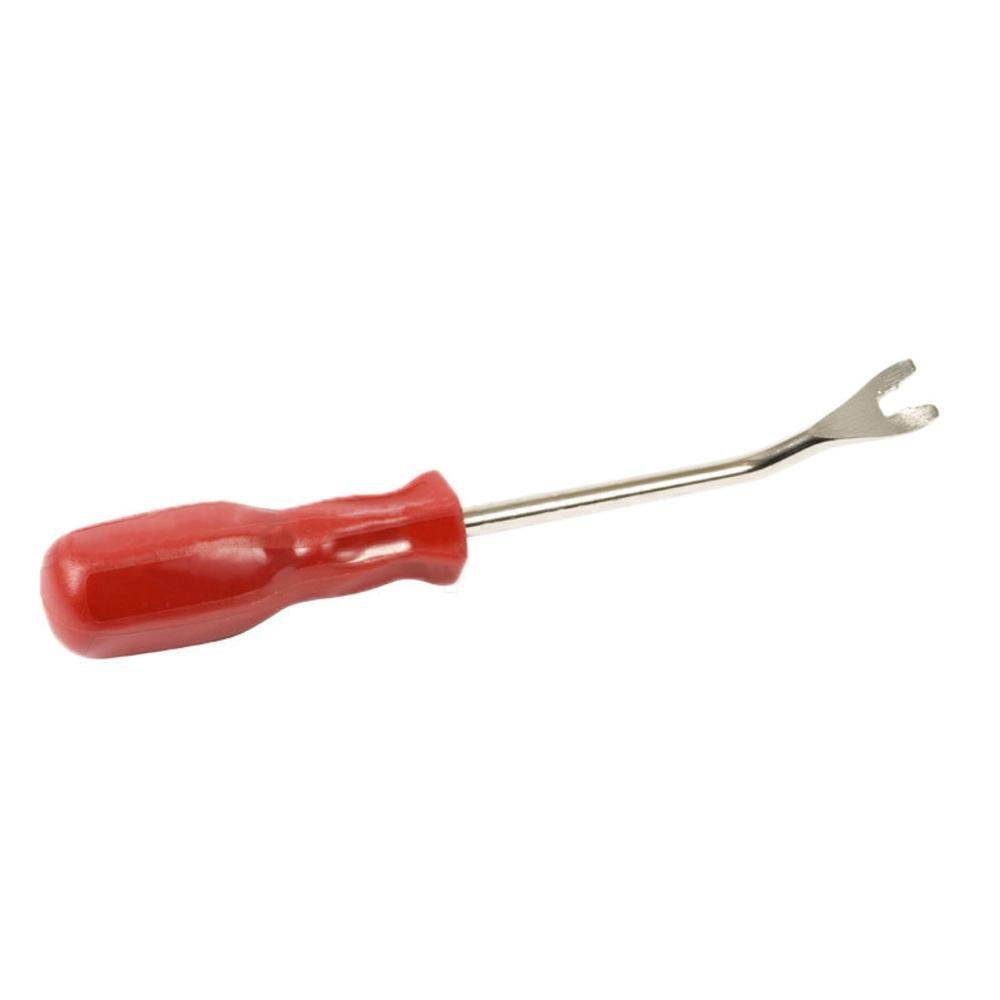
Using improper tools strips screws or scratches finishes. These five items cover 95% of removal scenarios:
Must-Have Screwdrivers for Door Handle Removal
Keep a precision set with 1.5mm, 2mm, and 3mm flathead tips. The 1.5mm is critical for pinhole releases—larger tools won’t fit. For set screws, include a hex key set with 0.05″ to 0.1″ sizes. Never substitute with improvised tools; a stripped screw adds 30+ minutes to your job. Pro tip: Wrap tape around the hex key end for better grip on stubborn screws.
Why a Plastic Spudger Beats Metal Tools for Delicate Hardware
Metal screwdrivers scratch chrome or nickel finishes. Always use a plastic spudger (or old credit card) to pry off rosette covers. Insert it into the rosette seam at a 30-degree angle and twist gently—metal tools crack brittle zinc alloy rosettes. Keep painter’s tape ready to protect high-gloss door surfaces during leverage.
Remove Door Handles with Visible Screws: Fast Method
This straightforward approach works for traditional knobs like Kwikset or older interior handles. Time required: 3 minutes.
How to Pop Off Decorative Rosette Covers Safely
Position your plastic spudger at the rosette’s seam closest to the door edge. Apply steady upward pressure while rotating around the cover. If it resists, tap the spudger handle lightly with a rubber mallet—never hammer directly. Once loose, slide your fingers under the cover to lift it straight off. Avoid prying near the spindle hole; this warps the rosette and jams the mechanism during reassembly.
Unfastening Rosette Screws Without Stripping Them
Use a Phillips #1 screwdriver matching the screw head size exactly. Place firm downward pressure while turning counterclockwise—this prevents cam-out. If screws feel stuck, apply one drop of penetrating oil and wait 2 minutes. Remove both screws completely before attempting to pull the handle. If the handle won’t release, the spindle may be seized; tap the knob lightly with a mallet while wiggling it.
Extract Handles with Hidden Pinhole Releases in 3 Steps

This method solves the #1 frustration: handles with no visible fasteners. Time required: 5 minutes.
Inserting a Paperclip into the Release Hole Correctly
Straighten a paperclip, then bend 3mm of the tip at 90 degrees. Insert it into the pinhole until you feel resistance (about 1/4 inch deep). Push firmly inward—you’ll hear a soft click as the spring clip disengages. If no click occurs, rotate the handle 90 degrees; some models require alignment. Never force the paperclip; if it won’t depress the clip, the hole may be clogged with paint—clear it with a pin first.
Pulling the Handle Off Without Damaging the Spindle
While holding the release tool depressed, pull the handle straight off the square spindle with steady pressure. If it sticks, rotate it slightly left and right while pulling—never yank sideways. For lever handles, support the rosette with your palm to prevent it from twisting. If the handle still resists after 10 seconds of pressure, recheck for a second pinhole on the opposite side; many modern handles have dual releases.
Unscrew Stubborn Set Screw Handles Without Stripping
Handles with Allen screws often seize from paint buildup or corrosion. Time required: 7 minutes.
Choosing the Right Allen Wrench Size for Your Handle
Test multiple hex key sizes in the screw head. The correct fit should allow zero wiggle—if it spins freely, go one size larger. For rounded screws, wrap a rubber band around the hex key tip for extra grip. Insert the key fully to the bottom of the screw head before turning; shallow insertion causes stripping. Apply steady pressure while turning counterclockwise in short bursts.
Loosening Set Screws That Won’t Budge
Drip one drop of penetrating oil onto the screw and let it soak for 5 minutes. Tap the screw head lightly with a hammer to vibrate the oil into threads. If still stuck, heat the screw head for 10 seconds with a hairdryer—thermal expansion breaks corrosion bonds. Never use pliers on the screw head; this ruins the hex cavity. If stripped, try a screw extractor bit designed for small hardware.
Fix 4 Common Door Handle Removal Problems
Why Your Handle Won’t Come Off After Releasing the Mechanism
90% of “stuck handle” cases involve overlooked secondary fasteners. Check for:
– A second set screw hidden under the spindle hole
– Paint sealing the handle base to the rosette (score the seam with a utility knife)
– A retaining clip inside the rosette (visible after handle removal)
– Corrosion on the square spindle (apply penetrating oil and let sit 15 minutes)
Removing Paint-Sealed Screws Without Ruining the Finish
Paint clogs screw heads making them impossible to turn. Score a deep “X” across the screw head with a utility knife. Insert a flathead screwdriver into the groove and turn slowly while applying downward pressure. For rosette screws, place masking tape around the head first to prevent slip marks on the finish.
Reassemble Your Door Handle Correctly: Avoid Costly Mistakes
Tightening Mounting Screws to the Perfect Torque
After reassembly, tighten the long through-bolts in a star pattern:
1. Snug the top-left screw until resistance begins
2. Tighten the bottom-right screw equally
3. Repeat for remaining screws
Stop when the rosette sits flush against the door—overtightening by just 1/8 turn can crack hollow-core doors. Test handle movement before final tightening; binding means the latch isn’t aligned.
Aligning the Latch Bolt for Smooth Door Operation
The latch’s beveled edge must face the door jamb. Insert it into the edge bore hole and close the door slowly. If it catches, rotate the latch 180 degrees. Before securing, verify the latch fully retracts when the handle turns. Misalignment causes premature wear and frustrating “almost closed” doors.
Removing door handles becomes effortless when you match the method to your specific hardware. Remember: 95% of removal issues stem from misidentifying the fastening type—always inspect before acting. For stubborn vintage handles, a single drop of penetrating oil and 10 minutes of patience solves most problems. Once mastered, you’ll replace hardware confidently in under 20 minutes. Before tackling exterior locks, photograph each component during disassembly—this prevents reassembly errors that compromise security. Ready to upgrade your home? Start with interior handles to build confidence, then move to keyed locks using these exact techniques.