
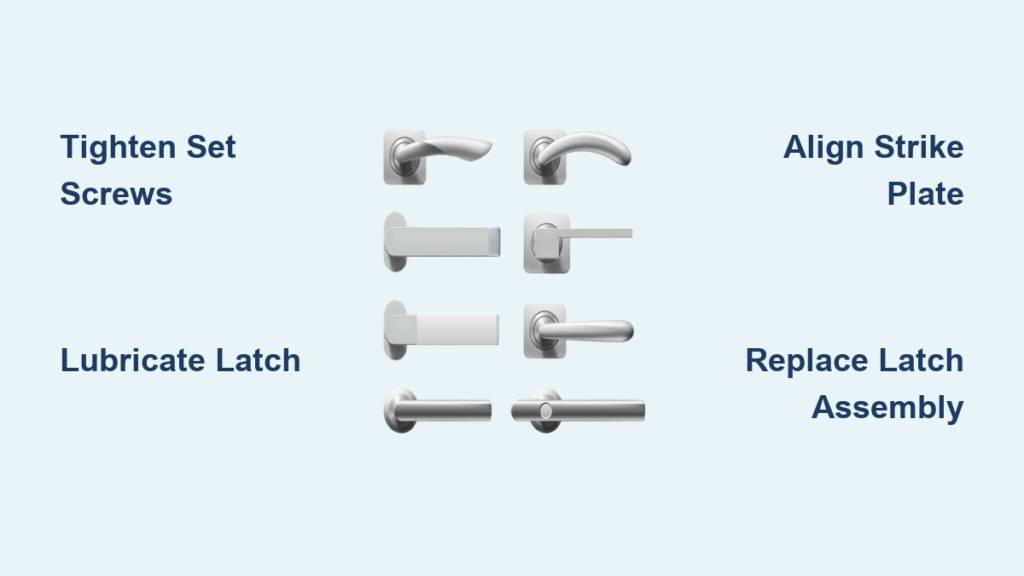
That frustrating moment when your door handle won’t turn or your latch refuses to catch is more than just an inconvenience—it’s a security vulnerability in your home. Whether you’re dealing with a wobbly interior knob that spins uselessly or an exterior handle that won’t engage the lock, knowing how to fix a broken door handle can save you time, money, and the embarrassment of being locked out of your own bathroom or bedroom. In this comprehensive guide, you’ll learn exactly how to diagnose and repair the seven most common door handle problems using basic tools you likely already own.
Why Your Door Handle Suddenly Won’t Latch or Turn
When your door handle stops functioning properly, the culprit is usually one of three mechanical failures: loose set screws, a misaligned strike plate, or worn internal components. Modern door handles rely on a square spindle connecting the interior and exterior handles, with set screws securing everything in place. Over time, repeated use causes these set screws to gradually loosen, creating that telltale wobble. Meanwhile, house settling can shift door frames just enough to misalign the latch bolt with the strike plate, preventing proper latching. Inside the mechanism, springs wear out and latch components become corroded or gummed up with old lubricant that’s turned sticky.
The most common warning signs that your door handle needs attention include a handle that spins freely without operating the latch, visible wobble when gripping the knob, difficulty turning the handle, or the door failing to stay closed. These issues typically develop gradually—you might notice increased resistance when operating the handle or hear unusual grinding noises before complete failure occurs. Ignoring these early symptoms often leads to complete handle failure, leaving you unable to lock your bedroom or stuck with a door that won’t stay shut.
Essential Tools for DIY Door Handle Repair

Before attempting any door handle repair, gather these specific tools to ensure success:
- Precision Allen wrench set: Most modern handles use metric set screws (1.5mm, 2mm, 2.5mm, 3mm, 4mm, and 5mm)
- Phillips and flathead screwdrivers: Various sizes for mounting screws and decorative covers
- Adjustable wrench or socket set: For stubborn mounting nuts
- Graphite powder or silicone spray lubricant: Dry lubricants that won’t attract dirt
- Wood glue and toothpicks: Emergency fix for stripped screw holes
- Chisel and hammer: For strike plate adjustments
Critical tool tip: Keep a small container specifically for door hardware repairs. Store replacement set screws, spare mounting screws, and a small tube of thread-locking compound. This saves crucial time when you discover a stripped screw during an emergency repair. Never use oil-based lubricants—they attract dust and eventually create a gummy mess that worsens sticking problems.
How to Diagnose Your Exact Door Handle Problem in 5 Minutes
Identifying Loose Handle Set Screws
When your handle wobbles or spins freely, the issue is almost always loose set screws. Locate the set screw by checking under decorative caps on the handle’s base or end, or on the underside where the handle meets the door. Use a small flathead screwdriver to gently pry off any decorative covers. Most interior passage sets and privacy handles have set screws on both handles, while exterior entry sets typically have them only on the interior side. If you find the set screw hole empty, you’ve discovered why your handle won’t stay tight.
Testing Latch Mechanism Operation
With the door open, operate the handle while watching the latch bolt. A healthy mechanism should retract smoothly when the handle turns and spring back into position when released. If the latch sticks partially extended or won’t retract fully, you’re dealing with either internal corrosion or misalignment. Apply lipstick to the latch bolt, close the door, then reopen it to see exactly where the bolt contacts the strike plate—this reveals alignment issues invisible to the naked eye.
Fixing a Wobbly Doorknob: Tightening Loose Handle Set Screws
Locating and Accessing Hidden Set Screws
Most homeowners waste time trying to tighten visible mounting screws when the real problem lies with hidden set screws. For lever handles, check under the lever’s base where it meets the rosette. On knob handles, look for a small hole in the side of the knob’s shank or under a decorative cap at the knob’s end. Use the smallest Allen wrench that fits snugly—typically 2mm or 2.5mm for interior handles, 3mm for exterior. For stubborn decorative caps, wrap a rubber band around a flathead screwdriver for better grip when prying.
Proper Set Screw Tightening Technique
Insert the Allen wrench and turn clockwise to tighten, but stop immediately when you feel resistance. Overtightening strips the soft metal threads, creating a much worse problem. If the set screw turns but doesn’t tighten, it’s likely stripped—remove it completely and inspect the threads. For slightly stripped screws, apply a tiny drop of thread-locking compound before reinserting. If the screw hole is damaged beyond repair, replace the set screw with one size larger if possible, or use the toothpick-and-wood-glue method for temporary hold until you can replace the entire mechanism.
Repairing a Sticking Latch Mechanism Without Replacing Hardware
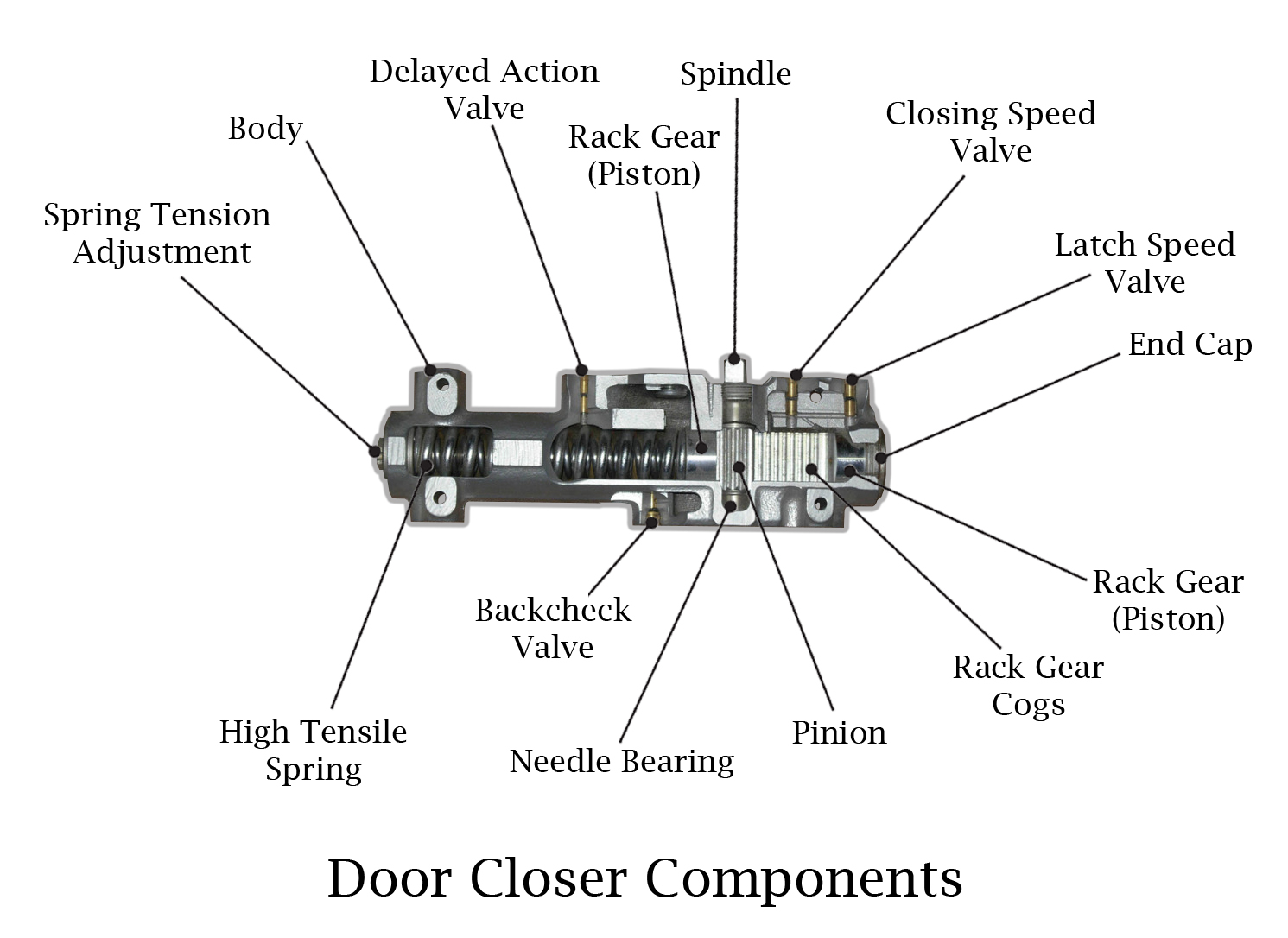
Lubrication Protocol for Smooth Operation
Most sticking latch problems resolve with proper lubrication. First, remove any old lubricant by spraying carburetor cleaner into the mechanism while working the handle back and forth. Let it dry completely before applying a dry lubricant—graphite powder works best for exterior doors exposed to temperature extremes, while silicone spray suits interior applications. Never spray directly into the lock cylinder; instead, apply lubricant to a small brush and work it into the latch mechanism through the edge of the door. Operate the handle 20-30 times to work the lubricant deep into the mechanism.
Strike Plate Alignment Adjustment
A misaligned strike plate causes 70% of latching problems. After marking the contact point with lipstick, determine if the bolt hits high, low, or off-center. For minor misalignment (1/16″ or less), file the strike plate opening using a metal file. For larger adjustments, remove the strike plate screws, insert cardboard shims behind the plate, and remount it slightly higher, lower, or inward. If filing isn’t enough, chisel the mortise deeper—but work slowly, removing small amounts of wood at a time until perfect alignment is achieved.
Replacing a Worn-Out Latch Assembly in 6 Simple Steps
Removing the Old Latch Mechanism
- Remove both interior and exterior handles by loosening their set screws
- Unscrew the two latch plate screws on the edge of the door
- Gently pull the entire latch assembly straight out
- Note the backset measurement (2-3/8″ or 2-3/4″) for replacement
- Check the bevel direction—most latches have the angled side facing the door stop
- Take the old assembly to the hardware store to ensure exact replacement
Installing the New Latch Correctly
Position the new latch with the bevel facing the door stop (the side that contacts the frame when closed). Insert it into the mortise and test operation by manually moving the spindle. If the new latch doesn’t fit perfectly, carefully chisel the mortise wider or deeper—never force it. Secure with screws, but leave them slightly loose until you’ve reinstalled both handles and confirmed smooth operation. Only then should you fully tighten all components. Test the latch 10-15 times before considering the repair complete.
Emergency Fixes for Stripped Screw Holes in Door Handles
The Toothpick and Wood Glue Method
When set screw holes become stripped beyond use, this emergency fix buys you time until proper replacement parts arrive. Remove the handle and set screw, then fill the stripped hole with wood glue. Insert three or four wooden toothpicks, breaking them off flush with the surface. Let the glue dry completely (at least 2 hours), then reinsert the original set screw. The toothpicks create new gripping material for the screw threads. For mounting screw holes in the rosette plate, drill out the stripped hole with a 3/8″ bit, insert a wooden dowel with wood glue, let it set, then drill a new pilot hole for a slightly longer screw.
Alternative Quick Fix: Thread-Locking Compound
For slightly stripped set screws that still have some grip, apply a small drop of medium-strength thread-locking compound (blue Loctite) to the screw threads before reinserting. This creates temporary holding power without making the screw impossible to remove later. Work the compound into the threads with the screw, then tighten to proper tension. Never use permanent (red) thread locker on door hardware—it makes future repairs extremely difficult.
Preventing Future Door Handle Problems with Proper Maintenance
Monthly Inspection Checklist
Grab every door handle in your home and give it a quick test each month. Check for wobble by gripping the handle firmly and trying to rotate it independently of the spindle. Listen for unusual grinding noises when operating the latch. Verify that all doors latch securely and lock properly. Pay special attention to high-traffic doors like bathrooms and bedrooms, which typically show wear first. During your inspection, tighten any loose mounting screws you discover—don’t wait until the problem worsens.
Annual Deep Maintenance Routine
Twice a year, perform thorough maintenance on all door hardware. Remove each handle set completely, clean all components with carburetor cleaner, and inspect for worn parts. Replace any springs that have lost tension and lubricate all moving parts with graphite powder. Check set screws for wear and replace any that show stripped threads. Verify strike plate alignment on every door and make minor adjustments before problems develop. This 15-minute annual ritual prevents 90% of major handle failures and extends hardware life by years.
Final Note: When your door handle fails, you now have the knowledge to diagnose and repair most common problems without calling a professional. From tightening loose set screws to replacing worn latch mechanisms, these straightforward techniques restore security and function to your doors. Remember to perform monthly inspections and annual maintenance to catch problems early—most major handle failures develop gradually from neglected minor issues. Keep a dedicated door hardware repair kit with essential tools and spare parts, and you’ll never be frustrated by a broken door handle again.