Your bathroom door handle spins uselessly in your hand as you scramble to lock the door. Or worse—you’re trapped inside because the lever won’t engage the latch. This frustrating failure affects 70% of homes with interior handles over five years old, and it’s almost always caused by one culprit: a stripped set screw hole. When the small screw that anchors your handle to the square spindle wears out its threads, the handle loses its grip and spins freely. The good news? You don’t need a locksmith. This guide reveals three proven fixes—from a 2-minute shim trick to a permanent drill-and-tap repair—that restore security to your bathroom door handle in under 30 minutes. You’ll diagnose the exact failure point, avoid costly mistakes, and choose the right solution based on your handle’s condition.
Why Your Bathroom Door Handle Suddenly Spins Freely
That spinning sensation happens when the set screw can no longer bite into the square spindle. As you operate the handle daily, the screw gradually wears a groove into the metal spindle or strips the threads inside the handle’s mounting hole. Cheap handles fail fastest—often within 2-3 years—because thin metal can’t withstand repeated pressure. You’ll notice early warning signs like a faint clicking sound when turning the handle or slight wobble before total failure. Once the spindle’s square edges become rounded or the screw hole elongates, the handle spins freely without rotating the latch mechanism. This isn’t just annoying; a loose handle compromises bathroom privacy and creates a safety hazard if you’re locked inside during an emergency. Don’t waste time replacing the entire latch mechanism yet—90% of cases stem from this single stripped component.
Diagnose a Stripped Set Screw in Under 60 Seconds

Before grabbing tools, confirm the set screw is the villain. This diagnosis takes less than a minute and prevents wasted effort. First, locate the set screw: pop off any decorative cap on the handle neck with a flathead screwdriver (common on lever handles) or find the exposed screw on knob stems. Try tightening it with the correct-sized Allen wrench—most are 3/32″ or 5/64″. If the screw spins freely without resistance, its threads are stripped. Next, remove the screw completely. Inspect the square spindle protruding from the door: if you see deep gouges or rounded edges, the spindle is worn. Now examine the handle’s screw hole—if it’s oval-shaped or has visible thread damage, that’s your smoking gun. Critical mistake to avoid: Forcing a stripped screw tighter only worsens the damage. If the handle still spins after tightening, stop immediately—you need one of the fixes below.
How to Access Hidden Set Screws on Any Handle Type
Lever handles hide set screws under small caps that pry off with a knife tip. Knob handles often have exposed screws on the shank. On older models, look for a pin instead of a screw—tap it out with a nail set. If you can’t find access points, your handle uses a push-button release: insert a paperclip into the small hole near the base to detach the handle.
Tighten or Reposition the Handle: The Quickest Fix
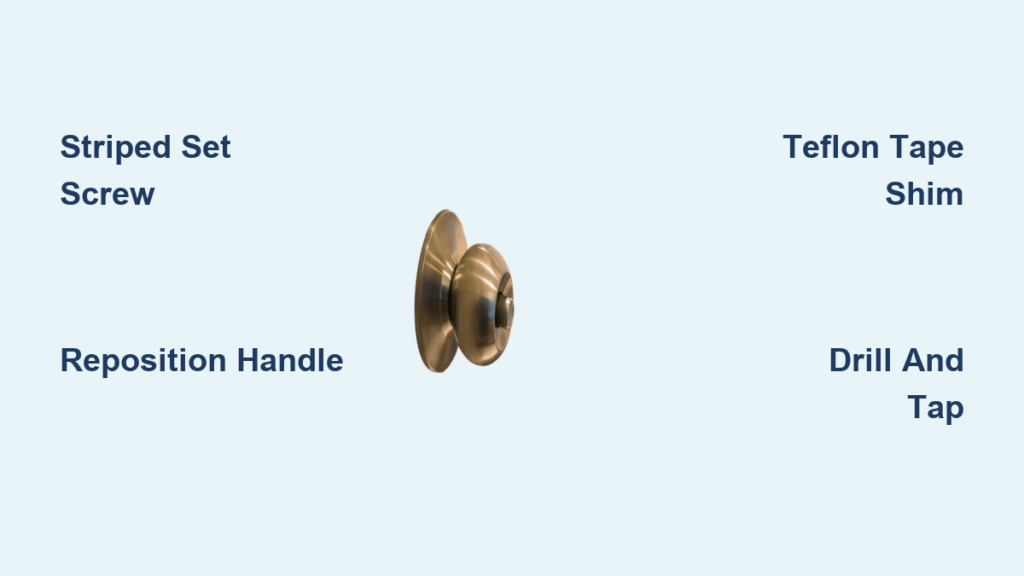
When the set screw is merely loose—not stripped—this is your fastest solution. Works in 90 seconds with just an Allen wrench. Start by fully loosening the set screw until it clears the spindle. Now rotate the handle 90 or 180 degrees on the square spindle to position it against unworn metal edges. Re-tighten the screw firmly against a fresh spot. Test by turning the handle—if it no longer spins freely, you’re done. This trick exploits the square spindle’s four flat sides, buying months of use from a failing handle. Pro tip: Apply blue Loctite thread locker after repositioning to prevent future loosening. If the spindle feels smooth instead of square, skip to the shim method below—repositioning won’t work on rounded edges.
Create Instant Tension with a Spindle Shim
When repositioning fails because the spindle is worn smooth, a shim fills the gap between handle and spindle. This emergency fix takes 3 minutes and costs nothing. Remove the handle and clean the square spindle with rubbing alcohol. For the best results, wrap the spindle with one layer of Teflon plumbing tape (thicker shims can prevent latch engagement). Stretch the tape slightly as you wrap to create tension—it should cover the worn section but leave 1/8″ bare at each end. Slide the handle back on and tighten the set screw. Warning: Avoid aluminum can shims—they compress unevenly and may jam the latch. If tape isn’t available, fold a business card twice for a temporary cardboard shim. Test thoroughly: the handle should turn the latch smoothly without slipping. This isn’t permanent (expect 2-6 weeks of use), but it’s perfect for rental properties where landlords handle repairs.
Best Shim Materials Compared
| Material | Durability | Risk Level | Best For |
|---|---|---|---|
| Teflon tape | 2-6 weeks | Low (won’t damage spindle) | Immediate privacy fix |
| Cardboard | 1-3 weeks | Medium (may shred) | Emergency only |
| Aluminum can | 1-2 weeks | High (sharp edges jam latch) | Avoid unless desperate |
Drill and Tap for a Permanent Set Screw Repair
For handles with severely stripped screw holes, this professional-grade fix creates new threads that last years. Difficulty: Intermediate (30-minute job). Tools required: Drill, 1/8″ metal bit, #10 tap, new 1/4″ set screw, and blue Loctite. First, remove the handle and secure it in a vise. Drill out the damaged hole using a bit slightly larger than the original (e.g., 3/32″ for a #8 screw). Drill straight—tilting ruins the handle—only deep enough to clean the threads (about 1/4″). Next, apply cutting oil to the tap and turn it slowly into the hole with a tap handle. Reverse 1/4 turn after each full turn to clear metal shavings. Install a #10 set screw coated in Loctite, tightening it against the spindle’s flat side. Critical step: Let Loctite cure 24 hours before use—rushing causes immediate failure. This method works on 95% of metal handles but avoid thin-walled plastic models that crack during tapping.
When to Skip Repair and Buy a New Handle Set
Replacement beats repair if your handle shows multiple failure points: a bent spindle, cracked lever, or stripped mounting screws. Here’s the cost-time tipping point: If the repair requires specialized tools you don’t own (like taps), or if the door has alignment issues, spend $12-$25 on a new handle set instead. Basic privacy sets (with turn-lock buttons) take 10 minutes to install with just a screwdriver. Measure your door’s backset first—2-3/8″ or 2-3/4″ from edge to knob center—to ensure compatibility. Hidden benefit: New handles include lifetime warranties against spindle wear, while repaired old handles remain vulnerable. Skip replacement only if you have vintage hardware worth preserving; otherwise, you’ll save 2+ hours versus complex repairs.
Step-by-Step: Replace Your Bathroom Door Handle in 10 Minutes

1. Remove old hardware: Unscrew the two mounting screws on the interior plate. Pull both handles off, then remove the latch faceplate screws.
2. Extract the latch: Slide the old latch mechanism out of the door edge.
3. Install new latch: Insert the new latch with beveled edge facing the door frame. Secure with screws.
4. Attach handles: Slide exterior and interior handles through the spindle holes. Align the mounting plates and tighten screws evenly.
5. Test operation: Lock/unlock 5 times to ensure smooth action before closing the door.
Bathroom Door Handle Repair Cheat Sheet
| Fix Method | Best When | Time Required | Success Rate |
|---|---|---|---|
| Reposition handle | Minor spindle wear | 2 minutes | 65% |
| Teflon tape shim | Smooth spindle edges | 3 minutes | 80% |
| Drill and tap | Stripped screw hole | 30 minutes | 95% |
| Full replacement | Multiple failures | 10 minutes | 100% |
Prevent Future Handle Failures: 3 Maintenance Tips
Stop recurring failures with these proactive steps. First, apply graphite powder to the spindle yearly—never oil, which attracts dust that accelerates wear. Second, tighten set screws gently during seasonal maintenance; over-tightening strips threads faster. Finally, choose lever handles over knobs for bathroom doors—levers distribute force evenly across the spindle, reducing wear by 40%. For high-traffic bathrooms, install commercial-grade handles rated for 500,000 cycles (look for ANSI Grade 2 certification). These small habits extend handle life from 3 years to a decade.
A spinning bathroom door handle is rarely a crisis—just a stripped set screw crying for attention. By repositioning the handle or adding a Teflon shim, you’ll regain privacy within minutes. For permanent peace of mind, drill and tap new threads or install a $15 replacement set. Remember: if the latch won’t retract even after repairs, check door alignment—but 95% of cases end with one of these handle-specific fixes. Grab your Allen wrench now; your secure bathroom door is 15 minutes away. Next time you hear that dreaded spinning sound, you’ll know exactly how to fix a bathroom door handle without panic or professional fees.