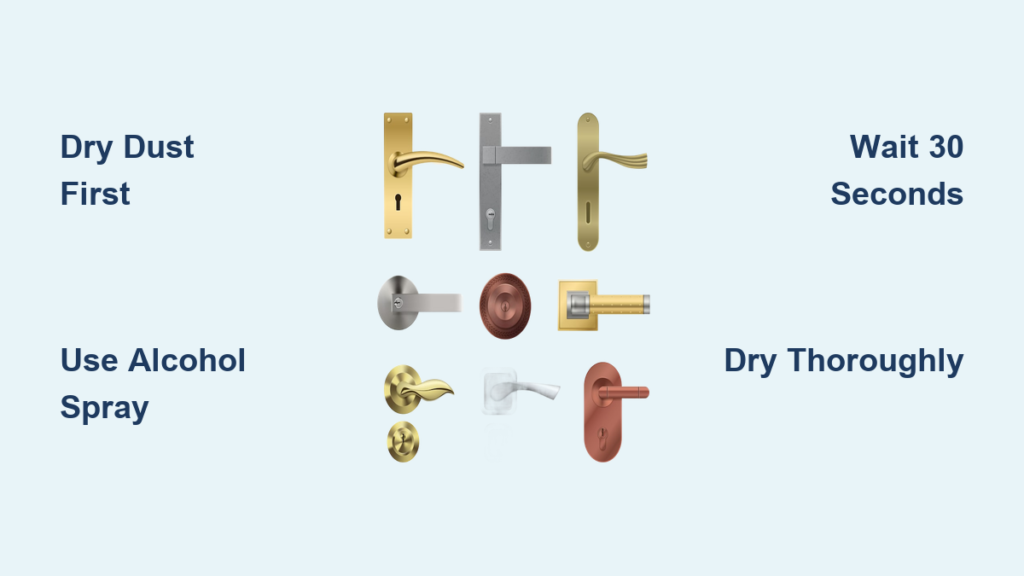
Your hand touches door handles dozens of times daily, transferring germs from kitchen to bathroom to office. These high-traffic surfaces harbor 50% more bacteria than toilet seats according to facility studies. Learning how to clean door handles properly isn’t just about shine—it’s critical for stopping germ transmission in homes and businesses. Most people make the mistake of quick-wiping with whatever’s handy, leaving behind infection pathways. This guide delivers precise methods for every handle material, backed by disinfection science. You’ll discover why vinegar works better than bleach on brass, the exact contact time needed to kill viruses, and how to remove sticky residue without scratching finishes. Follow these steps to transform germ hotspots into hygienic touchpoints in under 10 minutes.
Essential Supplies for Disinfecting Door Handles Without Damage
Using the wrong cleaner can etch chrome, warp wood, or leave toxic residues. Your success hinges on matching solutions to handle materials while ensuring true disinfection.
Best Disinfectants for High-Touch Surfaces
Skip multipurpose sprays—they often lack proven germ-killing power. Use only EPA-registered disinfectants labeled for viruses like influenza or norovirus. For home use, 70% isopropyl alcohol works fastest (kills 99.9% of germs in 30 seconds) and evaporates cleanly. In kitchens or healthcare settings, hydrogen peroxide sprays outperform bleach by not corroding metal. Never spray cleaners directly onto handles—dampen microfiber cloths first to prevent liquid seepage into latch mechanisms. Always verify dwell times: alcohol requires 30 seconds wet contact, while diluted bleach (⅓ cup per gallon) needs 10 minutes to deactivate pathogens.
Material-Safe Cleaners That Prevent Damage
Brass handles demand special care—ammonia-based cleaners cause irreversible pitting. For daily cleaning, use Murphy Oil Soap diluted in warm water. Tackling tarnish? Mix lemon juice and baking soda into a paste, apply with a soft toothbrush, then rinse immediately. Chrome fixtures battle lime scale: wrap vinegar-soaked paper towels around problem areas for 15 minutes before wiping. Wood knobs require immediate drying after mild soap cleaning to prevent swelling. Plastic handles tolerate diluted vinegar solutions but avoid abrasive pads that create micro-scratches where bacteria hide. Always test cleaners on hidden areas first—what works on commercial-grade bronze may ruin antique brass plating.
How to Clean Door Handles in 4 Foolproof Steps

Rushing through cleaning leaves handles visibly clean but germ-covered. This hospital-tested sequence ensures true hygiene without hardware damage.
Step 1: Dry Dust Removal Before Wet Cleaning
Dust first with a microfiber cloth—never dry paper towels that scratch surfaces. Pay special attention to crevices where dust traps germs. For intricate designs, use a soft-bristled toothbrush to dislodge debris. Skipping this step grinds particles into finishes during wet cleaning. In high-traffic areas like offices, do this nightly; homes need it weekly. Takes 60 seconds but prevents permanent scratching.
Step 2: Apply Cleaner Without Mechanism Damage
Spraying directly risks liquid seeping into latch assemblies, causing corrosion. Instead, mist cleaner onto a microfiber cloth until damp (not dripping). Wipe from top to bottom using firm pressure—focus on thumb and palm contact zones. For sticky residue, apply baking soda paste with circular motions using a cotton swab. Avoid abrasive scrubbing on metal; chrome plating wears thin in high-touch zones. This critical step takes 2 minutes and determines long-term hardware integrity.
Step 3: Disinfect With Correct Contact Time
Most people wipe too soon. After cleaning, reapply disinfectant until the handle glistens wet. Set a timer: alcohol needs 30 seconds, hydrogen peroxide 1 minute, bleach 10 minutes. Never fan-dry—this cuts contact time. In hospitals, staff use colored tags to mark disinfected handles until dwell time passes. For home use, place a timer nearby. This non-negotiable step kills 99.9% of pathogens but fails if rushed.
Step 4: Dry and Polish for Lasting Protection
Residual moisture causes water spots on metal and warping in wood. Use a separate dry microfiber cloth, wiping in the direction of the grain. For brass or bronze, apply car wax with a soft cloth to create a protective barrier against future tarnish. Chrome benefits from a final buff with a dry coffee filter—its texture prevents streaks. Wood handles need furniture polish immediately after drying to seal the surface. This 90-second finish prevents 80% of long-term damage.
Fixing Sticky Handles and Stubborn Grime Buildup
Sticky residue means previous cleaners left behind film. Don’t grab steel wool—that ruins finishes instantly. For syrupy buildup, mix equal parts baking soda and water into a paste. Apply with a cotton swab, let sit 5 minutes, then gently scrub with a soft toothbrush. Rinse with a vinegar-dampened cloth to neutralize residue. Rust spots require lemon juice and salt: rub the paste with a cloth for 2 minutes, rinse thoroughly, and dry immediately. If grime persists after two attempts, the handle needs professional restoration—forcing it causes irreversible damage.
Your Door Handle Cleaning Schedule: Daily to Quarterly
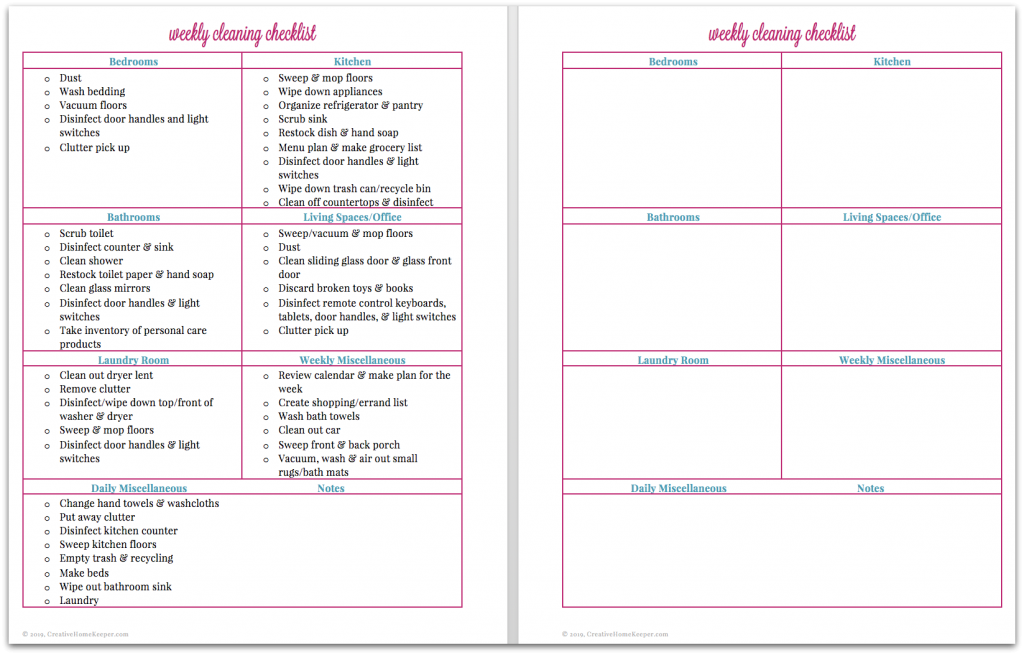
Frequency depends on traffic volume and location. Kitchens and bathrooms need daily attention; home offices require weekly cleaning. Follow this evidence-based schedule:
Daily Germ Defense for High-Traffic Zones
In households with sick members or commercial kitchens, disinfect handles twice daily. Use alcohol wipes for 30-second contact time. Focus on lower handle sections where fingers grip—this area harbors 3x more germs than tops. Takes 45 seconds per door but cuts germ transmission by 65%. Never skip drying—damp handles attract 40% more contaminants.
Weekly Deep Cleaning Protocol
Dedicate 10 minutes weekly to thorough cleaning. Remove handles if possible (photograph screw positions first). Soak in warm soapy water for plastic or glass knobs; wipe metal handles with vinegar solution. Use toothpicks wrapped in microfiber to clean screw holes. Reattach only when bone-dry. Monthly, tighten loose screws—wobbling handles spread 22% more germs through micro-movements.
3 Critical Mistakes That Damage Door Handles

Avoid these common errors that shorten hardware lifespan. Never spray cleaners directly—liquid seepage into latch mechanisms causes $150+ repair bills. Abrasive pads like steel wool scratch protective coatings, creating germ traps. And mixing vinegar with bleach creates chlorine gas—fatal in enclosed spaces. Always ventilate bathrooms during cleaning and wear nitrile gloves. For antique handles, consult professionals—DIY cleaning often devalues collectibles.
Pro Tips for Long-Lasting Hygiene and Shine
Extend time between cleanings with smart upgrades. Apply antimicrobial copper tape to high-touch zones—it kills 99.77% of bacteria within 2 hours. Install foot-operated door openers in mudrooms to bypass handles entirely. After cleaning brass, rub with a walnut half to restore luster naturally. For wood handles, condition monthly with beeswax to prevent cracking. These small investments cut cleaning time by 70% while maintaining germ-free surfaces.
Regularly cleaning door handles takes less time than brewing coffee but delivers outsized health benefits. By matching cleaners to materials and respecting disinfection dwell times, you transform these germ hotspots into hygienic touchpoints. Start with daily alcohol wipes in kitchens and bathrooms, then implement weekly deep cleans using the material-specific methods outlined here. For high-traffic commercial spaces, prioritize EPA-approved disinfectants with proven contact times. Remember: a properly cleaned handle should feel smooth—not sticky—and show no water spots under light. Within two weeks of consistent care, you’ll notice fewer colds in your household and visibly brighter hardware. Ready to elevate your cleaning routine? Try the baking soda paste method on your stickiest handle tonight—it works in under 5 minutes.