A broken door knob is more than just an inconvenience. It can trap someone in a room, compromise your privacy, or leave your home insecure. Whether the knob spins uselessly, won’t turn at all, or has completely shattered, most issues can be resolved quickly with basic tools and the right approach. This guide walks you through every step from diagnosing the problem to making repairs or replacements, so you can restore function without calling a professional.
Opening a Stuck Door First
Before you can fix the knob, you need to gain access to the door. This is especially important if someone is locked inside or outside.
Try the Credit Card Method
For interior doors with spring latches, a credit card or gift card can retract the latch without damage. Slide the card between the door and jamb at knob height, angling it toward the sloped side of the latch. Push inward while angling down to force the latch back into the door. This works best when there is a small gap between the door and frame. It fails if the door is tightly sealed, painted shut, or has a deadbolt.
Pry the Latch With a Screwdriver
If the card method fails, insert a flathead screwdriver into the gap at latch height. Angle it at approximately 45 degrees and twist to push the latch into the door. Wiggle the door slightly while applying pressure. Sometimes a fraction of an inch makes all the difference between a stuck door and one that opens freely.
Remove Hinge Pins
When latch access is impossible, remove the hinge pins. Use a hammer and nail punch to tap the hinge pins upward. Lift the door off the frame once all pins are removed, then manually retract the latch from the side. This method only works if hinges are standard. Support the door throughout to avoid damage.
Cut Away Molding to Reach the Latch
For tight seals or swollen wood, carefully pry off baseboard or trim near the door edge. Use a utility knife to break any caulk or paint seals first. Insert a screwdriver through the gap to push the latch in. After opening, reattach the molding with construction adhesive and light tapping with a rubber mallet.
Break the Knob as Last Resort
When nothing else works, destroying the knob may be your only option. You can cut through the spindle with a hacksaw to remove both sides. Use vise grips to clamp and twist until the knob breaks free. Drill through the setscrew hole with a metal bit to destroy internal fasteners. Or shatter plastic knobs with a sharp hammer blow. These methods destroy the knob and may damage the door, so only use them when essential.
Diagnosing the Problem
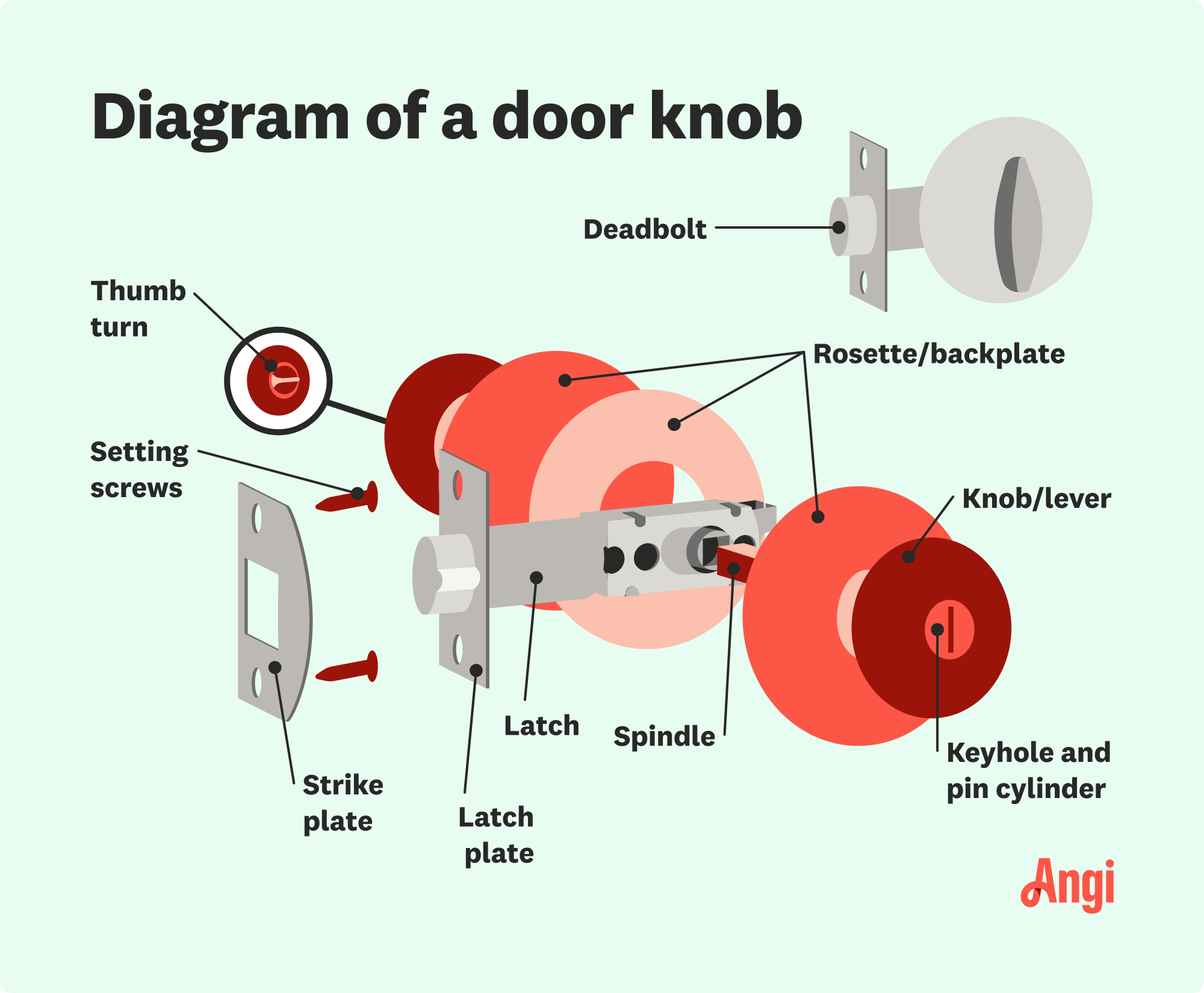
With the door open, inspect the knob and mechanism to determine what went wrong.
Check for a Spinning Knob
If the knob turns but the latch doesn’t move, the spindle is disconnected from the latch mechanism. Internal gears may be worn or stripped, or the setscrew is missing or stripped. Remove the knob and manually rotate the spindle. If the latch moves when you turn the spindle, the knob itself isn’t engaging properly.
Test Latch Movement
Open the door and pull the latch with your fingers. It should spring back smoothly. If the latch is stiff or stuck, apply WD-40 or silicone spray into the mechanism. Tap gently with a screwdriver and hammer to free it. A stuck latch is usually caused by debris, paint buildup, or a broken spring.
Inspect the Strike Plate
Look at the metal plate on the door jamb. Check if the latch is scraping the top or bottom of the hole. Look for scratches or dents. Fix this by loosening the strike plate screws, realigning it, and retightening. File the hole larger if needed to allow smooth latch engagement.
Disassembling the Door Knob
To repair or replace the knob, you need to take it apart first.
Remove Slip-On Knobs
Many older and budget knobs are slip-on style. Find the small slot on the side of the knob. Insert a flathead screwdriver and press the internal button. Pull the knob straight off the spindle. Repeat on the other side. A spring-loaded pin will pop out when released.
Remove Setscrew Knobs
Most modern knobs use a setscrew. Look for a small cap on the side and pry it off with a knife. Use an Allen wrench or flathead screwdriver to loosen the screw. Slide the knob off the spindle. Keep the setscrew safe since it’s tiny and easy to lose.
Take Off the Rosette Plate
After removing the knob, look for screws on the escutcheon faceplate. If none are visible, gently pry off the cover with a flathead screwdriver. Unscrew the long mounting bolts that go through the door. Pull both halves apart. Don’t force it if stuck. Check for hidden screws or paint seals first.
Fixing a Loose or Spinning Knob
A wobbly or spinning knob is the most common issue and usually the easiest to fix.
Tighten the Setscrew
Remove the knob cap. Tighten the hex or flathead screw against the spindle. Use thread locker like Loctite to prevent loosening over time. If the screw spins freely, the threads are stripped. Replace it with a matching 10-32 or 8-32 machine screw from a hardware store.
Reconnect the Spindle
If the knob turns but the latch doesn’t, open the lockset and check if the spindle is misaligned. Push it fully into the latch mechanism. Ensure the square or crossbar end is seated in the actuator. This often resolves spinning knob issues quickly.
Replace a Worn Latch
If internal gears are stripped, remove the edge screws and slide out the latch. Take it to a hardware store to match the backset measurement, which is either 2 3/8 inches or 2 3/4 inches. Install the new latch with the beveled side facing the jamb. This repair takes approximately 10 minutes.
Replacing the Entire Lockset
When repair isn’t possible, replacement is fast and inexpensive.
Choose the Right Replacement
Three main types exist. Passage knobs have no lock and work best for closets. Privacy knobs have a push-button or twist lock and are used in bathrooms. Keyed entry knobs require a key and are best for exterior doors. Measure before buying. You need the backset distance from door edge to knob center, door thickness, and bore hole diameter. Bring the old knob to the store for a perfect match.
Install the New Latch
Slide the new latch into the edge bore. Screw it in but don’t overtighten. Test by pressing the latch in and out. The beveled side must face the jamb. This lets the door close smoothly without binding.
Attach the New Knob
Insert the spindle through the latch. Align both knob halves. Slide them onto the spindle. Insert and tighten mounting screws evenly. Reattach decorative plates. Test by opening and closing the door five times. The latch should click smoothly each time.
Repairing Damaged Door Holes or Edges
Broken knobs or forced entry can crack the wood around the bore holes.
Fill Minor Cracks With Wood Glue
For small splits, inject wood glue into the crack with a syringe. Clamp the area for 24 hours. Sand and repaint once dry. Fill any remaining gaps with wood filler if needed.
Perform a Dutchman Repair for Major Damage
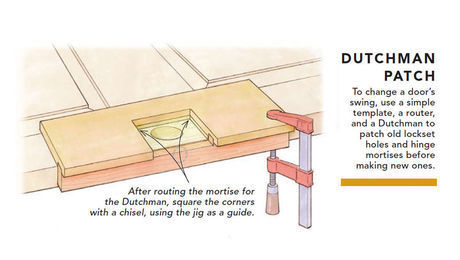
When the edge is split or crumbling, cut out damaged wood in a clean rectangle. Taper the ends slightly for a smooth blend. Fit a new wood patch of the same thickness. Glue with Titebond III or epoxy. Clamp until dry, then sand flush. This takes time but restores structural strength better than patching.
Add a Reinforcement Plate
For high-traffic or exterior doors, install a metal door reinforcement plate over the latch area. This prevents future splitting and is common in commercial and security doors.
Preventing Future Failures
Avoid repeat problems with simple maintenance.
Lubricate Annually
Use graphite powder for locks since it won’t attract dust. Use silicone spray for latches since it’s safe on plastic and metal. Avoid WD-40 for long-term use since it attracts grime.
Tighten Screws Every Six Months
Check mounting screws and setscrews. Tighten evenly to prevent wobble. Replace stripped screws with slightly longer ones if needed.
Align the Strike Plate Seasonally
Wood expands in humidity. Check alignment in summer and winter. Loosen, reposition, and retighten the plate if the door sticks.
Replace Worn Parts Early
If the knob feels loose or noisy, fix it now. A new interior knob costs between $10 and $25, which is cheaper than emergency repairs.
When to Call a Pro
DIY works for most interior doors, but call a professional when exterior doors are involved since security is critical. Call for deadbolts or high-security locks that need repair. Call for historic or custom doors that require preservation. Call for structural damage beyond patching. For minor interior issues, a handyman is cheaper than a locksmith and just as effective.
Frequently Asked Questions About Fixing Broken Door Knobs
Why does my door knob spin without opening the door?
The spindle has disconnected from the latch mechanism, or the setscrew has come loose. Remove the knob and check if the spindle is properly seated in the latch. Tighten the setscrew or reconnect the spindle to fix this.
Can I fix a broken door knob without removing it?
Some issues like a stuck latch can be addressed by lubricating through the gaps. However, most repairs require removing the knob to access the internal mechanism. If the knob is completely broken, removal is necessary.
How much does it cost to replace a door knob?
Interior door knobs cost between $10 and $25 for the hardware. Professional installation adds $50 to $100. DIY replacement takes 20 to 30 minutes and costs only the price of the new knob.
What tools do I need to fix a door knob?
You need a flathead screwdriver, Phillips screwdriver, Allen wrench set, hammer, and possibly needle-nose pliers. For stuck doors, a credit card, putty knife, or pry bar may help. Having WD-40, graphite powder, or silicone spray on hand is useful for lubrication.
How do I open a bathroom door if the knob is broken?
Try the credit card method first for interior doors with spring latches. If that fails, remove the hinge pins to take the door off, or pry off the molding to access the latch. These methods work without damaging the door.
Key Takeaways for Fixing Broken Door Knobs
Fixing a broken door knob is rarely an emergency and almost always a DIY win. With basic tools and the right approach, you can diagnose the issue, gain access to stuck doors, and make repairs in under 30 minutes. Most problems stem from loose setscrews, disconnected spindles, or stuck latches, all of which have straightforward fixes. When replacement is needed, new interior knobs cost under $25 and take minutes to install. Save the locksmith call-out fees. This is one job you can handle yourself with confidence.