A sudden ding on your car door can ruin your day, especially when it comes from a shopping cart, another vehicle, or an errant elbow in a parking lot. But before you rush to a body shop, know this: many dents can be fixed at home for less than $20 and often in under an hour. The key is choosing the right method based on dent size, paint condition, and access. This guide covers every proven DIY technique so you can restore your door’s shape without damaging the finish.
Assess the Dent Before Starting Repair
Evaluating the damage first helps you choose the right method and avoid making things worse.
Size, Depth, and Paint Check
- Small dents under 3 inches: Usually repairable with suction or glue pulling methods
- Medium dents between 3 and 6 inches: May require backside access or multiple pull points
- Large or deep dents: Likely need professional tools or body shop work
- Paint intact? If yes, paintless dent repair techniques work. If cracked, expect sanding and repainting
- Sharp creases or folds: These rarely respond to DIY methods and are best left to professionals
Check Access and Obstacles
Car doors often have internal reinforcement bars that block full backside access. If your dent sits over one, pushing from behind may not work unless you can maneuver around it. Modern unibody designs sometimes make internal access impossible without major disassembly.
Pro Tip: Shine a flashlight inside the door cavity after removing the panel. Look for space between the outer skin and inner structure to determine whether you can push the dent out.
Use a Plunger for Shallow Dents
This method works best for small to medium dents with intact paint and relatively flat surfaces.
How to Pull a Dent with a Plunger
- Clean the area with soapy water and dry it thoroughly
- Lightly wet the surface with room temperature water
- Center a cup-style plunger over the deepest part of the dent
- Pump quickly to create suction, then pull straight out with steady force
- Repeat until the dent pops or improvement stops
Why it works: The plunger creates suction that pulls the metal back into shape. Room temperature water helps seal the edge without risking thermal shock.
When Plunger Method Fails
- Deep or angular dents that don’t create good suction
- Dents near edges or curves where the plunger won’t seal
- Cold metal in winter below 45°F (7°C) becomes less responsive
Avoid: Pouring boiling water on metal car doors. It can crack the clear coat and warp thin panels.
Push Out from Behind for Best Results
This is the most effective method for car door dents when you can remove the interior panel.
Remove the Door Panel Safely
- Roll up the window completely
- Pop off trim covers with a plastic pry tool
- Unscrew fasteners on armrests and door handles
- Disconnect wiring for speakers, locks, and windows
- Gently pull the panel off, preserving the plastic moisture barrier
Warning: Do not force clips. They break easily. Replace any damaged ones before reinstalling.
Push the Dent Out
- Locate the dent from inside using a flashlight
- Use a wooden dowel, unibit, or body spoon to push from behind
- Start at the edges and work toward the center to prevent oil canning
- Tap gently with a hammer if more force is needed
- Smooth high spots with light tapping from the outside
Pro Hack: Wrap a can of beans in a shirt and roll it over the dent while heating the backside with a hair dryer. Gentle pressure helps reset the shape.
Reinstall the Panel
- Reconnect all wiring harnesses
- Align clips carefully before pressing into place
- Snap the panel back into place and reattach screws
Time Estimate: 45 to 90 minutes total. Success rate approaches 100% with full access.
Try Glue Pulling for Medium Dents
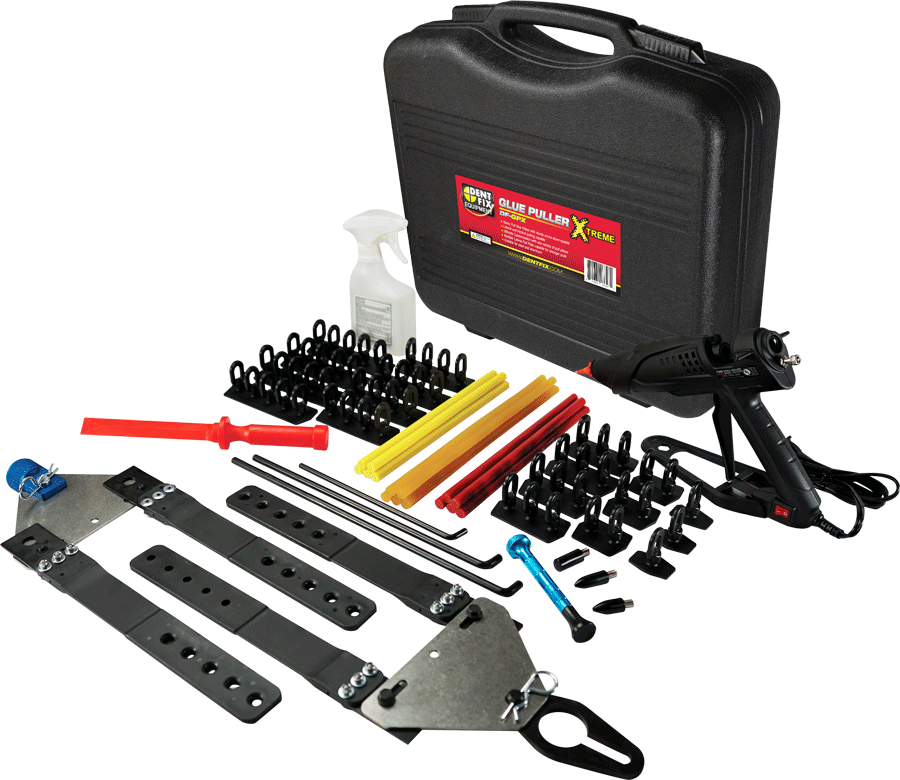
Glue pulling works well for medium dents with no back access and intact paint.
Tools You Will Need
- High-tack PDR glue or hot glue gun
- Glue tabs (plastic or metal)
- Slide hammer or pulling handle
- Isopropyl alcohol for cleaning
Step-by-Step Glue Pull
- Clean the dent thoroughly with isopropyl alcohol
- Apply glue tabs, one per square inch, over the lowest points of the dent
- Let cure for 10 or more minutes. Do not rush this step
- Pull straight out with a slide hammer or pulling handle
- Repeat with new tabs if needed
- Remove residue with dental floss or more alcohol
Will hot glue work? Yes, if it is high-tack and applied correctly. Standard craft glue may fail.
Pros and Cons of Glue Pulling
- No drilling or permanent damage
- Works on curved surfaces
- Fails if paint is cracked
- Glue residue can be stubborn to remove
Success Rate: 70 to 80% on suitable dents. Combine with light tapping for best results.
Apply Thermal Shock for Stubborn Dents
Heat then cold can help “set” dents that have been in the metal for months or years.
Use a Hair Dryer and Compressed Air
- Heat the dent with a hair dryer held 5 to 7 inches away for 2 minutes
- Test flexibility by pressing the edge. Reheat if the metal feels stiff
- Flip a can of compressed air upside down and spray the liquid refrigerant directly onto the hot spot
- Listen for a “pop.” This means the metal snapped back into place
- Wipe off condensation and inspect the result
Wait 24 hours before repeating. Too many thermal cycles can cause stress cracks.
Try Dry Ice for Instant Contraction
- Optionally pre-heat the area slightly with a hair dryer
- Cover the dent with aluminum foil and tape the edges securely
- Rub dry ice over the foil while wearing insulated gloves
- Wait up to 60 seconds for the “pop” to occur
- Remove foil and check your progress
Safety First: Dry ice is -109°F (-78°C). Never touch it with bare skin.
Effectiveness: 70 to 90% improvement on responsive dents.
Use Vacuum Suction for Flat Surfaces
This method works best on large, shallow dents on flat metal when you have no back access.
DIY Vacuum Method
- Place a bowl or bucket over the dent
- Seal the edges with tape or rubber if air leaks occur
- Attach a vacuum hose to a hole in the bottom of the bowl
- Turn on the vacuum and wait for the “pop”
Upgrade Tip: Rent a commercial vacuum for stronger suction if your home model fails.
Limitations of Vacuum Suction
- Less effective on curved or deep dents
- Requires an airtight seal to work
- May take multiple attempts to see results
Do Not Use Boiling Water on Metal Doors
This is a common myth that can actually damage your car.
Why Boiling Water Is Risky
- Thermal shock can crack paint or clear coat, especially in cold weather
- Uneven cooling causes warping on thin metal panels
- There is no added benefit over safer methods like plungers or glue pulling
Exception: Boiling water is effective on plastic bumpers. Heat softens thermoplastic, allowing you to push the dent out from behind.
Safe Plastic Bumper Repair
- Pour boiling water over the dented area
- Push from behind with a dowel or rubber mallet
- Hold the shape as it cools
- Dry thoroughly before checking the result
Works best on TPO or polypropylene bumpers common on modern vehicles.
Fix Deep Dents with Hammer and Dolly

Use this technique after initial pulling when high spots remain.
Hammer on High, Dolly Under Low
- Place the dolly behind the low spot
- Tap the adjacent high spot with a soft-faced hammer
- Redistribute metal gradually. Do not overwork the area
- Check your progress by viewing the reflection under moving light
Oil canning alert: If the panel flexes in and out, you have over-stretched the metal. Stop immediately and reassess.
Smooth and Fill if Needed
- Grind imperfections with a 40-grit resin disc
- Sand progressively using 40, then 80, then 120 grit
- Apply body filler to low spots
- Knock down high spots while filler is still soft
- Final sand before priming
Know When to Call a Professional
DIY is not always the answer. Seek professional help if paint is cracked or chipped, the dent has sharp creases, no back access is possible, the dent is near edges seams or structural supports, or the vehicle has high resale or collector value.
Cost Note: Professional PDR costs $50 to $150 per dent, often worth it for perfection.
Safety and Best Practices
Stay Safe While Working
- Wear gloves and eye protection
- Work in well-ventilated areas when using adhesives
- Use insulated gloves when handling dry ice
- Avoid excessive force that can puncture metal
Maximize Your Results
- Start with the least invasive method
- Clean surfaces thoroughly before any technique
- Work in 60 to 80°F (15 to 27°C) shade
- Check progress under moving light
- Preserve factory curves
Frequently Asked Questions About Removing Car Door Dents
Does the plunger method work on all types of dents?
The plunger method works best on shallow to moderate dents with intact paint. It is less effective on deep, angular, or edge-located dents. Success rates reach 80 to 90% on suitable shallow dents but drop significantly on complex damage.
Can I use boiling water to remove a dent from my car door?
No. Boiling water should never be used on metal car doors. The thermal shock can crack the paint or clear coat and cause warping, especially in cold weather. This method only works safely on plastic bumper covers.
How long does it take to remove a car door dent yourself?
Most DIY dent repairs take 15 minutes to 2 hours depending on the method and dent severity. Simple plunger repairs take 15 to 30 minutes. Backside push-out methods take 45 to 90 minutes. Advanced hammer and filler work can take 2 to 6 hours.
What tools do I need to remove a dent from a car door?
Basic tools include a cup-style plunger, soap and water, wooden dowels, and a flashlight. Advanced methods require a glue gun with PDR adhesive, glue tabs, a slide hammer, a heat gun or hair dryer, and body filler for finishing. Most basic repairs can be done with household items.
When should I hire a professional instead of DIY?
Hire a professional when paint is cracked or chipped, the dent has sharp creases, there is no access to push from behind, the dent is near edges or structural supports, or the vehicle has high resale or collector value. Professional PDR costs $50 to $150 per dent.
Can I fix a dent if the paint is damaged?
You can still repair the dent, but you will need to sand, fill, prime, and repaint the damaged area. Paintless dent repair only works when the paint remains intact. If paint is cracked, budget additional time and cost for finishing work.
Key Takeaways for Fixing Your Car Door Dent
You do not need expensive tools or professional skills to fix most car door dents. A plunger, some patience, or a few minutes removing the interior panel can deliver near-professional results. Start with the least invasive method and work up to more involved techniques only if needed.
Focus on preserving the paint, avoiding over-correction, and working gradually. Never use boiling water on metal doors, as the thermal shock risk outweighs any potential benefit. With the right approach, your car can look dent-free again without the body shop bill.
The best method depends on your specific situation. Use a plunger for shallow dents, push from behind when you have access, try glue pulling for medium dents with no back access, and apply thermal shock for stubborn or aged dents. Know your limits and call a professional when the damage exceeds what you can safely handle.