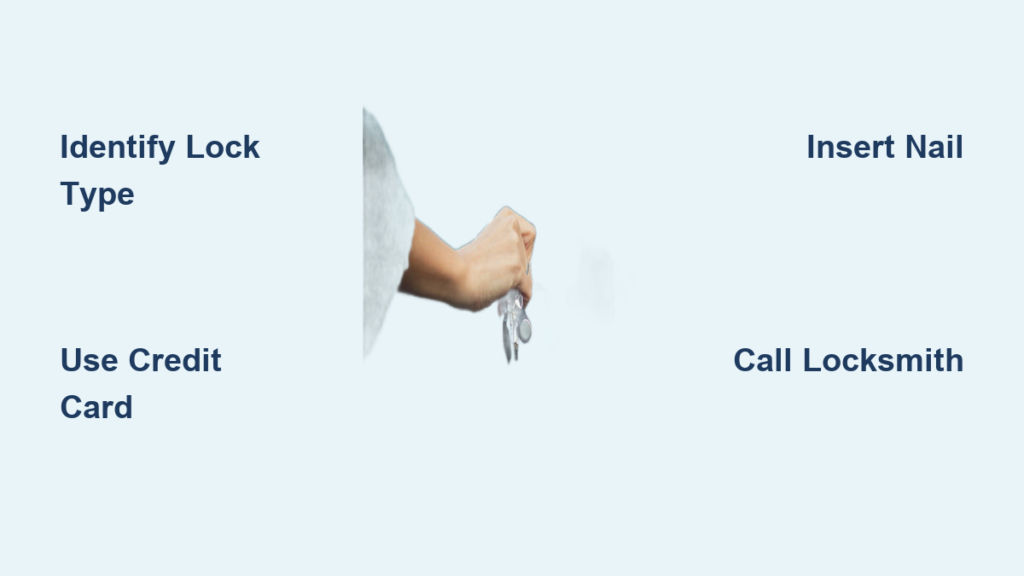
You’re standing in front of a closed door, hand on the knob, only to realize there’s no key in your pocket. Whether it’s a bathroom, bedroom, or even your front door, being locked out is stressful but you don’t always need a key to get back in. With the right knowledge and tools, you can unlock most doors safely and quickly. The secret depends on the lock type you are dealing with.
From simple interior privacy knobs to high-security deadbolts, every lock has a weakness and often the fix is easier than you think. This guide reveals proven, non-destructive methods using everyday items like credit cards, nails, and screwdrivers. You’ll learn how to identify your lock, bypass it with common tools, or know when to call a locksmith before causing damage.
Identify Your Lock Type First

Before trying any method, know what you are dealing with. Using the wrong technique wastes time and risks damage to your door or lock mechanism.
Privacy Knobs With Emergency Holes
Look for a small 1/8-inch hole in the center of the doorknob. This is a tool port, not a keyhole. It is found on bathroom and bedroom doors and is designed for emergency access. Insert a stiff tool like a nail or screwdriver to push or turn the internal release. Many people waste time trying to pick this hole when you do not need to turn a key, just push or twist.
Spring Latch Passage Locks
These doors do not lock at all. The knob turns freely from both sides. If you are locked out, the issue is likely a jammed or misaligned latch, not a locked mechanism. A credit card or spoon can often release it. Do not assume every stuck door is locked. Test the knob first before attempting any technique.
Deadbolt Locks
Deadbolts extend straight into the frame and cannot be opened with a credit card or coat hanger. They require a key or thumb turn. If engaged, most DIY methods will fail. Does the door have a second bolt above the knob? If yes, it is a deadbolt and you will need a key or a locksmith.
Smart Locks
Modern smart locks use keypads, fingerprints, or apps. If batteries die or the system fails, check for a physical key backup, a 9V battery terminal for emergency power, or a tool port or reset button. Always set up remote access and keep a spare key in a secure location.
Unlock a Door With a Credit Card
The credit card method works only on spring-latch doors with a slanted latch bolt and a visible gap between door and frame. This is common on older interior doors but won’t work on modern exterior doors with tight seals or reinforced frames.
Step-by-Step Credit Card Technique
- Angle the card at 30 to 45 degrees between the door and frame, near the latch.
- Push down and wiggle the card toward the latch.
- Slide it flat against the slanted side of the bolt.
- Turn the knob as the latch retracts.
Press the door inward slightly to reduce tension on the latch. Use expired credit cards, hotel key cards, laminated ID badges, or gift cards. Avoid chip cards as they can snap. The latch is spring-loaded and designed to retract when the door closes. The card mimics the strike plate, forcing it back.
Use X-Ray Film for Better Results
X-ray film, overhead transparencies, or thick plastic strips are stiffer, more durable, and less likely to bend than credit cards. They offer better control and feedback when attempting to unlock a door.
How to Use X-Ray Film
- Cut a 2-inch wide by 6 to 8-inch long strip.
- Insert it at latch height, flat against the bolt.
- Tap sharply downward to force the latch into the door.
- Turn the knob as it retracts.
This method is ideal for tight gaps, latches that resist card pressure, and repeated attempts without tool breakage. One person opened a stuck bathroom door with a laminated folder after failing with a credit card.
Pick a Lock With a Bobby Pin
This method works on pin tumbler locks found in doorknobs and padlocks with traditional keyholes. It does not work on privacy knobs with holes.
Tools You Need
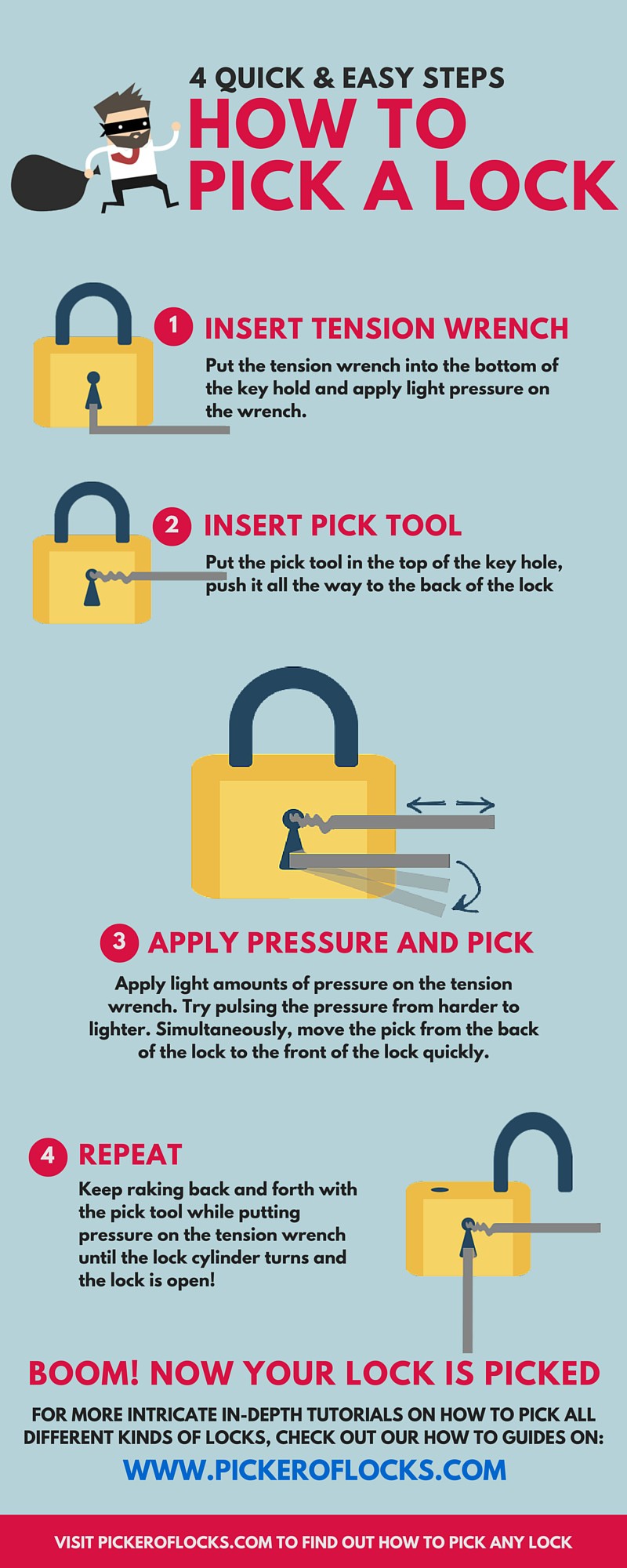
Two bobby pins are needed. Bend one into an L-shape to serve as a tension wrench. Straighten the other with a slight upward bend to serve as the pick.
Step-by-Step Lock Picking
- Insert the L-shaped pin into the bottom of the keyhole.
- Apply light clockwise pressure. Most locks turn clockwise.
- Insert the pick above it and gently rake upward on each pin.
- Feel for clicks. Each click means a pin has set.
- Once all are set, turn the tension pin to unlock.
Some locks turn counterclockwise. Test both directions gently. Beginners may take minutes or fail entirely while experienced lock pickers can open locks in under 10 seconds. This is legal only on locks you own or have permission to access.
Unlock a Privacy Knob With a Nail
Many privacy knobs, especially RB-branded models, have a center hole that releases the latch when a 2.5-inch finishing nail is pushed straight in. This is the fastest method for these specific locks.
How to Do It
- Insert the nail tip-first into the hole.
- Push firmly and straight. No turning is needed.
- The latch should snap open.
Standard paperclips bend under pressure. Use a safety pin, Allen wrench, or finishing nail instead. A small Allen wrench fits perfectly in many models. A teaspoon handle can also work by inserting and pushing.
Use a Screwdriver on Tool-Port Locks
Many people do not realize the hole in the knob is meant for a flat-head screwdriver, not a key. This is an instant fix that saves money.
What to Do
- Insert a small flat-head screwdriver into the hole.
- Turn clockwise or counterclockwise.
- The knob should unlock immediately.
This works on RB, Schlage, and Kwikset privacy knobs with internal cam mechanisms. One user paid $189 to a locksmith only to learn a screwdriver twist would have done it.
Remove the Trim Ring to Access Screws
If pushing or turning does not work, the internal mechanism may be jammed or broken. Your next move is to remove the outer trim ring.
Step-by-Step Trim Removal
- Gently rotate the trim ring counter-clockwise. Many snap off.
- Once removed, two screws will be exposed.
- Remove screws with a screwdriver.
- Pull off the outer knob.
- Use a flat tool to turn the exposed latch mechanism.
Do not pry the trim as it can bend and prevent reassembly. Use this when tool insertion fails, paperclip breaks, or you suspect internal damage.
Hook the Latch With a Coat Hanger
If there is a visible gap between door and frame, you can fish a wire behind the latch using a modified coat hanger.
How to Make and Use the Tool
- Straighten a wire coat hanger.
- Bend a small hook at one end using pliers.
- Optional: Add a 90-degree bend for better control.
- Insert the hooked end at latch height.
- Angle it to catch the end of the bolt.
- Pull or push the latch into the door.
- Turn the knob while maintaining pressure.
This works best on warped wooden doors with slight gaps at the edge and no deadbolt engaged.
Destructive Methods as Last Resort
Use these only if a child or pet is locked inside, there is a medical emergency, or all other methods have failed.
Hammer and Screwdriver Method
- Strike the doorknob sharply with a hammer to break internal parts.
- Insert a flat-head screwdriver into the core.
- Turn to retract the latch.
This damages the knob, door finish, and trim. Replacement is required.
Drill the Lock
- Use a 1/8-inch drill bit.
- Drill into the center of the keyhole.
- Insert a screwdriver to turn the damaged core.
Only use this for life-threatening situations. Always call a locksmith first.
When to Call a Locksmith
Stop attempting DIY methods and call a professional when tools keep bending or breaking, there is no response from hole or latch, there is high resistance when turning, or a deadbolt is engaged.
What to Expect
The average cost is $189. The time is under 10 minutes for interior locks. The result is a door opened without damage. You made the right choice by stopping once tools broke. Continuing could have damaged the latch or door.
Prevent Future Lockouts
Install a Smart Lock
Models like eufy Smart Lock S230 or Netatmo Smart Door Lock offer keypad, fingerprint, app control, and remote unlock features. Always maintain a physical backup key or emergency power terminal.
Use a Key Safe
Mount a key safe outside with a combination lock. Store a spare key securely. Use a non-sequential code, not 1234.
Keep Spare Keys
Give spare keys to trusted neighbors or family. Avoid obvious hiding spots like under mats or above frames.
Use a Door Wedge
Keep interior doors slightly open with a door wedge. This prevents accidental lock-ins. Only use this for interior doors. Never compromise security on exterior doors.
Legal and Safety Warnings
Unlocking a door without a key is legal if you own the property or have permission from the owner. It is illegal if you are entering someone else is home without consent. Unauthorized entry can lead to criminal charges, even with simple tools.
Yes, you can damage the door. Risks include scratched paint, bent trim rings, and broken internal mechanisms. Stop if resistance is high. Calling a professional costs less than repairing damaged doors.
Frequently Asked Questions About Unlocking Doors Without a Key
Is it legal to unlock a door without a key?
Yes, if you have legal access rights to the property. Unlocking someone else is door without permission is illegal and constitutes trespassing.
Which way do you turn a door lock to unlock it?
Most locks turn clockwise to unlock. Some turn counterclockwise. Test gently in both directions. Privacy knobs often require simple insertion and push, not turning.
Can I damage the door or lock?
Yes. Improper force or tools can bend trim rings, break internal springs, and scratch wood or metal surfaces. Stop if resistance is high to avoid permanent damage.
What if the trim ring won’t rotate?
Some require gentle counter-clockwise twist to snap off. Use a thin flat tool to pry at seam lines carefully to avoid bending the trim.
Can I use a bobby pin like a key?
In privacy locks with emergency holes, yes, but only if the pin is stiff enough. Better alternatives include a nail, Allen wrench, or safety pin.
How do I open a jammed combination lock?
Apply lubricant like graphite spray or WD-40 to the shackle and dials. Work the dials back and forth after lubrication to loosen the mechanism.
Key Takeaways for Unlocking Doors Without a Key
Start simple. Try a nail, screwdriver, or credit card first. Identify the lock type before proceeding. Privacy knobs, spring latches, deadbolts, and smart locks each require different approaches.
Avoid force. It leads to damage and higher costs. Call a locksmith if tools break or resistance is high. The average $189 visit is often cheaper than a damaged door.
Prevent lockouts with smart locks, key safes, or spare keys kept with trusted people. The best way to unlock a door without a key is to never need to. Install a keyless entry system, keep spares secure, and teach your household what to do. Prevention beats panic every time.