Arched windows add elegance and architectural charm to any home, but they also present a unique challenge when it comes to window treatments. Unlike standard rectangular windows, most off-the-shelf curtains or blinds won’t fit the curved geometry, leading to gaps, poor coverage, and compromised aesthetics. If you’ve ever struggled with how to cover arched windows effectively, you’re not alone. The right solution balances style, function, and fit.
The key is moving beyond generic options and embracing custom or strategically layered treatments that respect the window’s shape while delivering privacy, light control, and insulation. Whether your arch is a perfect half-circle or an elongated curve, this guide walks you through every proven method, from dramatic drapery to energy-efficient cellular shades. You’ll learn how to measure correctly, choose the best materials, and install with confidence.
Match Your Treatment to the Arch Type
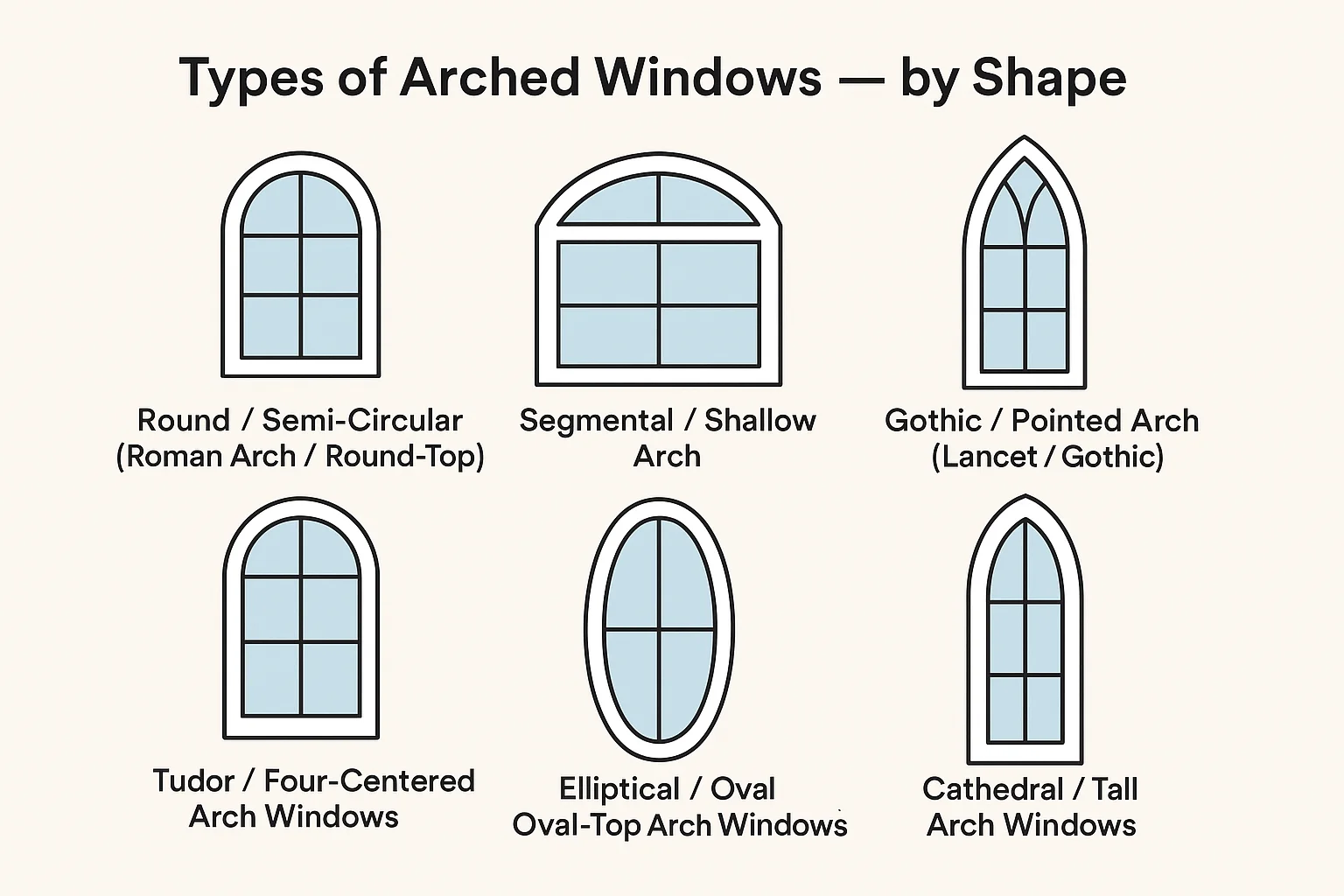
Selecting the ideal window treatment starts with understanding what each option offers in terms of fit, function, and aesthetics. For arched windows, four primary solutions stand out: drapery, cellular shades, Roman shades, and shutters. Each has strengths depending on your space and needs.
Identify Semi-Circle vs. Elongated Arches
Not all arches are the same. Some form true half-circles, while others have stretched or flattened curves. This distinction affects which treatments will work best. A semi-circular arch pairs well with sunburst blinds or curved cellular shades, while elongated arches often require custom drapery or pelmet boards for clean coverage.
Always confirm your arch type before ordering. Misidentifying the shape leads to ill-fitting hardware and visible light gaps. When in doubt, take a photo and consult with a specialist from a custom window treatment provider.
Choose Custom Over Ready-Made
Off-the-shelf window coverings rarely fit arched windows properly. They often leave gaps at the top or sides, fail to follow the curve, or block too much natural light. Custom-made treatments eliminate these issues by being built to your exact dimensions.
While more expensive, custom solutions offer:
– Seamless curvature alignment
– No light leaks
– Tailored fabric or wood selection
– Perfect mounting depth compatibility
Investing in custom ensures your treatment enhances, rather than fights, the architecture.
Install Arched Window Drapery for Drama
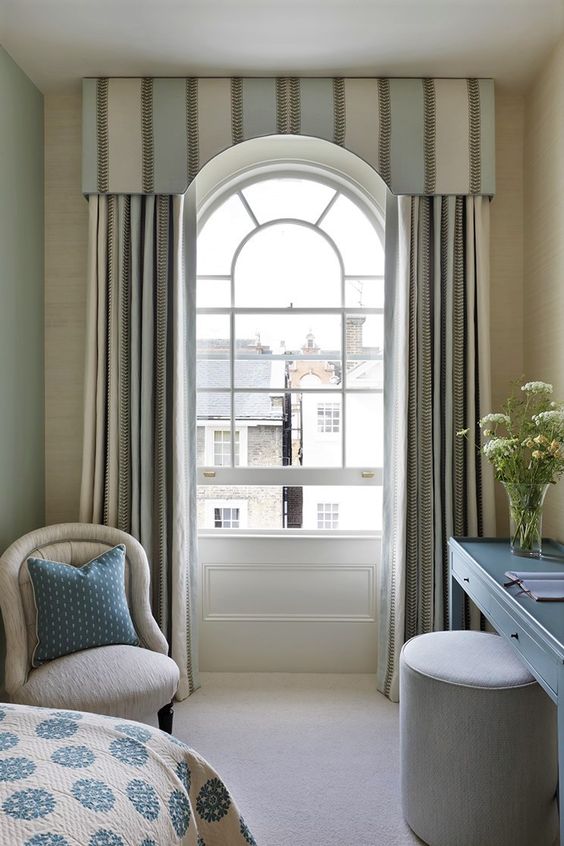
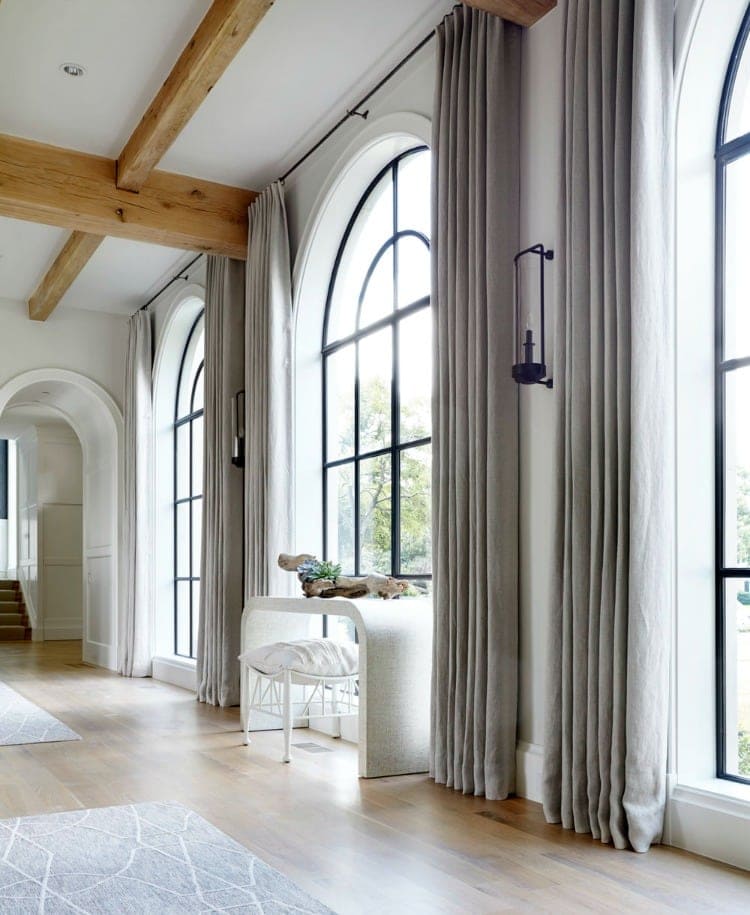
Drapery is the top choice among interior designers for covering arched windows due to its versatility and ability to draw the eye upward. With proper mounting and layering, it transforms the window into a focal point.
Mount Above, Below, or to the Sides
Where you mount the rod determines the visual impact:
– Above the arch: Creates height and allows full coverage. Ideal for dramatic floor-to-ceiling curtains.
– Below the arch: Frames only the lower window, leaving the arch exposed for maximum light.
– To the sides: Flanks the window, showcasing the arch while adding softness.
For full coverage, ceiling-mounted rods provide the cleanest look and avoid wall space constraints.
Use a Shaped Valance or Pelmet Board
A curved valance or pelmet board follows the arch’s shape and hides drapery hardware. This adds polish and structure, especially when using motorized or traversing tracks.
Pelmet boards can be:
– Pre-fabricated in standard curves
– Custom-built to match exact dimensions
– Upholstered to coordinate with curtain fabric
This technique gives a tailored appearance and prevents fabric from bunching at the top.
Layer Sheer and Blackout Panels
Combine functionality and style by layering:
1. Sheer inner panel – Filters daylight and maintains views
2. Blackout outer panel – Ensures privacy and darkness when needed
Use a double rod or stacking system to operate both independently. This setup works especially well in living rooms and bedrooms where light control varies throughout the day.
Fit Cellular Shades for Energy Efficiency
Cellular (honeycomb) shades are the best option for energy efficiency and precise light control. Their insulating air pockets reduce heat loss and gain, making them ideal for rooms with temperature fluctuations.
Select Inside Mount for a Clean Fit
Install cellular shades as an inside mount within the window frame. This eliminates side gaps and keeps the treatment flush with the arch, preserving sightlines and aesthetics.
Ensure your window has enough depth (usually 3/4″ minimum) to accommodate the headrail. If not, consider a flush-mount bracket or switch to an outside mount alternative.
Choose Top-Down/Bottom-Up Operation
This feature allows you to:
– Lower the shade from the top to let in high natural light
– Raise it from the bottom to maintain privacy
– Stop anywhere in between
Perfect for bathrooms, kitchens, or home offices where glare reduction is needed without sacrificing ambiance.
Opt for Custom Curved or Sunburst Design
For full arch coverage:
– Curved cellular shades follow the semi-circle shape exactly
– Sunburst patterns radiate from a central point, emphasizing the arch’s symmetry
These require professional measurement and fabrication but deliver unmatched performance and visual impact.
Apply Roman Shades Below the Arch
Roman shades offer a clean, tailored look that suits modern and traditional interiors alike. While not ideal for full arch coverage, they work beautifully when installed below the curve.
Install at the Base of the Arch
Mount the shade in the rectangular portion beneath the arch. This leaves the curved section open to allow ambient light while providing privacy where it’s needed most.
Best for arched windows above doorways, kitchen sinks, or entryways where lower-level coverage is sufficient.
Use Soft-Fold or Flat-Fold Styles
- Soft-fold: Creates gentle pleats when raised; ideal for lightweight fabrics
- Flat-fold: Lies completely flat; offers a sleek, contemporary finish
Choose based on your décor style and fabric preference.
Coordinate with Side Drapes
Pair Roman shades with side-mounted drapery panels to unify the treatment. The Romans handle light control, while the drapes add softness and symmetry.
Match or contrast colors and textures for a layered, designer look.
Install Arched Window Shutters for Structure
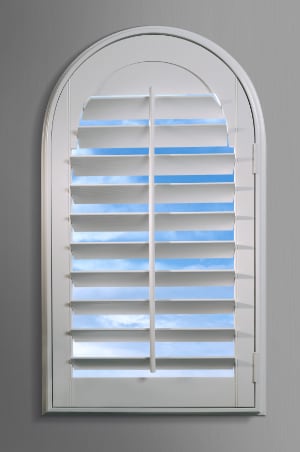
Shutters bring structure, durability, and timeless appeal to arched windows. Made from real wood or composite materials, they’re a long-term investment that boosts curb appeal and home value.
Choose Between Horizontal and Sunburst Designs
- Horizontal rails: Provide classic shutter styling with adjustable louvers
- Sunburst design: Blinds radiate outward from a central hub, highlighting the arch’s shape
Sunburst shutters are particularly effective in formal dining rooms or entryways with grand arches.
Ensure Custom Fit for Full Coverage
Like all arched treatments, shutters must be custom-built. Templates or digital imaging are often used to map the exact curve.
Professional installation is recommended to ensure smooth operation and proper alignment.
Benefit from Cordless, Kid-Safe Operation
Most arched shutters are cordless, making them safe for homes with children or pets. The tilt rod allows easy louver adjustment without dangling cords.
They also resist warping and fading better than fabric options, especially in sunny rooms.
Combine Treatments for Maximum Impact
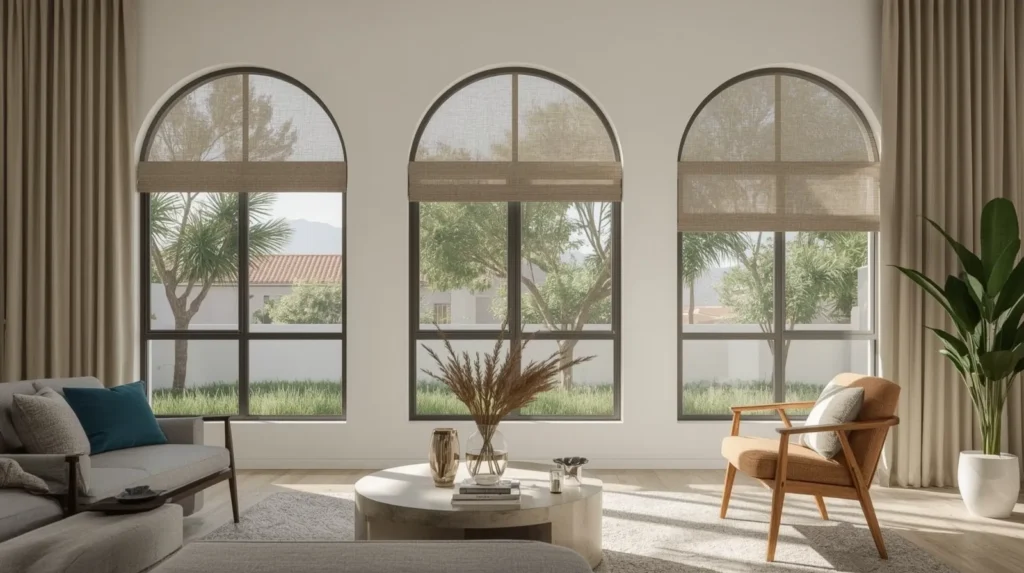
Layering different types of window coverings gives you the best of all worlds: style, privacy, insulation, and flexibility.
Layer Shades with Drapes
A powerful combination:
– Cellular or Roman shade for daytime privacy and insulation
– Floor-length drapes for evening blackout and drama
Use a double curtain rod or ceiling track system to operate both independently.
This setup works exceptionally well in bedrooms and media rooms.
Add a Decorative Valance
Top off layered treatments with a shaped valance that mirrors the arch. It hides hardware and adds a finished look.
Options include:
– Fabric-covered pelmets
– Wooden cornices
– Crown molding extensions
Choose a style that complements your room’s architecture.
Balance Light and Privacy Needs
In living areas, use sheer shades behind opaque drapes. During the day, keep the sheers down for soft light and views. At night, close the drapes for total privacy.
For home offices, top-down/bottom-up shades paired with side panels let you block screen glare while keeping the room bright.
Measure Accurately Before Ordering
Incorrect measurements are the number one reason for failed arched window treatments. Even a small error can result in gaps or misalignment.
Follow Precision Measurement Steps
- Width: Measure the inside of the frame at the widest point (usually the base).
- Height: Measure from the base to the highest point of the arch.
- Depth: Check mounting depth for inside-mount shades or shutters.
- Curve profile: Some companies provide paper templates or digital tools to trace the exact shape.
Always measure twice, and consider having a professional verify.
Account for Mounting Clearance
For drapery:
– Allow at least 6–12 inches above the window for rod and stacking space
– Extend rods 6–10 inches beyond the frame on each side for full pooling or stacking
For shades and shutters:
– Confirm headrail clearance so the shade doesn’t obstruct the curve when raised
Optimize for Room Function
The best treatment depends on how the room is used. Tailor your choice to match daily needs.
Bedrooms: Maximize Darkness
Goal: Total light blockage for restful sleep.
Best options:
– Blackout cellular shades with top-down operation
– Heavy drapes with blackout lining
– Layered system: cellular shade plus floor-length drapes
Mount drapes from ceiling to floor to enhance room height and coverage.
Living Rooms: Enhance Natural Light
Goal: Soften light while preserving views and architecture.
Best options:
– Sheer drapery with a curved valance
– Roman shades in light-filtering fabric
– Sunburst shutters as a statement feature
Use open-weave fabrics to maintain brightness and warmth.
Home Offices: Reduce Glare
Goal: Control screen glare without darkening the room.
Best options:
– Top-down/bottom-up cellular shades
– Adjustable shutters
– Dual shades: light-filtering on bottom, blackout on top
Keep the upper arch open to maintain ambient light.
Windows Above Benches: Save Space
Goal: Avoid curtain swing into seating area.
Best options:
– Inside-mount cellular or Roman shades
– Fixed or operable shutters
– Café curtains on lower section only
Shutters are ideal because they don’t swing and are easy to adjust.
Finalize Material and Style Choices
Once you’ve decided on the type and configuration, select materials that match your décor and performance needs.
Pick Drapery Fabrics Wisely
- Linen or cotton blends: Natural look, medium light filtration
- Silk or velvet: Luxurious drape, excellent light blocking
- Blackout-lined: Essential for bedrooms or media rooms
Avoid stiff fabrics that won’t follow the curve smoothly.
Select Wood or Composite for Shutters
- Basswood: Lightweight, smooth finish, resists warping
- Composite: Moisture-resistant, ideal for kitchens or bathrooms
- Painted finishes: Offer bold contrast; white is timeless
Match the stain or paint to existing trim for cohesion.
Coordinate Colors and Textures
Use the 60-30-10 rule:
– 60% dominant color (walls or main drape)
– 30% secondary (shade or secondary panel)
– 10% accent (valance, tiebacks, or trim)
Mix textures like smooth shades with textured drapes to add depth.
Frequently Asked Questions About Arched Windows
What is the best window treatment for arched windows?
The best treatment depends on your priorities. Drapery offers the most drama and versatility, cellular shades provide the best energy efficiency, Roman shades deliver a tailored luxury look, and shutters offer durability with adjustable light control. For most homeowners, custom cellular shades or layered drapery systems deliver the best balance of function and style.
Can you put regular curtains on an arched window?
Standard curtains can work if mounted above the arch or to the sides, but they won’t follow the curve. This approach leaves the arch exposed and is ideal when you want to showcase the architectural feature. For full coverage of the arch itself, custom treatments are required.
How do you cover an arched window without blocking light?
Use top-down cellular shades, which lower from the top while leaving the bottom open. Alternatively, mount drapery below the arch or use sheer fabrics that filter light without blocking it. Café curtains on the lower portion also preserve upper light entry.
Are arched window treatments expensive?
Custom arched treatments cost more than standard window coverings due to specialized fabrication. Drapery offers the widest price range depending on fabric and hardware. Shutters and curved cellular shades sit at the higher end. However, these treatments add home value through improved curb appeal and energy efficiency.
Can arched windows have blackout shades?
Yes. Custom cellular shades can be made with blackout materials and fitted to follow the arch shape. For maximum darkness in bedrooms, layer blackout cellular shades with heavy drapes for complete light blockage.
How do you measure an arched window for blinds?
Measure the width at the widest point (usually the base), the height from base to the arch’s highest point, and the mounting depth inside the frame. For curved shades, many companies provide paper templates or digital tools to trace the exact curve. Professional measurement is recommended for accuracy.
Key Takeaways for Covering Arched Windows Successfully
Covering arched windows means enhancing their architectural beauty, not hiding it. The three most important steps are: measure precisely and identify your arch type before ordering, choose custom over ready-made to eliminate gaps and ensure proper fit, and layer treatments when you need both light control and style.
Your next step: take clear photos of your arched window, note its dimensions, and request consultation from a custom window treatment specialist. With the right approach, your arched windows will become the standout features they were meant to be.