A broken window, whether at home or in your car, can leave you exposed to weather, intruders, and serious safety hazards. The immediate priority is securing the area to prevent injury and limit further damage. Learning how to tape a broken window correctly gives you a fast, temporary fix that holds until professional repair arrives.
This guide walks you through every step, from assessing damage and choosing the right tape to applying secure seals for both residential and automotive windows. You’ll also learn which mistakes to avoid and when to call a professional.
Essential Safety Precautions Before Taping
Broken glass can cause deep cuts, eye injuries, and embed tiny shards into skin. Protect yourself before touching anything.
Wear Protective Gear
Always put on:
– Thick work gloves (cut-resistant if available)
– Safety glasses to shield your eyes
– Closed-toe shoes to protect your feet
Never handle broken glass with bare hands or bare feet.
Clear and Clean the Area
Start with a visual inspection to determine if the glass is cracked but intact, partially shattered, or fully missing. If the glass moves when gently pressed with gloves on, it is unstable and needs immediate reinforcement or removal.
Remove large shards carefully and place them in a sturdy paper bag or cardboard box. Label it “Broken Glass” before disposal. Use a hammer to gently dislodge stubborn pieces stuck in the frame.
After removing big fragments, vacuum thoroughly. In cars, focus on seats, carpets, and headrests. At home, vacuum window tracks and nearby floors. Even tiny granules can cut skin or damage surfaces later. Sweep exterior areas first, then mop or wet-dry vacuum indoors.
Choose the Right Tape for the Job
Using the wrong tape can damage surfaces, fail under pressure, or leave sticky residue. Match the tape to your specific situation.
Best Tapes by Application
| Situation | Recommended Tape | Why It Works |
|---|---|---|
| Car window frame (exterior) | Paint-grade masking tape | Sticks to rubber/metal, removes cleanly, won’t damage paint |
| Home window frames (wood/metal) | Duct tape | Strong hold, weather-resistant, durable |
| Cracked glass (holding pieces) | Clear packing tape | Transparent, builds strong lattice, easy to layer |
| Temporary seal on plastic cover | Masking tape | Easy to remove, good for short-term use |
| Emergency outdoor fix | Crash wrap (adhesive film) | Clings like plastic wrap, maintains visibility |
Avoid duct tape on car paint. It pulls off clear coats and leaves residue that is hard to clean. For maximum visibility while driving, use clear packing tape in a grid pattern on side windows.
Tape a Cracked Window With Glass Still Intact

When the glass is cracked but still in place, taping helps prevent full shattering and buys you time.
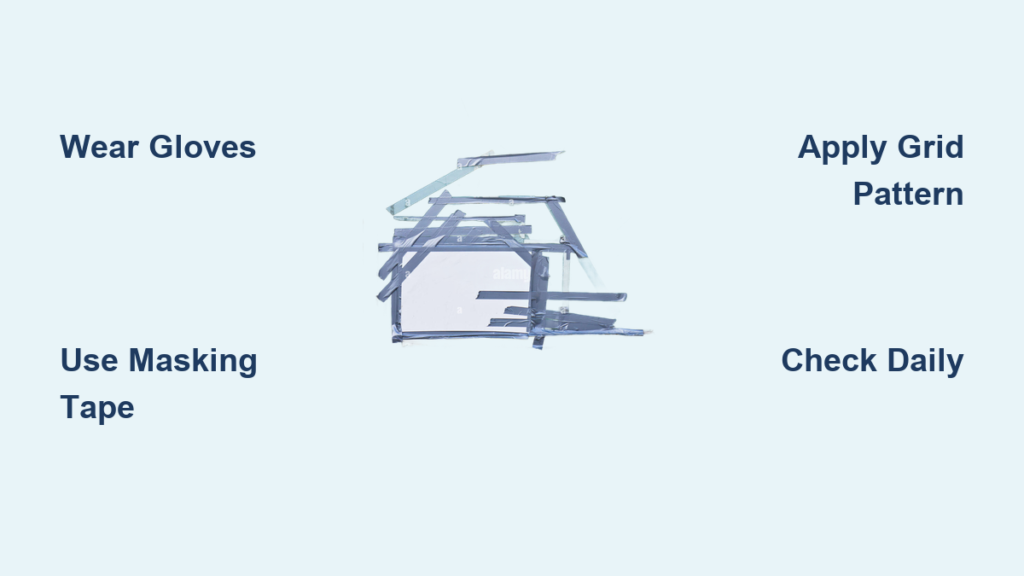
Apply a Reinforcing Grid
- Put on gloves and safety glasses.
- Clean both sides of the glass with a damp cloth to improve adhesion.
- Starting on one side, apply vertical strips of clear packing tape across the crack.
- Overlap with horizontal strips to create a crosshatch (lattice) pattern.
- Repeat on the opposite side if accessible.
This grid holds fragments together and reduces the chance of sudden collapse.
Pro Tip: For large cracks or spiderweb patterns, reinforce with cardboard taped over both sides. This adds rigidity and prevents wind pressure from pushing the glass inward.
Check the tape daily. Reapply if edges peel or cracks spread.
Cover a Missing or Shattered Home Window
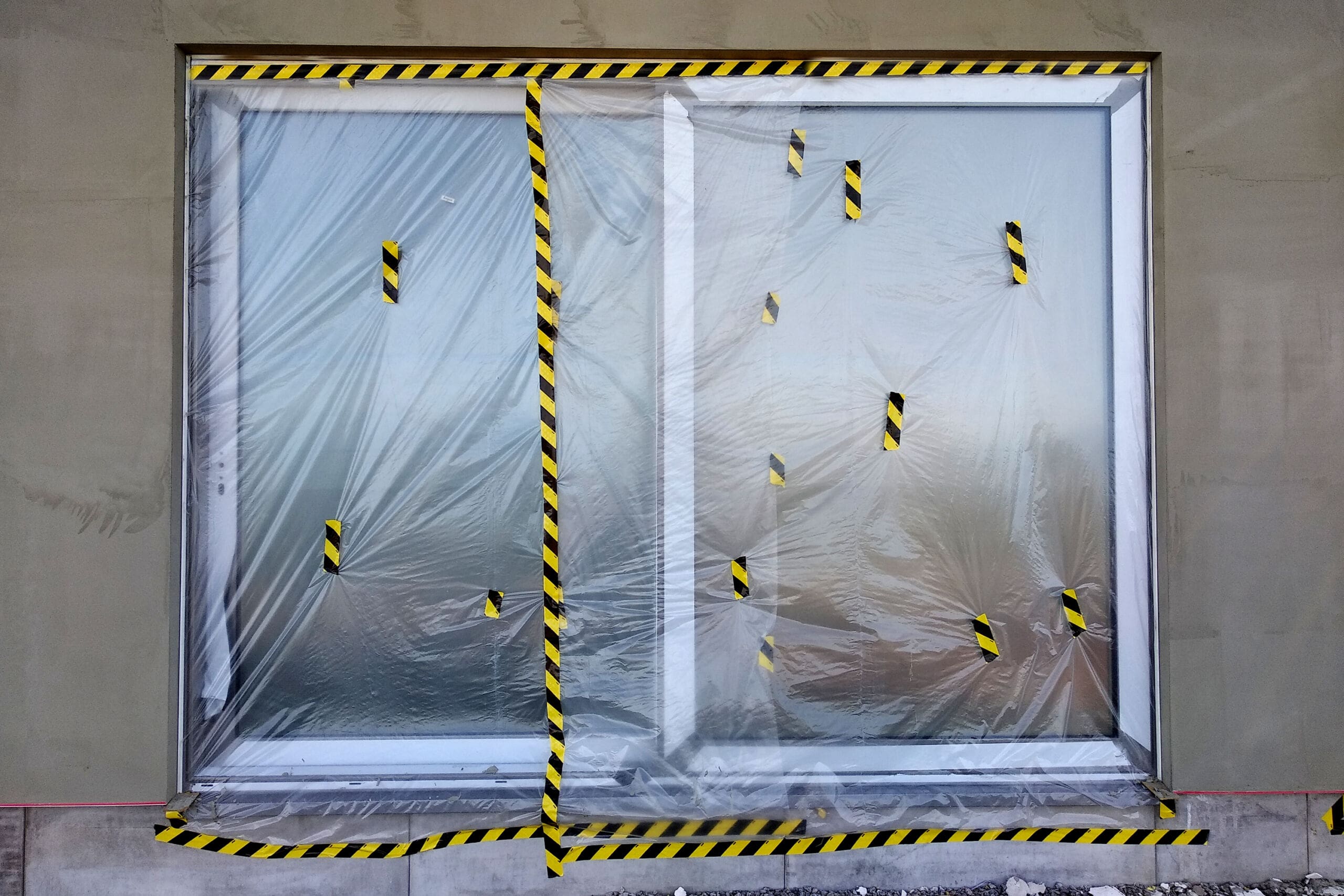
If the glass is gone or too damaged to save, cover the opening to block weather, pests, and intruders.
Use Plastic Sheeting for Short-Term Fixes
- Measure the window frame.
- Cut heavy-duty plastic sheeting (or a high-density trash bag) 2 to 3 inches larger than the frame.
- Place the plastic over the opening from the inside.
- Tape one edge securely with duct tape.
- Pull the plastic taut and tape the remaining three sides.
- Seal all edges with a second layer of tape.
This creates an airtight barrier that reduces drafts and noise.
Warning: Do not rely on kitchen trash bags. They tear easily in wind or rain.
Install Plywood for Maximum Security

For long-term safety or storm protection, plywood is the best solution.
- Measure the window frame precisely.
- Cut plywood to fit snugly.
- Position it over the opening from the outside.
- Secure with screws or nails every 6 to 8 inches around the perimeter.
- Seal edges with duct tape to prevent water seepage.
Optional: Cover the plywood with plastic sheeting for added waterproofing. Plywood blocks light but provides strength and deters break-ins.
Fix a Broken Car Window Temporarily
Driving with a broken window is risky and may be illegal. Use these fixes only to get to a repair shop safely.
Protect the Frame Before Taping
Car paint is easily damaged by adhesives.
- Remove all glass from the interior and track.
- Vacuum seats, floor, and headrests.
- Wipe the window frame and rubber seal with a microfiber cloth.
- Apply paint-grade masking tape around the entire metal edge.
This creates a safe surface for adhesives without harming your vehicle’s finish.
Create a Clear Tape Lattice for Side Windows

This method works best for driver or passenger windows where visibility matters.
- From inside the car, run vertical strips of clear packing tape top to bottom.
- Add horizontal strips to form a grid.
- Repeat the same lattice pattern on the outside.
This double-layer lattice holds loose fragments and allows you to see through the window.
Expert Note: Avoid driving at high speeds. Wind pressure can weaken the seal over time.
Use Crash Wrap for Rear or Windshield Damage
Crash wrap is ideal for large breaks where taping isn’t practical.
- Buy crash wrap from an auto parts store.
- Cut a piece slightly larger than the opening.
- Press the adhesive side onto the cleaned frame.
- Smooth out air bubbles for a tight seal.
Critical: Do not drive with a damaged windshield, even if covered. Structural integrity is compromised, and this is a tow-only situation.
Emergency Option: Trash Bag Method
Only use this if the car isn’t being driven.
- Use a high-density resin garbage bag (not kitchen-grade).
- Cut to size, leaving half an inch extra on all sides.
- Stretch over the opening from the inside.
- Tape edges to the masking tape on the frame.
- Add a second layer outside if possible.
Seal seams with additional tape, using duct tape only on rubber or plastic, never on painted surfaces.
Test and Maintain Your Temporary Fix
A temporary fix only works if it stays sealed.
Check for Weak Points
Inspect every few hours if driving, or once daily if parked:
– Are tape edges lifting?
– Is water pooling behind the plastic?
– Can wind make the cover flap?
Re-tape any loose areas after drying the surface completely.
Re-Tape Properly
- Peel off old tape carefully.
- Wipe the area clean and dry.
- Apply fresh tape with firm pressure.
For cars, peel tape at a 45-degree angle to avoid pulling paint. Use automotive adhesive remover for stubborn residue, testing on a small hidden area first.
Know the Limits: When to Call a Professional
Taping a broken window is not a permanent solution.
Maximum Time Limits
- Ideal repair window: Within 1 to 2 days
- Absolute maximum: Do not exceed 7 days
Beyond this, risks increase significantly.
Risks of Delaying Permanent Repair
Leaving a taped window too long leads to:
Water Damage and Mold
Moisture enters through small gaps, soaking carpets and insulation. This breeds mold and can short-circuit door electronics or dashboard components.
Security Threats
Plastic and tape offer zero protection against intruders. Vehicles with visible window damage are common theft targets. Remove valuables, lock doors, and use a steering wheel lock if you must leave the car unattended.
Legal and Safety Issues
Obstructed vision from opaque covers can result in traffic citations. Windshields contribute to roof strength in rollovers, so driving with a broken windshield is unsafe and often illegal.
Compare Materials: What Works Best
Residential: Plastic vs. Plywood
| Feature | Plastic Sheeting | Plywood |
|---|---|---|
| Installation | Fast, no tools | Requires screws, drill |
| Security | None | High |
| Weather Resistance | Moderate | Excellent |
| Insulation | Poor | Good |
| Light Transmission | Yes | No |
Use plastic for quick fixes and plywood for security and durability.
Automotive: Duct Tape vs. Masking Tape
| Feature | Duct Tape | Paint-Grade Masking Tape |
|---|---|---|
| Adhesion | Very strong | Moderate |
| Water Resistance | High | Medium |
| Paint Safety | Damages clear coat | Safe, residue-free |
| Longevity | Holds well but ruins finish | Best for short-term |
Never use duct tape on car paint. Use masking tape as a protective liner instead.
Final Steps After Professional Repair
Once the window is professionally repaired:
– Carefully peel off all tape.
– Clean residue with appropriate remover.
– Inform the technician about what materials were used, since some adhesives affect new sealants.
Schedule replacement immediately. Many glass services offer mobile repairs, so you don’t have to drive the damaged vehicle.
Frequently Asked Questions About Taping a Broken Window
What tape works best for a broken car window?
Paint-grade masking tape is the safest choice for car frames because it removes cleanly without damaging paint. For holding cracked glass together, clear packing tape creates a strong transparent lattice that maintains visibility.
How long can a taped window last?
Temporary fixes should not remain in place longer than one week. The ideal repair window is 1 to 2 days. UV exposure, wind, and temperature changes weaken tape and plastic quickly.
Can I use duct tape on my car window?
No. Duct tape damages car paint and clear coats, leaving sticky residue that is difficult to remove. Use paint-grade masking tape on the frame and clear packing tape for the glass itself.
Is it legal to drive with a taped window?
It depends on visibility and location. Side windows covered with clear tape lattices are generally acceptable for short trips. However, driving with a broken windshield is unsafe and often illegal because it compromises structural integrity during rollovers.
What should I do if glass is still stuck in the frame?
Wear thick gloves and use a hammer to gently tap dislodged shards. Apply firm but controlled pressure to avoid shattering the glass into finer particles. Vacuum thoroughly afterward to remove tiny granules.
How do I remove tape residue from my car?
Peel tape slowly at a 45-degree angle. If residue remains, use an automotive adhesive remover or mild solvent. Always test on a small hidden area first to avoid paint damage.
Key Takeaways for Taping a Broken Window
Taping a broken window is a smart, short-term response to an emergency. Wear protective gear, choose the right materials for your situation, and apply secure seals using the methods outlined above. For home windows, use plastic sheeting for quick fixes and plywood for security. For car windows, always protect the paint with masking tape and use clear packing tape for visibility.
Remember that tape is a bridge, not a solution. Schedule professional replacement within a few days to restore full safety and functionality. Act quickly, stay safe, and prioritize permanent repair.