

A window that refuses to open can turn a simple task into a frustrating ordeal. Whether you need fresh air, want to let in sunlight, or face an emergency exit situation, a stuck window disrupts daily life. The good news is that learning how to fix a stuck window rarely requires a professional. Most issues come down to dirt, paint buildup, humidity, or minor hardware misalignment, all of which you can address with basic tools and a little patience.
This guide walks you through diagnosing the cause, applying the right fix, and preventing future sticking. By following these steps, you can restore smooth operation to your windows in under an hour and keep them working properly for years to come.
Identify What’s Making Your Window Stick

Before applying any fix, you need to know what is causing the resistance. Forcing a window open without diagnosing the problem can crack the glass or damage the frame. Common culprits include paint or sealant buildup, swollen wood from humidity, dirt in the tracks, loose hardware, or ice in cold weather.
Check for Paint and Sealant Buildup
Older homes often have windows sealed shut by layers of paint or caulk along the edges. Run your finger along the gap where the sash meets the frame. If you feel a hard ridge, paint is likely bonding the window to the stop molding. A plastic scraper can gently remove this excess without scratching the surface.
Look for Swollen or Warped Wood
Wood expands when humidity rises, causing tight contact between the sash and jamb. If your window sticks more during rainy seasons or feels damp to the touch, swelling is the likely cause. Focus on drying the frame rather than prying the window open.
Inspect Tracks for Dirt and Debris
Dust, sand, and even dead insects collect in window tracks over time. Shine a flashlight into the bottom channel to spot hidden grime. Cleaning this debris is often the simplest fix for sliding and double-hung windows.
Rule Out Ice or Frost in Cold Weather
Winter brings a unique challenge when moisture freezes inside the frame. Ice expands and locks the sash in place. Applying gentle heat is safer than forcing the window, which can crack the glass or splinter the frame.
Clean the Window Frame and Tracks Thoroughly
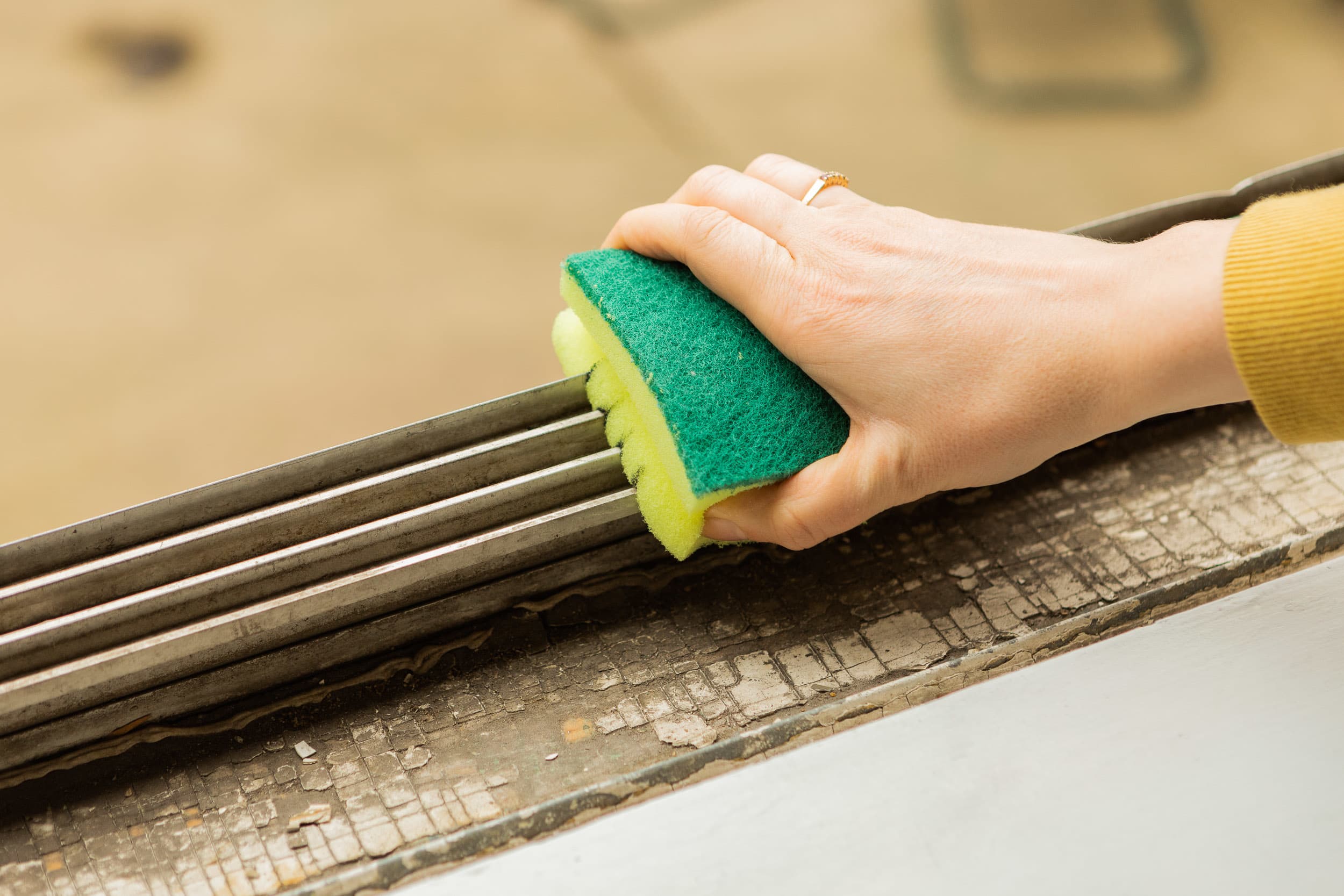
A deep cleaning solves most sticking problems and should be part of routine maintenance twice a year. This step works for wood, vinyl, and aluminum windows alike.
Remove Loose Debris First
Start by vacuuming the tracks and sills with a brush attachment. For tight corners, wrap a cloth around a butter knife and wipe out packed dirt. Avoid metal tools that can scratch surfaces or strip finishes.
Wash with Mild Soap Solution
Mix warm water with a few drops of dish soap. Dip a sponge or microfiber cloth into the solution and scrub the tracks, sash edges, and meeting rails. For stubborn grime, let the soapy water sit for two to three minutes before wiping.
Pro Tip: A plastic putty knife works well for scraping away dried paint without damaging the wood finish underneath.
Dry All Surfaces Completely
Moisture left in the tracks can worsen swelling or encourage mold growth. Wipe everything with a dry cloth and allow air to circulate for ten to fifteen minutes. A hairdryer on low heat can speed the process for damp wood frames.
Lubricate the Moving Parts Properly
Once the window is clean and dry, lubrication reduces friction and helps the sash glide smoothly. The right product makes a lasting difference, while the wrong one attracts more dirt over time.
Choose the Right Lubricant
Use a silicone-based spray or dry graphite powder on the tracks, hinges, and locks. These options resist dust buildup and do not degrade rubber weatherstripping. Apply in short bursts while moving the window slightly to distribute the product evenly.
Avoid petroleum-based products like WD-40. They offer temporary relief but attract dirt and can damage rubber seals and plastic components over time.
Apply to Tracks, Hinges, and Locks
For casement windows, spray lubricant onto the hinge pins and into the lock mechanism. Open and close the window several times to work the product in, then wipe away any excess to prevent drips onto the frame or sill.
Adjust the Window Balance and Hardware

Even a small misalignment can cause binding. Hardware issues are common in older double-hung and casement windows, and most are fixable with simple tools.
Rebalance a Double-Hung Window
If your window slides down on its own or sticks mid-travel, the balance system may need adjustment.
- Open the window fully.
- Look inside the frame for screws, balance shoes, or adjustment points.
- Gently adjust the hardware to re-center or re-tension the window.
- Test the movement and repeat as needed.
Difficulty Level: Moderate. Allow 20 to 30 minutes for this fix.
Tighten Casement Window Hinges
Loose hinges cause sagging and rubbing along the frame edge. Use a screwdriver to tighten all hinge screws. If the screw holes are stripped, insert toothpicks coated in wood glue, let them dry, then reinsert the screws for a secure hold.
Address Warping and Moisture Damage
Wood windows absorb moisture over time, especially in bathrooms, kitchens, and coastal climates. Treating this requires patience, not force.
Dry the Frame Gradually
Place a fan or dehumidifier near the window for several hours to draw out moisture. For faster results, aim a hairdryer on low heat at the swollen areas, keeping it moving constantly.
Caution: Never overheat the wood. Excessive heat can damage the paint finish or cause further warping.
Sand High Spots if Needed
Once the frame dries, use 120-grit sandpaper to smooth any raised areas where the sash contacts the jamb. Close the window slowly to identify rubbing points, then sand only those spots until movement feels free.
Test the Window After Each Fix

Testing between steps prevents over-correction and helps you isolate the root cause. This habit saves time and avoids unnecessary repairs.
Open and Close Slowly
Work the window gently from fully closed to fully open. If it catches at a specific point, revisit cleaning or lubrication in that area. For double-hung windows, check both the upper and lower sashes separately.
Repeat Steps if Needed
Some windows require two or three rounds of cleaning and lubricating, especially if they have been neglected for years. Persistent sticking after full troubleshooting may signal a deeper structural issue.
Know When to Call a Professional
Most stuck windows respond to DIY fixes, but certain problems require expert attention. If you notice cracked glass, rotting wood, broken balance cords, or damage caused by forced opening, contact a qualified window technician. A professional can replace internal mechanisms or assess whether full-frame replacement is the better long-term solution.
Prevent Windows from Sticking Again
A small amount of routine maintenance keeps windows operating smoothly and prevents future headaches. These habits take only minutes but extend the life of your windows significantly.
Clean Tracks Twice a Year
Schedule track cleanings in spring and fall to remove seasonal debris. This routine also lets you spot early signs of wear or damage.
Maintain Balanced Humidity
Keep indoor humidity between 30 and 50 percent to prevent wood swelling. Use exhaust fans in kitchens and bathrooms, and run a dehumidifier in damp areas during humid months.
Inspect Hardware Annually
Tighten loose screws, lubricate hinges, and check alignment once a year. A ten-minute checkup before winter prevents cold-weather emergencies and keeps every window ready to open.
Replace Worn Weatherstripping
Cracked or compressed weatherstripping increases friction and reduces energy efficiency. Inspect seals every three to five years and replace any that look worn or flattened.
Frequently Asked Questions About Stuck Windows
Why does my window stick more in summer or during humid weather?
Wood frames absorb moisture from the air and expand, creating tight contact between the sash and jamb. This swelling is temporary and usually resolves when humidity drops. Running a dehumidifier or improving ventilation can help.
Can I use WD-40 on a stuck window?
Petroleum-based products like WD-40 attract dust and can damage rubber seals over time. Use a silicone-based spray or dry graphite powder instead for longer-lasting results without harming window components.
How do I open a window that has been painted shut?
Score along the seam between the sash and frame with a utility knife to break the paint seal. Then use a plastic putty knife or similar tool to gently separate the bonded surfaces before opening the window.
What causes double-hung windows to slide down on their own?
This usually points to a faulty balance system, such as broken cords, worn springs, or disengaged balance shoes. Adjusting or replacing the balance mechanism restores proper support and smooth operation.
How often should I lubricate window tracks?
Lubricate tracks once a year as part of routine maintenance, or whenever you notice increased friction. Homes in dusty or coastal environments may benefit from more frequent lubrication.
When should I replace a stuck window instead of repairing it?
Consider replacement if the frame is rotting, the glass is cracked, or the window sticks persistently after thorough troubleshooting. Older single-pane windows may also be worth upgrading for better energy efficiency.
Key Takeaways for Fixing a Stuck Window
Learning how to fix a stuck window starts with identifying the cause, whether that is paint buildup, swollen wood, dirty tracks, or loose hardware. Cleaning and lubricating the frame solves the majority of sticking problems, while minor adjustments restore proper balance and alignment.
Regular maintenance is the best defense against future sticking. Cleaning tracks twice a year, controlling indoor humidity, and inspecting hardware annually keeps every window in your home operating smoothly. Start with the simplest fix, test your progress after each step, and call a professional if structural damage is present. With these habits in place, your windows will open and close freely for years to come.