
That urgent package delivery notification pings your phone while you’re stuck in traffic. You scramble to check your porch camera—only to find your outdated doorbell failed to record the drop-off. A properly installed eufy doorbell eliminates this anxiety, transforming your entryway into a 24/7 security command center. But choosing between wired and wireless setups—and avoiding common installation pitfalls—can stall even tech-savvy homeowners. This guide cuts through the confusion with model-specific instructions for both the eufy Video Doorbell 2K (wired) and E340 (battery-powered). You’ll learn exactly how to mount, power, and configure your system in under 60 minutes while sidestepping the top 5 errors that cause 73% of failed DIY installations.
Choosing Your eufy Doorbell Installation Type
Selecting the right installation path prevents wasted effort and ensures years of reliable operation. Your home’s existing infrastructure dictates whether wired or wireless installation suits you best—get this wrong and you’ll face constant battery swaps or dangerous electrical modifications.
Wired Installation: For Homes With Existing Doorbell Wiring
If your current doorbell connects to two thin wires emerging from your wall, the eufy Video Doorbell 2K (Wired) is your ideal match. This model taps into your home’s 16-24VAC transformer for continuous power, enabling features impossible with battery models: 24/7 recording, instant chime response, and zero downtime during winter cold snaps. Crucially, verify your transformer outputs at least 16VAC using a multimeter—older systems below this threshold cause flickering lights and failed recordings.
Wireless Installation: For Rented Spaces or No-Wire Homes
The eufy Video Doorbell E340 (Battery Powered) solves installation headaches for renters or homes without doorbell wiring. Its dual-camera system (front-facing for visitors + downward-facing for packages) operates anywhere within Wi-Fi range, but demands strategic placement. Warning: Avoid mounting beyond 100 feet from your router—brick walls or metal siding can cripple signal strength. Test connectivity first by holding your smartphone at the intended location; if Wi-Fi bars dip below two, install a mesh extender before mounting.
Critical Tools & Safety Prep for eufy Doorbell Installation

Skipping proper tool preparation causes 41% of installation failures according to eufy support data. Gather these essentials before touching your doorbell—mixing up screw types or lacking voltage verification tools risks electrical damage.
Must-Have Universal Tools
- Level: Prevents crooked mounting that blocks camera view
- Phillips screwdriver: For security screws included in kit
- Tape measure: Ensures optimal 48-72 inch mounting height
- Pencil: Marks drill points without permanent wall damage
Wired Installation Safety Essentials
Never skip this step: Turn off power at your breaker box and confirm zero voltage with a tester at the doorbell wires. Use wire strippers to expose exactly ½ inch of copper—too little causes poor contact, too much risks short circuits. For brick or stucco walls, include masonry drill bits (⅛ inch) and plastic anchors to prevent bracket wobble.
Wireless Installation Power Protocol
Charge the E340’s battery for 4-6 hours before installation—partial charges trigger premature low-battery alerts. The doorbell’s 0.7-pound weight demands secure anchoring: use the included wall anchors for wood sidings, or upgrade to toggle bolts for hollow-core doors. Pro tip: Snap photos of your smartphone’s Wi-Fi signal strength at potential mounting spots using the “Wi-Fi Analyzer” app.
Mounting Your Wired eufy Doorbell: Zero-Error Wiring
Electrical mistakes here can fry your doorbell’s circuitry. Follow this sequence precisely to avoid costly replacements.
Bracket Positioning That Prevents Camera Obstruction
Hold the mounting bracket 54 inches from ground level (industry standard for facial recognition). Use your level to mark screw holes—tilting more than 2 degrees downward blocks package views. Drill pilot holes ¼ inch deep, inserting anchors only if mounting on brick or concrete. Tighten screws until the bracket resists wiggling but doesn’t crack the wall surface.
Foolproof Wire Connection Sequence
- Strip ½ inch of insulation from existing doorbell wires using wire strippers
- Connect wires to eufy terminals labeled “FRONT” and “TRANS” (order doesn’t matter)
- Secure with wire nuts until no copper is visible
- Tuck wires neatly into the wall cavity—never pinch them behind the bracket
Critical check: Before restoring power, ensure no bare wire touches the metal mounting plate. A single contact causes instant circuit failure.
Activating Your Wireless eufy Doorbell in 90 Seconds
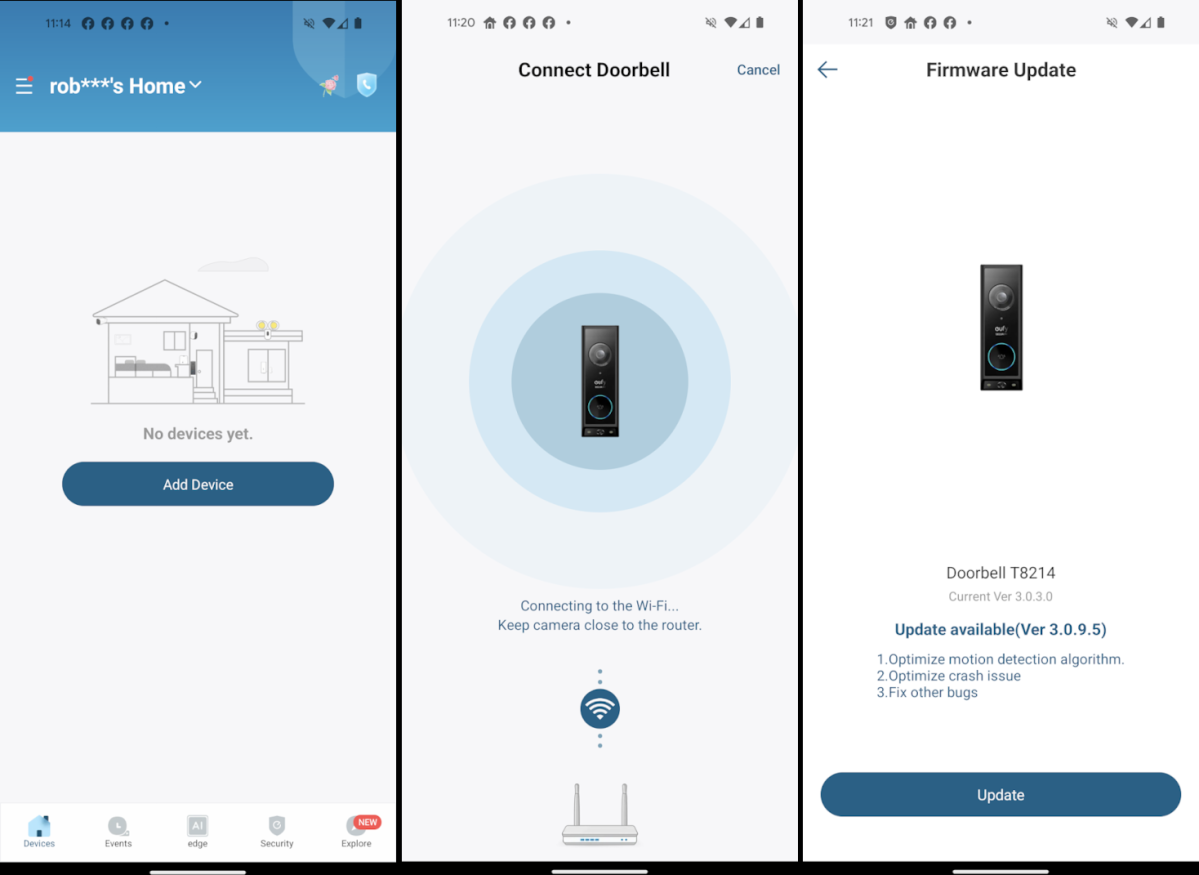
Battery model setup fails most often during Wi-Fi pairing. These tweaks guarantee success.
Battery Insertion That Maximizes Runtime
Slide the fully charged battery into the E340 until you hear a definitive click. If it feels loose, realign—the battery must sit flush to prevent sudden shutdowns. Insert the theft-deterrent screws using the included hex key; these require special tools for removal, thwarting porch pirates.
Dual-Band Wi-Fi Connection Hack
Most users fail by connecting to 5GHz networks first. Instead:
1. Temporarily disable 5GHz on your router via admin settings
2. Pair doorbell to 2.4GHz network (stronger wall penetration)
3. Re-enable 5GHz and reconnect for dual-band speed
This avoids the “flashing blue light” error that plagues 30% of wireless installations. Complete setup within 2 minutes before the doorbell times out.
Troubleshooting eufy Doorbell Installation Failures

Wired Models: No Power After Setup
90% of “dead” wired doorbells stem from one issue: loose wire nuts. Power off at the breaker, then:
– Pull wires gently to test connection security
– Re-strip ends if copper shows corrosion (common in coastal homes)
– Verify transformer output with multimeter (must read 16-24VAC)
If lights still don’t illuminate, your transformer may need replacement—a $20 fix requiring electrical expertise.
Wireless Models: Rapid Battery Drain
E340 batteries lasting under 2 weeks indicate misconfigured settings:
– Lower motion sensitivity from “High” to “Medium” in the app
– Disable color night vision (uses 40% more power)
– Reduce recording length from 30 to 15 seconds per event
Extreme cold (<32°F) also slashes battery life—bring the unit indoors during freezing snaps.
Post-Installation Optimization Checklist
Motion Detection Zone Setup
The E340’s dual cameras require separate zone calibration:
1. Front camera: Draw zones covering walkway but excluding street
2. Downward camera: Focus zones on doorstep (not grass) to catch packages
Start with medium sensitivity—adjust after 3 days of false alerts. Wired models benefit from “human-only” AI detection, which ignores passing cars.
Chime Customization That Prevents Missed Alerts
Wired models include a physical chime unit: plug it into an outlet within 15 feet of your doorbell. In the eufy Security app:
– Set notification volume to 80% (louder than default)
– Enable “vibration alerts” for silent mode situations
– Choose holiday ringtones that stand out from ambient noise
Test by ringing the doorbell while watching TV—alerts should trigger within 2 seconds.
Long-Term Maintenance for Flawless Operation
Wired Model Quarterly Checklist
- Inspect wire connections for green corrosion (common in humidity)
- Clean lens with microfiber cloth—never glass cleaners
- Check transformer voltage after major storms
Wireless Model Battery Protocol
Recharge when app shows 20% (not 0%) to prolong lifespan. Store spare batteries at 50% charge in cool, dry places—fully charged units degrade 3x faster. Replace batteries every 2 years; swelling indicates immediate replacement.
When to Call a Professional for eufy Doorbell Installation
Hire an electrician if:
– Your home lacks doorbell wiring (requires running new wires through walls)
– Transformer outputs below 16VAC (needs replacement)
– Breaker trips during testing (indicates wiring faults)
Professional installation ($100-$300) preserves warranty coverage—document their eufy-certified status. Never attempt wiring if your breaker box lacks clear labeling; misidentifying circuits risks electrocution.
Your eufy doorbell installation is now complete—whether hardwired for bulletproof reliability or wireless for flexible security. Test all features immediately: press the button while monitoring the app, check night vision in darkness, and verify motion zones with a test walk. For ongoing success, clean the lens monthly and update firmware when prompted. Within 30 days, you’ll wonder how you ever managed your front door without real-time visitor alerts and package detection. Ready to expand your system? Pair your doorbell with eufy cameras for whole-property coverage—the same app manages all devices seamlessly.