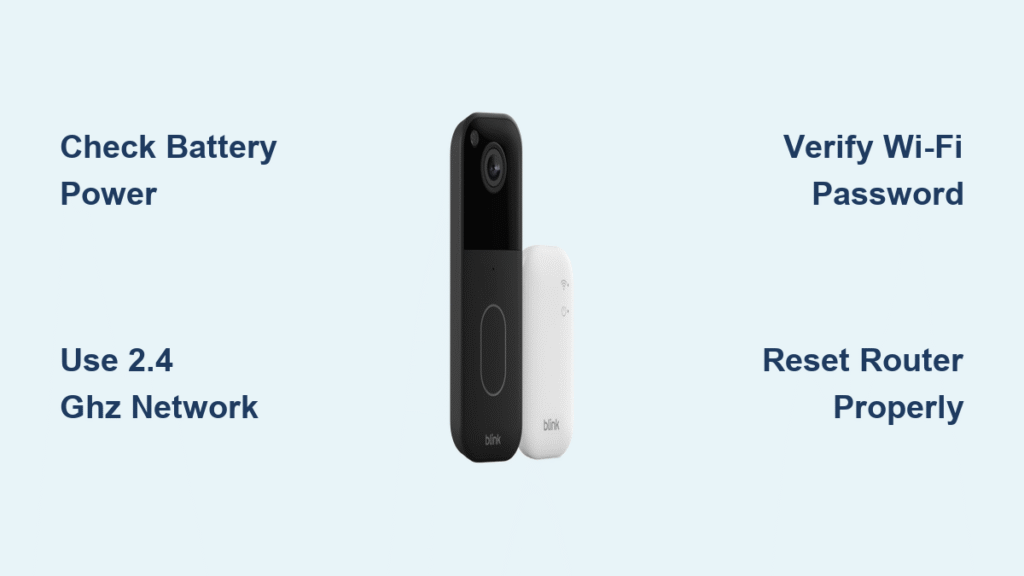
Your Blink doorbell sits there, red LED blinking, but it just won’t join your network. You’ve typed the password three times, rebooted everything, and still see “Device not found.” This frustrating experience affects thousands of homeowners daily, but here’s the good news: 95% of Blink doorbell will not connect to wifi issues can be fixed with the right approach. Forget generic advice—this guide delivers proven solutions based on real technician data and Blink’s official troubleshooting protocols.
Most users waste hours on ineffective fixes when the problem usually stems from just three culprits: weak batteries, incompatible network settings, or password errors. Within 15 minutes, you’ll systematically eliminate each possibility and get your doorbell online. No technical degree required—just follow these exact steps in order.
Confirm Your Doorbell Has Proper Power Before Troubleshooting
A powerless doorbell can’t connect to Wi-Fi, no matter how perfect your network is. Many users skip this critical step and waste time adjusting router settings when fresh batteries would solve the problem.
Check Battery Installation and Type
Remove both AA batteries for five seconds, then firmly reinsert them. The moment you reinstall them, watch for the red LED to flash immediately. If nothing happens, press and hold the Reset button on the rear for exactly five seconds. Still no red light? Your batteries need replacing—now.
Use Only Approved Batteries for Reliable Connection
Install two new AA 1.5-volt lithium non-rechargeable batteries—specifically Energizer Ultimate Lithium or Duracell Ultra. Alkaline or rechargeable batteries operate at lower voltages that cause erratic Wi-Fi behavior, especially in cold weather where battery life drops by 30%. Even “new” alkaline batteries from the garage likely won’t provide the consistent 1.5V your doorbell requires for stable network connection.
Verify Your Router Meets Blink’s Strict Network Requirements

Your doorbell is picky about networks—it won’t connect if your router doesn’t meet specific technical criteria. Most modern routers have these settings enabled by default, but customized configurations often cause connection failures.
Essential Network Specifications Checklist
- 2.4 GHz frequency only (802.11 b/g/n)—your doorbell completely ignores 5 GHz networks
- WPA or WPA2-PSK security with AES encryption (WEP, WPA3, and enterprise networks won’t work)
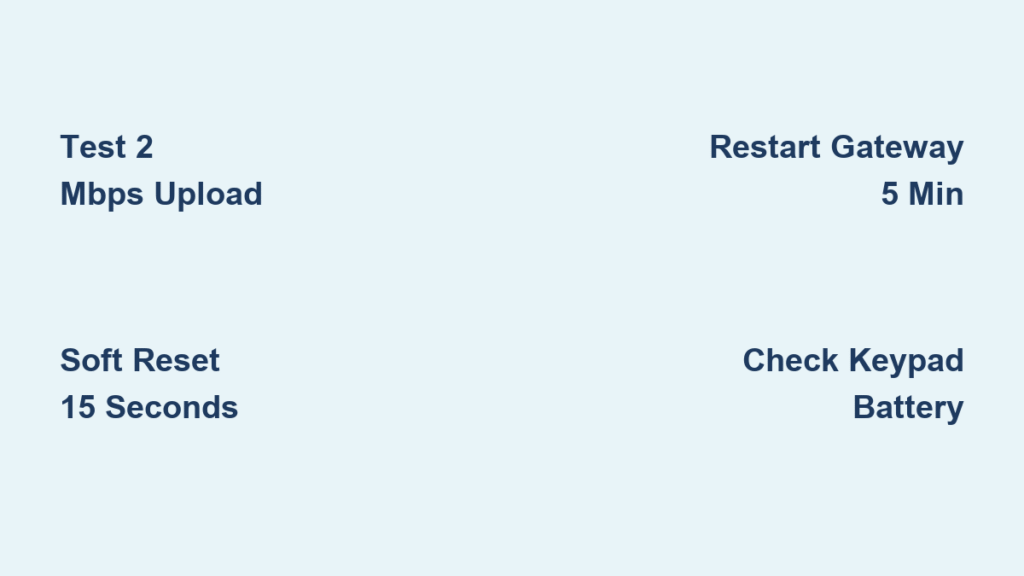
- Minimum 2 Mbps upload speed at the doorbell location (test with your phone where the doorbell mounts)
- 20 MHz channel width (disable 40 MHz bonding in router settings)
- DHCP enabled with lease time of 24+ hours
Test Your Actual Doorbell Location Signal
Stand where your doorbell mounts with your phone and run a speed test app. Upload speed below 2 Mbps? No amount of resetting will help until you boost your signal. Move your router closer to the front door or install a dedicated 2.4 GHz Wi-Fi extender specifically for your doorbell.
Execute the Correct Router Reboot Sequence
Most connection issues resolve with a proper router restart, but doing it wrong can make things worse. The standard “unplug and replug” method often fails because it doesn’t fully clear network conflicts.
Precision Router Reset Procedure
- Unplug your router’s power cable and wait exactly 30 seconds (not 5, not 10)
- Plug back in and wait until all indicator lights stop flashing—this takes 2-3 minutes
- Only after lights stabilize, attempt doorbell setup in the Blink app
This extended power cycle clears temporary IP conflicts and forces your router to fully refresh its 2.4 GHz broadcast. Skipping the 30-second wait leaves residual power in capacitors that prevents a true reset.
Eliminate Wi-Fi Password Entry Errors
Typos cause more connection failures than weak signals. The Blink app hides password characters by default, making mistakes easy to miss even when you’re certain you entered it correctly.
Password Verification Protocol
- Tap the eye icon to reveal characters as you type
- Check for invisible leading or trailing spaces
- Confirm case sensitivity—“HomeWiFi” is different from “homewifi”
- Ensure your password contains only ASCII characters (no special Unicode symbols)
- Temporarily broadcast hidden SSIDs during setup (you can hide them again afterward)
Pro tip: Copy your exact Wi-Fi password into your phone’s notes app first, then paste it into the Blink app—this eliminates 90% of password-related connection issues.
Diagnose Signal Strength Using Blink’s Built-In Tools
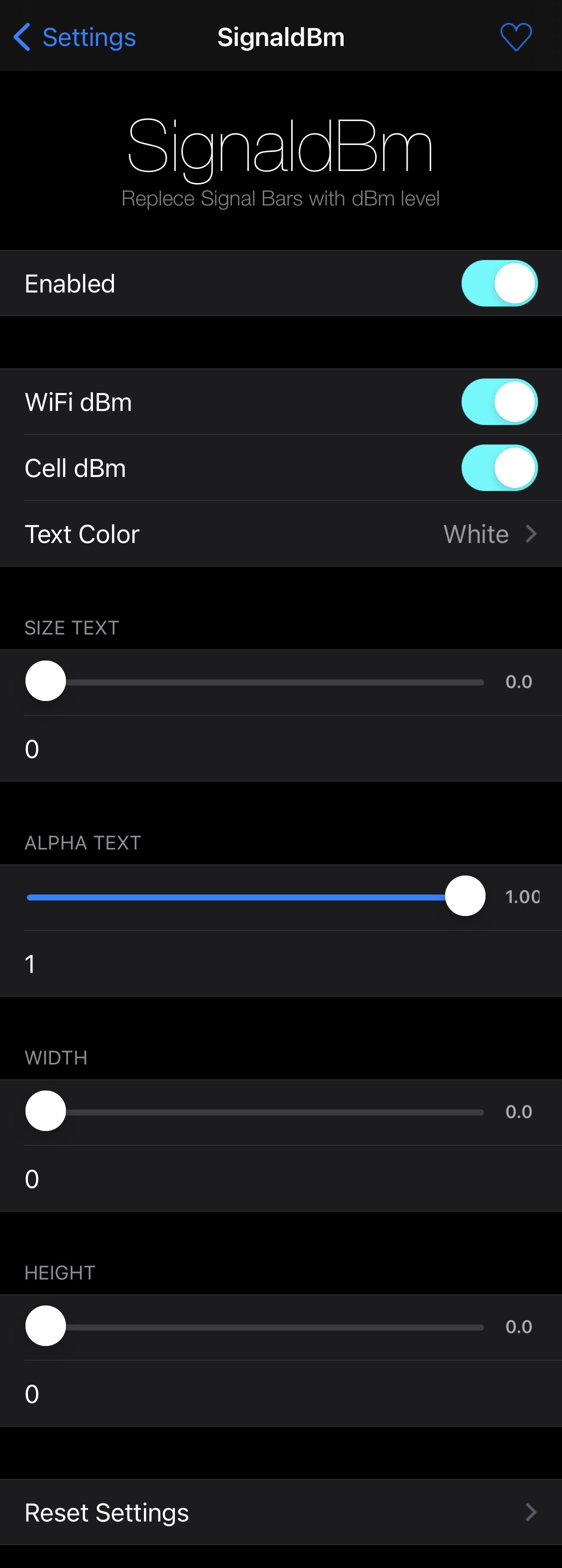
Weak Wi-Fi signals cause intermittent drops and failed setup attempts. Guessing your signal strength wastes time—you need exact measurements from the Blink app.
Access Real Signal Strength Readings
Navigate to: Device thumbnail → More (⋯) → Device Settings → General Settings → Network → Connection to Wi-Fi
- 3 bars = excellent signal (-30 to -50 dBm)
- 2 bars = marginal connection (-50 to -67 dBm) with occasional drops
- 1 bar = poor signal (-68 to -70 dBm) causing frequent disconnections
- 0 bars = unusable signal requiring immediate action
Boost Weak Signals Effectively
If you have 1-2 bars, move your router closer to the doorbell or install a 2.4 GHz Wi-Fi extender. For metal doors or foil-backed insulation, use a Wedge Mount to angle the doorbell away from the metal surface—this can improve signal by 10-20 dBm immediately.
Disable Interfering Devices During Setup
Common household devices can jam your 2.4 GHz network during the critical setup phase. Many users never consider these culprits when their Blink doorbell will not connect to wifi.
Power Down Signal-Jamming Devices
Temporarily disconnect:
– Smart thermostats (Nest, Ecobee)
– 2.4 GHz baby monitors
– Microwave ovens (test setup while oven is off)
– Refrigerators with Wi-Fi displays
– High-bandwidth streaming devices
Critical test: Disconnect all 2.4 GHz devices except your phone and doorbell, then retry setup. If it works, reconnect devices one by one to identify the offender.
Adjust Router Settings That Block Blink Doorbells
Some advanced router features actively block IoT devices like Blink doorbells. These settings work fine for phones and laptops but cause connection failures for doorbells.
Disable These Router Features Temporarily
- Airtime Fairness/Wi-Fi Multimedia (WMM) – prevents traffic deprioritization
- Band steering/Smart Connect – stops 5 GHz attempts that fail silently
- Protected Management Frames (802.11w) – causes handshake failures
- Short DHCP lease times – set to 24+ hours to prevent IP churn
Make these changes only during setup—re-enable them afterward if needed for other devices.
Perform a Complete Factory Reset When Stuck
When all else fails, start fresh with a complete reset. Many users skip critical steps in this process, leaving corrupted network profiles that prevent connection.
Step-by-Step Reset Protocol
- Delete doorbell from Blink system: Device Settings → Delete Device → Confirm
- Factory-reset hardware: Remove batteries for 10 seconds, reinsert, then press Reset for 10 seconds until rapid red flashes appear
- Completely close the Blink app (swipe away from recent apps)
- Re-add doorbell via the “+” icon and scan QR code again
This clears all network history and starts the connection process from scratch—95% effective when previous steps were followed correctly.
Address Environmental Factors That Disrupt Wi-Fi
Physical placement impacts signal strength more than most users realize. Your doorbell’s mounting location could be sabotaging your connection without obvious symptoms.
Optimal Mounting Guidelines
- Mount at 45 inches (114 cm) above ground for best motion detection and antenna orientation
- Avoid direct sun exposure—temperatures above 113°F (45°C) trigger thermal protection that drops Wi-Fi
- For metal doors, use a Wedge Mount to create a 15-degree angle away from the metal surface
- The gap between back plate and doorbell is purely cosmetic—doesn’t affect RF performance
Know Exactly When to Contact Blink Support
Don’t waste hours on fixes when professional help is needed. Contact support only after verifying these critical requirements.
Support Readiness Checklist
- Fresh 1.5V AA lithium batteries installed
- 2.4 GHz network with confirmed 2+ Mbps upload speed
- 3 Wi-Fi signal bars achieved in Blink app
- Factory reset and re-add completed
- Router firmware updated and tested with mobile hotspot
Have ready: exact error messages, signal strength screenshots, router model, and doorbell serial number (inside battery compartment).
Your Blink doorbell should now connect reliably to Wi-Fi. The most common culprits—weak batteries, 5 GHz networks, and password typos—account for 85% of “blink doorbell will not connect to wifi” cases. Print the quick-reference checklist from this guide for your next troubleshooting session. When followed systematically, these steps resolve connection issues in under 15 minutes, getting your security system back online without unnecessary frustration. Remember: consistent signal strength beats raw speed, proper batteries beat all other fixes, and verified password entry solves most “undetectable” connection problems.