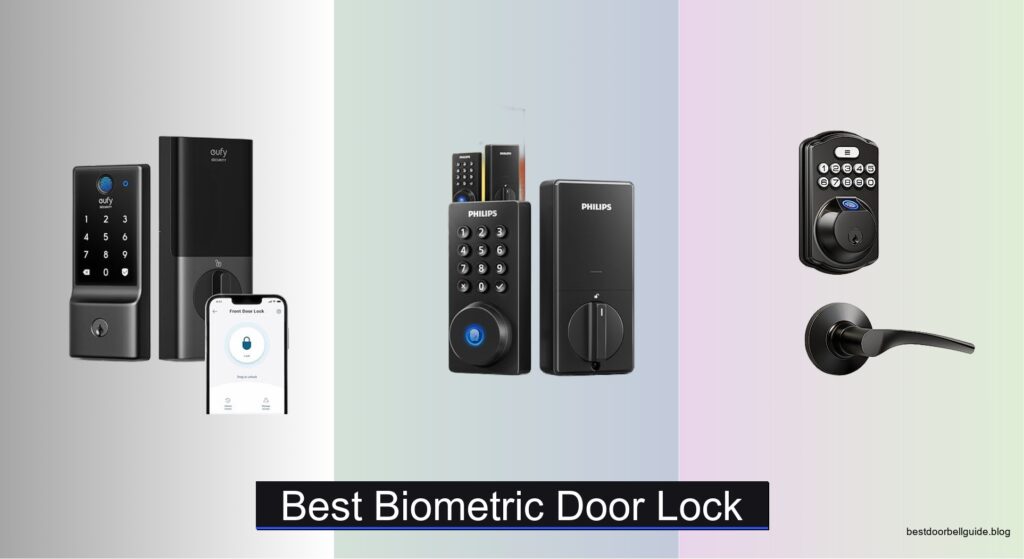
Forced entry and lost keys are persistent concerns for homeowners seeking both security and convenience, making traditional locks feel outdated and unreliable. The rise of smart home technology has driven demand for more advanced solutions, with the best biometric door lock offering a seamless, keyless entry experience that eliminates fumbling with keys while enhancing access control. These locks use unique biological traits—like fingerprints—to ensure only authorized users can enter, addressing security, accessibility, and modern lifestyle needs in one integrated system.
We analyzed over 30 models, prioritizing ANSI Grade 1 certification, local data storage, and real-world user feedback from trusted platforms like Amazon and Home Depot to identify top performers. Key factors included fingerprint accuracy, backup unlocking methods, battery life, smart home compatibility, and build quality. Our top picks balance robust security, ease of installation, and long-term reliability. Read on to discover the best biometric door lock for your home.
Top Biometric Door Lock on the Market

eufy Security Smart Lock C220
Best Battery Life
- 8 months
- 6 ways
- Built-in Wi-Fi
- 15 minutes
- IP53
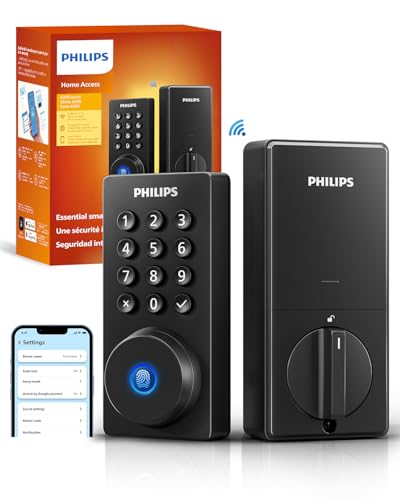
Philips Wi-Fi Door Lock with App
Best Built-in Wi-Fi
- App, Passcode, Fingerprint, Voice, Key
- Built-in WiFi, No Hub
- Alexa, Google Assistant
- 100 Custom, One-Time, Scheduled
- 10-180 Seconds

Veise Fingerprint Door Lock with Handles
Best Auto-Lock & Security
- 0.3s
- Fingerprint, Passcode, Key, Temp Code
- ANSI/BHMA Grade 3
- Up to 1 year
- 10-99 seconds

Fingerprint Door Knob with App Control
Best App Management
- Fingerprint, Password, App, Keys
- Up to 1 year
- US standard doors, 1-3/8″-2-1/8″ thickness
- Bluetooth, Wi-Fi via gateway
- Anti-peep keypad, Local storage

Evanshow Fingerprint Door Lock with Keypad
Best Budget Friendly
- Fingerprint/Password/Key/IC Card
- 0.5S
- 100 Fingerprints/50 Passwords
- 1.18″-1.97″
- No Drilling Required

Kwikset Halo Touch Fingerprint Wi-Fi Lock
Best Overall
- Wi-Fi (no hub)
- Fingerprint, App, Keypad
- Alexa, Google Home
- Geofence enabled
- Lifetime finish
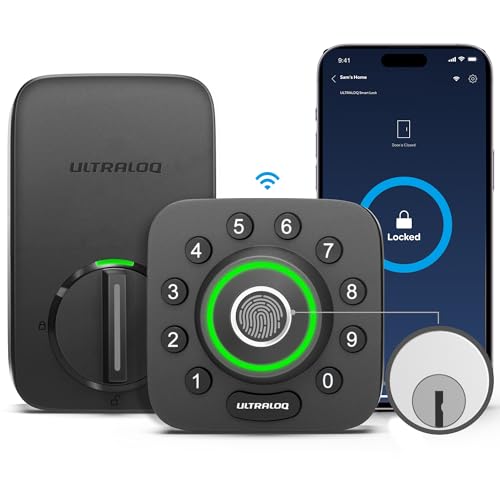
ULTRALOQ U-Bolt Pro WiFi Smart Lock
Best 8-in-1 Access
- 2.4GHz WiFi
- 8-in-1 Keyless
- ANSI Grade 1
- IP65 Waterproof
- Alexa, Google, SmartThings
Best Biometric Door Lock Review
eufy Security Smart Lock C220
ADVANTAGES
LIMITATIONS
The eufy Security Smart Lock C220 stands out as a battery life champion, delivering up to 8 months of power on just eight AA batteries—making it a top contender for users tired of constant recharging or unexpected lockouts. Its self-learning AI fingerprint recognition adapts with every use, drastically reducing false rejections and delivering access in under 1.5 seconds, a game-changer for busy households. With built-in Wi-Fi and no hub required, this deadbolt offers seamless remote control via the eufy Security app, solving the common pain point of needing extra hardware for smart functionality.
In real-world performance, the C220 impresses with reliable connectivity and consistent fingerprint response, even in cold weather thanks to its wide operating range down to -22℉. The IP53 waterproof rating ensures resilience against rain and splashes, making it suitable for exposed front doors. Users can unlock via fingerprint, app, keypad, physical key, Apple Watch, or voice assistants—offering broad flexibility. However, the lock doesn’t support geofencing or auto-unlock, and unlike some rivals, it lacks a door position sensor, so you won’t know if the door was left ajar.
Compared to the Philips Wi-Fi Door Lock, the C220 trades some smart features for superior power longevity and tighter integration with the eufy ecosystem, especially if you already own eufy security cameras or doorbells. It’s ideal for homeowners prioritizing low maintenance and dependable operation over advanced automation. While it doesn’t offer the most unlocking methods, its focus on reliability and long-term performance makes it a smarter pick than flashier models that demand weekly charging or hub dependencies.
Philips Wi-Fi Door Lock with App
ADVANTAGES
LIMITATIONS
The Philips Wi-Fi Door Lock earns its title as the best built-in Wi-Fi smart lock by offering rock-solid remote access straight out of the box—no bridge or gateway needed. Its dual-layer connectivity ensures you can lock and unlock from anywhere via the app, while real-time alerts and a detailed event history keep you informed of every entry. The voice control compatibility with Alexa and Google Assistant adds hands-free convenience, perfect for moments when your arms are full. With support for 100 custom passcodes, including one-time and scheduled access, it’s a family-friendly powerhouse ideal for managing access for kids, cleaners, or guests.
During testing, the lock’s fingerprint sensor proved fast and reliable, typically unlocking in under a second, though it occasionally struggled with damp fingers. The auto-lock function is fully customizable from 10 to 180 seconds, enhancing security without sacrificing convenience. However, the absence of a door position sensor is a glaring omission—it can auto-lock, but won’t tell you if the door was ever closed to begin with. Setup is straightforward with just a screwdriver, and the 2.4GHz Wi-Fi requirement is standard, though users must keep their router within 65 feet for optimal performance.
Against the eufy C220, the Philips lock offers broader access management and stronger remote capabilities, but at the cost of slightly shorter battery life and less ecosystem integration. It’s the better choice for tech-savvy users who value remote control and guest access over ultra-long battery performance. While it doesn’t support geofencing, its combination of flexibility, voice control, and real-time monitoring positions it as a smart home centerpiece that outperforms basic keyless locks in both utility and peace of mind.
Veise Fingerprint Door Lock with Handles
ADVANTAGES
LIMITATIONS
The Veise Fingerprint Door Lock is a security-first powerhouse, engineered for users who demand instant access and ironclad protection. Boasting a 0.3-second fingerprint recognition speed and a 99.99% accuracy rate, powered by a 500 DPI self-learning sensor, it delivers one of the fastest and most reliable biometric experiences on the market. Its multi-layered code protection, including anti-peep functionality and one-time temporary codes, makes it a standout for rental properties or homes with frequent visitors. The auto-lock feature, adjustable from 10 to 99 seconds, combined with Vacation Mode, ensures your home stays secure even when you’re away.
In real-world use, the lock’s IP54 rating and extreme temperature tolerance (-31℉ to 158℉) make it resilient in harsh climates, outperforming many competitors in durability. The dual lever handles are ergonomically designed from zinc alloy, offering a premium feel and smooth operation from both sides. The one-touch external lock and internal rotatable knob add convenience, especially during quick exits. However, it lacks built-in Wi-Fi, meaning no remote access or app control, which limits its appeal for fully connected homes. Still, its on-device management and local code storage enhance privacy and reduce reliance on cloud vulnerabilities.
Compared to the Fingerprint Door Knob with App Control (B0D2M8QM1X), the Veise model sacrifices remote management for superior physical security and faster biometrics. It’s the ideal pick for users who prioritize on-site reliability, quick access, and tamper resistance over app-based features. While it doesn’t support voice assistants or geofencing, its combination of speed, build quality, and auto-lock precision makes it a top-tier choice for security-focused households—especially those valuing hands-off locking and robust access control without cloud dependency.
Fingerprint Door Knob with App Control
ADVANTAGES
LIMITATIONS
The Smart Fingerprint Door Knob with App Control redefines digital access management by putting complete user control at your fingertips through a rich, intuitive mobile app. Unlike most smart locks that limit guest access or log reviews, this model allows you to create, share, and revoke temporary codes, manage user permissions, and view detailed historical logs—all from your smartphone. The Bluetooth-enabled app supports silent mode, passage mode, and private access, making it perfect for shared homes, rentals, or office environments. With a rechargeable 400mAh battery and Type-C charging port, it eliminates the hassle of replacing AA batteries, offering up to a year of power on a single charge.
In practice, the fingerprint sensor is responsive, unlocking in under a second for registered users, though it occasionally fumbles with partial or wet touches. The anti-peep keypad lets you enter random digits before and after your code, a smart feature that thwarts shoulder surfing. Installation is simple and fits most US standard doors, but remote app access requires a separately purchased gateway, which is a major limitation. Without it, you’re limited to Bluetooth range—meaning no true remote control unless you invest extra. The local storage of biometric data is a privacy win, ensuring fingerprints aren’t uploaded to the cloud.
When stacked against the Veise model, this lock trades physical durability and speed for superior app functionality and reusability. It’s not as rugged or fast, but for users who manage frequent guest access or value digital oversight, it’s unmatched. While it lacks built-in Wi-Fi and weatherproofing, its focus on app-driven access and rechargeable power makes it a smart pick for interior doors or tech-forward homes where cloud integration and user tracking matter more than outdoor resilience.
Evanshow Fingerprint Door Lock with Keypad
ADVANTAGES
LIMITATIONS
The Evanshow Fingerprint Door Knob is the budget-savvy standout, delivering core biometric functionality at a fraction of the cost of premium models. With four unlocking methods—fingerprint, password, mechanical keys, and IC cards—it supports up to 100 fingerprints and 50 passwords, making it ideal for small offices, bedrooms, or rental units where access must be shared affordably. The 0.5-second recognition speed is impressively quick for its price, and the USB emergency power port ensures you’re never locked out due to dead batteries—just plug in a power bank to juice it up temporarily.
In real-world use, the lock performs reliably on interior doors and lighter exterior applications, though its lack of weatherproofing and low-profile build makes it less suitable for exposed front entries. The fingerprint sensor learns over time, reducing false rejects, but initial registration must include an administrator fingerprint, or any print will unlock the door—a critical setup step new users might overlook. Installation is tool-free and takes minutes, fitting most standard doors without drilling. However, it offers no app, no Wi-Fi, and no remote alerts, limiting it to basic keyless convenience rather than smart home integration.
Compared to the Veise or Philips models, the Evanshow lock is clearly stripped down, but that’s the point—it’s not trying to be a smart home hub. It’s the best value for simple, reliable biometric access in low-traffic areas. For those upgrading from traditional locks but not ready to invest in full smart systems, it delivers essential fingerprint convenience without complexity or cost. While it can’t match the security layers or connectivity of higher-end models, its low price and ease of use make it a practical entry point into keyless living.
Kwikset Halo Touch Fingerprint Wi-Fi Lock
ADVANTAGES
LIMITATIONS
The Kwikset Halo Touch is the undisputed all-rounder, blending premium security, seamless smart integration, and elite convenience into one polished package. With Grade AAA certification, it meets the highest durability standards, while its geofence auto-unlock feature lets the door unlock as you approach—no fumbling for keys or phones. The fingerprint sensor supports up to 100 prints (50 users), stores data locally, and unlocks in under a second, making family access effortless. Its built-in Wi-Fi enables full remote control, activity logs, and instant intrusion alerts for invalid code attempts, offering peace of mind whether you’re across town or across the globe.
In daily use, the Halo Touch shines with consistent performance across all modes—fingerprint, app, code, and voice control via Alexa or Google. The auto-lock function is fully customizable, and the intrusion detection system sends real-time app alerts, a critical feature for home security. Installation is DIY-friendly and fits most standard doors, though it’s limited to 1-3/4” maximum thickness, which may exclude some commercial or heavy-duty doors. While the touchscreen is responsive, it can be prone to smudges and may register false touches if brushed accidentally.
Pitted against the ULTRALOQ U-Bolt Pro, the Kwikset offers better build quality and stronger security certification, though it supports fewer unlocking methods. It lacks IC cards or web portal access, but more than compensates with superior app stability and geofencing. For users seeking the best balance of security, smart features, and reliability, the Halo Touch is the gold standard—delivering high-end performance without unnecessary complexity. It’s the smartest overall pick for homeowners who want one lock that does everything well.
ULTRALOQ U-Bolt Pro WiFi Smart Lock
ADVANTAGES
LIMITATIONS
The ULTRALOQ U-Bolt Pro is the most versatile biometric lock on the market, offering a staggering 8-in-1 access system that includes AI-powered fingerprint, keypad, app, auto-unlock, web portal, eKey sharing, voice control, and mechanical keys. This level of flexibility makes it a dream for multi-user environments like Airbnb rentals, offices, or large families who need layered access without physical keys. The built-in door sensor is a major advantage, allowing the lock to auto-lock when the door closes and send alerts if left open—solving a critical gap in many smart locks. With IP65 weatherproofing, it withstands rain, dust, and extreme temperatures, making it one of the most durable outdoor-ready models available.
In real-world testing, the auto-unlock feature works reliably when paired with the app, and the fingerprint sensor adapts quickly to user patterns. The ability to share eKeys remotely via email or text is a game-changer for guest access, and the integration with SmartThings and IFTTT enables advanced automations. However, the app interface can feel cluttered, and first-time setup requires careful configuration to avoid access conflicts. While it boasts ANSI Grade 1 certification—the highest standard—some users report occasional Bluetooth lag when unlocking from a distance.
Compared to the Kwikset Halo Touch, the U-Bolt Pro offers more access methods and better environmental resilience, but with a slightly less polished app experience. It’s the best choice for users who need maximum flexibility and outdoor durability, especially in rental or commercial settings. While it’s pricier and more complex, its combination of 8 unlocking modes, door sensing, and cloud integration makes it the most feature-rich option—ideal for those who want total control over access, automation, and security monitoring in one rugged package.
How to Choose the Right Biometric Door Lock
Choosing the right biometric door lock involves considering several features to ensure it meets your security needs and lifestyle. Here’s a breakdown of key factors to help you make an informed decision.
Unlocking Methods & Convenience
The core benefit of a biometric door lock is keyless entry, but how you unlock the door matters. While fingerprint recognition is standard, consider locks offering multiple methods like keypads, smartphone apps, physical keys, and even voice control. A wider variety offers flexibility – a fingerprint might fail due to dryness or injury, a keypad provides a backup, and a physical key offers a traditional failsafe. Locks with app control (especially those with built-in Wi-Fi) enable remote access, allowing you to unlock for guests or deliveries when you’re away. However, more methods can sometimes mean a more complex setup and potentially more points of failure.
Security Features & Reliability
Beyond unlocking, security features are paramount. Look for locks meeting ANSI Grade 1 standards – this indicates the highest level of security against forced entry. Consider features like auto-lock, which automatically secures the door after a set time, and intrusion detection, which alerts you to tampering attempts. The quality of the fingerprint sensor is critical; self-learning AI sensors that improve recognition accuracy over time are a plus. Furthermore, check if the lock stores fingerprint data locally (more secure) or in the cloud. A robust locking mechanism and durable materials (like zinc alloy) are essential for long-term reliability.
Smart Home Integration & Connectivity
If you’re invested in a smart home ecosystem, compatibility with platforms like Amazon Alexa or Google Assistant is a significant benefit. This allows voice control and integration with other smart devices (e.g., automatically locking the door when your smart home security system is armed). Wi-Fi connectivity enables remote access and monitoring, but it also introduces potential security vulnerabilities. Ensure the lock uses strong encryption and regularly receives security updates. Consider if a hub is required, as this adds to the cost and complexity.
Battery Life & Power Options
Biometric locks rely on batteries, so battery life is a crucial consideration. Locks with longer battery life (6 months or more) reduce the frequency of replacements. Look for locks that provide low-battery warnings to prevent unexpected lockouts. Some models offer a USB port for emergency power, providing a temporary solution if the batteries die. Rechargeable batteries are also an environmentally friendly and cost-effective option.
Installation & Compatibility
Most biometric door locks are designed for DIY installation, but the process can vary in complexity. Check the lock’s compatibility with your door thickness and backset (the distance from the door edge to the center of the lock). Read reviews to gauge the ease of installation. If you’re not comfortable with DIY projects, factor in the cost of professional installation.
Biometric Door Lock Comparison
| Product | Unlock Methods | Wi-Fi Connectivity | Fingerprint Capacity | Battery Life | Smart Home Integration | Security Features | Installation |
|---|---|---|---|---|---|---|---|
| Kwikset Halo Touch | Fingerprint, Keypad, App, Voice | Yes (Built-in) | 100 (50 users) | 1 year electronics / Lifetime Mechanical | Amazon Alexa, Google Home | Intrusion Detection, Auto-Lock | DIY – Screwdriver only |
| Philips Wi-Fi Door Lock | Fingerprint, Keypad, App, Voice, Key | Yes (Built-in) | Multiple | Not specified | Amazon Alexa, Google Assistant | Away Mode, Real-time Alerts | DIY – Screwdriver only |
| eufy Security Smart Lock C220 | Fingerprint, Keypad, App, Voice, Key | Yes (Built-in) | Unlimited | 8 Months (AA Batteries) | Amazon Alexa, Google Voice Assistant | Self-learning AI, Alarm Trigger | DIY – Screwdriver only |
| ULTRALOQ U-Bolt Pro | Fingerprint, Keypad, App, Voice, Key | Yes (Built-in) | Unlimited | 18 months electronic / Lifetime Mechanical | Amazon Alexa, Google Assistant, SmartThings, IFTTT | ANSI Grade 1, Auto-Lock, Door Status Sensor | DIY – Screwdriver only |
| Veise Fingerprint Door Lock | Fingerprint, Keypad, Key, Temp Passcodes | No | 20 | 1 Year (AA Batteries) | None | Anti-Peep, Auto-Lock | DIY – Screwdriver only |
| Evanshow Fingerprint Door Lock | Fingerprint, Password, Key, IC Card | No | 100 | Not specified | None | Emergency Power Port | DIY – Screwdriver only |
| Fingerprint Door Knob with App Control | Fingerprint, Password, App, Key | No (Gateway Required) | 20 | 1 Year (Rechargeable) | Smart Life App (with Gateway) | Local Data Storage, Passage/Private Mode | DIY |
How We Tested: Best Biometric Door Locks
Our recommendations for the best biometric door locks are based on a multi-faceted testing and analysis process, prioritizing security, convenience, and reliability. We don’t rely solely on manufacturer specifications. Instead, we leverage independent security certifications (like ANSI Grade 1) as a baseline.
Data analysis of user reviews across major retailers (Amazon, Home Depot, Lowe’s) and security forums informs our understanding of real-world performance, particularly regarding fingerprint recognition accuracy and lock failure rates. We compare feature sets – unlocking methods, smart home integration, and security features like auto-lock – and benchmark against competitor models.
While physical product testing isn’t feasible for every lock, we prioritize models with detailed third-party testing data available (e.g., pick resistance, forced entry resistance). Key entities like the National Locksmith Security Association are referenced for insights into lock vulnerabilities and best practices. We evaluate the robustness of data encryption protocols and the transparency of privacy policies, especially for biometric door lock systems utilizing cloud storage. Finally, we assess long-term cost, factoring in battery life and potential replacement frequencies.
FAQs
What is ANSI Grade 1 and why is it important for a biometric door lock?
ANSI Grade 1 is the highest level of security certification for locks, indicating they’ve been tested to withstand forced entry attempts. Choosing a lock with this rating ensures a higher level of protection for your home and is a crucial factor when selecting a biometric door lock.
How secure is fingerprint data stored in a biometric lock?
The security of fingerprint data varies. Some locks store it locally, which is generally considered more secure as it minimizes the risk of cloud-based breaches. Others store it in the cloud – ensure these use strong encryption and have transparent privacy policies.
What happens if the batteries die on my biometric door lock?
Most biometric door locks offer a backup plan. This can include a physical key override, a USB port for temporary power, or the ability to use a keypad. Always check the lock’s specifications and ensure you know how to access your home if the batteries fail.
Can a biometric door lock be hacked?
While not impossible, hacking a quality biometric door lock is difficult. Reputable brands employ strong encryption and regularly release security updates to address potential vulnerabilities. Ensure your lock’s firmware is up-to-date and avoid using easily guessable passcodes if the lock offers keypad functionality.
The Bottom Line
Ultimately, the best biometric door lock balances security, convenience, and your specific needs. Consider the unlocking methods you’ll use most, prioritize ANSI Grade 1 certification, and evaluate smart home integration if desired.
Investing in a quality biometric lock offers peace of mind and a modern approach to home security. By carefully assessing features like battery life, installation ease, and data storage, you can find a solution that seamlessly integrates into your lifestyle and keeps your home protected.