
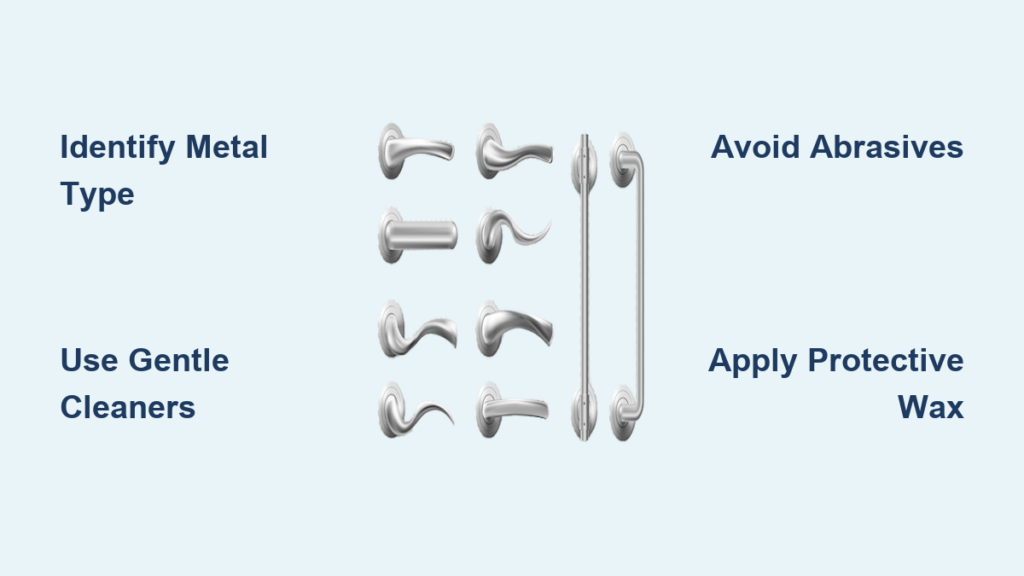
Your brass door handle has turned dull green, the chrome finish on your entryway knob is streaked with water spots, and fingerprints mar your oil-rubbed bronze lever. These common metal door handle problems don’t just look unsightly—they signal accelerating corrosion that can permanently damage your hardware. Using abrasive cleaners like Bar Keepers Friend might seem like a quick fix, but they strip protective finishes down to bare metal, leaving handles vulnerable to rapid deterioration. Properly cleaning how to clean metal door handles requires matching your method to the specific metal and finish type. This guide reveals professional techniques to safely restore shine while preserving protective coatings, with step-by-step instructions you can implement immediately using household items. You’ll learn to identify your handle’s composition, choose the right cleaning solution, and apply protective barriers that prevent future tarnish.
Identify Your Door Handle Metal Type Before Cleaning (Avoid Costly Mistakes)
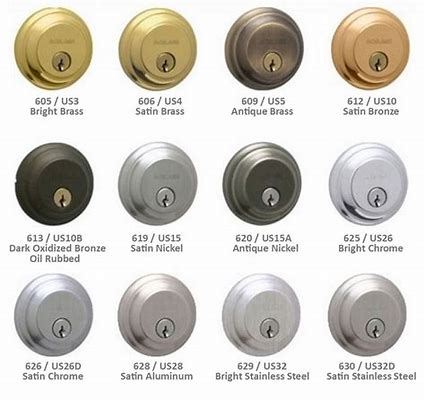
Applying the wrong cleaner to your door handles can cause irreversible damage, turning minor tarnish into costly restoration projects. The critical first step is identifying your handle’s metal composition and finish type—never assume all “bronze” handles are created equal. A simple magnet test provides immediate answers: hold a strong magnet against the handle. If it sticks firmly, you’re dealing with a steel base coated in chrome, nickel, or oil-rubbed bronze plating. These thin plated finishes are exceptionally vulnerable to abrasives. If the magnet doesn’t adhere, your handle is likely solid brass, bronze, or copper—metals that develop natural patinas over time. Solid brass handles often have reddish-gold undertones visible in scratches, while unlacquered bronze develops characteristic green verdigris corrosion. Mistaking plated hardware for solid metal leads to disastrous results, as aggressive cleaning strips the microscopic plating layer down to base metal.
How to Recognize Problematic Finish Types
Plated finishes require the most caution since their protective layer measures mere microns thick. Oil-rubbed bronze handles typically show darker coloring in crevices with lighter high points—a deliberate aesthetic that abrasive cleaners destroy by removing the chemical finish. Painted or powder-coated handles feel uniformly smooth with no metallic texture. Living finishes intentionally develop patina and should never be polished to a mirror shine. If your handle shows flaking, peeling, or inconsistent coloring, the factory finish has already failed, requiring professional intervention rather than DIY cleaning. Always test any cleaner on an inconspicuous area first—like the handle’s underside—to verify compatibility.
How to Clean Unlacquered Brass and Bronze Handles Safely
Solid brass and bronze handles develop beautiful patinas naturally, but excessive tarnish or powdery green verdigris requires gentle intervention. Never use abrasive powders or harsh chemicals on these metals—they accelerate corrosion and strip protective waxes. Instead, reach for your kitchen pantry. For light tarnish, mix equal parts lemon juice and baking soda into a thick paste. Apply this mixture with a soft cotton cloth, rubbing gently along the metal grain. Let it sit for 5-10 minutes on stubborn spots, but never allow it to dry completely. Rinse thoroughly with clean water and dry immediately with a microfiber towel to prevent water spots. This mild acid reaction dissolves surface oxidation without harming the base metal.
Removing Stubborn Verdigris Without Scratching
For handles covered in powdery green corrosion (verdigris), skip chemical cleaners entirely. Use a dry gray Scotch-Brite pad—the ultra-fine non-metallic abrasive lifts loose oxidation without scratching. Apply minimal pressure in circular motions, focusing only on affected areas. Wipe residue away with a clean cloth. For persistent spots, add one drop of mild dish soap to the pad and dampen slightly. Immediately dry the handle after cleaning. Never use steel wool or metal brushes—these create micro-scratches that trap moisture and accelerate future corrosion. Remember: unlacquered brass and bronze are meant to patina; your goal is removing harmful buildup, not achieving mirror-like shine.
Cleaning Plated Chrome and Nickel Handles Without Streaking
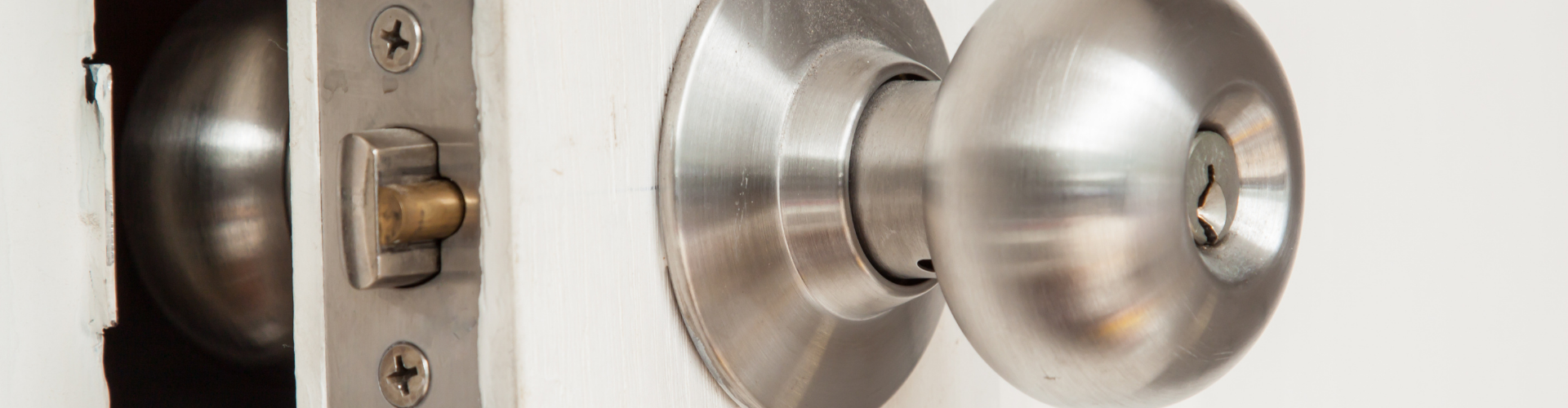
Plated handles demand the gentlest approach since their protective layer can vanish with a single aggressive wipe. Chrome and nickel finishes react poorly to acidic cleaners that cause pitting and cloudiness. Start by dusting handles with a dry microfiber cloth to remove loose particles that could scratch during cleaning. For water spots and light grime, mix equal parts white vinegar and water in a spray bottle. Lightly mist this solution onto a microfiber cloth—not directly onto the handle—to avoid liquid seeping into mounting hardware. Wipe gently following the handle’s contour, never scrubbing. Immediately dry with a second clean cloth using straight-line motions to prevent swirl marks. This method dissolves mineral deposits without stripping the plating.
Fixing Hard Water Stains on Polished Metal
Hard water stains appear as chalky white deposits that resist basic cleaning. For these, dampen a soft-bristled toothbrush with the vinegar-water solution and gently brush the affected area in one direction. Focus only on stained sections—never brush the entire handle. Rinse by wiping with a clean damp cloth, then dry immediately. Never soak plated handles or allow liquids to pool around screw holes, as this causes internal corrosion. If streaks remain after drying, buff lightly with a dry microfiber cloth using minimal pressure. Avoid commercial chrome polishes—they contain abrasives that wear down thin plating over time.
Restoring Painted and Powder-Coated Door Handles
Painted or powder-coated handles require different care than bare metal since cleaners can degrade the protective layer. These finishes show uniform color without metallic texture and often feel slightly textured. Start by removing dust with a dry microfiber cloth. For fingerprints and light grime, mix 2 drops of mild dish soap into a cup of warm water. Dip a soft cloth into the solution, wring thoroughly, and wipe the handle. Never use abrasive pads—even soft-bristled brushes can mar the surface. For stuck-on debris, dampen a cotton swab with the soapy water and gently work the area. Immediately wipe with a clean damp cloth to remove soap residue, then dry completely with a microfiber towel. Avoid all vinegar-based solutions—they break down paint binders over time.
What Absolutely Not to Do With Coated Handles
Bar Keepers Friend, Comet, and similar abrasive cleaners will strip painted finishes down to bare metal within seconds, as many homeowners discover too late. Never use ammonia, bleach, or alcohol-based cleaners—they cause irreversible discoloration and peeling. Skip commercial metal polishes entirely; their abrasives scratch through the thin coating. If your handle shows flaking paint or inconsistent coloring, the factory finish has failed, and professional recoating is the only solution. Attempting to clean severely damaged coated handles accelerates deterioration.
Protecting Your Handles After Cleaning
Cleaning is pointless without proper protection—bare metal oxidizes 5x faster when exposed to air and moisture. Immediately after drying, apply a thin coat of high-quality paste wax using a soft cloth. Buff gently until the wax disappears, leaving a protective barrier. For unlacquered brass or bronze, carnauba wax provides excellent tarnish resistance while allowing natural patina development. Powder-coated handles benefit from automotive ceramic coatings that repel water spots and fingerprints. Reapply these protectants every 6-12 months depending on handle usage. In high-moisture areas like bathrooms, increase applications to quarterly.
When Sealants Cause More Harm
Avoid liquid lacquers or clear coats sold for DIY use—they yellow quickly and peel unevenly, worsening the handle’s appearance. Never apply wax to handles near hand sanitizer dispensers; alcohol in sanitizers breaks down waxes and damages finishes. If your handle has a living finish designed to patina, skip heavy sealants entirely—light wax applications every 6 months suffice. For oil-rubbed bronze handles, professional-grade metal sealants are the only safe option since household products alter the chemical finish.
Preventing Future Tarnish With Daily Habits
Daily maintenance takes 15 seconds but prevents 90% of tarnish buildup. Wipe handles weekly with a dry microfiber cloth to remove skin oils and dust that accelerate corrosion. In kitchens and bathrooms, use a slightly damp cloth after cleaning other surfaces—dry immediately. Never place hand sanitizer dispensers within 18 inches of metal handles; alcohol vapors degrade finishes. During humidity spikes above 60%, increase wiping frequency to every 3-4 days. For high-traffic entry handles, apply a protective wax coating every 4 months instead of 6.
The Fingerprints That Accelerate Corrosion
Sweaty fingerprints left overnight create electrolytic reactions that pit metal surfaces. Combat this by keeping a microfiber “handle cloth” near exterior doors for quick wipe-downs after use. In coastal areas, rinse salt residue weekly with fresh water followed by immediate drying. Never use paper towels—they contain wood fibers that scratch metal. Cotton flannel or microfiber are the only safe fabrics for regular maintenance.
When Professional Restoration Beats DIY Cleaning
Some damage requires expert intervention. If your handle shows flaking or peeling finish, white/blue-green powdery deposits (galvanic corrosion), or deep pitting, stop cleaning immediately. These indicate structural damage where DIY methods cause further harm. Valuable antique handles, architecturally significant hardware, or handles with failed factory lacquer need professional reblacking (for oil-rubbed bronze) or powder coating. Attempting to “fix” these with home remedies strips remaining finish, leaving bare metal vulnerable. Replacement often costs less than restoration for standard hardware—if your handle is common and under $50, consider swapping it for new.
Cost-Effective Solutions for Damaged Handles
For moderately damaged plated handles, professional powder coating costs $40-$75 per handle and lasts decades. True oil-rubbed bronze finishes require chemical rebrowning by specialists—expect $25-$40 per handle. If corrosion has penetrated mounting hardware, replacement becomes necessary to prevent door mechanism damage. Always photograph damaged handles and consult a high-end locksmith specializing in hardware restoration before proceeding. They’ll determine if the handle can be saved or if replacement preserves your home’s aesthetic better.
Final Note: Consistent gentle cleaning extends metal door handle life by 5-7 years compared to harsh or infrequent care. Focus on identifying your specific finish type first—this single step prevents 95% of DIY disasters. By implementing these targeted techniques and protective measures, your handles will maintain their intended appearance while resisting environmental damage. For ongoing maintenance, stick to the weekly dry wipe and bi-annual wax application—this minimal effort prevents the need for intensive restoration later. Remember: metal door handles are functional art; treat them with the care they deserve.