
Struggling with how to cut door hangers properly? A poorly punched hole can ruin an otherwise professional marketing piece, causing your door hangers to tear, hang unevenly, or look amateurish. Whether you’re handling a small batch for a local business or preparing 1,500+ units for a major campaign, creating that perfect hanging hole is the critical final step that separates functional door hangers from frustrating failures. This guide reveals the exact tools, techniques, and professional methods used by print shops to achieve clean, consistent holes every time—regardless of your volume or budget constraints.
Essential Tools for Cutting Door Hanger Holes by Project Size

Your success with how to cut door hangers depends entirely on matching the right tool to your specific project requirements. Forget generic advice—here’s exactly what you need based on your volume and material type.
Hand Punches: For 1-100 Door Hangers
When you’re making fewer than 100 door hangers, manual tools save you from overspending on equipment you’ll rarely use.
- Lever-Action Punches: These punches with extended handles deliver 3-5x more force than standard hand punches, allowing you to cut through 5-10 sheets of standard cardstock at once. Look for models with adjustable depth settings when working with carbonless two-part forms.
- Circle Cutters with Pivot Bases: For absolute precision on high-value single pieces, these $15-$50 tools let you set exact hole sizes (typically 1/4″ to 1″) with a rotating blade. Perfect when you need flawless results for premium door hangers.
- Pro Tip: Always place a self-healing cutting mat beneath your work—paper dust and slight pressure can damage surfaces and affect punch accuracy over time.
Medium-Volume Solutions: For 100-5,000 Door Hangers
This is where most small businesses get stuck—too many for hand punching, but not enough to justify industrial equipment.
- Arbor Press with Custom Jig: For $200-$500, this setup transforms your ability to cut door hangers efficiently. A simple wooden jig with registration pins ensures perfect hole placement on every piece while allowing you to punch 10-20 sheets at once.
- Drill Press Conversion: Fit your drill press with a 1/2″ Forstner bit and create a custom stop block. This method processes 500-800 units per hour with clean, splinter-free holes—ideal for thicker cardstock door hangers.
- Critical Warning: Never attempt to punch carbonless two-part forms without proper registration. Misaligned holes between layers will cause your door hangers to separate when hung.
Professional Equipment: For 5,000+ Door Hangers
When volume justifies the investment, these tools deliver commercial-quality results.
- Hydraulic Punch Presses: Processing 50-100 sheets per stroke, these $5,000-$15,000 machines are standard in print shops. Their precision alignment systems prevent the layer misalignment that plagues carbonless forms.
- Steel Rule Dies: Custom dies costing $300-$800 create perfect holes with a single press stroke. For two-part carbonless forms, specify “kiss-cutting” so the die cuts only the top layer.
- Smart Move: Many local print shops offer die-cutting services for $0.10-$0.25 per unit with $50-$200 setup fees—often cheaper than buying equipment for one-time large runs.
Step-by-Step: How to Cut Door Hangers with Professional Precision
Follow this proven process to avoid the most common mistakes that ruin door hanger batches.
Step 1: Perfect Hole Placement Every Time
The standard placement—2 inches from the top, centered horizontally—is non-negotiable for proper hanging, but measuring each piece wastes time.
- Create a registration template from scrap cardboard with your exact hole position
- For carbonless two-part forms, use pin registration—small holes at corners that align both layers perfectly
- Mark your placement with a non-permanent silver pen (visible on all paper colors but disappears after punching)
Step 2: The Cutting Process for Different Materials
Your technique must adapt to your specific door hanger material.
- Standard Cardstock (65-110#): Stack 10-15 sheets, align with your jig, and punch in one motion. Check the first 5 pieces for clean edges before continuing.
- Carbonless Two-Part Forms: Reduce stack height to 5-8 sheets maximum. Carbonless paper’s brittleness causes tearing with thicker stacks.
- Laminated Materials: Use a sharp Forstner bit on a drill press at slow speed—standard punches will melt or tear laminated surfaces.
Step 3: Quality Control During Production
Most door hanger failures happen because people skip these verification steps.
- Every 50 units, hold up a sample against a light source to check for misalignment between layers
- Immediately stop if you notice paper dust accumulating in your punch—this causes ragged edges
- Rotate your punch blade every 200 units to maintain sharpness (if using a rotary cutter)
Troubleshooting Critical Door Hanger Cutting Problems

When you’re learning how to cut door hangers, these issues will inevitably arise—here’s how to fix them immediately.
Ragged Holes on Carbonless Paper
This common problem occurs because carbonless paper is more brittle than standard stock.
- Solution: Reduce your stack height by 50% and use a sharp Forstner bit instead of shearing punches
- Pro Tip: Lightly mist the paper stack with water before punching—this temporarily increases flexibility
Misaligned Holes in Two-Part Forms
When the top and bottom layers don’t match, your door hangers will separate when hung.
- Immediate Fix: Stop production and verify your registration pins/jig alignment
- Prevention: Add registration marks to your design that align with your jig
- Critical: Never punch two-part forms without pin registration—eye alignment fails at volume
Tearing Around the Hole
This indicates either dull equipment or improper technique.
- For hand punches: Replace blades or sharpen cutting edges immediately
- For drill presses: Reduce speed and increase downward pressure gradually
- Emergency Fix: Back your material with scrap cardstock during punching for support
Cost-Smart Method Selection: Which Approach Fits Your Budget?
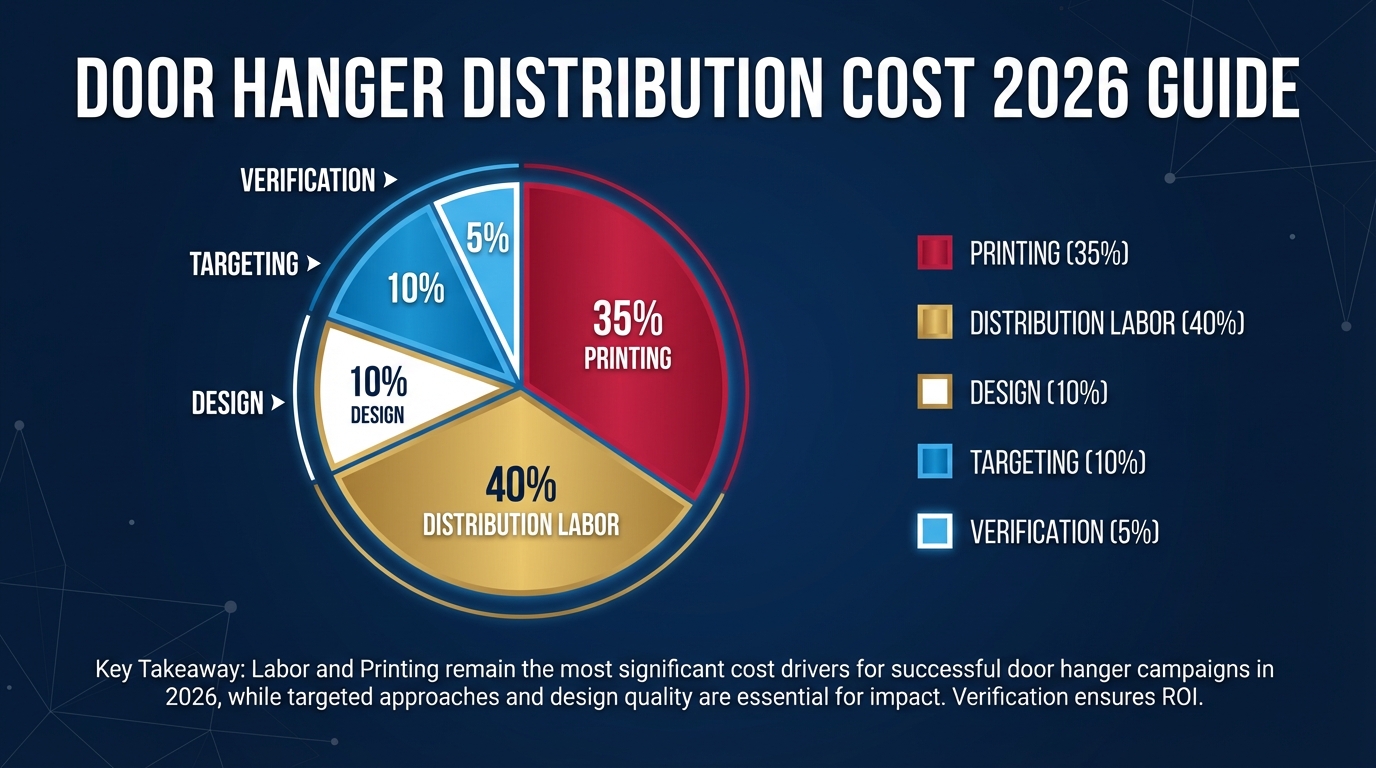
Choosing the wrong method wastes hours and money—here’s the exact breakdown by volume.
Under $100 Budget (1-100 Units)
- Best Tool: Lever-action hand punch ($30-$50)
- Time Required: 1-2 minutes per door hanger
- Total for 100 units: 2-3 hours of punching
- Pro Tip: Work in 20-minute intervals to prevent hand fatigue
$100-$500 Budget (100-1,000 Units)
- Best Setup: Arbor press ($150) + custom jig ($50)
- Time Required: 30-60 seconds per unit in batches of 10
- Total for 500 units: 4-6 hours
- Critical: Factor in 30 minutes for jig creation before starting
$500+ Budget (1,000+ Units)
- Smart Investment: Steel rule die ($300) + hydraulic press rental ($200/day)
- Time Required: 2-3 seconds per unit
- Total for 1,500 units: 2-3 hours
- Better Option: Commercial die-cutting service ($200-$500 total)
Safety Essentials When Cutting Door Hangers
Punching door hangers seems simple, but these often-overlooked safety steps prevent serious injuries.
- Always wear safety glasses—paper fragments can fly at high speed during punching
- Secure loose clothing and hair—entanglement with drill presses causes severe injuries
- Use push sticks with drill presses—never hold material by hand within 6 inches of the bit
- Keep fingers clear of punch dies—hydraulic presses generate enough force to crush bone
Professional Shortcut: The Registration Jig That Saves Hours
The single biggest time-saver when learning how to cut door hangers is a custom registration jig.
- Cut a 12″x12″ piece of 1/4″ acrylic or hardboard
- Drill two 1/8″ registration holes at bottom corners
- Create a wooden stop block at 2″ from front edge
- Add clamps to secure material during punching
This $20 jig eliminates measuring for every piece, ensures perfect hole placement, and allows you to process door hangers 5-10x faster. For carbonless two-part forms, add corresponding pins that align both layers simultaneously.
Final Note: Whether you’re punching your first door hanger or your thousandth, the key to professional results lies in matching your technique to your specific material and volume. Start with small test batches to verify your method before committing to full production—this simple step prevents costly mistakes that ruin entire runs. For two-part carbonless forms specifically, prioritize registration above all else, as misaligned holes render your door hangers completely unusable. With these proven techniques, you’ll consistently create door hangers that hang straight, look professional, and withstand repeated handling—turning what seems like a simple task into a reliable part of your marketing workflow.