
You yank the cord on your patio door blinds, but the slats stay frozen in place. Twist the tilt wand until your knuckles turn white—still nothing. That sinking feeling hits when you realize these aren’t ordinary blinds. They’re sealed inside your double-pane glass door, completely inaccessible. No screwdriver can reach those tangled cords or broken gears. For homeowners with Pella, Andersen, or Marvin doors featuring insulated glass units (IGUs), this is a common nightmare. But here’s the truth: you can fix door blinds trapped behind glass—without replacing the entire door. This guide cuts through the confusion with three proven solutions, cost breakdowns, and critical safety steps you won’t find in generic tutorials. You’ll learn exactly how to diagnose the failure, avoid costly mistakes, and choose the right fix for your budget and skill level.
Why Your Door’s Sealed Blinds Won’t Move (3 Telltale Signs)
Don’t waste hours trying to “repair” what’s fundamentally unfixable. Blinds sealed between glass panes operate in a vacuum-like environment—they’re designed to be maintenance-free but impossible to service once broken. Your first move is identifying the failure mode, which dictates your solution path.
Is It a Control Mechanism Failure or Total Blind Collapse?
- Tilt mechanism dead? If the wand spins freely without moving slats, the internal gear stripped or the tilt rod detached. This requires full IGU replacement—no exceptions. Sealed units prevent accessing the mechanism.
- Lift cord stuck or broken? Pull the cord and feel slack? The cord snapped inside the headrail. Visible tangled slats confirm this. You cannot rethread cords through sealed glass.
- Blinds frozen in one position? If slats won’t raise/lower or tilt, moisture likely seeped into the unit (causing corrosion) or the headrail assembly shattered. This always means IGU replacement.
Critical: Check for Hidden Fogging or Seal Failure
Run your palm along the glass edges. Feel condensation between the panes? See persistent fogging? That’s catastrophic seal failure. Moisture has destroyed the moisture-absorbing desiccant crystals inside the spacer bar. Even if blinds still move, they’ll seize permanently within months. Do not attempt band-aid fixes here—this demands immediate IGU replacement to prevent mold growth inside your wall cavity.
Replacing the Glass Unit: Cost vs. DIY Reality Check

This is the only way to truly fix door blinds sealed inside glass. Forget YouTube hacks about drilling holes—99% of glass shops refuse this “repair” because resealing creates weak points that leak within months. Here’s what you need to know before ordering a new unit.
How to Order the Exact Replacement IGU (Without Costly Mistakes)
- Find your door’s DNA: Locate the manufacturer’s label on the hinge edge (Pella labels often hide under weatherstripping). Note the serial number—not the model name. For Andersen doors, check the spacer bar between panes for a tiny etched code.
- Measure like a pro: Measure the glass opening (not the door frame) at top, middle, and bottom. IGUs require 1/8″ clearance per side. A 36.25″ x 80.125″ opening needs a 36″ x 80″ IGU. Get this wrong, and the glass won’t seat properly.
- Specify blind type: Tell suppliers if you have “mini-blinds” (1/2″ slats) or “vertical blinds” (common in wide patio doors). Pella’s “SmartBlind” IGUs cost 20% more than standard versions.
DIY Installation: When It Saves Money (and When It Backfires)
Only attempt this if:
– Your door is under 40″ wide (heavier units require 3+ people)
– You have a workshop with sawhorses and clamps
– Your warranty expired (Pella voids coverage for DIY IGU work)
Skip DIY if:
– Your door has decorative grilles (muntins) between glass—these require factory-replicated spacer bars
– You see existing sealant cracks on the exterior frame (indicates structural flexing)
Pro Tip: Order IGUs with butyl tape pre-applied on the spacer bar. It costs $15 more but eliminates 70% of DIY seal failures. Silicone sealant alone won’t cut it for exterior doors.
Step-by-Step: Removing Your Broken IGU Safely
Tools you absolutely need: Impact gloves (not regular work gloves), 3″ wide putty knife, 12″ pry bar, 2×4 shims, and a helper. Never attempt this alone—IGUs shatter unpredictably.
How to Avoid Shattering Your Door Frame
- Remove the door slab: Unscrew hinge pins and lay the door flat on sawhorses padded with moving blankets. Critical: Support both ends—glass weight stresses the frame when vertical.
- Pry interior stops correctly: Slide the putty knife behind the stop molding at the bottom corner. Tap the pry bar upward (never outward) to avoid splitting the frame. Work toward the center on each side.
- Lift the IGU straight out: Place hands under the glass edges—not the center. If stuck, insert two 2×4 shims under the bottom edge and gently lever up. Forcing it cracks the glass.
⚠️ Warning: If the IGU has fogging, wear an N95 mask during removal. Moisture inside often carries mold spores.
Installing the New Unit: The Sealant Trick Pros Use
- Apply a 1/4″ bead of SikaFlex 221 (not generic silicone) around the interior channel. This UV-resistant sealant lasts 20+ years.
- Lower the new IGU onto 1/8″ thick cardboard spacers at each corner. Press down firmly to embed the butyl tape.
- Reinstall stops with 3/4″ galvanized brad nails—not glue. Leave 1/16″ gaps between stops for wood expansion.
- Seal the exterior: Apply sealant only to the outside joint where glass meets frame. Rainwater must drain away from the interior.
Budget Fixes That Actually Work (When IGU Replacement Is Too Costly)

If replacing the glass unit isn’t feasible, these alternatives restore function fast—without risking broken glass or voided warranties.
Install Interior Plantation Shutters in 20 Minutes
Forget flimsy clip-on blinds. Mount real wood plantation shutters directly to your door’s interior stiles using these steps:
1. Measure stile width (vertical frame pieces) with door closed.
2. Order shutters 1/4″ narrower than stiles to avoid rubbing when opening.
3. Use #8 x 1-1/2″ lag screws into stile centers—not just the thin surface wood. This prevents sagging.
Cost Saver: Basic polywood shutters run $80-$150 per door on Amazon. They block light better than broken IGU blinds and add resale value.
Apply Peel-and-Stick Privacy Film (Renter-Friendly)
For $35, transform foggy or broken-blinds glass into frosted privacy glass:
1. Clean glass with 70% isopropyl alcohol (removes invisible oils).
2. Spray solution of 1 cup water + 1 tsp baby shampoo onto glass.
3. Peel film backing slowly while squeegeeing out bubbles from center outward.
4. Trim edges with box cutter against a straightedge.
Avoid cheap static-cling films—they bubble within weeks on exterior doors.
When to Call a Pro: 4 Non-Negotiable Scenarios
Don’t gamble with these situations—they turn $300 jobs into $2,000 disasters:
- Your door has thermal break damage: Visible cracks in the vinyl or aluminum frame near the glass. DIY pressure during IGU removal worsens this.
- Pella doors under warranty: Their IGU warranty covers blind failures for 20 years. Demand a replacement unit—not a repair estimate.
- Sliding glass doors: The weight (100+ lbs) and awkward size make DIY dangerous. One slip shatters glass onto your deck.
- Existing exterior sealant cracks: Indicates frame flexing. A pro will shim the door before IGU replacement to prevent recurrence.
Pro Tip: Find IGU specialists via the Glass Association of North America (GANA) directory. Ask: “Do you fabricate IGUs with between-the-glass blinds?” Many general glaziers can’t.
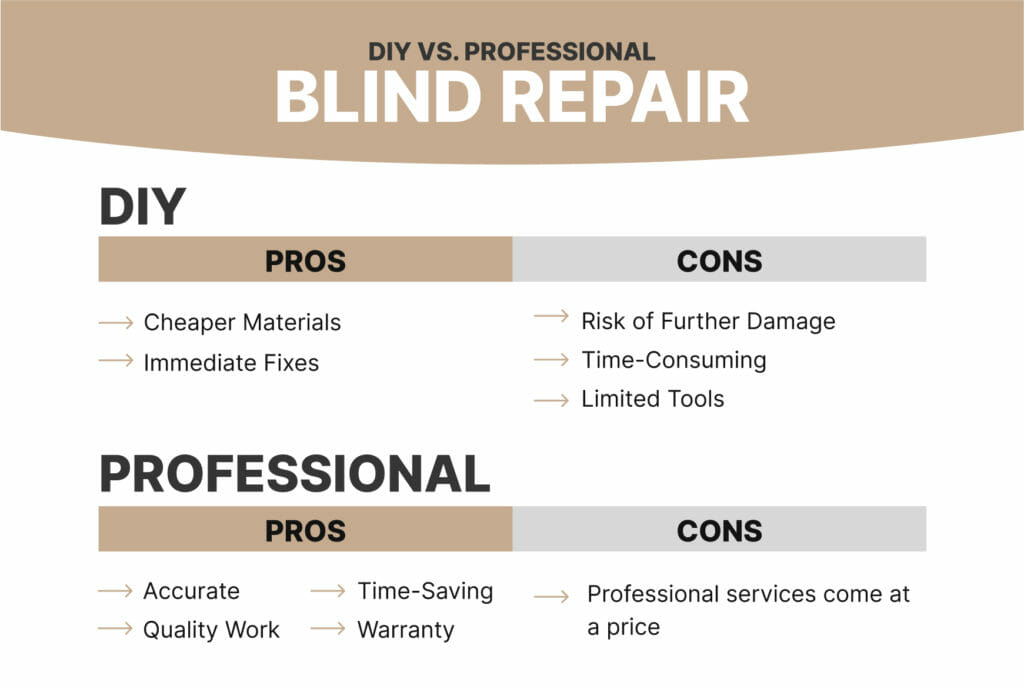
Final Decision: Which Fix Saves You the Most Money?
| Solution | True Cost | Time Required | Longevity |
|---|---|---|---|
| DIY IGU Replacement | $280-$650 (unit + tools) | 3-5 hours | 15-20 years |
| Interior Shutters | $90-$180 | 20 minutes | 10+ years |
| Privacy Film | $25-$60 | 45 minutes | 3-5 years |
| Pro IGU Replacement | $620-$1,400 | 1-2 days | 20+ years |
Choose IGU replacement if: Your door is new, under warranty, or you plan to sell soon (broken blinds scream “deferred maintenance”).
Choose shutters/film if: Renting, on a tight budget, or your frame shows damage (shutters hide flaws).
No matter your choice, act fast. Moisture from failed IGU seals rots door frames from the inside out. For Pella/Andersen owners: Contact the manufacturer first—many cover blind failures under glass warranties even after 10 years. Once you’ve restored function, prevent repeats by never forcing tilt wands and cleaning glass with vinegar (not ammonia-based cleaners that degrade seals). Your door’s blinds can work like new—you just need the right fix, not the fanciest one.