That frustrating moment when your door handle won’t snap back into place isn’t just annoying—it’s a security risk waiting to happen. When the lever sticks vertically or the knob flops limply after use, the culprit is almost always a failed return spring inside the mechanism. This critical but tiny component endures thousands of compressions over its lifetime, eventually losing tension or snapping completely. In this guide, you’ll learn exactly how to fix door handle spring issues yourself with basic tools, saving you a costly locksmith call while restoring reliable operation to interior and exterior doors throughout your home.
Ignoring a faulty door handle spring can lead to serious consequences. A handle that doesn’t return properly may prevent the latch from fully engaging, leaving doors vulnerable to forced entry. In high-traffic areas like kitchens or bathrooms, this problem worsens rapidly as the weakened spring struggles against daily use. The good news? Most spring failures can be resolved in under 30 minutes with the right approach. By the end of this guide, you’ll confidently diagnose spring issues, select the correct replacement, and execute a professional-quality repair that lasts for years.
Why Your Door Handle Spring Fails and How to Confirm It
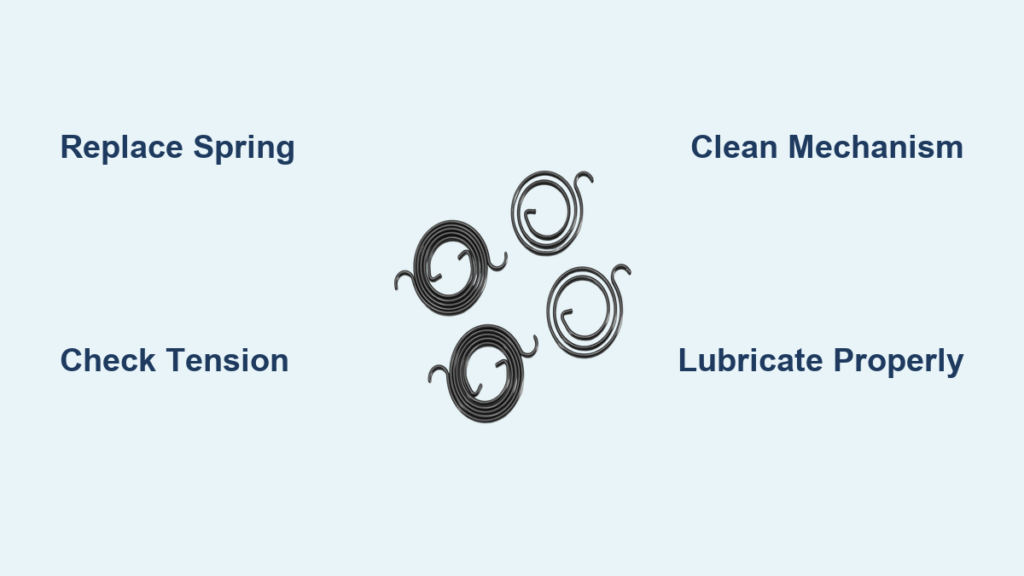
Understanding why springs fail helps you diagnose accurately before disassembling your hardware. Torsion springs—those small coiled metal components inside lever handles—suffer from three primary failure modes: metal fatigue from repeated twisting, corrosion from humidity exposure, or physical displacement from improper installation. When these springs weaken or break, they lose the tension needed to return your handle to its horizontal position after use.
Spotting the Telltale Signs of Spring Failure
Three clear symptoms indicate spring trouble before you even remove the handle. First, if the lever stays stubbornly vertical after opening the door rather than snapping back horizontally, your spring has likely lost tension. Second, a handle with excessive “play” that moves 1/4 inch before engaging the latch mechanism points to spring displacement or breakage. Third, listen for unusual sounds—a sharp ping during operation often means a broken coil, while grinding suggests corrosion seizing the spring housing.
What NOT to Mistake for Spring Failure
Don’t confuse spring issues with other common door handle problems. If your latch doesn’t retract fully when turning the knob, the problem likely lies in the latch mechanism itself—not the spring. Similarly, a handle that feels gritty but returns properly usually needs lubrication rather than spring replacement. Always test the handle action independently of the latch by operating it while the door is open to isolate spring-related symptoms.
Essential Tools and Safety Gear for Spring Repair

Working with compressed springs demands proper preparation to avoid injury from flying components. Skipping safety steps here risks eye damage or pinched fingers when springs release unexpectedly. The right tools make disassembly and reassembly precise while protecting delicate internal components.
Must-Have Tools for Spring Replacement
Gather these specific items before starting: needle-nose pliers with fine tips for handling tiny springs, a precision screwdriver set (including #00 Phillips and 1.5mm flathead), and a small container for screws. Crucially, include spring clamps or retaining ring pliers—they safely compress springs during removal and installation. For stubborn mechanisms, add a dental pick for prying out hidden clips and a small magnet to retrieve dropped parts.
Critical Safety Precautions
Wear ANSI-approved safety glasses at all times—springs under tension can eject at dangerous speeds. Use cut-resistant gloves when handling broken spring fragments with sharp edges. Work on a clean, well-lit surface with a towel to prevent small parts from rolling away. Most importantly: never point the mechanism toward your face during disassembly. If you hear a “twang” when removing the handle, stop immediately—this indicates stored spring tension requiring controlled release.
Step-by-Step Spring Replacement Without Damage
Rushing through disassembly is the #1 cause of additional damage during spring repairs. Taking photos at each stage creates your personal reassembly guide, preventing costly mistakes when reinstalling tiny components. This method works for 95% of residential lever handles from brands like Schlage and Kwikset.
Removing the Handle Safely
Start by examining the handle base for hidden set screws—often concealed under decorative caps that pry off with a utility knife. For European-style handles, locate the tiny release hole on the shank and insert a 1.5mm allen wrench to disengage the lever. Once the lever is off, remove the rosette cover to expose mounting screws. Pro Tip: Place masking tape on the door surface around the hardware to prevent scratch marks during disassembly.
Extracting and Replacing the Faulty Spring
With the mechanism removed, locate the torsion spring—typically wrapped around the spindle post where the lever attaches. Before removing it, note its orientation: one end hooks into the housing while the other presses against the lever collar. Use needle-nose pliers to gently unwind the spring, never releasing tension suddenly. Measure the old spring’s wire diameter (usually 0.5-1.2mm) and coil count against your replacement to ensure compatibility. Install the new spring by first seating the fixed end, then carefully winding the active end to match the original tension.
Lubrication Secrets for Long-Lasting Results

Improper lubrication causes 40% of premature spring failures according to hardware manufacturers. Oil-based lubricants like WD-40 attract dust that creates grinding paste inside mechanisms. The wrong lubricant can also degrade plastic components common in modern handles.
The Right Way to Lubricate Door Mechanisms
After spring replacement, apply only dry graphite powder or silicone-based lubricant to pivot points. Dip a toothpick in lubricant and apply sparingly to the spring housing channels—not directly on the spring itself. Operate the handle 10 times to work in the lubricant, then wipe away excess with a microfiber cloth. For exterior doors exposed to moisture, add a drop of marine-grade anti-seize compound to the spindle shaft annually.
Troubleshooting Stubborn Post-Repair Issues
Even with a perfect spring replacement, binding mechanisms can mimic spring failure. If your handle still doesn’t return smoothly after repair, systematic troubleshooting prevents unnecessary part replacements.
Fixing Handle Binding Without Spring Replacement
First, disassemble and inspect for metal shavings or corrosion inside the housing—common in coastal areas. Clean all parts with isopropyl alcohol and a brass brush, never steel wool which leaves conductive particles. Check spindle alignment: a bent spindle causes binding that no spring can overcome. Reassemble without the spring temporarily to test for mechanical resistance—if the handle moves freely, your spring installation is correct.
When Spring Tension Is Too Strong or Weak
A handle that snaps back violently indicates excessive spring tension, while sluggish return means insufficient tension. For adjustable mechanisms (common in commercial hardware), use a spring tension gauge to measure force—residential handles typically require 3-5 inch-pounds. Critical Warning: Never stretch or compress springs to adjust tension—this permanently damages metal fatigue properties. Always replace with manufacturer-specified springs.
Manufacturer-Specific Repair Tips You Need

Generic springs work for basic handles, but premium brands require exact specifications. Baldwin and Emtek lever handles, for example, use proprietary spring geometries that won’t function correctly with standard replacements.
Schlage and Kwikset Spring Solutions
For Schlage F-series handles, note the spring’s “offset” design where one end sits higher than the other—installing it backward causes immediate failure. Kwikset SmartKey models require springs with specific hook angles; measure the old spring’s “leg angle” with a protractor. Both brands offer free spring replacement kits through customer service if you provide the model number (found under the lever cap).
When to Call a Professional Locksmith Immediately
Some situations demand expert intervention regardless of your skill level. Fire-rated doors with spring mechanisms must maintain specific closing speeds to pass safety inspections—improper repairs void certifications. Similarly, commercial panic bars use heavy-gauge springs under extreme tension that require specialized tools to service safely.
Recognizing Beyond-DIY Scenarios
Stop immediately if you encounter welded components, integrated electronic wiring, or evidence of forced entry damage. High-security locks like Medeco or Mul-T-Lock often have tamper-proof spring housings that require proprietary tools. If your handle is under manufacturer warranty, DIY repairs typically void coverage—contact the company first for authorized service.
Final Note: A properly repaired door handle should return to horizontal position with a crisp, consistent motion—no sticking, no excessive force required. Test your repair by operating the handle 20 times while listening for smooth operation. For ongoing reliability, apply dry lubricant every six months and inspect for spring fatigue annually. If you encounter complex commercial hardware or safety-critical doors, always consult a certified locksmith—the $75 service call beats the $500 replacement cost of damaged fire-rated hardware. With this guide, you’ve gained the confidence to tackle 90% of residential spring failures while knowing exactly when to call in the experts.