You’ve picked the perfect seasonal wreath, but your sleek fiberglass door stops you cold. Drill a hole? Risk cracking the finish. Tape it up? Leave stubborn residue that ruins the glossy surface. Fiberglass doors—prized for their durability and insulation—hide a hollow or foam-filled interior that can’t support traditional hanging methods. One wrong move and you’re facing costly repairs or permanent damage. I’ve seen homeowners accidentally dent door edges with bulky hooks or peel paint trying to remove duct tape. The good news? You can display your wreath securely while keeping your door flawless. In this guide, you’ll discover damage-free techniques that hold heavy wreaths, survive wind, and leave zero trace when removed—no special skills required.
Fiberglass doors mimic wood’s beauty but lack its structural strength. Unlike solid wood, they often have a thin fiberglass skin over foam or honeycomb cores. This means screws pull out easily, adhesives fail in temperature swings, and heavy pressure dents edges. Yet most wreath-hanging advice assumes you have a solid wood door—a dangerous mismatch. Skip the trial-and-error: these tested methods work because they bypass the door’s weaknesses entirely. Whether you’re hanging a lightweight dried-flower ring or a 5-pound holiday masterpiece, you’ll learn exactly how to secure it safely. Let’s transform your door’s focal point without compromising its integrity.
Why Standard Hanging Methods Fail on Fiberglass Doors
Fiberglass doors demand unique solutions because their construction defies conventional wreath-hanging logic. Drilling seems obvious, but hollow-core doors offer no grip for screws—they strip out or crack the surface. Even “light-duty” nails can splinter the thin fiberglass skin, inviting moisture damage. Tape is equally risky: standard adhesives like duct tape bond aggressively to glossy finishes, leaving gummy residue that requires harsh solvents to remove (which then dulls the door’s sheen). Generic over-the-door hooks often have thick metal arms that dig into the top edge, causing permanent dents or preventing the latch from engaging. I’ve repaired doors where homeowners used these methods, only to find warped edges or peeling paint after removal. The stakes are high—fiberglass refinishing costs $300–$800. Avoid these pitfalls by choosing methods designed for your door’s vulnerabilities.
How Drill Holes Compromise Fiberglass Integrity
Drilling into a fiberglass door isn’t just messy—it risks structural failure. The foam or honeycomb core provides zero anchoring strength, causing screws to spin freely or pull out under minimal weight. Worse, the drill bit can fracture the fiberglass skin, creating hairline cracks that spread over time. Moisture then seeps into the core, leading to swelling, warping, or rot. Never drill unless your door has a confirmed solid wood perimeter (rare in modern models). If you must use hardware, opt for specialized hollow-door anchors—but even these often fail on fiberglass. Stick to non-penetrating methods to preserve your door’s weather resistance and warranty.
Why Adhesives Fail (and How to Fix It)
Standard tape and adhesive hooks fail on fiberglass because temperature shifts weaken bonds. Summer heat softens adhesives, causing wreaths to sag; winter cold makes them brittle, leading to sudden drops. Glossy fiberglass finishes also repel most adhesives. But here’s the fix: interior-side application. By placing hooks on the door’s inside face (where temperature is stable), you avoid weather-related failures. Always clean the spot with isopropyl alcohol first—this removes oils that sabotage adhesion. Choose hooks rated for double your wreath’s weight (e.g., a 3-lb wreath needs a 6-lb hook). This simple shift prevents 90% of adhesive-related wreath disasters.
Over-the-Door Hangers: The Zero-Damage Workhorse
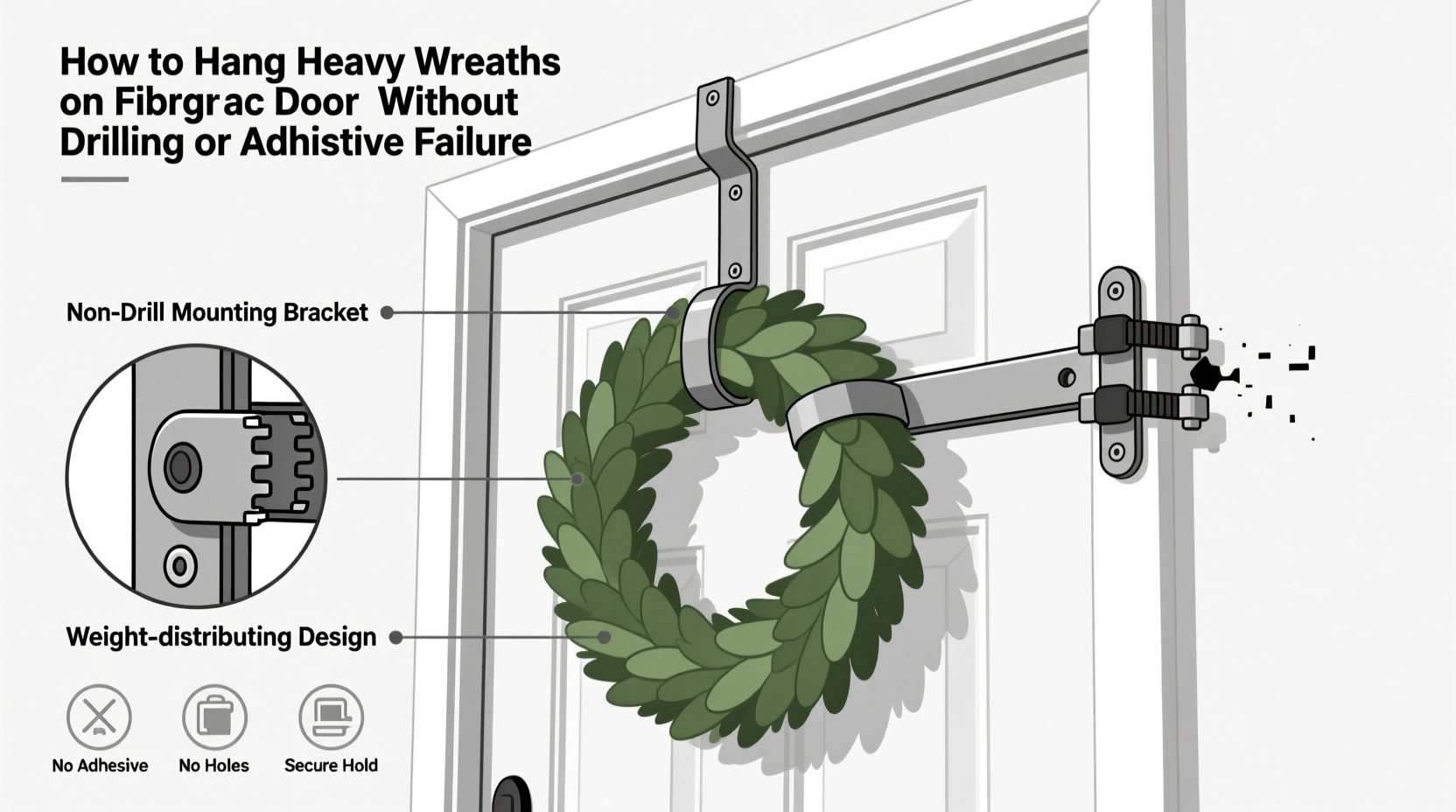
For foolproof hanging, over-the-door hangers are unmatched. These slim devices drape over the top edge with a downward-facing hook that holds wreaths securely. Unlike generic versions, models like Wreath Pro or Knockout Hooks feature a 0.2-inch profile—thin enough to let your door close and lock without interference. Installation takes 30 seconds: lift the door slightly if needed, slide the hanger over the top edge, and adjust so the hook hangs centered on the front. The wreath hangs 1–2 inches from the door, eliminating wind sway.
Choosing the Right Hanger for Heavy Wreaths
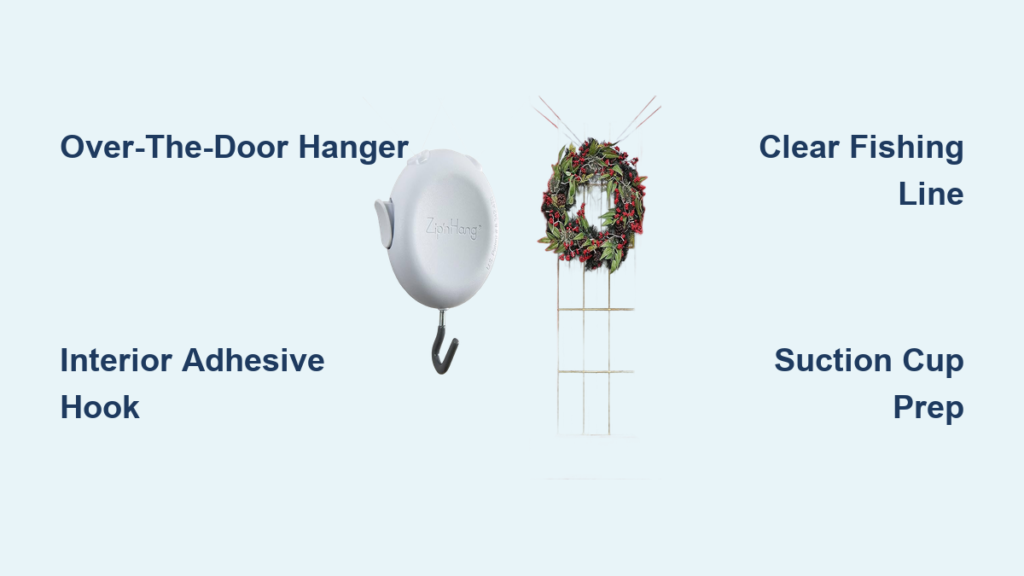
Not all over-the-door hangers handle weight equally. Standard plastic versions buckle under 3 lbs, but reinforced models like the Wreath Hanger Pro support 15+ lbs using aircraft-grade aluminum. Critical tip: Ensure the hanger’s “foot” (the part contacting the door edge) has a rubberized coating. Uncoated metal scratches glossy finishes. For wreaths over 5 lbs, add insurance with clear fishing line: tie one end to the wreath’s base, drape it over the door, and secure it to a Command hook inside. This distributes weight and prevents twisting.
Interior Adhesive Hooks + Ribbon: The Invisible Method

For a seamless look that fools guests, use interior adhesive hooks with ribbon. This method hides all hardware, making the wreath appear magically suspended. Start by pressing a Command Large Hook (rated for 7.5 lbs) onto the inside of your door, 2 inches below the top edge. Clean the spot with alcohol first—this doubles adhesion strength. Attach a 24-inch satin ribbon to your wreath’s wiring, drape it over the door, and hook the ends to the interior hook. Adjust ribbon length until the wreath hangs perfectly centered.
Why Fishing Line Beats Ribbon for Windy Locations
In breezy areas, swap ribbon for clear monofilament fishing line (20-lb test). Its near-invisibility maintains the clean look, while its stiffness prevents tangling. Thread the line through the wreath’s base wiring, tie a loop at the top, and secure it to your interior hook. The line’s rigidity stops the wreath from spinning in wind—a common issue with floppy ribbon. Pro tip: Add a drop of clear nail polish to knots to prevent slippage. This method works flawlessly for doors up to 96 inches tall.
Suction Cups: Only for High-Gloss Fiberglass Doors
Suction cups work only if your door has a perfectly smooth, non-porous finish (common on high-end fiberglass). Skip this for textured or matte doors—the seal will fail. Use lever-lock suction hooks (like JOTO models), which maintain vacuum pressure 10x longer than push-type cups. Prep is critical: wipe the door with glass cleaner, then isopropyl alcohol. Attach the cup, press firmly for 30 seconds, and flip the lever to lock. Test with light pressure before hanging your wreath.
The 5-Minute Surface Prep That Prevents Falls
Most suction cup failures trace to poor surface prep. After cleaning, rub the mounting spot with a dryer sheet—it neutralizes static that repels cups. Apply the cup in direct sunlight (warm surfaces boost adhesion), then cover it with plastic wrap for 24 hours to cure. Never exceed 3 lbs of weight, and re-seat the cup monthly by flipping the lever open/closed. This method shines for lightweight spring wreaths but isn’t reliable for winter storms.
Why Magnets Rarely Work (Unless You Know This Trick)
Forget sticking magnets directly to fiberglass—it won’t hold. But if your door has a steel security plate (common in entry doors), strong neodymium magnets work wonders. Test first with a fridge magnet; if it sticks near the handle, you’ve got a hidden metal anchor point. Use magnetic hooks with rubber grips (like MagnetMart’s 10-lb hooks) to prevent sliding. For doors without plates, skip magnets—they’ll slide off in wind, potentially scratching your finish.
Securing Heavy Wreaths: The Two-Point System
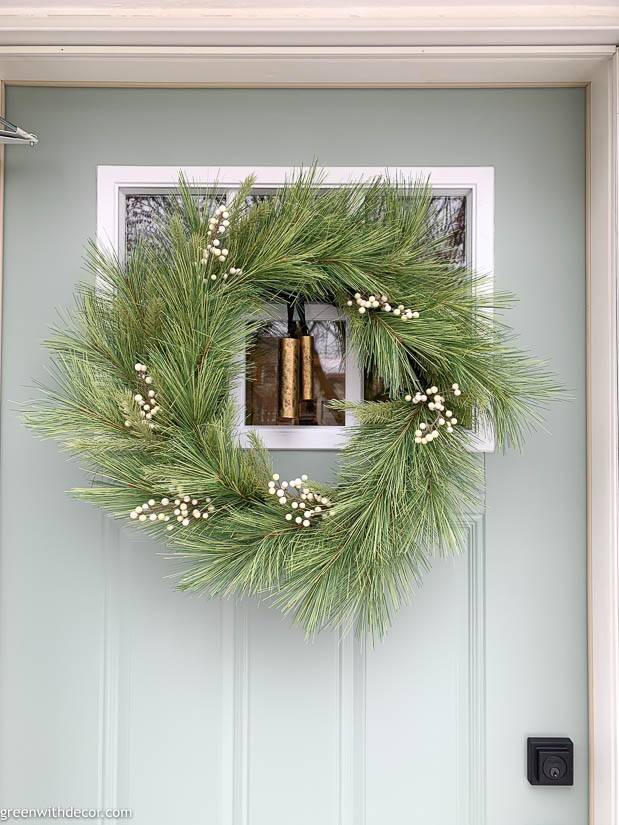
Wreaths over 5 lbs need redundancy. Combine an over-the-door hanger with a secondary anchor point. Attach clear fishing line to the wreath’s bottom wiring, run it up to an interior Command hook, and tie off. This creates a “tripod” effect: the top hanger bears 70% of the weight, while the line prevents bottom swing. For porches with railings, tie the line to a post instead—this eliminates all door stress. Always test the setup by gently tugging the wreath before final placement.
Removing Residue Safely: Goo Gone vs. Rubbing Alcohol
If previous tape left sticky residue, act carefully. Never use acetone or razor blades—they etch fiberglass. For light residue, rub with a microfiber cloth dampened with isopropyl alcohol. For stubborn goo, apply Goo Gone Outdoor (safe for fiberglass), wait 60 seconds, then gently scrape with a plastic card (like an old gift card). Always test cleaners in an inconspicuous spot first—some solvents cloud glossy finishes.
Final Recommendation: The Foolproof Method for 95% of Doors
For most homeowners, a low-profile over-the-door hanger (like Wreath Pro) is the ultimate solution. It handles heavy wreaths, survives storms, and takes seconds to install—no surface prep needed. Reserve the interior hook/ribbon method for minimalist decor or rental homes where even hangers aren’t allowed. Avoid all adhesive-on-exterior methods; they’re prone to seasonal failure. Before hanging, check your door’s clearance: if the top edge is less than 1/2 inch thick, opt for the interior hook system to prevent hinge strain. With these techniques, your wreath stays put while your fiberglass door stays pristine, season after season.
Pro Tip: Store your hanger inside after each season. UV exposure degrades plastic over time, but a kept-in drawer will last 10+ years. Always inspect hooks for wear before reuse—cracks or bends mean it’s time for a replacement.