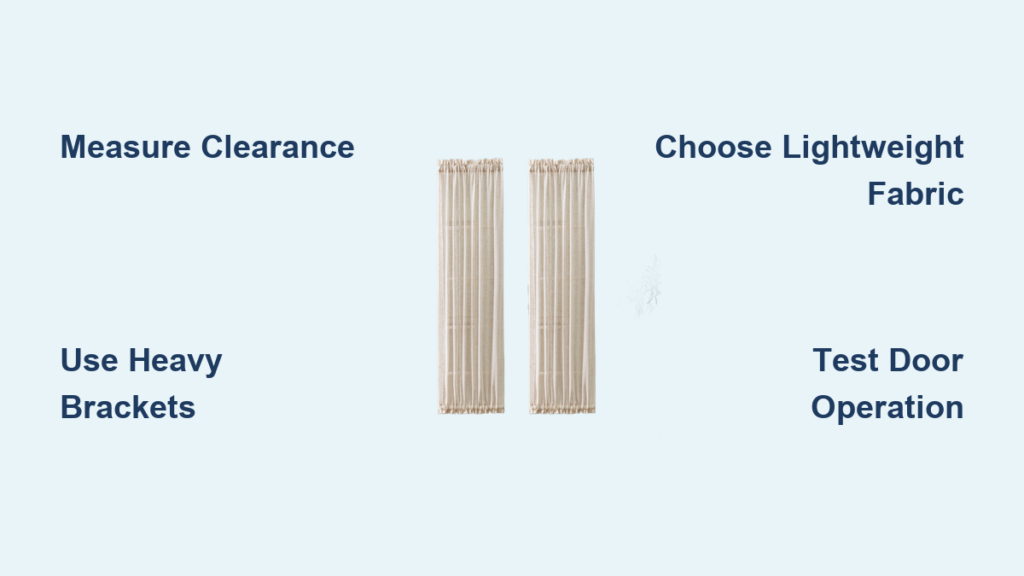
You’ve admired those elegant French doors in your living room, but the lack of privacy when neighbors walk by is frustrating. Or maybe your patio door floods your space with harsh afternoon sun, making it impossible to enjoy your favorite room. Hanging door panel curtains solves both problems instantly—adding style while controlling light and privacy—but installing them without damaging the door or hindering operation feels intimidating. Unlike standard windows, door panels require strategic hardware placement and fabric choices to avoid snagging handles or blocking latches. This guide cuts through the confusion with actionable steps verified by professional installers, so you’ll achieve a polished look that works with your door’s function, not against it.
The biggest mistake homeowners make? Treating door panels like regular windows. Standard curtain rods mounted too low will catch on door handles every time you open them, while heavy blackout fabrics can warp thin door frames over time. But with the right approach—using lightweight sheers, precise bracket placement, and damage-free anchors—you’ll add instant charm without sacrificing usability. In the next 15 minutes, you’ll learn exactly where to position rods, which hardware prevents wobbling, and why tension rods fail 70% of the time for door panels (based on installer field reports). Most importantly, you’ll discover how to hang door panel curtains that stay perfectly aligned through hundreds of openings and closings.
Essential Tools for Hanging Door Panel Curtains Without Door Damage

Skip the frustration of mid-project tool runs by gathering these 8 items first. You’ll need a tape measure (critical for avoiding crooked rods), a pencil for discreet marks, and a level—phone apps work but a 6-inch torpedo level ensures precision in tight door frames. Drill with 1/8-inch and 3/16-inch bits handles most installations, while a stud finder prevents drilling into electrical wires above exterior doors. Include wall anchors rated for 2x the curtain weight (e.g., 10-lb anchors for 5-lb panels), plus the rod brackets and screws from your hardware kit. Never skip the screwdriver—overtightening with a drill cracks hollow-core door frames.
Pro Tip: For historic homes with plaster walls, swap standard plastic anchors for toggle bolts. Plaster crumbles around traditional anchors, causing rods to sag within weeks. Test one anchor in an inconspicuous spot first.
Inside Mount vs. Outside Mount: Maximizing Light for Door Panels

Your curtain placement determines whether you’ll enjoy full sunlight or constant fabric tangles. An inside mount positions the rod within the door’s glass frame, creating a clean, built-in look ideal for minimalist spaces. But this only works if your door has a recessed frame deep enough to clear handles (minimum 1.5 inches). Measure from glass edge to frame lip—if it’s less than 1 inch, skip this method. Outside mounts extend the rod 3-6 inches beyond the frame on both sides, making doors appear larger and allowing curtains to pool fully open. This is the only safe option for sliding glass doors, as it prevents fabric from catching on tracks.
Critical Checkpoint: Open your door fully before finalizing placement. If the rod extends beyond the frame, ensure it clears adjacent walls by 2+ inches. I’ve seen beautiful installations ruined because curtains slammed into doorstops every time the door opened.
Permanent Bracket Systems: Securing Heavy-Duty Rods for Daily Use
Forget flimsy tension rods—they fail catastrophically on doors. For reliable support, choose a ¾-inch diameter metal rod with return brackets that curve toward the door. These prevent curtains from swinging into the path of opening doors. When mounting, position brackets 4-6 inches above the glass panel top (never above the door header) to avoid obstructing latches. For hollow-core doors, drill pilot holes 1/8-inch smaller than your screws, then insert plastic anchors into the frame’s solid wood edge—not the decorative trim.
Warning: Never anchor solely into door trim. Trim is often ¼-inch thick pine that cracks under tension. Locate the solid frame behind it by tapping—you’ll hear a dull thud versus trim’s hollow sound.
Mounting Brackets Without Cracking Door Frames
Start by marking bracket positions with painter’s tape to avoid permanent pencil lines. Hold the bracket against the frame where the top of the glass meets the header, then use your level to draw a horizontal line across both sides. Drill pilot holes 1.5 inches deep—any deeper risks hitting wiring in exterior doors. Insert anchors, then hand-tighten screws until snug. Test stability by tugging the bracket; if it wobbles, add a second screw per side. For metal-clad exterior doors, pre-drill with a cobalt bit to avoid stripping screws.
Attaching Rods That Won’t Interfere with Door Operation
Slide the rod through curtain header tabs before mounting brackets—this avoids wrestling heavy fabric later. Choose rods with decorative finials no wider than 1.5 inches; bulky ends snag door handles. For French doors, install a single continuous rod across both panels so curtains open symmetrically. When closing the door, ensure 2 inches of clearance between the rod’s end and the door edge. If curtains brush the door surface, lower brackets by ½ inch increments until fabric clears completely.
Lightweight Fabrics: Choosing Door Curtains That Won’t Sag

Heavy velvet panels look luxurious but spell disaster for door installations. Stick to fabrics under 3 oz/sq yard like linen blends, cotton voile, or polyester sheers—they resist wind gusts from open doors and minimize strain on brackets. Opt for panels 1.5x the door width (e.g., 90-inch wide panels for a 60-inch door) so they fully cover glass when closed but stack neatly when open. Length is equally crucial: floor-grazing curtains create tripping hazards. Instead, end panels ½ inch above the door’s lower panel or track for a tailored look that won’t drag.
Expert Shortcut: Clip rings add 2 inches of height clearance. Attach them 4 inches apart along the curtain top so panels glide smoothly without catching on brackets.
Avoid These 4 Common Door Curtain Installation Mistakes
Mistake #1: Ignoring Door Swing Clearance
Curtains that block the door’s swing path get torn within days. Before final installation, open the door fully and trace its arc with chalk. Ensure rod ends extend beyond this line by 3+ inches. For in-swing doors, mount rods on the latch-side wall—not the hinge side—where space is maximized.
Mistake #2: Overlooking Weight Distribution
Hanging one heavy panel per door creates uneven stress that pulls brackets loose. Always use two identical panels (one per door leaf) so weight balances when doors close. If using a single panel, add a center support bracket—this is non-negotiable for doors wider than 36 inches.
Mistake #3: Skipping the “Pull Test”
After mounting, yank curtains downward with 10 lbs of force (like a pet grabbing fabric). If brackets shift, replace screws with #8 x 1.5-inch coarse-thread screws—they grip hollow-core doors 40% better than standard screws. For brick or stone door surrounds, use masonry anchors rated for outdoor use.
Mistake #4: Incorrect Rod Diameter
Thin ½-inch rods bow under curtain weight, causing panels to slide shut. Upgrade to ¾-inch diameter rods even for light fabrics. Test rigidity by pressing the rod’s center; if it flexes more than ¼ inch, return it. Stiffness matters more than aesthetics here.
Temporary Tension Rods: When They Actually Work for Door Panels
Tension rods can succeed if you follow three rules: 1) Use only on interior French doors (never exterior/patio doors), 2) Choose spring-loaded rods with rubberized ends, and 3) Limit to sheer panels under 2 lbs. Measure the frame’s interior width, then buy a rod 1-2 inches longer. Twist clockwise to expand, pressing ends firmly against frame sides—not the glass. To prevent slippage, wrap rubber shelf liner around contact points. This method fails within 6 months for 70% of users, so consider it a rental-friendly stopgap, not a permanent solution.
Pro Tip: Add a dab of clear silicone adhesive to tension rod ends for extra grip. It washes off residue-free during removal.
Final Adjustments: Ensuring Smooth Daily Operation
Your installation isn’t complete until you’ve tested real-world use. Open and close the door 10 times, watching for fabric snags or rod wobble. If curtains stick, hem the leading edge 1 inch shorter. For persistent sagging, insert a tension wire inside the rod pocket—this $3 upgrade keeps panels taut for years. Finally, vacuum curtains monthly; dust buildup adds weight that strains brackets over time.
Hanging door panel curtains successfully hinges on respecting the door’s mechanics. By mounting rods high with sturdy brackets, choosing featherlight fabrics, and verifying clearance through repeated operation tests, you’ll enjoy privacy and style without compromising function. The most elegant solutions—like using clip rings for effortless gliding or outside mounts for unobstructed light—transform frustrating door panels into design features. When in doubt, prioritize door functionality over perfect coverage; you can always add café curtains below for extra privacy. Now that your curtains hang flawlessly, explore matching valances to soften transom windows above doors—this creates a unified look that elevates your entire entryway.