
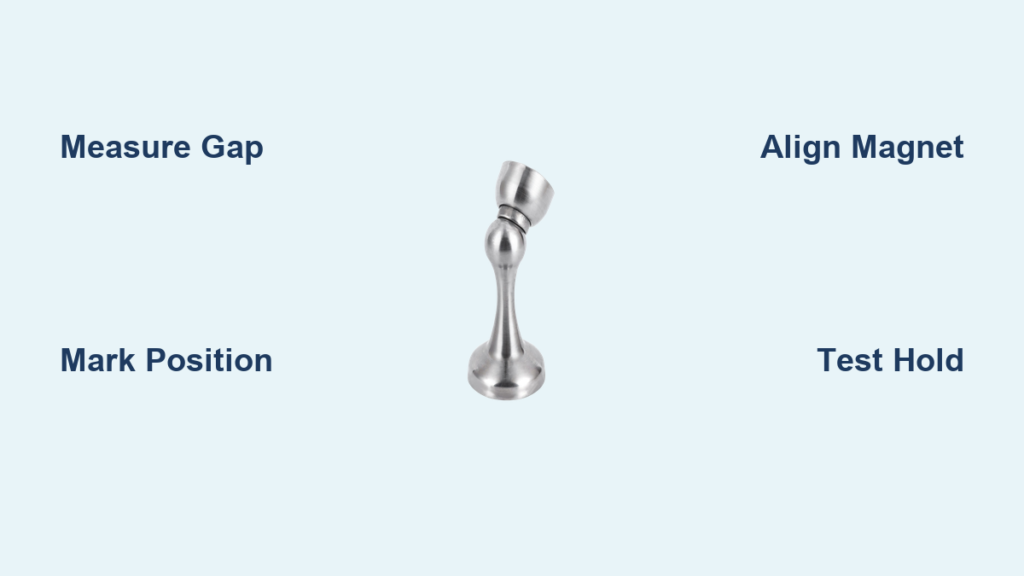
Your door slams against the wall for the third time this week, leaving another unsightly dent in your freshly painted wall. You’ve tried wedging books and towels to stop it, but nothing works reliably. Magnetic door stoppers solve this common household problem with an elegant, nearly invisible solution that keeps doors securely in place without damaging your walls. Installing one takes less than 30 minutes with basic tools and transforms how your doors function throughout your home. This guide covers everything you need to know to install a magnetic door stopper correctly the first time, ensuring years of reliable performance.
Essential Tools and Materials for Installation

Having the right equipment before starting prevents mid-project delays and ensures a professional result. Your magnetic door stop kit should include both the magnet assembly and metal strike plate, but often lacks necessary mounting hardware for different surfaces.
Gather these critical items before beginning:
– Complete magnetic door stop kit (magnet housing, strike plate, and included screws)
– Electric drill with variable speed control
– Assorted drill bits (wood, masonry, and metal bits depending on your surfaces)
– Phillips and flathead screwdrivers
– Carpenter’s pencil for precise marking
– 24-inch level to ensure perfect alignment
– Tape measure for accurate positioning
– Stud finder with AC wire detection capability
– Appropriate wall anchors for drywall or hollow surfaces
– Painter’s tape to prevent surface splintering
Skipping proper tools leads to misaligned stops that won’t engage properly or damage your surfaces. Never attempt installation without verifying what’s behind your walls—hitting electrical wiring or plumbing pipes creates expensive repair situations that could have been avoided with proper preparation.
Precise Location Planning for Optimal Performance
The success of your magnetic door stop installation depends entirely on accurate placement. Many DIYers rush this step, resulting in stops that don’t engage properly or require constant adjustment.
How to Determine the Perfect Placement Position
Close your door completely and measure the gap between the door edge and wall. Most installations work best when the door opens to a 90-degree angle, but your specific layout may require different positioning. Mark the wall at approximately 3 inches above the floor—this height avoids foot traffic while providing sufficient magnetic engagement.
Place a piece of painter’s tape on your baseboard at the marked location. Open the door slowly until it naturally stops against the wall, then make a second mark on the tape showing where the door edge contacts the wall. This shows exactly where your magnetic stop needs to engage.
Marking Critical Alignment Points
Hold the magnet base against your marked location and trace its outline with your pencil. Remove the base and mark the screw holes inside the outline. For the strike plate, open the door to your desired stopping position and hold the plate against the door bottom. Use your level to ensure it’s perfectly vertical, then mark the screw holes.
Check alignment by slowly closing the door toward your marks. The strike plate should line up precisely with the magnet location. If not, adjust your marks slightly until perfect alignment occurs. This precision prevents frustrating misalignment issues after installation.
Surface-Specific Installation Techniques

Different surfaces require specialized approaches to ensure your magnetic door stopper functions properly and remains securely mounted.
Installing on Hardwood Floors or Baseboards
Drill pilot holes slightly smaller than your screws using a wood bit. The pilot hole should be about 80% of the screw diameter to prevent wood splitting. For hardwood surfaces, use a countersink bit to create a slight depression for the screw heads, allowing the magnet assembly to sit flush.
Position the magnet base over the holes and secure with screws, but don’t tighten completely yet. Test the door’s movement and make micro-adjustments to the base position if needed. Only fully tighten screws once perfect alignment is confirmed.
Mounting on Tile or Masonry Surfaces
Tile requires special attention to prevent cracking. Place masking tape over your marked location, then use a masonry bit slightly smaller than your wall anchors. Drill slowly at low speed with light pressure—excessive force causes tiles to crack.
Insert plastic anchors into the holes, then position the magnet base. Tighten screws gradually in a star pattern to distribute pressure evenly across the tile surface. For stone or concrete floors, use appropriate masonry anchors designed for your surface type.
Critical Alignment Testing and Adjustment
Proper magnetic engagement separates a functional installation from a frustrating failure. Rushing this step causes most post-installation problems.
Verifying Magnetic Engagement Distance
Open the door fully and slowly guide it toward the magnet. The strike plate should engage when approximately 1 inch from the magnet housing. If engagement happens too early or not at all, your alignment needs adjustment.
Check both horizontal and vertical alignment. The strike plate must center perfectly over the magnet. Use a business card as a spacer to verify consistent gaps around the plate—this simple trick ensures optimal magnetic field alignment.
Fine-Tuning Magnetic Strength
Some magnetic stops include adjustment screws that raise or lower the magnet within its housing. If your door doesn’t stay put, tighten the adjustment screw clockwise to increase holding power. If the door sticks too aggressively, loosen the screw slightly.
Test the door’s movement through its full range. It should engage smoothly when opening to your desired position and release easily when closing. Make incremental adjustments until you achieve the perfect balance between secure holding and easy release.
Professional Installation Hacks You Need to Know
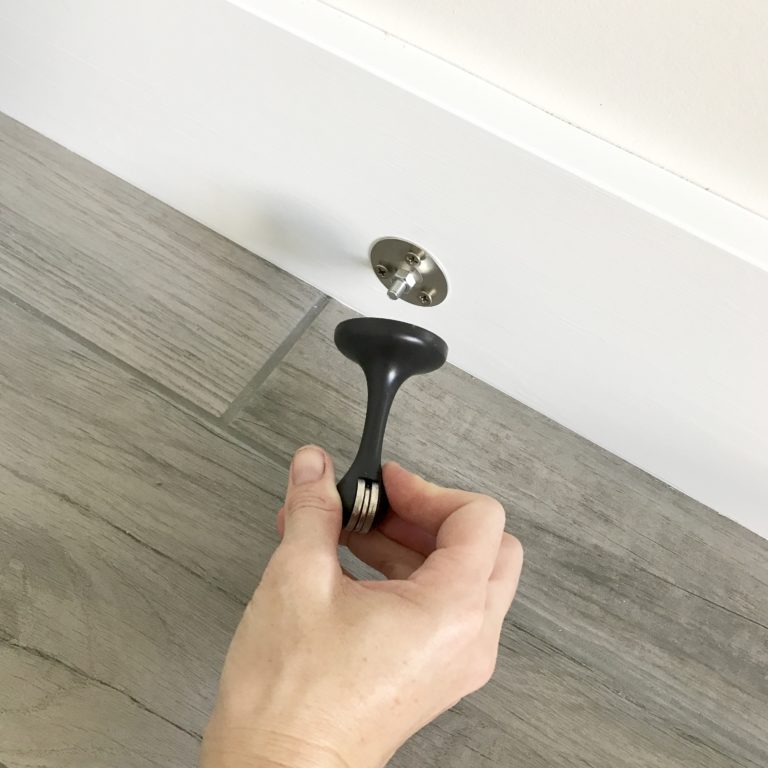
Seasoned installers use these proven techniques to ensure flawless magnetic door stopper performance from day one.
Avoiding Common Alignment Pitfalls
Mark your door’s stopping position with a small dot of removable tape before installing the strike plate. This visual reference prevents misalignment when you’re working alone. Have a helper hold the door in position while you mark the strike plate location—this eliminates guesswork.
For doors that swing both ways, install the magnet housing on the floor rather than the wall. Floor-mounted stops work with doors opening in either direction and create a cleaner aesthetic.
Surface Enhancement for Maximum Holding Power
If installing on carpeted floors, cut a small access hole through the carpet and padding to reach the subfloor. Secure the magnet housing directly to the subfloor, then tuck the carpet edges neatly around it. This provides solid mounting that won’t loosen as carpet compresses over time.
For painted surfaces, apply a small bead of clear silicone around the base of the magnet housing after installation. This prevents paint chipping from repeated door contact while remaining virtually invisible.
Troubleshooting Common Installation Issues
Even careful installations sometimes encounter problems. These solutions fix the most frequent magnetic door stopper issues.
Why Your Door Won’t Stay in Position
If the door won’t hold its position, check for magnetic interference from nearby metal objects. Door frames with metal reinforcement or nearby appliances can weaken the magnetic field. Relocate the stop 1-2 inches in either direction to find a “clean” magnetic zone.
Ensure the strike plate sits perfectly flush with the door surface. Any protrusion prevents full contact with the magnet. Sand down proud edges or add thin shims behind the plate to achieve perfect alignment.
Solving Sticky Release Problems
When the door sticks too aggressively, first verify you’re not using excessive force to close it. Magnetic stops require a deliberate, firm push to disengage—this isn’t a defect but proper functionality.
If the sticking seems excessive, check for debris between the magnet and strike plate. Dust and small particles create resistance. Clean both surfaces with isopropyl alcohol and a microfiber cloth to restore smooth operation.
Long-Term Maintenance for Reliable Performance
Your magnetic door stopper will provide years of service with minimal maintenance when installed correctly.
Wipe both the magnet and strike plate surfaces monthly with a dry cloth to remove dust buildup that reduces holding power. Every six months, apply a small drop of silicone lubricant to the magnet housing mechanism to maintain smooth operation.
Check screw tightness quarterly, especially on high-traffic doors. Vibration from repeated use can gradually loosen fasteners. Tighten any screws showing movement before they become completely loose.
A properly installed magnetic door stopper combines invisible aesthetics with reliable functionality. By following these precise installation techniques, you’ve created a solution that protects your walls while enhancing your home’s functionality. The next time someone asks how you keep your doors from slamming, you’ll know exactly how to share your expert installation knowledge. For best results, install stops on all problem doors at once—this creates consistent operation throughout your home and prevents future wall damage.