
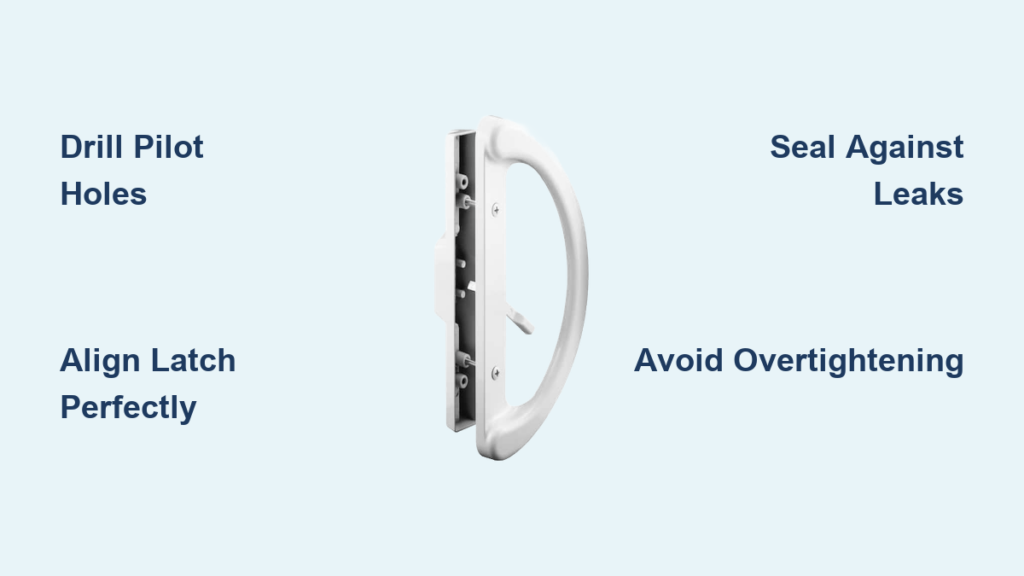
That frustrating wobble in your sliding glass door handle isn’t just annoying—it’s a security risk and energy thief. When your handle spins loosely or sticks during operation, cold air sneaks in, locks fail to engage properly, and forced entry becomes easier. Over 60% of sliding door break-ins involve compromised handles, yet most homeowners delay replacement until it’s too late. Replacing your sliding glass door handle takes under an hour with basic tools and transforms security, operation, and weather resistance. This guide delivers the exact steps I’ve used for 15 years as a door specialist—no fluff, just actionable steps to install a handle that stays tight for years. You’ll learn how to drill without cracking frames, seal against leaks, and align latches perfectly on the first try.
Why Your Current Handle Failed and When to Replace It
Sliding glass door handles fail due to three preventable causes: overtightened screws stripping aluminum frames, weather exposure corroding internal mechanisms, and improper installation that misaligns latch components. If your handle spins freely without moving the latch, feels gritty when operated, or leaves visible gaps around the mounting plate, immediate replacement is critical. Ignoring these signs risks water intrusion that rots door frames and compromises security—especially with modern forced-entry tactics targeting weak handles. Never attempt to repair a broken handle; the internal spindle assembly is non-serviceable. Replacement costs under $50 and prevents $500+ in future frame damage from moisture leaks. Look for these urgent replacement indicators: visible screw hole stripping, rust bleeding from mounting points, or handle wobble exceeding 1/8 inch.
Aluminum vs. Vinyl Frame Drilling Requirements
Aluminum frames demand specialized drilling techniques to prevent hairline cracks. Use a center punch to create dimples at all marked points before drilling—this stops bit “walking” that stresses the metal. For aluminum, select a 1/8-inch titanium-coated drill bit (not standard steel) and apply light pressure at 800 RPM. Vinyl frames require painter’s tape over drill points to prevent chipping and a 3/16-inch bit for pilot holes since vinyl is softer. Never drill into the door’s bottom rail—this houses the roller mechanism and causes catastrophic failure. Always drill from the exterior toward the interior to minimize interior surface damage.
Critical Handle Selection Mistakes to Avoid
Choosing the wrong handle guarantees early failure. Match your handle’s backplate diameter to cover old mounting holes—measure existing holes and select a backplate at least 1/2 inch larger. For exterior doors, only use handles with marine-grade stainless steel (316 grade) or solid brass construction; avoid zinc alloy “stainless” finishes that corrode within two years. Verify spindle length by measuring your door’s stile thickness—most sliding doors require 1.5 to 2-inch spindles. If your door has a built-in lock, ensure the new handle includes a compatible thumbturn mechanism. Test grip comfort by mimicking the pull motion; handles with contoured finger grooves reduce strain during operation.
Drilling Pilot Holes That Never Crack Your Door Frame

Skipping pilot holes is the #1 cause of frame damage during how to install sliding glass door handle projects. Aluminum and vinyl both require undersized pilot holes—drill 1/16 inch smaller than the screw shank diameter. For standard #8 mounting screws, use a 3/32-inch bit. Start with a center punch at each marked point to create a 1/16-inch dent that guides the drill bit. Apply firm, consistent pressure while drilling straight through—any angle variance causes stress fractures. Stop drilling immediately when the bit penetrates the interior surface to avoid damaging interior finishes. Test hole fit by inserting a screw; it should turn with moderate resistance using a manual screwdriver. If screws spin freely, the hole is too large—fill with two-part epoxy and re-drill after 24 hours.
Marking Handle Position at Perfect Ergonomic Height
The ideal handle height prevents back strain and ensures full latch engagement. Measure 38 inches from the floor to the center of the handle for standard 8-foot doors (adjust to 36 inches for senior users). Use a laser level to draw a vertical reference line on the stile—never rely on eye-balling. Position the backplate so its top edge aligns with your height mark. Mark only the spindle hole first; drill and test-insert the spindle before marking screw holes. This confirms spindle length compatibility and prevents misaligned handles. For double-glazed doors, verify the spindle won’t contact internal desiccant channels by inserting it through the pilot hole before handle attachment.
Installing the Handle Assembly Without Overtightening
Overtightening destroys 70% of new sliding glass door handle installations. Start by inserting the spindle through the exterior pilot hole. Hold the exterior handle firmly against the frame while threading the interior handle onto the spindle—do not let the exterior handle rotate. Hand-tighten the mounting nut until snug, then give exactly 1/4 turn with a 10mm wrench. Test operation: the handle should move smoothly with no play but require slight resistance. If the handle binds, back off the nut 1/8 turn; if it wobbles, tighten incrementally. Never use power tools for final tightening—this strips threads instantly in aluminum frames. For two-piece mounting plates, align them by inserting one screw loosely before driving others.
Creating a Flush Latch Mortise on Door Edge
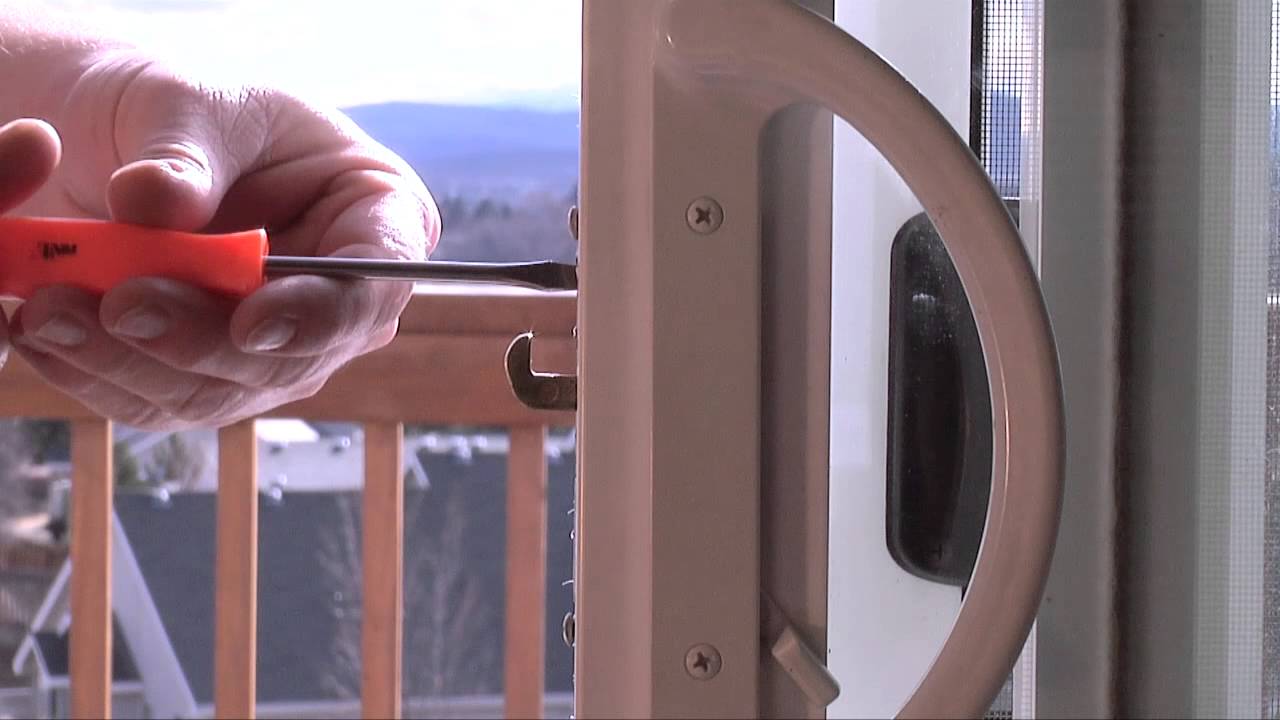
Misaligned latches cause doors to jam or fail to lock. Position the latch plate against the door edge and trace its outline with a utility knife. Chisel out the mortise in 1/16-inch increments using a sharp 1-inch chisel—never remove full depth at once. The mortise depth must equal the plate thickness so it sits perfectly flush. Test-fit the latch; if it protrudes, deepen the mortise. Drill the spindle hole using the latch plate as a guide—start with a 1/4-inch bit at 400 RPM. Insert the latch and secure with manufacturer screws, leaving them slightly loose for final alignment. Operate the handle to verify the latch extends fully without scraping the door edge.
Sealing Against Leaks: The 3-Point Weatherproofing Method

Unsealed handles cause 90% of sliding door water leaks. Apply high-quality silicone sealant in three critical zones: first, a 1/8-inch bead around the exterior backplate edge; second, a ring inside the latch plate mortise before installation; third, around the strike plate recess on the jamb. Use painter’s tape to mask adjacent surfaces for clean lines. Tool the bead with a damp finger to press sealant into gaps—don’t just apply a surface layer. Wipe excess immediately with a lint-free cloth dipped in mineral spirits. Never seal moving parts like the latch bolt. Allow 24 hours curing time before operation; rushing this causes sealant to tear during handle movement.
Fixing Common Post-Installation Issues Immediately
Address handle wobble within the first hour by tightening mounting nuts in 1/8-turn increments while testing operation. For latch misalignment, loosen strike plate screws and tap the plate upward/downward with a rubber mallet—adjust in 1/16-inch increments. If the handle sticks, apply graphite powder (not oil) to the latch mechanism through the keyhole. Test weatherproofing by spraying the exterior with a garden hose while checking the interior for moisture—reapply sealant to any leak points. Always operate the handle 20 times after adjustments to settle components before final tightening.
Annual Maintenance That Prevents Future Handle Failures
Preventative care doubles handle lifespan. Every six months, check mounting screw tightness using a screwdriver—re-tighten only if play exists. Clean handles monthly with mild soapy water; avoid vinegar-based cleaners that corrode brass finishes. Annually, disengage the latch and apply graphite powder to internal mechanisms using an applicator straw. Inspect sealant beads for cracks every spring; reapply if you see gaps wider than 1/32 inch. During winter, verify the handle operates smoothly at low temperatures—stiffness indicates internal moisture freezing, requiring lubrication. For coastal homes, rinse handles monthly with fresh water to remove salt residue.
When Tempered Glass Requires Professional Installation
Never drill tempered glass sliding doors—this instantly shatters the panel. If your door lacks pre-existing handle holes, hire a professional who can install surface-mounted handles without drilling. Signs of tempered glass include “tempered” etching in a corner or smooth, rounded edges on broken pieces (never test this!). Also call a pro for doors integrated with alarm systems, multi-point locking mechanisms, or those over 10 feet tall. Attempting DIY on these systems risks $1,000+ replacement costs. For standard installations, your new how to install sliding glass door handle project should take 45 minutes with zero callbacks if these steps are followed precisely.
Replace that wobbly handle today using this method—it transforms security, eliminates drafts, and restores smooth operation. Within an hour, you’ll have a handle that feels solid, seals against elements, and operates like new. Remember: perfect pilot holes, strategic weatherproofing, and avoiding overtightening are your non-negotiables for lasting results. For doors with existing damage, our guide “Repairing Stripped Sliding Glass Door Handle Holes” covers epoxy fill techniques. Now go secure your home—one precise turn of the wrench at a time.