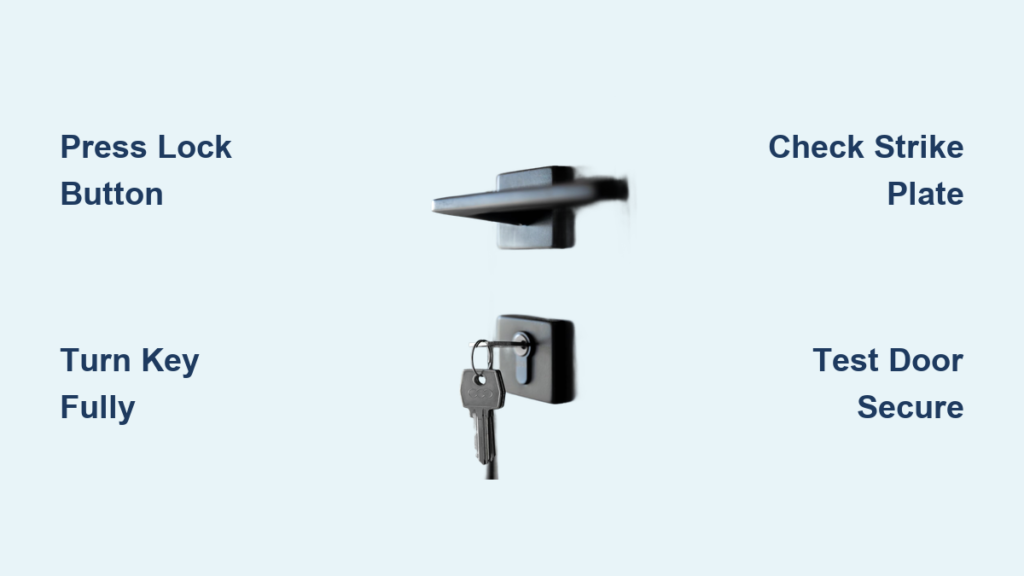
That moment when you’re halfway to your car and suddenly wonder: “Did I actually lock the front door?” It’s a common anxiety that affects millions of homeowners. Knowing exactly how to lock a door handle properly eliminates this uncertainty and creates a solid security foundation for your home. Whether you’re securing a bedroom for privacy or protecting your entire property from intruders, mastering door handle locking techniques is essential. This guide reveals the precise methods for locking every common door handle type, troubleshooting frustrating issues, and adopting professional security habits that keep your home truly protected.
Why Your Bathroom Door Handle Won’t Stay Locked (And How to Fix It)
Interior privacy locks seem simple but often malfunction when you need them most. Understanding your specific mechanism prevents embarrassing situations and ensures genuine privacy.
Finding Your Privacy Lock Button in Seconds
Privacy door handles feature a small release button typically located on the interior side of the knob or handle. Look for a discreet pinhole or rotating collar—these indicate a privacy lock designed for bathroom and bedroom doors. When you press or turn this mechanism, you’ll feel a distinct click as the handle disconnects from the latch. If you can’t locate the locking feature, your door likely has a non-locking handle that requires alternative security methods.
Proper Privacy Lock Engagement Technique
Many people press the lock button but fail to fully engage the mechanism. Push firmly until you hear a solid click, then test by gently turning the outside handle. If it still turns, press the button again with more force—some mechanisms require significant pressure. For turn-style privacy locks, rotate the collar until it stops, usually about 90 degrees. Always close the door and attempt to open it from the outside to verify proper locking before relying on it for privacy.
Emergency Unlocking Methods Every Homeowner Should Know
Privacy locks include an external override feature for emergencies. Locate the small pinhole on the outside knob face, then insert a straightened paperclip or specialized emergency tool. Apply firm pressure straight inward until you feel the lock disengage. Keep this technique in mind for situations where children accidentally lock themselves in, but never rely on it as your primary security method since it compromises privacy.
Securing Your Front Door Handle with a Key: The Right Way

Exterior door handles require more precise locking techniques to provide genuine security. Many homeowners think their door is locked when it’s actually vulnerable.
Locking Your Exterior Door from the Inside Without Fumbling
Modern entry handlesets feature interior thumb-turns or push-button locks that engage the deadbolt without keys. After closing your door, rotate the thumb-turn clockwise until it stops—you should feel resistance and hear the deadbolt extend. For push-button models, press firmly until you hear the locking mechanism engage. Never assume the lock is secure without verifying; always attempt to turn the outside handle after locking.
Correct Key Turning Technique for Maximum Security
When using your key from outside, insert it fully before turning. Rotate the key slowly and steadily through its entire range of motion—most cylinders require a 90-180 degree turn. Rushing this process often leaves the deadbolt partially engaged. If you feel unusual resistance, stop immediately; forcing the key can damage the cylinder. Proper technique ensures the full bolt extension that creates a secure barrier against forced entry.
Why Half-Turning Your Key Creates a False Sense of Security
Many homeowners turn their key only partway, thinking the door is secure when it’s actually vulnerable. A partially engaged deadbolt extends only 1/4 to 1/2 inch instead of the full 1 inch needed for proper security. Test your lock by inserting a business card between the door and frame—if it slides in easily when “locked,” your bolt isn’t fully extended. Always turn your key until it naturally stops to ensure maximum protection.
5 Emergency Ways to Secure an Unlocked Interior Door
Not all interior doors come with proper locking mechanisms, but you can create instant security with common household items.
Creating an Instant Privacy Lock with Office Supplies
When faced with an unlocked bedroom or bathroom door, a simple paperclip becomes your best friend. Straighten one end completely, then create a small hook at the other end. Insert the straight end into the emergency release hole on the outside knob, hook it around the internal mechanism, and pull firmly inward. This mimics the proper unlocking tool and provides temporary security until you can install a proper lock.
Improvised Door Wedges That Actually Stop Intrusion
A rubber doorstop wedge placed tightly under the door handle creates surprising resistance against opening. For better results, fold a thick magazine or phone book into a triangular shape and position it directly under the door sweep. The thicker the material, the more force required to open the door. Test your wedge by attempting to open the door—properly positioned wedges should require significant pressure to dislodge.
Building a Temporary Door Barricade in Under 2 Minutes
In situations requiring serious security, create a makeshift barricade using a sturdy chair. Position the chair with its back against the door handle and legs braced against the floor. For enhanced security, place a rolled towel along the door bottom to prevent lifting. While not foolproof, this method significantly delays unauthorized entry and works surprisingly well for interior doors without proper locks.
Why Your Door Handle Won’t Lock (and How to Fix It)
Common locking problems often have simple solutions that prevent costly locksmith calls.
Stuck Privacy Lock Button: Immediate Solutions
When your bathroom door’s push-button won’t engage, the mechanism is likely jammed with debris or misaligned. First, spray a small amount of dry graphite lubricant into the button hole—never use oil-based lubricants as they attract more dirt. Then, tap the button gently with the handle of a screwdriver while pressing. If this fails, remove the knob by locating the small set screw (often hidden under a decorative cap), loosen it, and carefully separate the knob to access and clean the internal mechanism.
Misaligned Strike Plate: The Silent Deadbolt Killer
If your deadbolt won’t fully extend into the door frame, the strike plate is likely misaligned due to house settling. Close the door and observe where the bolt hits the frame—marks indicate needed adjustment. Loosen the strike plate screws slightly, then tap the plate with a hammer and small punch to reposition it. Test the lock repeatedly during adjustment until the bolt slides in smoothly without forcing. Proper alignment prevents wear that leads to complete lock failure.
Frozen Door Mechanisms: Winter Locking Solutions
Extreme cold can freeze moisture inside lock cylinders, preventing key operation. Never force a key in freezing conditions—this risks breaking the key inside. Instead, warm the key in your hand first, then insert it slowly while applying gentle turning pressure. For stubborn locks, use a hairdryer on low setting to warm the cylinder exterior for 30 seconds. Always apply silicone-based lubricant before winter to prevent moisture buildup that causes freezing.
Professional Locking Habits That Prevent Break-Ins
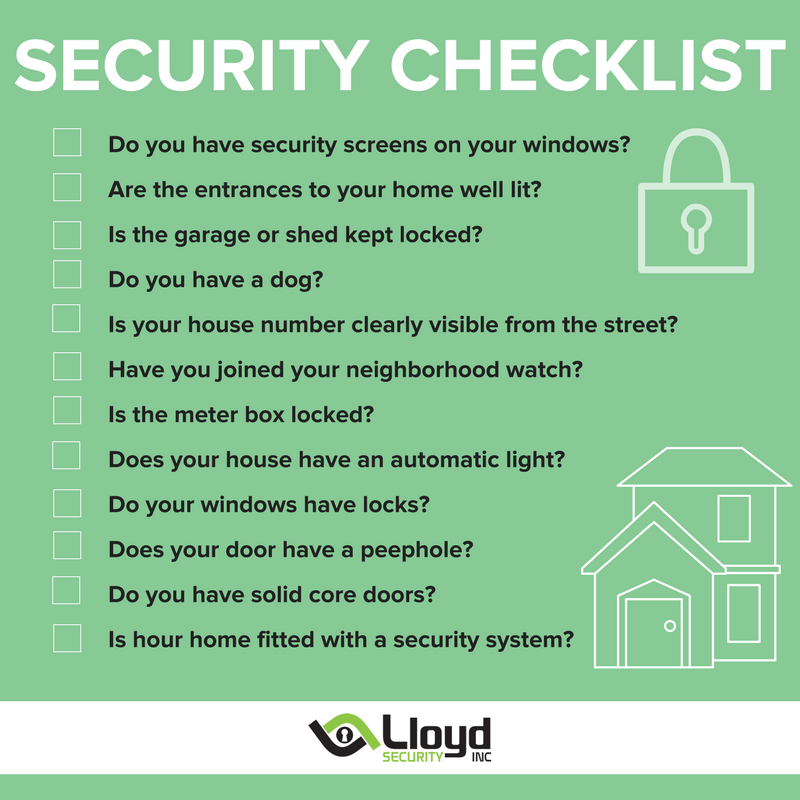
Security experts follow specific routines that transform simple locking into genuine protection.
The Double-Check Method That Actually Works
After locking your door, walk away for 10 seconds before returning to test it. This breaks the “confirmation bias” that makes you think you locked it when you didn’t. Grasp the handle firmly and attempt to turn it while simultaneously pulling the door toward you. If you feel any movement or hear rattling, the lock isn’t fully engaged. Repeat the locking process until the door remains completely stationary when tested.
Creating a Locking Routine That Becomes Second Nature
Link your door locking habit to another consistent action, like putting down your keys or checking your phone. Security professionals recommend always locking doors in the same sequence: deadbolt first, then handle lock. Consistency builds muscle memory that works even when you’re distracted or in a hurry. Set phone reminders for the first two weeks until the routine becomes automatic.
When to Upgrade to Smart Locks for Real Security
Traditional locks provide basic security but lack verification. Smart locks solve the “did I lock it” anxiety with instant phone notifications when doors lock. Look for models with physical key backup and encryption that meets ANSI Grade 1 standards—the highest residential security rating. The initial investment pays off when you remotely lock your door after leaving home, preventing costly break-ins that standard locks can’t address.
Mastering how to lock a door handle properly transforms simple hardware into genuine security. By identifying your specific lock type, using correct engagement techniques, and adopting professional verification habits, you eliminate uncertainty and create real protection. Remember that proper locking isn’t just about turning a key or pressing a button—it’s about verifying security through systematic checking. Implement these techniques consistently, and you’ll never again wonder whether your doors are truly locked. For maximum protection, combine proper locking habits with regular maintenance and consider upgrading to smart technology that provides verification your traditional locks can’t match.