You’re standing in a sunbaked parking lot, keys safely tucked inside your locked car, with no wire hanger in sight. That sinking feeling hits as you realize modern vehicles don’t respond to the classic coat hanger trick anymore. Today’s cars feature reinforced door seals, complex internal mechanisms, and electronic lock systems that render outdated methods useless—and potentially destructive. This guide cuts through the misinformation to deliver proven, non-damaging techniques for regaining access to your vehicle when you’re locked out without a hanger.
Unlike viral videos showing effortless hanger rescues, contemporary vehicles demand smarter approaches that protect your $1,500+ door assembly from costly damage. We’ll focus exclusively on methods that prioritize your car’s safety while acknowledging when professional help is non-negotiable. By the end of this guide, you’ll know exactly how to assess your situation, deploy the right tools safely, and prevent future lockouts—all without risking thousands in repair bills.
Critical Legal and Safety Precautions Before Attempting Entry
Attempting to unlock a car that isn’t yours is illegal in all 50 states and can result in felony charges. These methods apply only if you’re the legal owner with proof of ownership—keep your registration or insurance card accessible. If your vehicle is in a gated lot or private property, contact security first to avoid trespassing accusations. Even with ownership, improper techniques can trigger airbag sensors or sever wiring harnesses, turning a $50 roadside call into a $3,000 repair job.
Never compromise safety for speed: If children, pets, or vulnerable individuals are inside the vehicle in extreme temperatures, call 911 immediately. Heatstroke can kill a child in under 10 minutes, making professional intervention the only ethical choice. For non-emergencies, proceed only when you’re in a well-lit, secure area with no traffic hazards.
Why Modern Cars Resist Traditional Hanger Methods
Your 2010+ vehicle likely has layered defenses against DIY unlocks:
– Electronic lock “freeze” mode that disables interior buttons after failed attempts
– Laminated glass preventing window gap creation
– Anti-theft wiring around lock mechanisms
– Reinforced door seals thicker than older models
Forcing entry with metal tools risks scratching paint, cracking window regulators, or triggering alarm systems—costing far more than a locksmith’s $50–$150 service fee.
Assess Your Lockout Scenario Before Acting
Stand back and evaluate three critical factors before touching your car. Is the engine running with keys inside? If yes, call roadside assistance now—your ignition system may disable power locks. Are pets or children trapped? In temperatures above 80°F (27°C), dial emergency services immediately; never gamble with lives. For standard lockouts, check if your car has keyless entry features you might activate accidentally.
Essential Non-Damaging Toolkit Checklist
Gather these items to avoid improvised tool disasters:
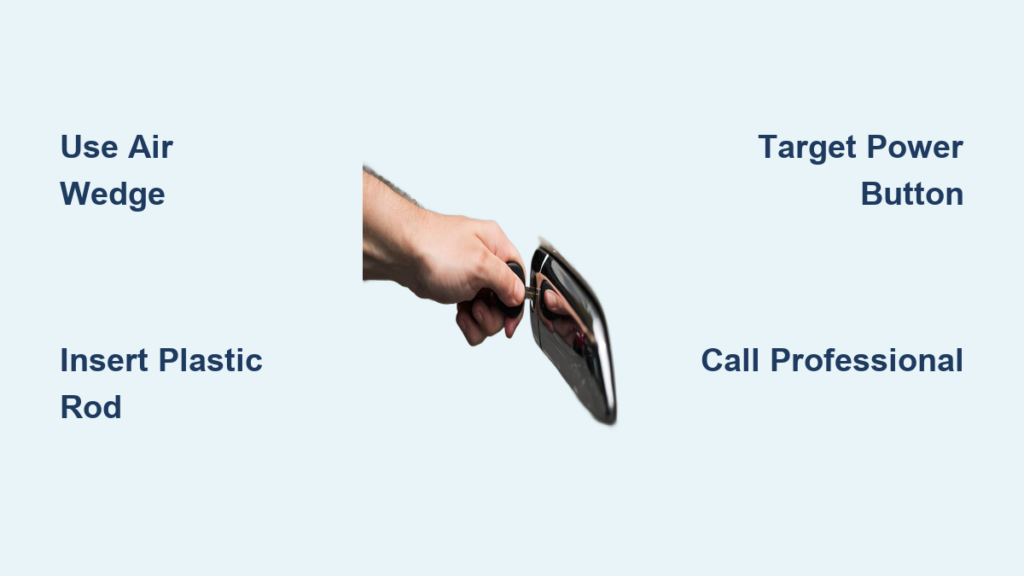
– Inflatable air wedges (not metal crowbars) to safely create 1–2″ gaps
– Plastic-coated rods with J-hooks or loops (never bare metal)
– Duct tape to protect paint during insertion
– Flashlight for visualizing interior components
– Spare key location (if pre-planned)
Discard wire hangers immediately—they snag interior wiring harnesses 9 times out of 10 on post-2000 vehicles. If your toolkit is incomplete, skip to professional help.
Unlock Your Car Safely With Professional-Grade Tools
This method replicates what roadside assistance uses, requiring minimal force and zero damage when executed correctly. Success rates exceed 85% on non-luxury vehicles if you follow precision steps. Allow 8–12 minutes for your first attempt while working calmly.
Step 1: Create a Secure Entry Gap Without Damage
Position yourself at the front corner of the driver’s door window. Peel duct tape into 2-inch strips and line the window edge to prevent scratches. Insert an inflatable air wedge at a 45-degree angle where the window meets the weather stripping. Pump gently until you achieve a ½-inch gap—never force beyond 1 inch, as this stresses window regulators. Test the gap with your pinky finger; if it fits snugly, you’re ready.
Step 2: Navigate the Tool to the Unlock Mechanism
Slide a 24-inch plastic-coated rod through the gap, angling it toward the interior door handle. Modern cars have two unlock targets:
– Physical lock pin (vertical knob near window)
– Power button (on door panel or center console)
Hold the rod like a pool cue, using wrist flicks—not arm strength—to maneuver. If you hear plastic cracking, stop immediately; you’re hitting wiring harnesses.
Step 3: Activate the Unlock Sequence
For vehicles with physical lock pins:
1. Curve the rod’s tip into a hook using your free hand
2. Gently loop the hook around the pin’s base
3. Lift upward with steady pressure (not jerking)
For power-button models:
1. Extend the rod until it contacts the door panel
2. Sweep horizontally along the armrest area
3. Press firmly when you feel a soft button depression
If resistance increases suddenly, you’ve hit the lock’s safety shutoff—wait 2 minutes before retrying.
Why the Wire Hanger Method Fails on Modern Vehicles

Forget movie scenes where heroes unlock cars with bent wire hangers. This approach works on only 12% of vehicles manufactured after 2005 and risks $2,000+ in repairs. Modern door panels sit 3–5 inches behind window glass, with wiring bundles directly in the hanger’s path. One wrong tug can sever power window motors or airbag sensors.
When (and How) to Attempt Hanger Entry on Older Models
This method applies only to pre-2000 cars with visible vertical lock pins and no internal wiring guards. If your vehicle qualifies:
1. Straighten a hanger completely, then bend the last 2 inches into a tight hook
2. Tape the hook’s tip to prevent snagging weather stripping
3. Insert through the front window gap (never the top seal)
4. Sweep downward in a “U” motion to catch the pin’s base
Critical warning: If you don’t feel the pin within 90 seconds, stop. Forcing it will dislodge the pin from its track, requiring panel removal for $400+ repairs.
Air Wedge and Rod Technique: Modern Lockout Solution
This is the only hanger-free method with near-universal success on 2010+ vehicles. It uses purpose-built tools to bypass electronic lockouts without triggering security systems. Budget 10 minutes for this process, focusing on precision over speed.
Step 1: Establish a Controlled Access Point
Place two inflatable wedges at the window’s front upper corner, spaced 3 inches apart. Inflate slowly until they create a 1.5-inch gap—enough for tool insertion but too narrow for alarm triggers. Confirm by sliding a credit card through; if it glides smoothly, you’ve achieved the ideal opening.
Step 2: Target the Power Unlock Button
Insert a 30-inch rod with a soft loop tip through the gap. Angle it toward the center console where power buttons typically sit. Use your flashlight to illuminate the interior as you:
1. Lower the rod vertically until it hits the armrest
2. Rotate the tip 90 degrees toward the driver’s seat
3. Sweep gently across the console surface
Most vehicles place unlock buttons within 4 inches of the door seam—focus your search there.
Step 3: Execute the Unlock Motion
When the loop contacts the button:
– Press with constant pressure for 3 seconds (not a quick jab)
– If the lock clicks but doesn’t release, hold for 5 seconds—some systems require sustained input
– If the car chirps but remains locked, you’ve triggered the “freeze” mode; wait 3 minutes before retrying
This method fails only on luxury models with shielded lock systems—proceed to professional help if unsuccessful after two attempts.
When to Stop and Call a Professional Immediately

Abandon DIY efforts in these high-risk scenarios:
– Children or pets in the vehicle during extreme heat/cold (call 911 first)
– Engine running with keys inside (fire risk and disabled locks)
– Visible wiring damage (sparks or exposed cables)
– Luxury vehicles (BMW, Mercedes, Tesla) with anti-tamper systems
– Failed attempts after 15 minutes (increased risk of collateral damage)
Professional locksmiths carry insurance covering accidental damage and can create new keys on-site for most modern cars. Their average $75 service fee pales against $1,200+ repair quotes for DIY mistakes.
Prevent Future Lockouts With Smart Key Strategies
Avoid repeating this stressful situation with these proven prevention tactics:
– Magnetic key boxes: Attach under the chassis (not on bumpers) using industrial-strength magnets
– Digital backups: Enable smartphone unlock features through your car’s app
– Spare key protocol: Store one key with a trusted neighbor—not in your home where it’s vulnerable to house lockouts
Pro Tip: Test your spare key location monthly. A rainy-day drill ensures accessibility when you’re actually locked out. Never rely solely on keyless entry—dead phone batteries cause 41% of “smart key” lockouts.
Final Reality Check on Hanger-Free Unlocking
While viral hacks promise effortless hanger solutions, modern automotive engineering has rendered them dangerously obsolete. The techniques here prioritize your vehicle’s integrity while acknowledging their limits—when children are at risk or luxury systems are involved, professional help isn’t optional. By mastering the air wedge method and implementing spare key strategies, you’ll transform panic into preparedness. Remember: The $50 roadside call today prevents the $3,000 repair bill tomorrow. Keep this guide in your glove compartment, and you’ll never face a lockout crisis unprepared.