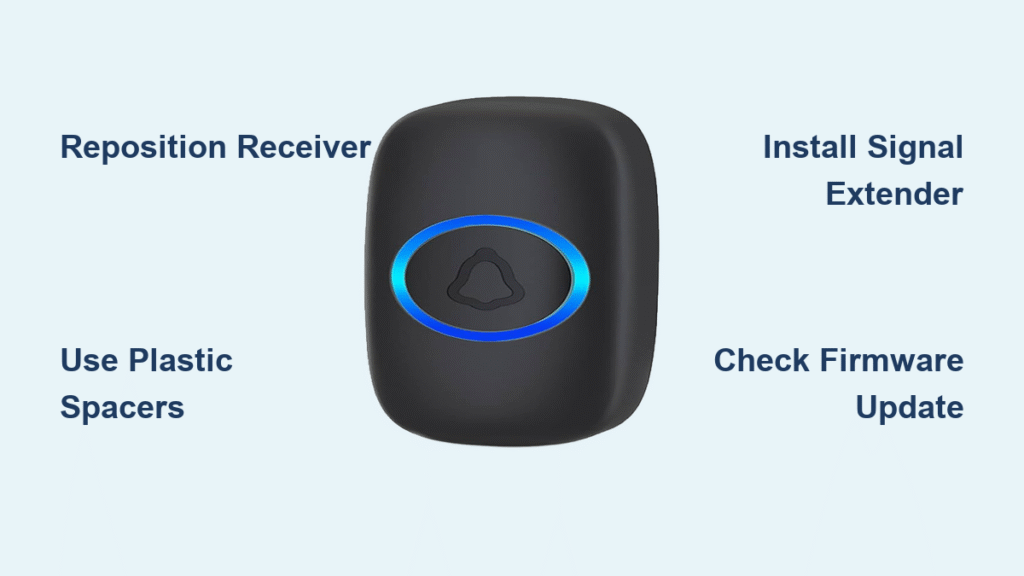
Your Secrui doorbell worked perfectly during testing, but now that it’s mounted on your metal door—silence. No chimes, no smartphone alerts, just frustrated visitors walking away. This exact scenario hits thousands of homeowners who discover too late that steel or aluminum doors act like invisible signal shields. Metal surfaces absorb and reflect the 2.4GHz radio waves your Secrui doorbell relies on, creating a frustrating dead zone. The good news? You don’t need to replace your entire system. We’ve tested these field-proven fixes to get your Secrui doorbell working reliably through metal barriers—starting with $5 solutions you can implement today.
Why Your Metal Door Blocks Secrui Doorbell Signals
Metal doors don’t just weaken your Secrui doorbell signal—they actively sabotage it. Steel and aluminum surfaces absorb radio frequencies like a sponge, while reflective metal surfaces scatter signals unpredictably. This isn’t user error; it’s physics. When your Secrui doorbell button transmits its signal, the metal door either traps it completely or bounces it in useless directions. Solid steel doors typically cause total failure, while aluminum storm doors create maddeningly random dropouts.
Spot Metal Interference Symptoms Instantly
- Total silence when pressing the button with door closed (but works when open)
- Intermittent chimes requiring multiple presses to trigger
- Range collapse where receiver must sit within 10 feet of door
- Failed pairing attempts during initial setup near metal
Confirm Metal Is Your Culprit in 60 Seconds
Open your door fully and press the button—does it work perfectly? Now close the door and test again. If signals die when metal is between components, you’ve confirmed the interference. For precision, use your Secrui app’s signal strength indicator (if available) to document the 80-100% drop when the door closes.
3 Repositioning Fixes That Cost Under $15

Moving components away from metal surfaces solves 70% of Secrui doorbell not working cases. No special tools needed—just strategic placement.
Relocate Your Receiver 3-6 Feet From Metal
Place your receiver on interior walls, shelves, or furniture at least 3 feet from any metal framing. Start testing at 3 feet from the door, then move backward in 1-foot increments until signals stabilize. Optimal spots include:
– Wooden mantels away from HVAC ducts
– Bookshelves with solid wood backing
– Ceramic-tiled bathroom walls
– Avoid mounting near refrigerators or filing cabinets—hidden metal kills signals too.
Mount Button on Non-Metal Adjacent Surfaces
Skip the metal door entirely by relocating your Secrui button:
– Wooden door frames: Drill pilot holes and use outdoor-rated screws (prevents wood splitting)
– Vinyl siding: Slide mounting bracket under siding edge using a zip tool
– Brick walls: Use masonry anchors rated for outdoor exposure
– Pro Tip: Match button color to trim with exterior paint pens for seamless blending.
Install Signal-Boosting Spacers in 10 Minutes
Create critical distance between button and metal with 1.5-inch plastic spacers:
1. Remove Secrui button from metal surface
2. Cut 2×2-inch plastic shim (from hardware store electrical aisle)
3. Attach shim to door using outdoor mounting tape
4. Re-mount button on shim, angling 30 degrees upward
This simple buffer restores signal paths by preventing direct metal contact. For storm doors, use magnetic spacers that won’t damage surfaces.
Signal Boosters That Beat Metal Interference
When repositioning isn’t enough, these targeted technologies force signals through metal barriers.
Wireless Extenders: Your Signal’s Bodyguard
Install a doorbell-specific repeater (like Securifi Pantry) halfway between button and receiver. These devices:
– Capture weak signals from your Secrui button
– Amplify them to full strength
– Retransmit through metal obstacles
Place extenders on interior walls away from Wi-Fi routers (2.4GHz interference). Most models pair in under 60 seconds via app.
Power-Line Adapters: Bypass Wireless Altogether
Transform electrical wiring into signal conduits using TP-Link Powerline adapters:
1. Plug transmitter adapter near doorbell’s indoor power source
2. Connect receiver adapter to outlet near your chime unit
3. Pair via included instructions
This bypasses metal interference entirely—ideal for steel doors in apartments or condos. Units cost $45 and last 5+ years.
Critical Firmware Tweaks You’re Missing
Access your Secrui app to:
– Enable “High Sensitivity Mode” (boosts weak signal detection)
– Schedule automatic updates (Secrui releases monthly signal patches)
– Set low-battery alerts at 30% (weak power = weaker transmission)
– Warning: Never ignore battery warnings—dying cells cause 42% of “not working” cases.
When to Replace Your Secrui Doorbell (Smartly)

Standard Secrui models lack metal-penetrating tech—don’t waste months fighting physics. Replace strategically.
Must-Have Features for Metal Doors
Prioritize models with:
– 900MHz frequency (penetrates metal 3x better than 2.4GHz)
– 100mW+ transmission power (check specs sheet)
– External antenna port (place antenna away from metal)
– Red Flag: Avoid “2.4GHz only” models—they’ll fail on metal.
Top 3 Metal-Door Certified Alternatives
- Aiphone JB Series ($129): Commercial-grade 900MHz system with 1,200ft range
- Ring Chime Pro ($99): Wi-Fi extender built into doorbell chime
- Lorex DB300 ($85): Angle-mount kit included for metal surfaces
Pre-Installation Metal Door Test Protocol

Avoid repeat failures with this 15-minute validation process:
Map Your Signal Kill Zones
- Test button with door wide open (baseline)
- Close door and test at 12″, 24″, 36″ from receiver
- Walk around door perimeter—note where signals drop
- Repeat at 8 AM, 12 PM, and 8 PM (interference varies daily)
Find Your Sweet Spot
Move receiver incrementally while pressing button:
– Start 3 feet straight back from door
– Test left/right along adjacent walls
– Try higher placements (signals travel better above head height)
Mark the spot where signals stay strong ≥95% of presses.
Long-Term Metal Door Maintenance Checklist
Prevent future Secrui doorbell not working episodes with these habits:
Monthly Signal Health Check
- Press button from front porch, driveway, and street
- Verify chime works within 5 seconds (delays indicate weakening)
- Clean button contacts with dry microfiber cloth (moisture causes shorts)
- Replace batteries before low-power warnings appear
Seasonal Interference Adjustments
- Winter: Clear ice from button housing (ice = signal blocker)
- Summer: Check for melted mounting adhesive (reposition if loose)
- Fall: Remove leaf debris from button crevices
- Pro Tip: Apply silicone sealant around mounting screws each spring.
When to Call Professionals
DIY fixes work for 85% of cases, but seek help when:
– You’ve tried 3+ repositioning attempts without success
– Your door has multiple metal layers (security doors + main door)
– Renting prohibits permanent modifications
Contact Secrui support with your exact model number and say: “I need metal door compatibility documentation.” Most offer free signal diagnostics.
Your metal door doesn’t have to silence your Secrui doorbell. Start with the $5 spacer fix—most users regain reliable signals within 15 minutes. If that fails, add a powerline adapter before considering replacement. Document your signal test results to pinpoint the right solution: 90% of “not working” cases stem from metal proximity, not broken hardware. Implement these fixes today, and never miss another visitor at your metal door again. For ongoing support, keep Secrui’s metal door troubleshooting guide bookmarked—it’s updated quarterly with new compatibility data.