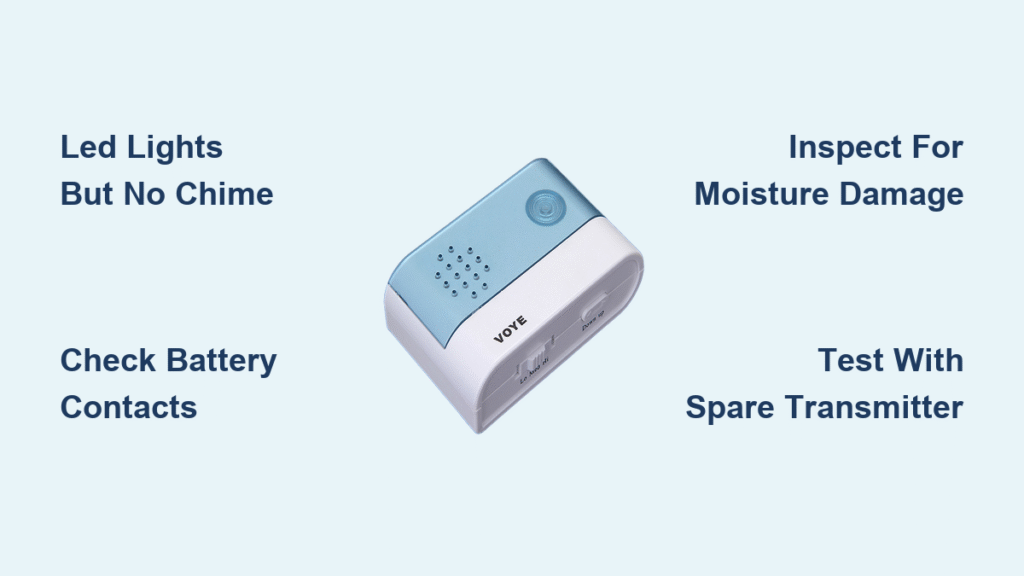
Your Voye doorbell suddenly stopped alerting you to visitors, but the receiver still plays melodies when triggered manually. This frustrating scenario points to a transmitter problem rather than the chime unit itself. If you live near coastal areas or high-moisture environments, humidity could be silently damaging your doorbell’s internal components while leaving LED indicators functional.
Most wireless doorbell failures stem from transmitter issues, especially in harsh environments. The good news? Many Voye doorbell not working problems have simple DIY solutions that cost little to nothing. Before replacing your entire system, follow these targeted troubleshooting steps to restore reliable operation and save yourself unnecessary expense.
Confirm Your Voye Transmitter Is the Problem
Immediate receiver verification test: Press any button directly on your receiver unit. If it plays melodies normally, your chime unit works perfectly—this immediately isolates the issue to your outdoor transmitter.
How to test with a second transmitter
If you have access to another compatible wireless doorbell transmitter, program it to your receiver frequency. A working second transmitter confirms your receiver functions correctly while proving the original Voye doorbell transmitter has failed.
Quick distance troubleshooting method
Move your transmitter temporarily closer to the receiver—within 10 feet. If the chime now activates reliably, environmental interference or weak signal strength explains your Voye doorbell not working issue. This simple test eliminates receiver problems from consideration.
Environmental Damage Causing Voye Doorbell Failure
Coastal humidity corrosion: Living near saltwater creates perfect conditions for transmitter failure. Salt air combined with constant moisture penetrates circuit boards, causing invisible corrosion that stops RF signals while leaving LED indicators functional—a classic Voye doorbell not working symptom.
Why temperature swings damage transmitters
Outdoor transmitters face daily temperature extremes that stress solder joints and components. Freezing nights followed by warm days can crack connections invisible to naked-eye inspection. If your Voye doorbell stopped working after a sudden cold snap, temperature stress is likely the culprit.
Physical damage you might not see
Repeated door slams, weather exposure, or accidental impacts can loosen internal components without obvious external signs. Check for subtle cracks around mounting points or button mechanisms that could indicate internal damage affecting performance.
Critical Visual Inspection Steps for Voye Transmitters

LED indicator diagnostic: Press your doorbell button and observe the LED. If it lights up normally but your receiver stays silent, you’ve confirmed power reaches the circuit board while ruling out battery or button failures—a key distinction in Voye doorbell troubleshooting.
Battery contact inspection protocol
Remove batteries and examine metal contacts for green corrosion (copper-based) or white crystalline buildup (alkaline leakage). Clean gently with 90%+ isopropyl alcohol and cotton swab—never use water or abrasive cleaners that could worsen corrosion.
Circuit board examination checklist
Look for these critical failure indicators:
– Brown discoloration around components (sign of moisture damage)
– Lifted traces near battery contacts
– Component damage near the antenna connection
– Visible corrosion on transistor leads (Q1 and Q2 in most models)
Diagnosing Voye Transmitter Circuit Failures
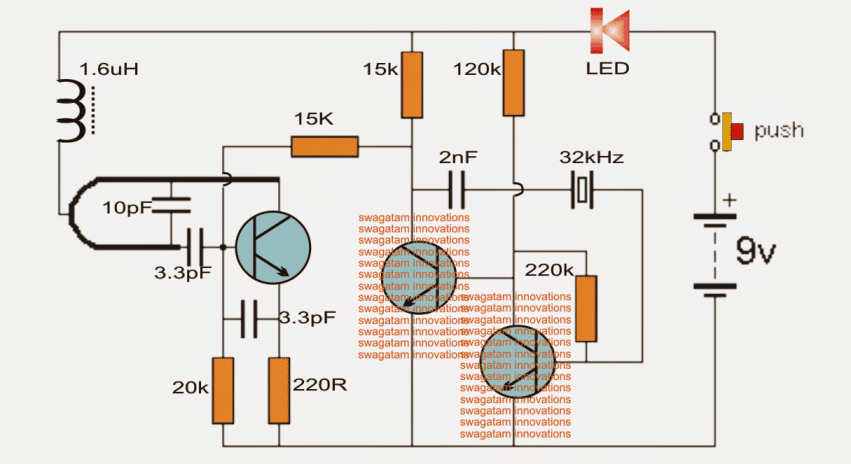
Oscillator circuit failure pattern: When your Voye doorbell LED lights but receiver stays silent, suspect the RF oscillator circuit. This generates the wireless signal your chime unit detects—exactly what happens when LED indicators work but your Voye doorbell not working issue persists.
Critical components to check
Focus your diagnosis on these vulnerable areas:
– Transistors Q1 and Q2 (handle signal generation and amplification)
– Crystal oscillator components
– Antenna connection points
– SAW (Surface Acoustic Wave) filter connections
Frequency verification limitations
Most wireless doorbells operate around 433MHz. Without specialized equipment like spectrum analyzers, component replacement becomes trial-and-error troubleshooting. If you lack diagnostic tools, replace suspect components based on visual inspection findings.
Effective Moisture Protection for Voye Doorbells
Silicone sealant application technique: Apply clear silicone around transmitter housing seams, button edges, and battery compartment—but leave ventilation holes unsealed to prevent internal condensation buildup. Use a fine-tip applicator for precision in tight spaces.
Weatherproof housing upgrade strategy
Install your transmitter in a protective NEMA-rated enclosure designed for outdoor electronics. Ensure the button remains accessible while sealing electronics from elements—this simple upgrade can double your Voye doorbell’s lifespan in coastal environments.
Desiccant maintenance schedule
Add moisture-absorbing silica packets inside transmitter housing and replace every 3-6 months in high-humidity environments. For coastal installations, consider moisture indicator cards that change color when desiccants need replacement.
Component-Level Repairs for Advanced Users
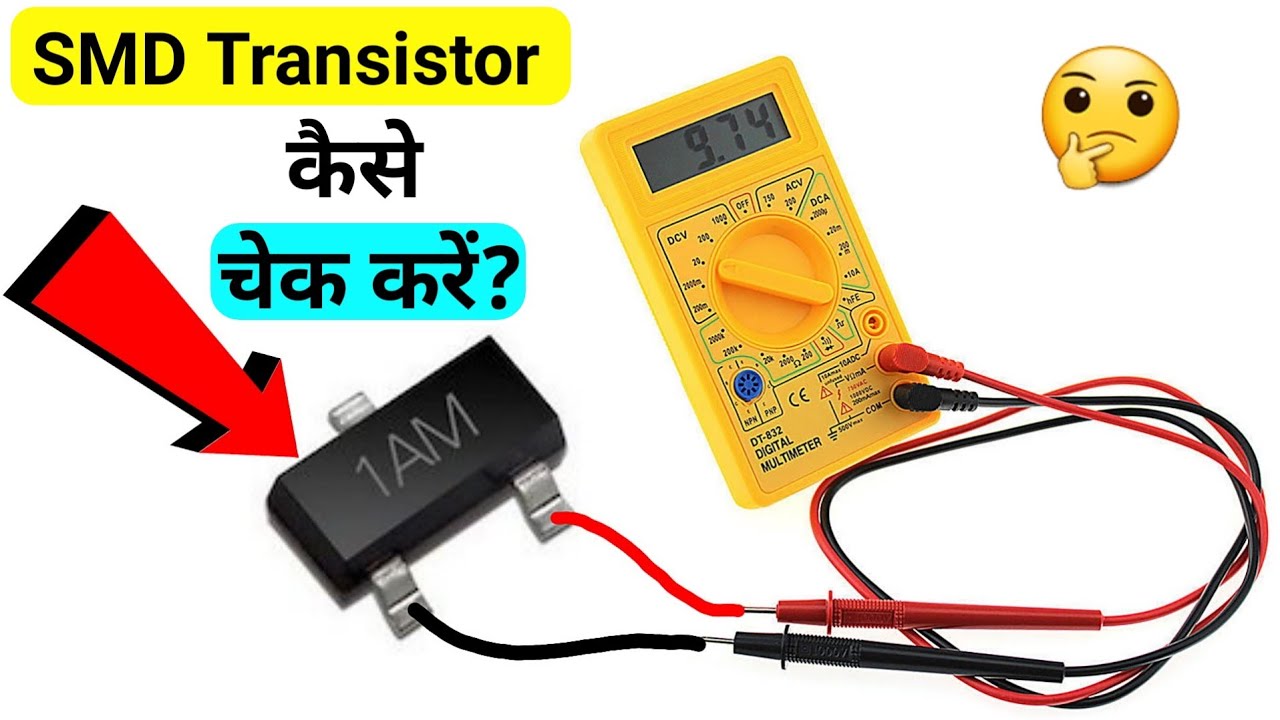
Transistor testing procedure: Use a multimeter to check Q1 and Q2 for proper operation. Set your meter to diode test mode and check between leads—replace with identical part numbers if testing reveals shorts or opens. Most Voye transmitters use common SMD transistors easily sourced online.
Oscillator circuit troubleshooting
Replace suspect capacitors and resistors near the crystal oscillator. Even small value changes can prevent proper oscillation. Pay special attention to components labeled with “C” (capacitors) and “R” (resistors) near the oscillator crystal.
Antenna repair essentials
Resolder broken antenna connections using minimal heat to avoid damaging the circuit board. Maintain original antenna length for proper frequency matching—cutting or extending the antenna significantly reduces transmission range.
Quick Fixes When Your Voye Doorbell Stops Working
Transmitter swapping solution: If you have identical spare transmitters, program them to your receiver frequency. Many wireless doorbells accept multiple transmitters, providing immediate functionality while you troubleshoot the original unit.
Battery type optimization
Switch to lithium batteries in cold climates—they maintain voltage better than alkaline batteries in temperature extremes. In coastal environments, consider premium alkaline batteries with enhanced corrosion protection.
Range extender placement
Install an RF signal repeater between transmitter and receiver. These devices receive and retransmit doorbell signals, overcoming distance limitations caused by building materials or environmental interference.
Voye Doorbell Prevention Strategies
Biannual maintenance schedule: Inspect and clean transmitter contacts every 6 months. Replace batteries annually regardless of apparent charge level—old batteries can leak and damage components even when still functional.
Environmental failure pattern tracking
Keep a simple log noting when your Voye doorbell stops working relative to weather conditions. This helps identify specific environmental triggers requiring targeted protection—like humidity spikes after rain or temperature extremes.
Backup system implementation
Keep a spare programmed transmitter ready for immediate installation. Quick swaps minimize downtime during troubleshooting or repair periods, ensuring you never miss visitors while fixing your Voye doorbell not working issue.
When to Replace Your Voye Doorbell Transmitter
Cost-benefit repair analysis: Compare transmitter replacement cost against your time investment for component-level repairs. New transmitters often cost less than diagnostic equipment rental—especially for older units where multiple components may be failing.
Age-based replacement guideline
Transmitter circuits older than 5 years likely have multiple components approaching failure end-of-life. Replacement provides better long-term reliability than piecemeal repairs for aging Voye doorbell systems.
Technology upgrade opportunity
Newer doorbell systems offer enhanced features like smartphone notifications, video capabilities, and improved weather resistance. If you’re already troubleshooting persistent Voye doorbell not working issues, consider upgrading to a more reliable modern system.
Final Resolution Steps for Voye Doorbell Failures
Most Voye doorbell transmitter failures result from environmental damage affecting RF oscillator circuits. Start with simple visual inspections and environmental protection measures before attempting component-level repairs. If LED indicators work but receivers stay silent, focus troubleshooting on oscillator components or consider replacement for faster resolution.
Implement a regular maintenance schedule with moisture protection to significantly extend transmitter lifespan in challenging environments. Document your system’s behavior patterns to predict and prevent future Voye doorbell not working issues proactively. When in doubt, keep spare transmitters programmed and ready—this simple preparation ensures you’ll never be left wondering who’s at your door.