
Nothing ruins a sparkling bathroom like a grimy, cloudy shower door. Soap scum, hard water stains, and mildew can turn sleek glass into a dull, streaky eyesore, especially in homes with hard water. If you’ve ever scrubbed for minutes only to see the grime return days later, you’re not alone. The good news is that with the right methods and tools, learning how to clean shower door glass effectively, and keeping it that way, is simpler than you think.
This guide gives you expert techniques for tackling everything from light film to years of mineral buildup. You’ll discover which cleaning solutions work best for different stain types, advanced methods for severe buildup, and preventive habits that reduce cleaning time by up to 90%. Whether you prefer natural remedies or fast-acting commercial products, this is your complete roadmap to crystal-clear shower doors.
Identify the Type of Buildup on Your Shower Door
Before you clean, know what you’re fighting. Different residues require different solutions, and using the wrong method can damage glass or waste time.
Hard Water Stains vs. Soap Scum
Hard water stains appear as white, chalky, or cloudy film caused by calcium and magnesium deposits. They cling tightly to glass and worsen over time if left untreated. Soap scum is a greasy, grayish layer formed when soap reacts with minerals. It feels slick to the touch and attracts more dirt over time.
Quick test: Spray vinegar on the spot. If it fizzes and dissolves, it’s likely soap scum or surface minerals. If nothing happens, the glass may be etched, or the buildup is severe.
Mildew in Tracks and Corners
Black or green spots in door tracks or seals mean mildew. This fungus thrives in damp areas and needs disinfecting, not just scrubbing. Vinegar and bleach solutions work well for mold, but mechanical scrubbing is often needed to dislodge embedded spores.
Etching: When Cleaning Won’t Work
Etching is permanent damage caused by acidic cleaners or long-term mineral exposure. The glass surface becomes rough and cannot be restored with cleaning. Test: Run a fingernail over the spot. If it feels rough, not smooth, it’s likely etched. In this case, cleaning won’t help, and restoration methods like wet sanding may be needed.
Best Cleaning Methods by Stain Type
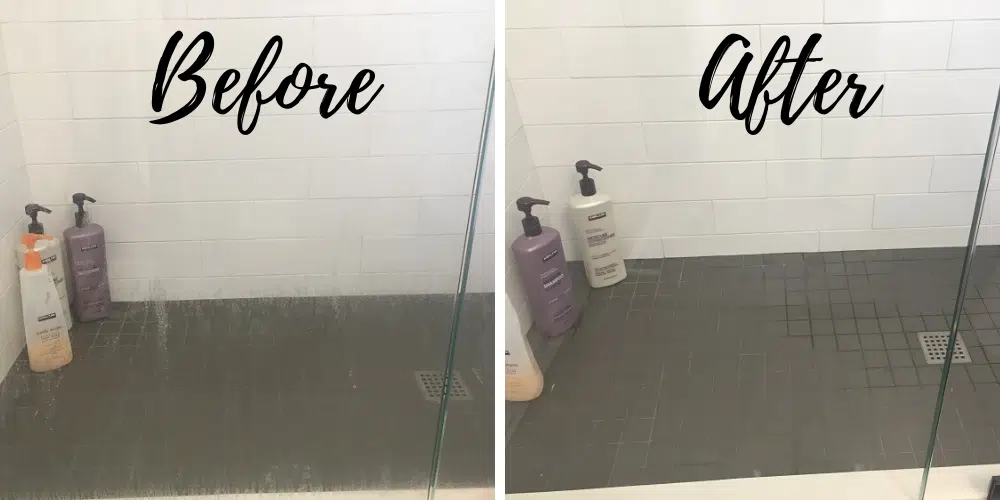
Match your method to the problem. Start gentle, escalate only when needed.
Vinegar and Baking Soda Paste
This natural method works well for light to moderate soap scum and soft water stains. Mix half a cup of baking soda with enough white vinegar to form a thick paste. Apply with a sponge or cloth to affected areas and let sit for 15 to 30 minutes. Scrub with a non-abrasive sponge or toothbrush, then rinse thoroughly.
Pro tip: Soak paper towels in vinegar and press them onto vertical glass to keep the solution in contact longer. The fizzing action lifts residue while baking soda provides gentle abrasion.
CLR for Tough Mineral Deposits
CLR (Calcium, Lime & Rust Remover) is a commercial product specifically formulated for severe calcium, lime, or rust stains. Spray CLR directly on stained glass and wait 1 to 2 minutes without letting it dry. Wipe with a soft cloth or sponge and rinse completely with water.
User advantage: Foam versions stick better to glass, reducing runoff. Safety note: Wear gloves and avoid contact with skin and eyes. CLR is not safe for coated glass. Follow up by applying a water-repellent treatment like Rain-X to slow future buildup.
Bar Keepers Friend for Stubborn Stains
Use Bar Keepers Friend when CLR works but leaves a haze, or for rust-colored stains. The oxalic acid in BKF dissolves mineral deposits effectively. Apply the powder, liquid, or spray form with a soft cloth or non-scratch pad. Let sit for 30 to 60 seconds, then gently scrub in circular motions and rinse well.
Caution: BKF is mildly abrasive. Do not use on treated glass like CleanCoat. Pro combo: Pair with a Magic Eraser for extra scrubbing power without scratching.
Citric Acid and Dish Soap Solution
Citric acid beats vinegar because it’s stronger than acetic acid and works better in hard water without the strong smell. Mix 2 tablespoons of citric acid powder with 1 cup of warm water and a few drops of Dawn dish soap. Spray on glass and let sit for 10 to 15 minutes. Wipe clean with microfiber.
Bonus: Dish soap helps the solution cling to vertical surfaces. This method is eco-friendly, safe for septic systems, and less corrosive than commercial acids.
Fabric Softener Sheets for Quick Fixes
An unexpected but effective trick: dampen a used or new dryer sheet and wipe over hard water spots. The cationic surfactants break down mineral bonds and leave a water-repelling residue. Results work best on fresh or light stains. Some users report near-magic results on chrome and glass.
Limitation: This is not a deep-cleaning solution. Use it for maintenance, not restoration.
Rejuvenate Scrub-Free Soap Scum Remover
For low-effort cleaning, spray Rejuvenate on, wait 10 minutes, and rinse. It’s safe for glass, tile, chrome, and plastic. User feedback confirms it lives up to the “scrub-free” claim for light to moderate scum. Some light wiping helps with stubborn areas. Best use: monthly maintenance or quick touch-ups.
Deep Cleaning for Severe Buildup
When standard cleaners fail, it’s time for pro-level methods.
Wet Sanding with 1500+ Grit Sandpaper
Only try this if all chemical methods have failed and glass appears etched. Wet sanding removes a micro-thin layer of glass along with embedded minerals. Wet the sandpaper and glass thoroughly. Use small circular motions with light pressure and rinse frequently to check progress. Stop when clarity returns.
Warning: Use only high-grit paper (1500 or higher). Lower grits will scratch. Aftercare: Polish with car compound or apply Rain-X to seal the surface.
Car Polish Buffer with Cutting Compound
For heavily clouded glass, detailers use this method to restore headlights and glass. Clean glass thoroughly, then apply cutting compound to a rotary buffer. Buff in slow, even passes, wipe clean, and seal with Rain-X.
Risk: Requires skill. Overheating or excessive pressure can crack glass. Best for: DIYers with experience or those restoring vintage shower doors.
Clean Shower Door Tracks Thoroughly
Shower door tracks trap water, soap, and mold. Ignoring them leads to stink, sticking doors, and health risks.
Step-by-Step Track Cleaning
Clear the area first by removing bottles, loofahs, and shower caddies. Soak tracks with a vinegar solution: mix equal parts vinegar and warm water, spray in, and wait 10 to 15 minutes. Sprinkle baking soda in the track and use an old toothbrush to agitate. The fizzing helps lift gunk. Rinse with water and dry completely with a microfiber cloth to prevent mold regrowth. Repeat if needed for stubborn buildup.
Track Maintenance Schedule
Daily: Wipe tracks with a dry towel after showering. Weekly: Quick vinegar spray and brush. Monthly: Full clean with baking soda scrub.
Tools and Techniques for Easier Cleaning
Use the right tool for the job and avoid damage.
• Razor blade removes hard water crust when held at a 45-degree angle and kept wet
• Magic Eraser works well for light scrubbing when paired with cleaner
• Green scrub pad tackles tough scum but can scratch if used dry
• 0000 steel wool handles stubborn buildup on glass only, never on metal frames
• Toothbrush cleans tracks and corners effectively
• Microfiber cloth provides streak-free final wiping
• Squeegee enables quick daily maintenance
Protect Glass to Prevent Future Buildup

The best cleaning strategy is one you barely have to do.
Apply Water-Repellent Treatments
Products like Rain-X for Showers, Invisible Shield, and Aquapel create a hydrophobic layer that causes water to bead and roll off, taking minerals with it. Clean glass completely, apply product with a soft cloth, buff to a shine, and reapply monthly. User results show this reduces cleaning frequency by 70 to 90%.
Daily Squeegee Routine
Ten seconds per shower prevents ten minutes of scrubbing per week. Use a rubber-bladed squeegee after each shower, wiping from top to bottom in one motion. Hang the squeegee inside the shower for easy access.
Improve Ventilation
Run the bathroom fan during and 20 minutes after showering. Open a window if possible. Install a dehumidifier in humid climates. The goal is reducing moisture to prevent mold and speed drying.
Switch to Liquid Soap
Bar soaps contain stearic acid that binds with minerals and creates stubborn scum. Liquid body washes leave far less residue and make cleaning easier.
Special Care for Coated Glass Doors
Some doors come with factory-applied coatings like CleanCoat that repel water and resist buildup.
What Not to Do
Never use vinegar, CLR, abrasive pads, Magic Erasers, or acidic cleaners on coated glass. These strip the coating, making the door more prone to stains.
Recommended Cleaning
Wipe with a soft cloth and water. Use a mild, non-abrasive detergent if needed. Squeegee after every use.
Signs the Coating Is Failing
Water no longer beads. Glass looks streaky even when clean. Buildup returns quickly. Solution: Reapply a compatible sealant or consider recoating services.
Choose the Right Product for Your Situation
| Situation | Recommended Method |
|---|---|
| Light soap scum | Vinegar plus baking soda, squeegee daily |
| Moderate hard water stains | CLR, BKF, or citric acid |
| Severe mineral buildup | CLR soak, then wet sanding with 1500-plus grit |
| Coated glass (CleanCoat) | Water plus soft cloth, squeegee only |
| Mold in tracks | Vinegar soak, baking soda scrub, dry completely |
| Prevention | Rain-X, daily squeegee, proper ventilation |
| Eco-friendly option | Vinegar, baking soda, citric acid, dryer sheets |
Frequently Asked Questions About Cleaning Shower Doors
What’s the fastest way to clean a shower door?
The fastest method is using a commercial product like Rejuvenate or CLR. Spray on, wait 5 to 10 minutes, rinse, and wipe clean. For daily maintenance, a quick squeegee after each shower takes only 10 seconds and prevents buildup.
Does vinegar damage shower door glass?
Vinegar is safe for untreated glass but can damage protective coatings and may cause etching if used repeatedly on sensitive surfaces. Always test a small area first, and avoid leaving vinegar on glass for more than 30 minutes.
How do I remove hard water stains from glass naturally?
Natural options include baking soda and vinegar paste, citric acid solution, or fabric softener sheets. For severe buildup, natural methods may require more scrubbing or multiple applications. Commercial cleaners like CLR work faster.
Can I use a razor blade on my shower door?
Yes, but with caution. Hold the razor at a 45-degree angle and keep the glass wet to prevent scratches. Use a new blade and gentle pressure. This method works well for thick mineral deposits but avoid aggressive scraping.
How often should I apply Rain-X to my shower door?
Apply Rain-X for Showers once monthly for best results. Some users report needing reapplication every 2 to 3 weeks in areas with very hard water. The key is applying to clean, dry glass and buffing to a clear shine.
Why does my shower door still look cloudy after cleaning?
Cloudiness after cleaning usually means either etching (permanent damage from acids or minerals) or residue from cleaning products. Try rinsing with clear water and drying with a fresh microfiber cloth. If cloudiness persists, the glass may be etched.
Key Strategies for Maintaining Sparkling Shower Doors

Cleaning a shower door doesn’t have to be a battle. With the right approach, you can remove years of buildup in under 30 minutes and make future cleaning quick and easy. The secret lies in combining effective cleaning with daily habits.
Start by identifying your stain type and choosing the appropriate method. Use gentle solutions first, then escalate only when necessary. Clean tracks regularly, since neglected tracks cause odors and door problems. Apply water-repellent treatments like Rain-X monthly to create a protective barrier.
Most importantly, squeegee after every shower, treat glass monthly, and maintain proper ventilation. Do this, and your glass will stay clear, sparkling, and low-maintenance for years.