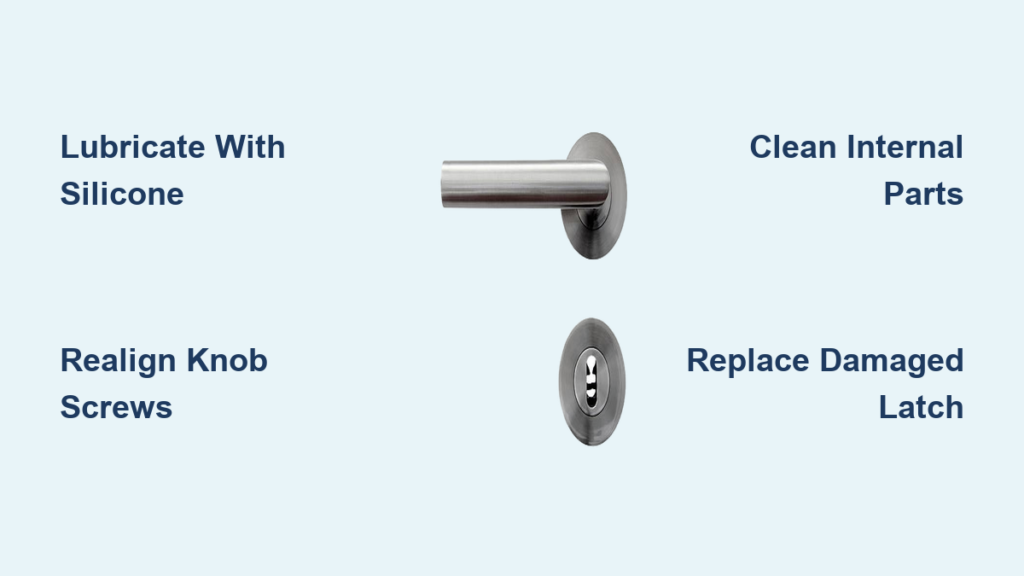
A sticky door knob can disrupt your daily routine, making simple tasks frustrating and potentially creating safety concerns during emergencies. Whether it’s an interior bedroom door or your main entryway, a stiff or unresponsive handle usually signals a mechanical issue that most homeowners can fix themselves. The good news is that most sticky door knobs don’t require replacement. This guide walks you through proven fixes ranging from quick lubrication to internal inspection, helping you restore smooth operation without calling a professional.
By the end of this article, you’ll understand exactly what causes stickiness, how to diagnose the problem accurately, and which repair method works best for your specific situation.
Diagnose the Real Cause First
Before grabbing tools, rule out simple issues that can mimic mechanical failure. A few minutes of inspection saves time and prevents unnecessary repairs.
Check for Latch and Frame Problems
Inspect the strike plate on your door frame. Look for scratches or dents that indicate the latch bolt isn’t seating properly. Check for paint buildup or debris blocking the latch path, as fresh paint can jam moving parts. Also examine the door edge for any screws protruding into the latch mechanism.
Test Handle Return and Binding
After turning the knob, notice whether it snaps back smoothly or sticks in the rotated position. A knob that won’t return suggests a weak or broken internal spring. Turn the knob slowly to feel for consistent resistance versus binding at specific points. Consistent resistance typically means internal friction, while binding at certain angles suggests a bent spindle or misalignment. A grinding or gritty feeling indicates lack of lubrication or gummed-up residue.
Lubricate the Latch Mechanism

This is the fastest fix and solves approximately 80% of sticky knob problems. Most cases respond to lubrication alone.
Use Silicone Lubricant Properly
Grab a dry silicone spray with a precision nozzle. Avoid regular WD-40 unless it’s the silicone variant, as standard WD-40 evaporates quickly and leaves no lasting lubrication.
Follow these steps:
- Fully press in the latch bolt so it’s retracted.
- Spray silicone into the gap between the latch and door edge.
- Apply a small amount around the knob base and any seams in the rose plate.
- Cycle the knob 20 to 30 times to work the lubricant in.
- Wipe off excess and wait 24 to 48 hours for the propellant to evaporate.
Performance improves significantly after drying, so don’t be discouraged if the knob feels worse immediately after application. This is normal and temporary.
Why Silicone Works Best
Silicone stays slippery without attracting dust and is safe for both metal and plastic parts. Users report success on knobs over 50 years old using only this method. Avoid grease, cooking oil, or 3-in-1 oil, as these substances gum up over time and create worse problems.
Realign the Door Knob
Misalignment between inner and outer knobs is a leading cause of binding. This fix requires no disassembly and works surprisingly well.
Loosen and Adjust Mounting Screws
Use a Phillips screwdriver to loosen, not remove, the two screws on the interior side of the knob. Gently slide the knob up, down, or sideways while testing the latch. Once movement feels smooth, tighten the screws gradually, testing after each turn. Stop when snug, as over-tightening causes binding.
This adjustment works because years of use can shift alignment, causing the spindle to bind in the latch mechanism. Even a tiny shift often restores free movement.
Disassemble for Deep Cleaning
When lubrication and realignment fail, taking the knob apart allows direct access to internal components.
Remove Knobs Safely
Look for a release slot on the rose plate, usually positioned at 2 o’clock. Insert a flathead screwdriver and gently pry off the cover. Unscrew the mounting screws and pull off both knobs. Slide out the spindle, which is the square or round rod connecting them.
Inspect and Lubricate Internally
Check the spindle for bends or corrosion, as even slight bending causes resistance. Spray silicone into the latch body from the door edge, the spindle hole in the latch, and the cam and spring assembly. Manually cycle the latch to work in the lubricant. Reassemble loosely, test operation, then tighten screws incrementally.
Reassembling loosely and testing before final tightening prevents recurring binding issues.
Fix the Spindle and Latch Body

Persistent stickiness often traces back to damaged hardware that requires attention beyond simple lubrication.
Straighten or Replace the Spindle
If the spindle is bent, rotate the knob to the sticking point and tap it gently with your hand or a soft mallet. Alternatively, remove it and bend it back carefully with pliers. If the spindle is stripped or severely bent, replace it, as spindles are inexpensive and model-specific.
Inspect the Latch Body
Remove the two screws on the latch faceplate and pull out the tubular latch. Check for cracked housing, protruding or broken springs, and seized or blocked rotating lugs, which are the metal tabs that turn with the spindle. Push the latch tongue in; it should spring back smoothly. If it doesn’t, the spring is broken and replacement is necessary.
Clear blocked rotating lugs using compressed air or a small brush. If the borehole in the door is too small, enlarge it slightly with a round file or drill bit.
Choose the Right Lubricant
Using the wrong product can make sticky problems worse. Your lubricant choice significantly impacts long-term results.
Best Lubricants for Door Knobs
Silicone spray dries to a slick film, doesn’t attract dust, and is safe for all materials. Light machine oil penetrates tight spaces and works well for metal-on-metal parts. Dry film lubricant leaves a waxy, non-tacky coating and lasts longer on high-use doors.
Lubricants to Avoid
Regular WD-40 evaporates fast, leaves no lasting lubrication, and attracts dirt. Grease is too thick and traps grime in small parts. Cooking oil and 3-in-1 oil oxidize and turn gummy over time.
Note that WD-40 does make a silicone-based version. Check the label before assuming all WD-40 products are the same.
Know When to Replace
Sometimes repair isn’t worth the effort, and replacement is the smarter choice.
Repair If the Knob Turns With Resistance
If the knob turns with resistance but still functions, lubrication helps but doesn’t fully fix the issue, misalignment is the main problem, or no visible internal damage exists, repair is worthwhile.
Replace If There’s Internal Damage
Replace the latch if the spring is broken and the tongue won’t retract, the latch body is cracked, the spindle is stripped or beyond repair, rotating lugs are damaged, or the knob wobbles after tightening. Most passage latches cost between $10 and $30, making replacement often faster and more reliable than extensive repair attempts.
Quick Fix Action Plan
Follow this sequence for the best results:
- Depress the latch and apply silicone lubricant to the edge and base.
- Cycle the knob 20 or more times, then wait 24 to 48 hours.
- If still sticky, loosen the screws and realign the knob.
- If no improvement, disassemble, inspect, and lubricate internally.
- Replace the latch if the spring is broken or lugs are damaged.
For long-term maintenance, lubricate annually on high-use doors. Use non-petroleum lubricants to prevent gumming. Test before final tightening and never fully tighten until movement is smooth.
Frequently Asked Questions About Sticky Door Knobs
Why Does My Door Knob Feel Sticky After Lubrication?
This happens because the lubricant carrier hasn’t evaporated yet. Silicone sprays contain propellants that initially feel sticky but dry to a slick finish. Wait 24 to 48 hours before judging the results.
Can I Use WD-40 on My Door Knob?
Standard WD-40 is not recommended because it evaporates quickly and leaves no lasting lubrication. However, WD-40 does make a silicone-based variant that works well. Check the product label carefully.
How Do I Know If My Latch Spring Is Broken?
Push the latch tongue in fully. It should spring back out smoothly on its own. If it stays retracted or moves sluggishly, the internal spring is likely broken and the latch needs replacement.
Should I Replace or Repair a 50-Year-Old Door Knob?
Try lubrication first. Users have reported success restoring knobs over 50 years old with silicone spray alone. Only replace if internal damage is confirmed or if repair attempts fail.
What’s Causing My Door Knob to Stick Only at Certain Angles?
Binding at specific angles usually indicates a bent spindle or misalignment. Try loosening the mounting screws and shifting the knob slightly to realign it with the spindle.
Key Takeaways for Fixing Your Sticky Door Knob
A sticky door knob is rarely a lost cause. In most cases, lubrication with silicone spray and minor realignment solve the problem completely. Full disassembly is only necessary for stubborn cases or when internal damage exists. Before purchasing a replacement, try these proven fixes. You’ll likely save time, money, and preserve the original hardware that matches your door’s aesthetic. If lubrication and realignment don’t resolve the issue after thorough testing, then consider replacement as your final option.