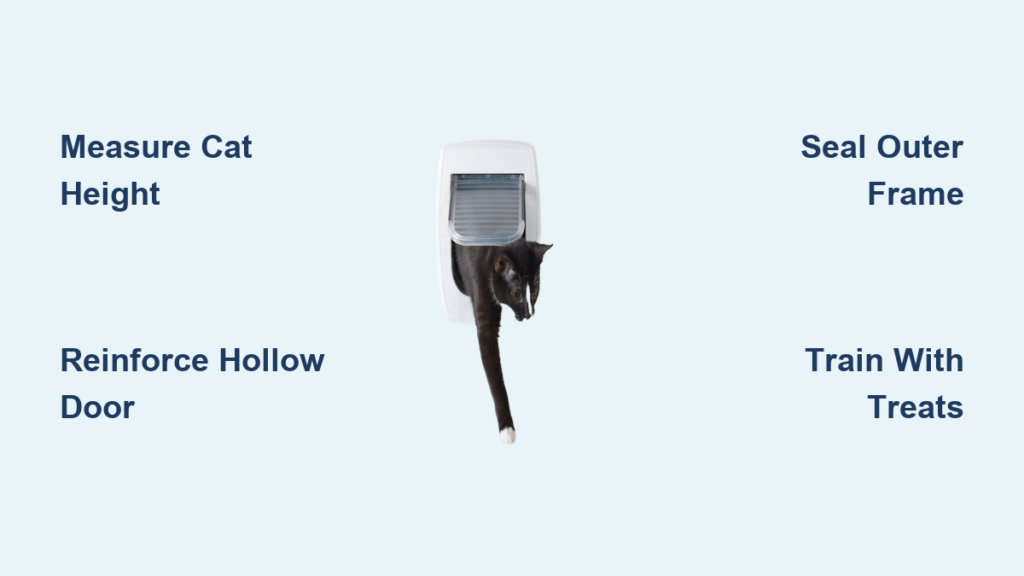
Installing a cat door gives your feline freedom to come and go while maintaining your home’s security and comfort. Whether you want your cat to access the backyard, a litter room, or a sunny patio, a properly installed cat door simplifies daily life for both pet and owner. This guide covers everything from measuring your cat and selecting the right model, to cutting precise openings, reinforcing hollow-core doors, and training your pet to use the new entry.
Measure Your Cat Correctly for the Perfect Fit
Before purchasing any cat door, you need accurate measurements to ensure comfortable passage. Measure from the floor to your cat’s shoulder height, as this determines the bottom edge of the flap opening. Most adult cats range between 6 and 8 inches, so positioning the flap 7 to 10 inches above the floor works well for most felines. If you have a larger breed or a tiny kitten, adjust accordingly.
Account for Body Width and Future Growth
Measure your cat’s widest point, typically the shoulders or hips. Add 2 inches to both width and height to allow room for movement and potential weight gain over time. A snug fit discourages use, especially in older or less confident cats. For accuracy, cut a cardboard template using your final dimensions and place it in a doorway to observe if your cat walks through naturally.
Test Fit Before Buying
Many owners rush into purchasing a model only to find it is too small. Use the cardboard mock-up to simulate the opening and lure your cat through with treats or toys. If hesitation occurs, consider increasing the size slightly. A little extra space improves confidence without compromising energy efficiency, especially with insulated double-flap models.
Choose the Right Cat Door Type for Your Needs

Selecting the appropriate door type depends on installation location, weather exposure, and security needs. Understanding the differences between models prevents costly mistakes and ensures long-term satisfaction.
Single vs. Double Flap: Match to Location
Use single-flap doors for interior installations where weather is not a concern. They are lightweight and easy to push through, perfect for closet or bathroom access. For exterior doors, always choose a double-flap design with one flap on each side to block wind, rain, and cold air. These models significantly reduce drafts and improve insulation, especially in regions with extreme temperatures.
Framed vs. Frameless: Know Your Door Type
Self-framing cat doors include a built-in frame that sandwiches the door, making installation simple and secure. These are ideal for solid-core and hollow-core interior doors. Frameless models require mounting directly into the door’s edge and are typically used in walls or thick exterior doors. They demand more precision but offer a sleeker appearance.
Electronic Doors for Controlled Access
If you are concerned about stray animals or neighborhood cats entering your home, choose an electronic microchip-activated door. These read your cat’s implanted microchip or a magnetic collar key and unlock only for authorized pets. Top models like the PetSafe SmartDoor and Cat Mate Elite 305 let you program access, preventing dominance issues in multi-cat households. Some models may have limited range or require backup collar keys for reliability.
Pick the Best Installation Spot
Choosing the right location affects both your cat’s willingness to use the door and your home’s security. Take time to observe your cat’s natural movements and preferences before committing to a spot.
Prioritize Safety and Natural Behavior
Install the cat door where your cat already shows interest, near a favorite window, patio, or food bowl. Avoid high-traffic areas to prevent accidental bumps. For exterior access, ensure the outdoor area is safe, free from predators, traffic, and toxic plants. Never install a cat door leading directly to a garage unless the space is pet-safe and free of chemicals or vehicles.
Consider Multi-Cat Household Dynamics
In homes with multiple cats, one door may create competition over resources. To reduce stress, install separate doors leading to different zones, such as one to the yard and another to the litter room. Electronic doors help manage access, allowing shy cats to use the door without interference from dominant pets.
Gather Tools Before Starting
Having all necessary tools ready before beginning prevents interruptions and ensures a smoother installation process. Preparation is key to achieving professional-looking results.
Essential Tools List
Prepare these tools before starting your installation project:
- Measuring tape
- Pencil and ruler
- Level
- Masking tape
- Power drill with bits
- Jigsaw with fine-tooth blade
- Screwdriver or drill driver
- Clamps (optional)
- Safety goggles and gloves
Many kits include a paper or plastic template. Keep it intact, as it ensures accurate tracing and alignment. For hollow-core doors, also gather wood glue, pine boards (1×2 or 1×3), screws, and silicone caulk for internal framing.
Remove the Door for Easier Work
For the cleanest, safest installation, remove the door from its hinges. Lay it flat on sawhorses or a protected surface. This prevents vibration, allows full access to both sides, and reduces the risk of splintering or misalignment. Rehang the door once the unit is securely mounted.
Mark the Cutout Accurately
Accurate marking sets the foundation for a successful installation. Taking extra time here prevents costly mistakes that cannot be corrected after cutting.
Position the Template at Shoulder Level
Hold the manufacturer’s template against the door at the measured height, typically 7 to 10 inches above the floor. Use a level to ensure it is perfectly horizontal. Tape the template in place with masking tape to prevent shifting during tracing.
Double-Check Measurements
Use a pencil to trace the outline firmly. Measure diagonally from corner to corner. Both measurements should match. If they do not, the rectangle is skewed, which can cause fitting issues. Recheck all dimensions against your cat’s size and the product specifications before proceeding.
Prepare for Cutting
Proper preparation minimizes damage to the door surface and ensures clean cuts. This step is especially important for veneered or painted doors that chip easily.
Prevent Splintering with Tape and Pilot Holes
Apply masking tape over the corners of the traced rectangle. This minimizes chipping, especially on veneered or painted doors. Then, drill a starter hole in each corner using a drill bit slightly wider than your jigsaw blade. These holes allow the blade to enter without starting at the edge, giving you better control.
Use the Right Blade
Install a fine-tooth jigsaw blade designed for wood or laminates. Coarse blades can tear the surface. Set the jigsaw to a low speed for smoother cuts. Keep the shoe of the jigsaw flat against the door to avoid angled mistakes.
Cut the Opening Cleanly
Cutting requires patience and steady hands. Rushing leads to wobbling or blowouts that compromise the final appearance and functionality.
Cut Along the Inside Edge
Insert the jigsaw blade into one starter hole and begin cutting slowly along the inside of the traced line. Staying inside ensures the final opening is the correct size. Move steadily. Rushing causes wobbling or blowouts. Exit into the next corner hole and repeat until all four sides are cut.
Sand and Inspect Edges
After cutting, sand the edges with medium-grit sandpaper to remove splinters. Run your fingers along the opening to check for sharp spots. A smooth edge protects your cat’s fur and body during passage. Wipe away dust before proceeding.
Install on Hollow-Core Doors
Hollow-core doors lack structural support and require special handling to prevent damage. Reinforcement is essential for long-term durability.
Reinforce With an Internal Frame
Installing a frameless cat door directly into a hollow-core door can lead to warping or damage. To fix this, build a wooden internal frame. This reinforcement prevents sagging and supports the mechanism long-term.
Build a Support Frame Step-by-Step
- Measure the internal cutout dimensions.
- Cut two vertical and two horizontal pieces from 1×2 or 1×3 pine.
- Assemble them into a rectangle using wood glue and screws.
- Insert the frame into the hole from one side.
- Secure it to the door’s inner edges with screws or construction adhesive.
- Let the adhesive cure completely, usually 24 hours.
- Mount the cat door to the wooden frame using provided screws.
Seal for Insulation
After installation, apply silicone caulk around the exterior and interior frames. This seals gaps, blocks drafts, and prevents moisture from entering the door’s core. This step is especially important in exterior doors or humid environments like laundry rooms.
Mount the Cat Door Unit
Proper mounting ensures smooth operation and prevents premature wear. Take care to align components correctly before tightening.
Align and Secure Both Sides
For self-framing models, insert the unit from one side and align the outer and inner frames. Begin tightening screws in a crisscross pattern, top-left, bottom-right, top-right, bottom-left. This ensures even pressure and prevents warping. Do not overtighten, as this can crack plastic housings.
Check for Smooth Operation
Once mounted, open and close the flaps by hand. They should swing freely without sticking. If resistance occurs, check for misalignment or debris. Verify that screws are flush and no hardware protrudes into the passage.
Weatherproof Exterior Installations
Exterior cat doors face unique challenges from weather exposure. Proper sealing protects your home from the elements while keeping your cat comfortable.
Seal All Gaps
For doors leading outside, apply a continuous bead of 100% silicone sealant around the outer frame. Press the unit gently to squeeze out excess. Wipe clean with a damp cloth. Allow 24 hours to cure before exposing to rain.
Choose Insulated Models
Opt for double-flap doors with thermal flaps, like the Endura Flap or Hale models. These reduce heat loss by up to 70% compared to standard vinyl flaps. In cold climates, this means lower energy bills and a warmer home.
Prevent Wind Flap Noise
Strong winds can cause flaps to rattle. Some models include magnetic seals that keep flaps closed until pushed. This reduces noise and improves draft protection. If your model lacks this feature, consider upgrading to one that does.
Train Your Cat to Use the Door
Installation is only half the battle. Many cats need encouragement to use their new door. Patience and positive reinforcement yield the best results.
Start With Flaps Propped Open
For the first few days, remove or prop open the flaps so your cat can see through and walk through easily. Use double-sided tape or removable clips to hold them aside. This removes the fear of an unknown barrier.
Use Treats and Positive Reinforcement
Place treats, toys, or catnip just outside the door. Call your cat’s name and encourage them to explore. When they pass through, praise and reward immediately. Repeat several times a day.
Guide Gently, Never Force
If your cat hesitates, gently guide them through by hand. Push the flap for them at first. Never shove or punish. This creates fear and setbacks. Some cats adapt in minutes. Others may take days.
Gradually Introduce Flap Resistance
After your cat walks through confidently, let one flap hang loosely. Help them push through. Then reintroduce both flaps, assisting as needed. Most cats learn within a week.
Maintain Long-Term Performance
Regular maintenance extends the life of your cat door and ensures continued functionality. Simple care routines prevent costly replacements.
Clean Flaps Monthly
Wipe flaps and frames with a damp cloth and mild soap. Dirt and oils can stiffen materials over time. Rinse and dry thoroughly. Avoid harsh cleaners that degrade plastic or rubber.
Inspect Seals Annually
Check for cracks, warping, or insect damage. Replace worn flaps every 2 to 3 years, especially in direct sunlight or extreme climates. Most manufacturers sell replacement flaps separately.
Service Electronic Models
For microchip doors, test functionality every 6 months. Replace batteries as needed. Most models have low-battery indicators. Clean the sensor area gently with a dry cloth to prevent false rejections.
Troubleshoot Common Issues
Even well-installed cat doors occasionally develop problems. Knowing how to address common issues saves time and frustration.
Cat Won’t Use the Door
Common causes include flaps that are too stiff or heavy, openings positioned too high or narrow, or outdoor areas that feel unsafe. Solutions involve lubricating hinges or switching to a lighter model, re-measuring and potentially relocating the door, and making the outside more inviting with a catio or shaded perch.
Drafts or Air Leaks
If you feel cold air around the door, recheck the sealant around the frame. Consider upgrading to a double-flap insulated model or installing a door with a draft shield or tunnel extension.
Loose or Wobbly Unit
Tighten all screws. If threads strip, use longer screws or fill holes with wood filler before remounting. For hollow-core doors, ensure the internal framing is solid and secure.
Key Takeaways for Installing Your Cat Door
Installing a cat door is a smart upgrade that boosts your cat’s independence and reduces wear on your home. By measuring accurately, reinforcing weak doors, sealing against weather, and training patiently, you create a reliable, long-lasting entry. Whether you choose a basic flap or a high-tech electronic model, the key is matching the installation to your cat’s size, behavior, and environment. With this guide, you now have the complete knowledge to install a cat door that works right the first time.
Frequently Asked Questions About Installing a Cat Door
What is the ideal height for a cat door?
The bottom of the flap should sit 7 to 10 inches above the floor, measured from your cat’s shoulder height. Adjust based on your specific cat’s size for comfortable access.
Can I install a cat door in a hollow-core door?
Yes, but you must reinforce the opening with an internal wooden frame to provide structural support. Without reinforcement, the door can warp or sustain damage over time.
How long does it take to install a cat door?
Most DIY installations take 1 to 2 hours, not including drying time for adhesives or sealants. Removing the door first simplifies the process and yields cleaner results.
Will my cat automatically know how to use the cat door?
Not always. Some cats adapt within minutes, while others need days of training. Using treats, propping the flaps open initially, and guiding your cat gently through the first few times helps accelerate the learning process.
Do electronic cat doors work with all microchips?
Most electronic doors are compatible with standard microchips, but some models have limited frequency ranges. Check product specifications and consider having your cat’s microchip registered with the manufacturer for reliable operation.