
A squeaky door knob can disrupt the peace of your home, especially during quiet moments or when a sleeping baby is nearby. The high-pitched noise that occurs when turning the knob or retracting the latch typically stems from dry internal mechanisms, metal-on-metal friction, loose mounting hardware, or worn components. The good news is that fixing this issue requires only basic tools and the right lubricant, making it a perfect weekend DIY project. This guide walks you through diagnosing the problem, applying the right lubrication, and performing deeper repairs when needed.
Locate the Source of the Squeak
Before applying any fix, you need to identify exactly where the noise originates. A squeak that seems to come from the knob might actually be coming from the latch mechanism or strike plate.
Isolate the Noise Origin
Operate the door slowly and listen carefully to determine where the sound occurs. If the noise happens during knob rotation, the issue likely involves the internal spindle or spring. If the sound appears when the latch engages, the problem may be a misaligned strike plate or dry latch bolt. Press your ear near the knob base, the door edge, and the frame to pinpoint the location. You can also use a screwdriver as a makeshift stethoscope by placing one end against the metal and the other to your ear.
Check for Loose Hardware
Grasp the knob firmly and try to wiggle it in any direction. Any movement indicates loose screws, which can cause vibration and noise during operation. Check the interior and exterior knob mounting screws, the rosette or faceplate screws, and the strike plate screws on the door frame. Even slight play in these connections can create annoying squeaks.
Choose the Right Lubricant
Using the incorrect lubricant can make the problem worse by attracting dust or damaging internal components. Some household remedies work temporarily but create long-term issues.
Best Lubricants for Door Knobs
Silicone spray stands out as the top choice because it applies cleanly, works safely on plastics and rubber, and provides lasting results for six to twelve months. White lithium grease spray offers superior penetration for heavy-duty or exterior door applications. PTFE spray creates a dry film that resists dirt, making it ideal for precision mechanisms. Graphite powder works well for lock cylinders but should be avoided for general knob use.
Avoid using olive oil, bar soap, or Vaseline as temporary fixes. These substances attract grime, break down over time, and can actually increase friction once they dry.
Apply Quick External Lubrication
For mild squeaks, you can often resolve the issue without removing the knob. This method works best when the noise is new and the internal mechanisms are not completely dried out.
Spray Technique Without Removal
Wipe the knob and base clean with a microfiber cloth. Insert the spray straw into the gaps around the knob base, into the keyhole if present, and along the spindle seam. Apply one to two bursts of silicone or PTFE spray. Rotate the knob twenty to thirty times to draw the lubricant inside the mechanism. Wait ten to fifteen minutes before testing the door.
This approach frequently fails on older knobs or heavily used doors where internal parts have completely dried out.
Disassemble for Deep Lubrication
When surface spraying does not eliminate the squeak, full disassembly provides the most effective solution by reaching all internal friction points.
Remove the Door Knob
Locate the set screw on the side of the knob, which usually requires a two-millimeter or three-millimeter Allen wrench. Loosen the screw and pull the knob straight off the spindle. On older models, you may need to press a release pin with a small tool instead. Set both knob halves aside safely and label them if the interior and exterior sides differ.
Access the Internal Mechanism
Unscrew the decorative rose or faceplate to expose the spindle housing and internal levers. This access allows you to reach all the moving parts that cause squeaking. Close the door slightly to reach the edge, then remove the two screws holding the latch plate. Pull the latch assembly straight out to inspect and clean all components.
Clean and Inspect All Components

Dirt, old grease, and corrosion create friction and noise. Thorough cleaning prepares the parts for effective lubrication.
Inspect for Damage
Examine the spindle for bending, corrosion, or rough surfaces. Check that the spring snaps back firmly and shows no signs of weakness or breakage. The latch bolt should slide smoothly without resistance. Look for cracked or missing bushings and washers. Inspect the knob housing for cracks, especially in plastic or low-grade metal models.
Clean Thoroughly
Wipe all parts with a dry cloth. Use a toothbrush to scrub crevices and remove accumulated debris. Blow out dust with compressed air. Apply WD-40 to dissolve rust and old grease, then wipe it off completely. Remember that WD-40 is a cleaner, not a lubricant, and leaving it on attracts dust that causes more noise.
Lubricate Internal Parts
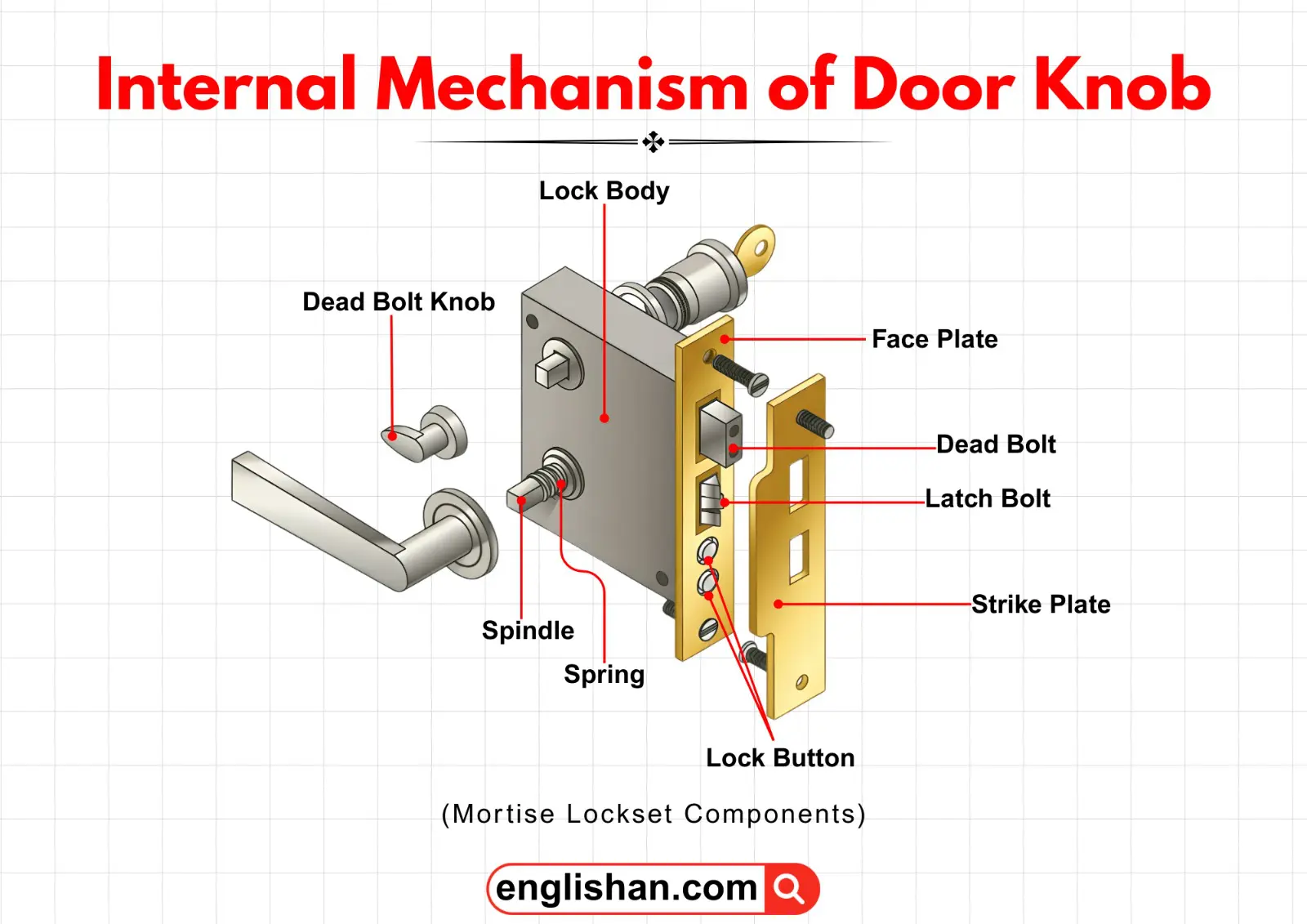
Apply lubricant directly to the friction points inside the mechanism for lasting results.
Target Key Areas
Use a small brush or your fingertip to apply white lithium grease or silicone spray to the latch bolt spring, spindle shaft, lever arm pivot points, actuating levers, and any gear-like interfaces. Use only a small amount because over-lubrication attracts dirt and creates gummy buildup that worsens squeaking over time.
Reassemble and Test the Knob
Proper reassembly ensures the lubricant reaches all moving parts and the hardware functions correctly.
Reinstall in Order
Slide the latch back into the door edge and secure it with screws. Insert the spindle through the latch mechanism. Slide both knob halves onto the spindle and align them properly. Tighten the set screw or reengage the release clip. Reattach the rosette and tighten all screws firmly but without overtightening.
Test Thoroughly
Open and close the door ten or more times, turning the knob slowly each time. Listen for any remaining squeaks and note any stiffness or binding. If noise persists, disassemble again and apply lubricant to overlooked areas, particularly the spring and spindle ends.
Tighten All Mounting Screws
Loose hardware creates vibration and noise even when the internal mechanisms are properly lubricated.
Secure Every Fastener
Check and tighten the knob mounting screws, faceplate screws, and strike plate screws. If any screw spins freely because the hole is stripped, insert two wooden toothpicks coated with wood glue into the hole. Break them off flush when dry, which takes two to four hours, then reinsert the screw for a tighter grip.
Align the Strike Plate
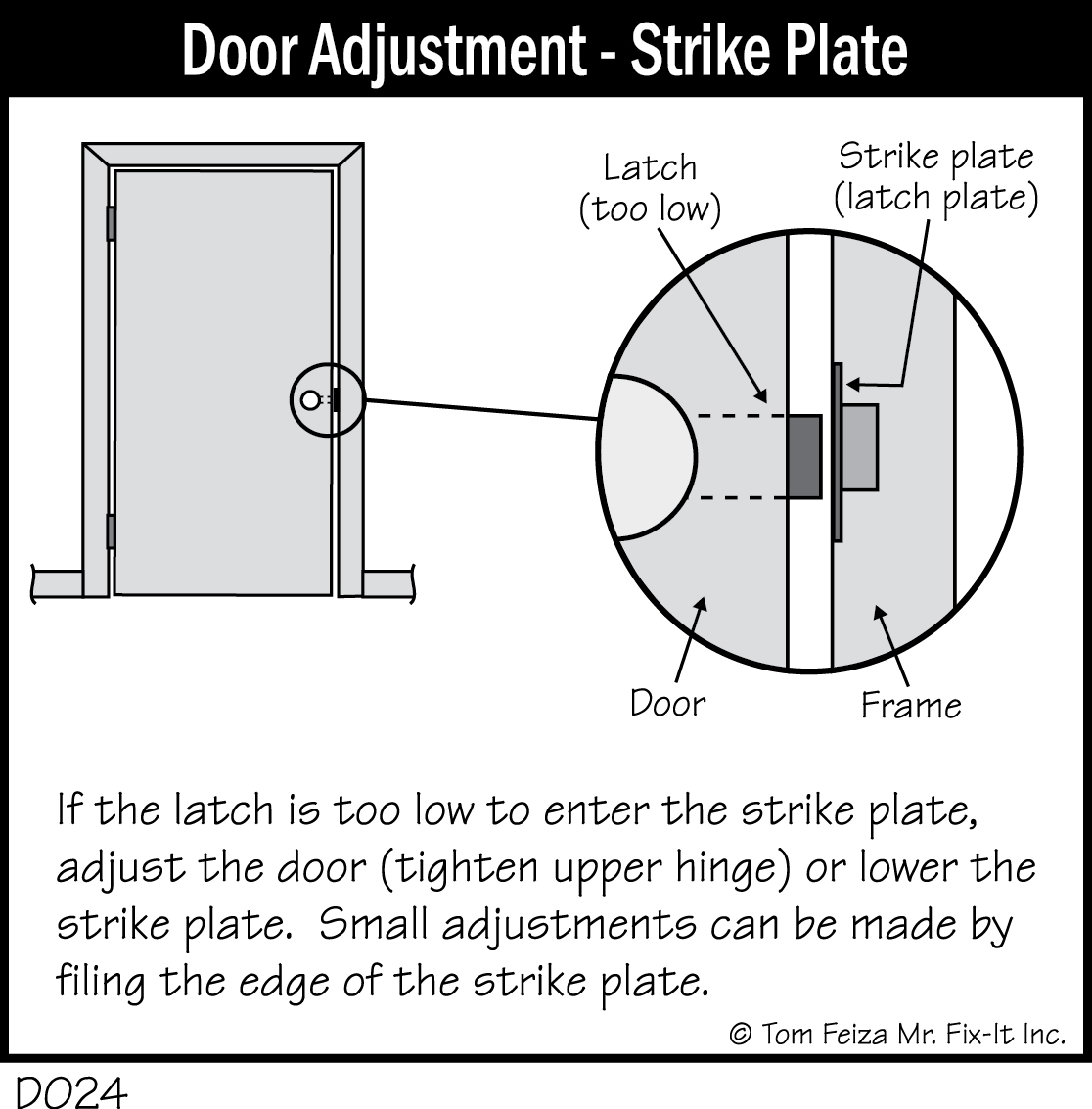
A misaligned strike plate causes the latch to scrape and bind, creating noise that mimics a knob squeak.
Diagnose and Correct Misalignment
Coat the latch bolt with chalk, lipstick, or tape. Open and close the door three to four times. Examine the strike plate for contact marks that show where rubbing occurs. If marks appear on the top, bottom, or side, the plate needs repositioning. Loosen the strike plate screws, tap it slightly with a screwdriver and hammer to shift the position, and retighten. For larger gaps, place cardboard shims behind the plate before tightening.
Replace Worn Components When Necessary
Sometimes cleaning and lubrication cannot save damaged or worn-out parts.
Know When to Replace
Consider replacement if the knob feels gritty or stiff after lubrication, if internal parts are corroded and non-replaceable, if screws will not hold due to stripped holes, or if the model is obsolete or cracked. A new knob costs twenty to sixty dollars and installs in minutes, making replacement worthwhile when repairs fail.
Choose Quality Replacement Hardware
Look for BHMA A156.13 Grade 1 or 2 certification, which indicates one million or more cycle durability and precision engineering. Solid brass or stainless steel resists corrosion effectively. Features like ball-bearing levers or self-lubricating bushings provide smoother, quieter operation.
Establish a Maintenance Routine
Prevent future squeaks with regular care and attention.
Lubricate Periodically
Apply silicone spray or lithium grease to high-use doors every six to twelve months. Reapply sooner in humid or dusty environments. Keep a maintenance log noting lubrication dates for each door to stay ahead of potential problems.
Annual Inspection Checklist
Test each door knob for smooth operation. Check for wobble or looseness. Clean exterior surfaces. Verify latch alignment. Addressing minor issues immediately prevents them from becoming major problems.
Frequently Asked Questions About Fixing Squeaky Door Knobs
What is the best lubricant for a squeaky door knob?
Silicone spray ranks as the best overall choice because it applies cleanly, works safely on various materials, and lasts six to twelve months. White lithium grease offers superior penetration for stubborn squeaks or exterior doors.
Why does my door knob squeak even after lubricating it?
Surface lubrication often fails to reach internal components in older or heavily used knobs. The lubricant may sit on the outside while internal friction points remain dry. Disassembling the knob and applying lubricant directly inside provides much better results.
Can I use WD-40 on my door knob?
You should use WD-40 only to clean rust and dissolve old lubricant. It works excellently for this purpose but dries quickly and attracts dust. Never use it as a final lubricant because it will cause more squeaking over time.
How often should I lubricate my door knobs?
Lubricate door knobs every six to twelve months, focusing on high-use doors like front entry, kitchen, and garage doors. Reapply sooner in humid climates or dusty environments where lubricant breaks down faster.
Should I replace or repair a squeaky door knob?
Replace the knob if lubrication fails to resolve the squeak, if internal parts are corroded or damaged, or if screws will not hold due to stripped holes. A new knob costs little and provides quiet, reliable operation.
Key Takeaways for Silencing Squeaky Door Knobs
A squeaky door knob is almost always fixable with the right approach. Start with silicone spray for mild cases, but do not hesitate to disassemble the knob for stubborn squeaks. Apply white lithium grease to internal components for long-lasting results. Tighten all mounting screws and align the strike plate to eliminate binding. For permanent quiet, upgrade to BHMA-certified hardware with ball-bearing mechanisms and lubricate every six to twelve months. With these steps, you can silence that annoying squeak and keep it quiet for years.