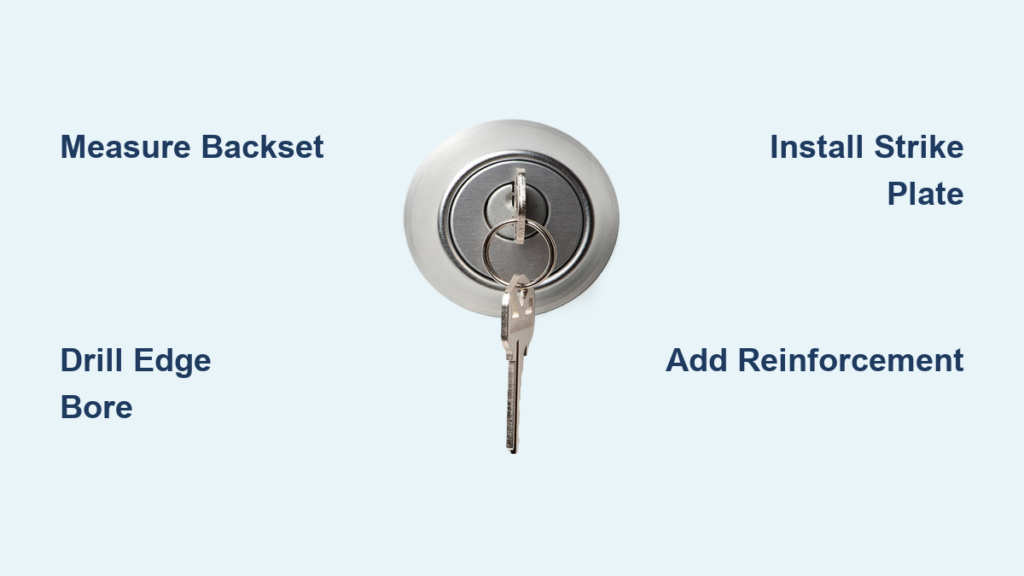
Installing a deadbolt on a door is one of the most effective ways to improve home security. Whether you’re upgrading an older lock, replacing damaged hardware, or installing a new deadbolt during a renovation, doing it right ensures your door resists forced entry and functions smoothly for years. This guide walks you through every step from measuring and drilling to final testing, with pro tips and common pitfalls to avoid.
With the right tools and careful attention to alignment, most homeowners can complete the job in under two hours. But misaligned holes, improper mortising, or skipping reinforcement can leave your door vulnerable. We will show you how to avoid those mistakes and get a clean, secure installation that works perfectly every time.
Measure Door and Set Backset
Before making any cuts, confirm your door dimensions and set the correct backset for your deadbolt. This foundational step prevents costly errors later.
Check Standard Door Thickness
Most interior and exterior residential doors are 1-3/8″ to 1-3/4″ thick. Verify this measurement with a tape measure. If your door falls outside this range, like a solid-core or antique door, you may need a specialty deadbolt with an extended tailpiece.
Confirm Bolt Backset: 2 3/8″ or 2 3/4″
The backset is the distance from the edge of the door to the center of the borehole. The two standard sizes are 2 3/8 inches and 2 3/4 inches. To determine which your door uses, measure from the door edge to the center of the existing doorknob bore. Most modern deadbolts have an adjustable faceplate that clicks into either position. Rotate the rectangular plate until it locks at your desired setting.
Mark Proper Height on Door
Install the deadbolt 6 to 12 inches above the primary door knob for ergonomic access and structural strength. Avoid placing it too high, which makes it hard to reach, or too low, which positions it closer to potential kick-in points. Use a combination square to transfer the centerline across the door edge and face for precise alignment.
Drill Edge Bore for Latch
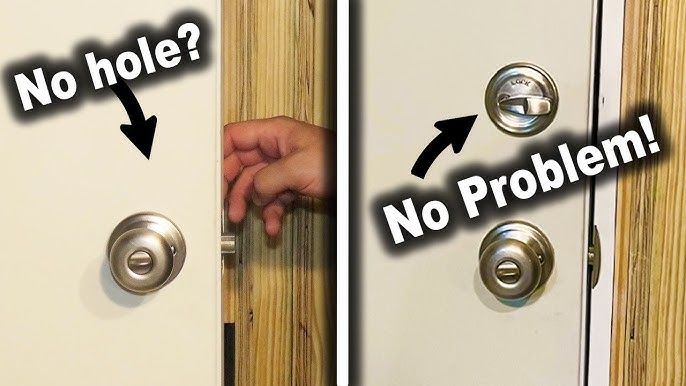
The first physical step is creating the hole in the door edge to house the deadbolt latch. This requires careful drilling to ensure proper fit.
Align Faceplate and Trace Outline
Place the rectangular faceplate, attached to the latch, flush against the door edge. Ensure the TOP marking faces upward. Trace its perimeter with a pencil.
Drill 1-1/8″ Hole into Door Edge
Using a spade bit or Forstner bit at 1-1/8″ diameter, drill straight into the edge of the door at the center of the traced area. Drill to a depth of about 2 inches, just enough to fully seat the latch. Keep the drill level to prevent misalignment. Support the opposite side with scrap wood to reduce splintering.
Chisel Recess for Flush Faceplate
After drilling, use a sharp 1″ wood chisel and hammer to carve out a shallow recess along the traced outline. Tap the chisel gently around the edges, then pare down to the correct depth so the faceplate sits flush. Test-fit the latch. It should slide in smoothly with the faceplate sitting completely flat against the door edge.
Insert and Secure Latch
Slide the deadbolt into the hole with the arrow or TOP indicator facing up. Attach the faceplate using the two short screws provided. Some models use a round drive-in faceplate instead. Remove the rectangular plate with a flathead screwdriver, then tap the round version in place using a block of wood and hammer.
Cut Crossbore Through Door Face
Now drill the large hole through the face of the door to install the lock body. This is the main opening that houses the cylinder mechanism.
Mark Centerline Across Door
Use a combination square to draw a straight line across the face of the door, aligned with the center of the edge bore. This ensures the crossbore will line up perfectly with the latch.
Drill 2-1/8″ Hole at Correct Height
Attach a 2-1/8″ hole saw to your power drill. Position the pilot bit on the centerline at your chosen height, 6 to 12 inches above the doorknob. Drill slowly and steadily through the door. Support the backside with scrap wood to prevent tear-out. Stop when the bit breaks through.
Clean Borehole Edges
Use sandpaper or a file to smooth any rough wood around the hole. A clean bore ensures the lock components fit flush and rotate smoothly.
Install Outside Cylinder
With both holes drilled, begin installing the mechanical parts of the lock. The outside cylinder is the portion you operate with a key.
Insert Tailpiece into Latch
Take the tailpiece, the flat metal bar extending from the cylinder, and insert it into the hub of the latch mechanism. It should slide in fully and turn the bolt when rotated.
Feed Cylinder Through from Exterior
From the outside of the door, push the outside housing with cylinder through the crossbore. The tailpiece should engage with the latch as it passes through. Ensure the brand logo faces up for correct orientation.
Handle Snap and Stay Brackets
Some models include a Snap and Stay bracket that holds the cylinder in place temporarily. If your door has a non-standard 1-1/2″ bore, remove this bracket by unscrewing the interior mounting plate, rotating and detaching the bracket, then reassembling without it.
Attach Inside Thumbturn Assembly
Now secure the interior side to complete the lock body. This is the part you turn manually to lock and unlock from inside.
Align Interior Plate Over Tailpiece
Slide the interior mounting plate over the protruding tailpiece. Make sure the slot in the plate matches the shape of the tailpiece.
Secure with Tapered Long Screws
Use the two tapered long screws to connect the inside and outside halves. These screws self-align the assembly as they tighten. Tighten both screws evenly. Do not fully tighten one side first, as this can cause binding.
Test Bolt Operation
Turn the thumbturn to extend and retract the bolt. It should move smoothly without resistance. If it binds, loosen the screws slightly and realign.
Mark and Cut Strike Plate Hole
The strike plate on the door jamb receives the bolt when the door is closed. Proper alignment is critical for smooth operation.
Transfer Bolt Position to Jamb
Close the door and extend the bolt. Use one of two methods to mark where the bolt hits the jamb. The ink transfer method provides precision by applying ink to the bolt tip using a stamp pad, placing masking tape on the jamb where the bolt strikes, and gently closing the door to leave an ink mark. The simpler pencil method involves extending the bolt and holding the door closed while marking the center point where the bolt touches the jamb.
Drill 1″ Hole in Door Jamb
Using a 1″ spade bit, drill into the jamb at the marked point. Drill straight and deep enough, about 1 to 1.5 inches, to allow full bolt extension.
Mortise Recess for Strike Plate
Trace the strike plate onto the jamb. Use a chisel to cut a recess so the plate sits flush. If the plate sticks out, it can interfere with the bolt or door closure.
Attach Strike Plate
Secure the plate with the remaining short screws. Ensure the bolt slides into the hole without rubbing. If the bolt drags, slightly enlarge the hole or adjust the plate position with shims.
Install Reinforcement Plate
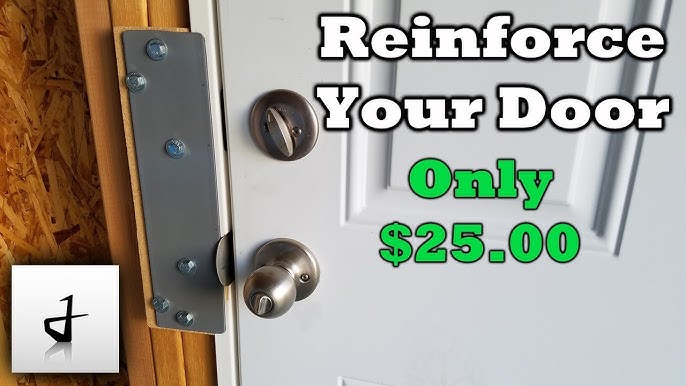
A weak jamb can be kicked in, even with a strong deadbolt. Add forced-entry resistance with reinforcement for maximum security.
Position Steel Reinforcement Plate
Place the reinforcement plate over the strike area on the door jamb. It typically covers the screw holes and extends into the wall framing.
Drill Pilot Holes
Use a center finder or small bit to pre-drill holes through the jamb and into the framing. This prevents splitting and ensures screws grab securely.
Secure with 3″ Wood Screws
Attach the plate using long wood screws at 3 inches or more that anchor into the wall stud. These screws vastly improve resistance to kick-in attacks. Without reinforcement, a burglar can break the jamb in seconds. With long screws and a steel plate, the door becomes significantly harder to breach.
Test and Fine-Tune Operation
Final testing ensures smooth, reliable performance. Take time to verify everything works correctly before considering the job complete.
Operate Lock with Door Open
Turn the thumbturn. The bolt should extend and retract fully. Insert the key from outside and test operation. Listen for grinding or scraping, which are signs of misalignment or binding.
Test With Door Closed
Close the door and lock and unlock using both key and thumbturn. Check that the bolt fully seats into the strike hole. If it sticks, adjust the strike plate by loosening screws, shifting slightly, then retightening.
Check for Flush Fit
All faceplates and strike plates should sit flush. Gaps reduce security and can lead to premature wear.
Verify Spare Keys Work
Test both keys. Store one in a secure, accessible location in case of emergencies.
Avoid Common Installation Mistakes
Even small errors can compromise security or function. Learn what to watch for and how to prevent problems.
Drilling Off-Center
Misaligned holes cause binding and uneven wear. Use a center finder and combination square for accuracy. Always double-check alignment before drilling.
Skipping Mortising
Leaving faceplates proud of the surface weakens the hold and looks unprofessional. Always chisel recesses so plates sit flush.
Over-Tightening with Electric Screwdriver
Power drivers can strip screws or damage internal parts. Use a manual Phillips #2 screwdriver for final tightening.
Poor Strike Alignment
A misaligned strike causes friction and wear. Use the ink transfer method for perfect placement.
Forgetting Reinforcement
A strong bolt is useless if the jamb fails. Always install long screws or a reinforcement plate.
Frequently Asked Questions About Installing a Deadbolt
What tools do I need to install a deadbolt?
You will need a 2-1/8″ hole saw, 1-1/8″ spade bit, power drill, tape measure, Phillips screwdriver, wood chisel, hammer, and combination square. Optional tools include a deadbolt installation jig, center finder, and stamp pad for marking strike placement.
How long does it take to install a deadbolt?
An experienced installer completes the job in 20 to 40 minutes. A first-time DIYer typically needs 1.5 to 3 hours, especially if making corrections or practicing on scrap material first.
Can I install a deadbolt myself or should I hire a professional?
If you are comfortable with basic power tools and carefully follow measurement steps, you can install a deadbolt yourself. Hire a professional if you lack confidence in measuring or drilling, have a solid-core or antique door, or want guaranteed security with reinforcement.
What is the standard backset for a deadbolt?
The two standard backsets are 2 3/8 inches and 2 3/4 inches, measured from the door edge to the center of the borehole. Most modern deadbolts are adjustable between these two sizes.
Do I need to reinforce the door jamb when installing a deadbolt?
Yes, reinforcement is highly recommended. A strong deadbolt is ineffective if the door jamb can be kicked in. Install a reinforcement plate with 3-inch wood screws that anchor into the wall stud for maximum resistance.
How high should I install a deadbolt on my door?
Install the deadbolt 6 to 12 inches above the primary door knob. This provides ergonomic access and maintains structural integrity of the door.
Key Takeaways for Installing a Deadbolt
Installing a deadbolt correctly takes patience, but the payoff is lasting security. Follow these steps carefully and use the right tools for a lock that performs flawlessly for decades. Measure twice and drill once to avoid misaligned holes that cause binding and wear. Always mortise faceplates and strike plates flush with the surface for professional results and maximum holding strength. Do not skip reinforcement. Installing long screws and a steel reinforcement plate dramatically increases resistance to forced entry, making your door significantly harder to breach. For difficult doors or if you are unsure at any step, hiring a local locksmith may be worth the investment, especially when protecting your home and family.