You press the remote, the garage door does not budge. No sound. No movement. You try again, still nothing. A garage door not opening is more than an inconvenience. It can block your morning commute, delay deliveries, or leave your home vulnerable. The good news? Most issues have clear causes and simple solutions.
This guide walks you through every possible cause of a garage door not opening, ranked by likelihood and risk. You will learn how to test each component, spot danger signs, and decide when to DIY or call for help. By the end, you will either have your door working or know exactly what needs fixing.
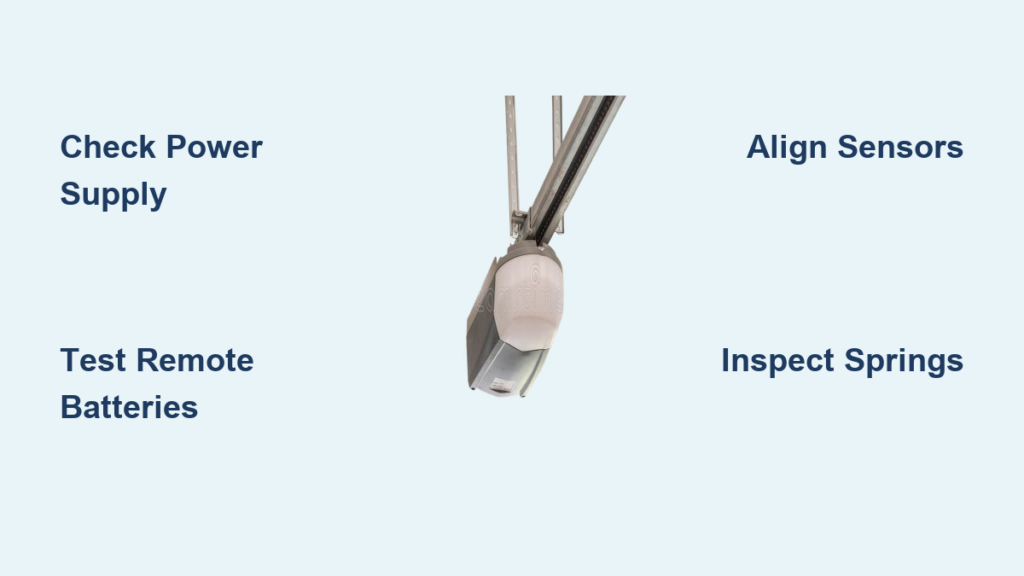
Check Power Supply First
If your garage door makes no noise at all, the issue is likely electrical. Start here before touching any mechanical parts.
Verify Outlet and Plug Connection
Ensure the opener is plugged in securely. Over time, vibrations can loosen the cord. Test the outlet with a lamp or phone charger. If it does not power on, the outlet may be dead. Look for GFCI outlets in the garage. Press the Reset button if tripped. After a power outage, unplug the opener for 30 seconds, then plug it back in to reset internal electronics.
Inspect Circuit Breaker Panel
Go to your home is main electrical panel. Check if the garage circuit breaker has tripped. Flip it fully off, then back on. If it trips again immediately, there is a short or overload. Call an electrician in this case.
Test Remote and Keypad Controls
When only the remote fails but the wall button works, the problem is isolated to wireless operation.
Replace Remote Batteries
Open each remote and replace batteries. Even if they seem fine, swap them out. Clean battery contacts with a cotton swab. Test one remote at a time after replacement.
Reprogram After Power Loss
Power outages or new batteries can erase programming. Locate the Learn button on the motor unit. Press and hold for 2 to 3 seconds until the LED blinks. Press the remote button. The light should flash to confirm pairing.
Diagnose Keypad Issues
Keypads use 9V or CR2032 batteries. Replace every 1 to 2 years. If the keypad has no lights, check wiring connections at both ends. Cracked casing or foggy lens means moisture intrusion. Replace it in this case.
Inspect Wall Console and Lock Mode
The wall-mounted button bypasses remotes, so it is key for isolating problems.
Test the Wall Button
Press the console button. If the door opens, the issue is with the remote or keypad. If it does nothing, check low-voltage wires for loose, chewed, or corroded connections. Replace the console if buttons feel sticky or unresponsive.
Disable Garage Door Lock Mode
A blinking light on the wall console often means lock mode is active. To disable it, press and hold the lock button for 5 to 10 seconds until the light stops blinking. Lock mode prevents remote access, great for vacations but easy to forget.
Fix Misaligned or Blocked Safety Sensors
Photo-eye sensors are the number one cause of partial operation. The door starts to open, then reverses or stops.
Locate and Inspect Sensors
Sensors are mounted 6 inches above the floor on both sides of the door. Each has an LED light. Solid green or amber means good. Flashing or off means problem.
Clear Obstructions and Clean Lenses
Wipe lenses with a soft, dry cloth. Dirt, spider webs, or snow can block the beam. Move bikes, trash cans, or tools away from the sensor path.
Realign Sensors Properly
Both sensors must face each other directly and sit at the same height. Loosen mounting screws, adjust until both LEDs stay solid, then tighten. Use a level for accuracy.
Use the Red Emergency Release Cord
This lets you disconnect the door from the opener to test mechanical function.
How to Disengage the Opener
Ensure the door is fully closed. Pull the red rope downward. You will feel the trolley release. Try lifting the door by hand.
Diagnose Manual Operation
Door lifts easily means opener motor or drive system is faulty. Door will not move or is very heavy means broken springs. Door sticks or grinds means track misalignment or lack of lubrication.
Diagnose Broken Garage Door Springs
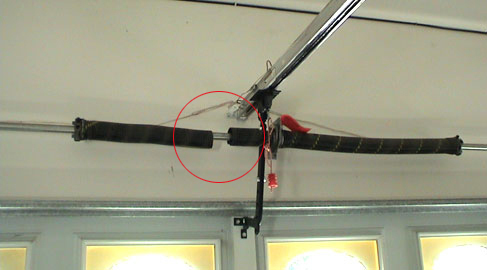
A loud bang followed by failure to open? You have a broken spring.
Identify Spring Type
Torsion springs are horizontal bars above the door under high tension. Extension springs run along side tracks and stretch when the door opens. Wayne-Dalton TorqueMaster springs are inside a metal shaft, hidden but prone to failure.
Signs of Spring Failure
Door will not lift manually. Opener runs but door barely moves. Visible gap or sag in spring coil. Door drops suddenly when released.
Why DIY Is Dangerous
Torsion springs hold 150 to 200 pounds of tension. Improper release can cause severe injury or death. Call a professional for spring replacement.
Inspect Cables, Tracks, and Rollers
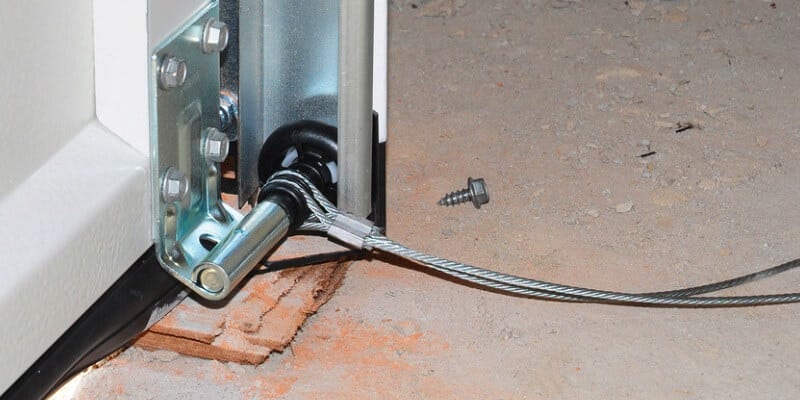
Even small mechanical issues can stop your door cold.
Check for Snapped Cables
Steel cables connect the door to the spring system. If one is loose, frayed, or broken, do not operate the door. Cables under tension can snap violently. Call a technician.
Fix Track Misalignment
Look for bent sections, gaps, or debris in the track. Clean out leaves, pebbles, or ice. Straighten minor bends with a rubber mallet. Never use metal tools. Lubricate tracks and rollers with silicone-based or lithium grease. Never use WD-40.
Replace Damaged Rollers
Worn or cracked rollers cause noise and sticking. Upgrade to nylon rollers for smoother, quieter operation.
Diagnose Opener Drive System Failures
If the motor runs but the door does not move, the drive system may be damaged.
Reconnect Disengaged Trolley
The trolley should be linked to the door arm. If disconnected, slide it back manually or press the wall button to re-engage. Ensure the red release cord is not hanging loose.
Check for Stripped Gears
This is common in older Chamberlain or LiftMaster units. Symptoms include motor hums but no movement, plastic shavings inside the motor housing, or burning smell. Replace the gear kit or upgrade the opener.
Tighten or Replace Drive Mechanisms
Chain drive chains should be taut but not rigid. Adjust tension via rail screw. Replace if stretched or broken. Belt drive belts show cracks or missing rubber pieces when failing. Screw drive rods need annual cleaning and light lubrication.
Adjust Force and Limit Settings
These control how far the door opens and how hard the motor works.
Open Force Too Low
Door starts to rise, then stops or reverses. Increase open force slightly using the adjustment knob on the opener.
Recalibrate Travel Limits
Door opens only halfway? Adjust limit settings so the door fully clears the opening. Turn the up limit screw clockwise in small increments. Test after each adjustment.
Address Cold Weather and Ice Issues
Winter brings unique challenges for garage door operation.
Frozen Panels or Tracks
Moisture between door sections can freeze, locking them together. Gently warm the door with a hairdryer or wait for natural thaw.
Thickened Lubricant
Standard grease hardens in cold temperatures. Use lithium-based or cold-weather lubricant. Apply to hinges, rollers, and springs.
Assist Manually in Extreme Cold
Give the door a light upward push on first use. This helps break any ice adhesion.
Upgrade with Smart Features and Battery Backup
Modern openers prevent many common failures.
Add Wi-Fi Connectivity
Retrofit older openers with MyQ or Aladdin modules. Control the door from your phone. Get alerts if left open.
Install Battery Backup
Keeps door operational during outages. Standard on premium models like LiftMaster 8550. Lasts 4 to 6 hours of use.
Follow Preventive Maintenance Schedule
Most failures are avoidable with routine care.
Clean tracks quarterly. Lubricate moving parts biannually. Test auto-reverse quarterly. Check sensor alignment quarterly. Tighten hardware annually. Schedule professional tune-up annually.
Know When to Call a Professional
Some jobs are not DIY-safe.
Call a technician if spring is broken or missing. Call if cables are loose or snapped. Call if door falls rapidly when released. Call if motor smokes or smells burnt. Call if door is off its tracks. Call if electrical issues persist after reset. Call if Wayne-Dalton internal spring system failed.
Frequently Asked Questions About Garage Door Not Opening
Why does my garage door not open but the motor runs?
This usually indicates a problem with the drive system. The trolley may be disconnected from the door arm. Alternatively, the gears inside the motor could be stripped. Check if the red release cord is hanging loose. If so, re-engage the trolley. If the motor hums but nothing moves, inspect for plastic shavings inside the housing.
How do I reset my garage door opener after a power outage?
Unplug the opener for 30 seconds, then plug it back in. This resets internal electronics. If remotes do not work after this, you may need to reprogram them using the Learn button on the motor unit.
What causes a garage door to open only halfway?
This is usually a limit setting problem. The up limit screw needs adjustment. Turn it clockwise in small increments. Test after each adjustment. Force settings may also be too low. Increase open force slightly.
Can I replace garage door springs myself?
No. Garage door springs are under extreme tension, 150 to 200 pounds. Improper handling causes severe injury or death. Always hire a professional for spring replacement. This is one of the most dangerous DIY repairs possible.
Why does my garage door reverse when closing?
The photo-eye sensors are likely blocked or misaligned. Clean the lenses with a soft cloth. Ensure nothing blocks the beam. Check that both sensors are at the same height and facing each other directly. The door should reverse when something passes through the beam.
How often should I lubricate my garage door?
Lubricate moving parts twice per year. Use silicone-based or lithium garage door lubricant. Apply to hinges, rollers, springs, and bearings. Never use WD-40, as it evaporates and leaves components dry.
Key Takeaways for Fixing a Garage Door Not Opening
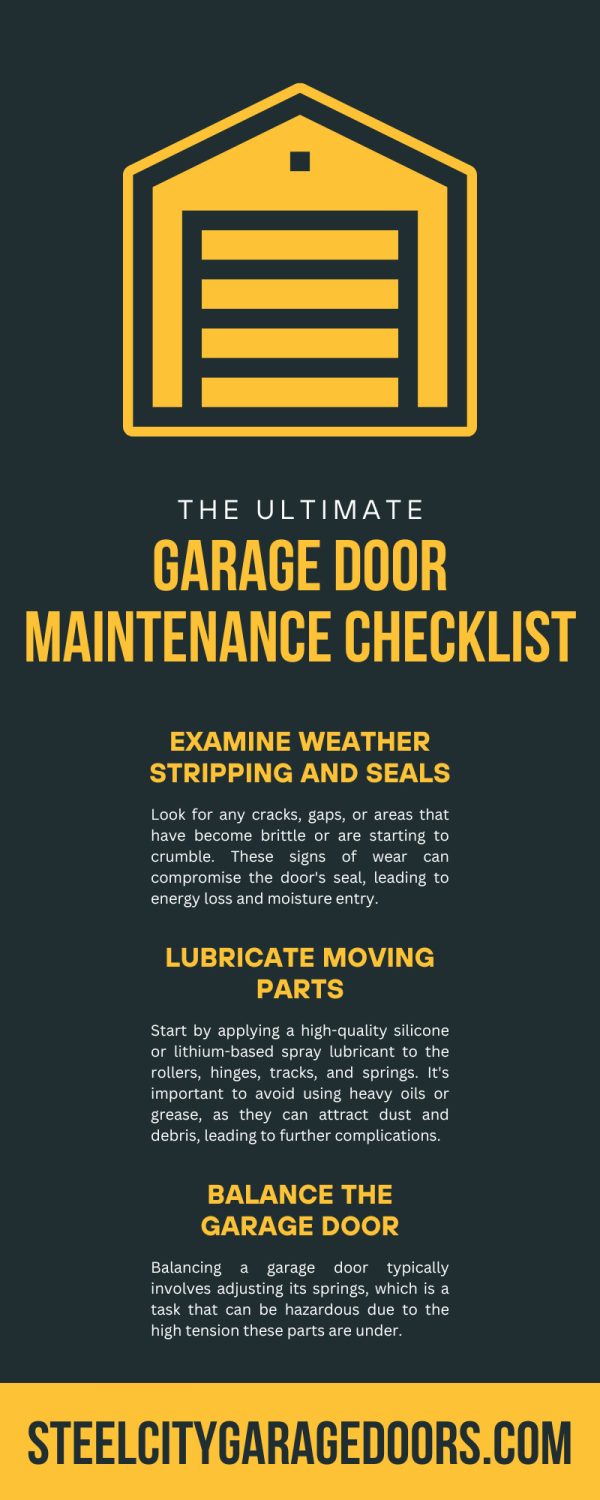
A garage door not opening is rarely mysterious. Most causes are predictable and fixable. Start simple by checking power, remote batteries, and sensor alignment. Test manual operation to isolate mechanical from electrical problems. If the door is heavy when lifted manually, stop immediately. Broken springs require professional repair. Regular maintenance prevents 80 percent of issues. Clean sensors, lubricate moving parts, and test safety features quarterly. When in doubt, call a certified technician. Garage doors weigh 150 to 400 pounds and operate under extreme tension. Safety must come first.