
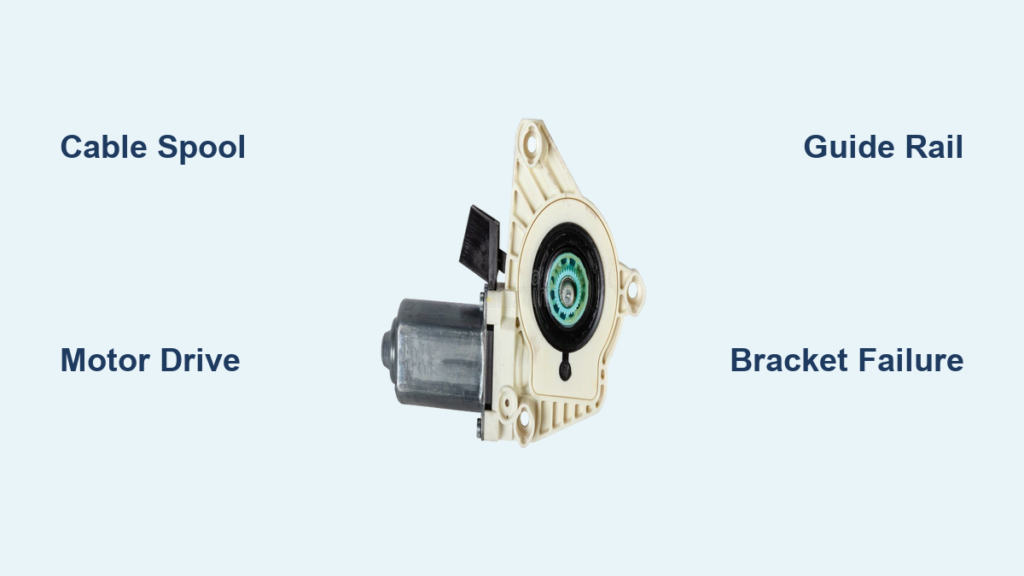
Ever pressed a button and watched your car window glide smoothly up or down? That effortless motion comes from a clever mechanism hidden behind the door panel called a window regulator. This unsung component handles the heavy lifting, raising and lowering roughly 25 pounds of glass every time you tap the switch.
Understanding how a window regulator works helps you appreciate the engineering behind this everyday convenience. From simple scissor arms to compact cable systems, these mechanisms balance strength, reliability, and lightweight design. In this guide, you will learn the core components, how power flows through the system, the differences between regulator types, and the warning signs that signal trouble ahead.
Core Components of a Window Regulator
Every window regulator relies on four essential parts working together. These components ensure stable, smooth, and safe movement of the glass.
Drive Mechanism
The drive is the power source that initiates motion. In manual regulators, a hand crank turns a small pinion gear that meshes with a larger gear. In electric versions, a 12-volt reversible DC motor sits on the assembly. Press the switch, and the motor spins clockwise to raise the window or counterclockwise to lower it. Reversing polarity changes the direction of travel.
Lifting System
The lifting system converts rotational force into vertical motion. Cable-based designs use a spool that winds or unwinds steel cables attached to the window carrier. Lever-based designs use crossed metal arms that expand or collapse like scissors. Both systems transfer power from the drive to the glass.
Guide Rail or Track
The guide rail keeps the window moving straight up and down. It is a rigid metal channel fixed to the door frame. The window bracket slides along this track using plastic rollers or sliders. Some regulators use a single rail, while others use dual rails for extra stability in heavier front doors.
Window Mounting Bracket
The window bracket connects the mechanism directly to the glass. The window is bolted to this metal or reinforced plastic component. As the lifting system moves, the bracket travels along the track, carrying the glass with it. Worn or broken brackets can cause misalignment or even a complete window drop.
Manual vs Electric: How Power Is Delivered
The way a window regulator operates depends on whether it is manual or electric. Both achieve the same result, but their methods differ in effort, complexity, and features.
Manual Window Regulator Operation
Older vehicles and budget models often use manual window regulators operated by a hand crank. Turning the crank rotates a small pinion gear that meshes with a large sector gear. This gear is part of a scissor-type arm system. As the sector gear turns, the crossed arms expand upward or collapse downward, moving the window bracket along the guide rail.
Manual systems require physical effort but have few failure points. There is no motor, wiring, switches, or fuses to worry about. They are highly reliable and easy to repair, though they lack convenience features and can be difficult for passengers with limited hand strength.
Electric Window Regulator Operation
Modern cars almost universally use electric window regulators. Pressing the switch completes a circuit, sending 12V power to the motor. The motor spins, activating either a cable drum or gear-driven arm system. Most systems offer one-touch operation, auto-reverse on obstruction, and centralized control from the driver’s door.
Electric systems provide effortless control and advanced safety features. However, they introduce more potential failure points, including blown fuses, faulty switches, wiring issues, or motor burnout. Despite the added complexity, their convenience makes them standard in today’s vehicles.
Cable-Type Window Regulator: Inside the Mechanism
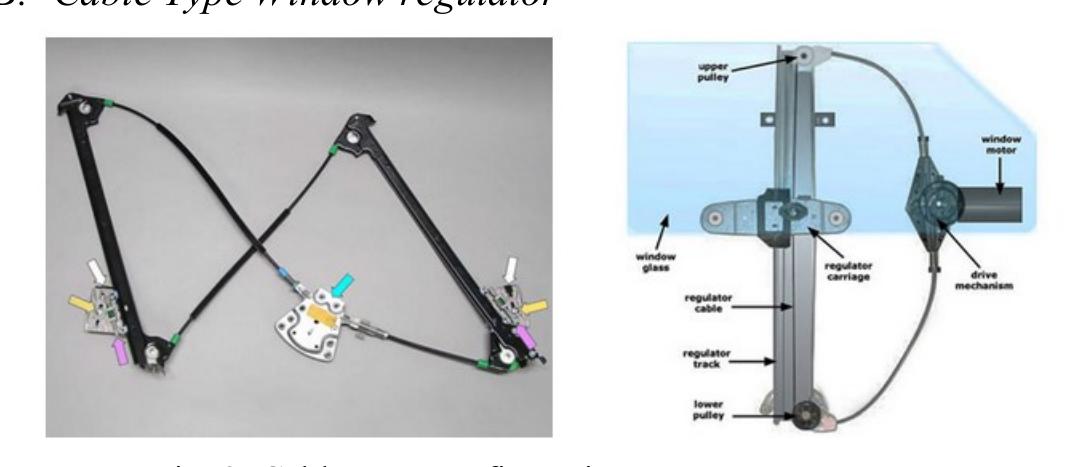
Cable-type regulators dominate modern vehicles due to their compact size, light weight, and smooth operation. Understanding how a window regulator works in this design reveals clever engineering.
Cable and Drum Assembly
At the heart of a cable-type regulator is a spool or drum connected to the motor shaft. High-tensile steel cables wind around this drum in opposite directions, much like a yo-yo with two strings. Each cable end connects to a window carrier on either side of the glass. When the motor spins, one side winds tight while the other unwinds, pulling the carriers upward or allowing them to descend.
This balanced tension ensures even lifting and prevents tilting. The drum must maintain consistent cable winding. Misalignment or fraying can cause jams or uneven movement.
Pulleys and Tensioners
A series of plastic or metal pulleys guides the cables from the drum to the carriers. These rollers keep the cables aligned and reduce friction. A tensioner maintains proper cable tightness, preventing slack that could lead to slipping or derailment. Over time, pulleys may crack or break, and tensioners can weaken, causing rattling or incomplete window travel.
Single vs Dual Rail Designs
Some cable systems use a single central rail with both carriers moving along the same track. Others use dual side rails for better support and stability. Dual-rail systems appear often in front doors where windows are larger and heavier. Single-rail designs save space and are common in rear doors.
Scissor-Type Window Regulator: Arm-Based Motion
Also known as geared or lever-type regulators, scissor mechanisms rely on interconnected metal arms to lift the window.
Crossed Arm Mechanism
Two long metal arms cross each other at a pivot point, resembling open scissors. One arm connects to a toothed sector gear driven by the motor or crank. As the gear turns, it pushes or pulls the arm, causing the assembly to expand and raise the window or collapse and lower it. The ends of the arms attach to window carriers that slide along vertical tracks.
This design provides strong mechanical advantage and durability under heavy loads. However, it is bulkier and heavier than cable systems, making it less common in newer, weight-sensitive designs.
Roller and Slider Function
The arm joints and carrier ends use plastic rollers or sliders to glide smoothly along the guide rails. These components reduce friction and wear. Over time, rollers can crack or fall out, leading to binding, noise, or erratic movement. Lubrication helps extend life, but contaminated or dried grease accelerates failure.
Why It Is Less Common Today
While robust, scissor-type regulators take up more space and add weight. As automakers prioritize fuel efficiency and compact packaging, cable-type systems have largely replaced them. Some trucks and SUVs still use scissor mechanisms for their strength and reliability.
How Power Windows Know When to Stop
Modern electric window regulators do more than move glass. They operate intelligently with built-in safety features.
Anti-Pinch Safety Feature
The anti-pinch function stops and reverses the window if it detects an obstacle, such as a hand or branch. Sensors monitor motor current. When resistance increases, the system interprets this as an obstruction and reverses direction. This feature is required by law in many countries and significantly improves safety.
Position Memory and Calibration
Many vehicles with power windows include position memory, allowing the window to return to a preset height after being lowered. After replacing a regulator or disconnecting the battery, the system may need re-calibration. This process usually involves holding the switch in the up position for a few seconds until the window cycles through its full range.
One-Touch Up and Down
One-touch operation lets you fully raise or lower the window with a single tap. The system uses internal logic to track motor rotation and determine when the window has reached the top or bottom. If the motor or sensor fails, this feature may stop working even if the window still moves manually.
Common Failure Points and Warning Signs

Even well-designed regulators eventually wear out. Recognizing early signs of failure can prevent a total breakdown.
Grinding or Clunking Noises
Unusual sounds during window operation often signal worn gears, broken rollers, or loose brackets. In cable systems, frayed cables rubbing against the drum or pulleys create squeaks or grinding. In scissor types, dry or cracked plastic bushings cause clunking as arms shift position.
Window Moves Unevenly or Tilts
If the window wobbles or tilts while moving, it may indicate cable slack, misaligned tracks, or a bent arm. In dual-cable systems, one cable may have stretched or slipped, causing one side to lag. This can lead to binding or complete failure if left unaddressed.
Window Falls Inside the Door
A sudden window drop is a classic sign of bracket failure or cable detachment. The glass becomes unsecured and falls into the door cavity. This usually happens after prolonged stress or plastic bracket degradation. Immediate repair is necessary to avoid damaging the motor or glass.
Slow or Intermittent Movement
Sluggish operation often points to motor strain, weak electrical connections, or binding tracks. Corrosion in wiring, dirty switches, or dried lubricant in the rails increases resistance. If the motor labors, it may overheat and shut down temporarily.
Preventive Maintenance Tips
Extending your window regulator’s life does not take much effort. A little attention goes a long way.
Clean and Lubricate Tracks Regularly
Dirt, sand, and moisture accumulate in the window channels and guide rails, increasing friction. Every six months, wipe down the rubber seals and rails with a damp cloth. Apply a silicone-based lubricant to the tracks and rollers. Never use grease or oil, as these attract more debris.
Avoid Slamming Doors
Forceful door closure can misalign the window or damage internal components. Over time, repeated impacts loosen brackets, bend arms, or dislodge cables. Train passengers to close doors gently.
Limit Use During Extreme Temperatures
Cold weather makes rubber seals stiff and increases resistance. In winter, wait a few seconds after unlocking before raising frozen windows. Similarly, avoid operating windows in extreme heat when glass expands slightly. Both conditions strain the motor and regulator.
Check Electrical Connections
For electric systems, inspect fuses, switches, and wiring periodically. Use a multimeter to test continuity if a window stops responding. Loose connectors or corroded grounds are common culprits behind intermittent failures.
Frequently Asked Questions About Window Regulators
What is the main function of a window regulator?
A window regulator raises and lowers the car window glass. It supports roughly 25 pounds of glass and translates input from a hand crank or electric motor into controlled vertical movement. The mechanism sits behind the door panel, bolted to the door frame.
How long does a window regulator typically last?
Most window regulators last between 5 and 10 years, depending on usage and environmental conditions. Frequent use, extreme temperatures, and lack of lubrication shorten lifespan. Regular maintenance can extend service life significantly.
Can I replace a window regulator myself?
Yes, many vehicle owners replace window regulators themselves with basic tools. The process involves removing the door panel, disconnecting the old regulator, and installing the new one. However, the job requires patience and careful handling of glass and electrical connectors.
What causes a window to fall inside the door?
A window typically falls inside the door when the window bracket breaks or the cable detaches. This failure often results from prolonged stress, worn plastic components, or impact damage. Immediate repair is needed to prevent further harm to the motor or glass.
How much does a window regulator replacement cost?
Most window regulators cost between $50 and $200 for the part alone. Labor adds $100 to $300 depending on the vehicle and shop rates. Luxury vehicles and OEM parts can push total costs into the thousands.
Do all cars use the same type of window regulator?
No, cars use different regulator types based on design and budget. Cable-type regulators dominate modern vehicles due to their compact size and light weight. Scissor-type regulators appear in some trucks and SUVs. Manual regulators still exist in older cars and budget models.
Key Takeaways on How a Window Regulator Works
Learning how a window regulator works empowers you to diagnose issues early and maintain smooth operation. Whether your car uses a cable-driven electric system or a manual crank, each component plays a critical role in lifting and lowering the glass safely.
Watch for warning signs like grinding noises, uneven movement, slow response, or a sudden window drop. These symptoms often appear before complete failure, giving you time to act. Regular cleaning, silicone-based lubrication, and gentle door handling extend the life of this vital mechanism.
If replacement becomes necessary, knowing your regulator type (cable, scissor, manual, or electric) helps ensure you get the right part the first time. Start by inspecting the symptoms, then consult your vehicle manual or a trusted mechanic to confirm the diagnosis and choose the best repair path.