Dust, pollen, and grime on window screens don’t just make your home look dull. They restrict airflow, trap allergens, and can even damage the screen over time. Many people assume cleaning means taking each screen down, but you can clean window screens without removing them safely and effectively. This method saves time, avoids the risk of bending frames or breaking clips, and works well for routine maintenance.
Whether you are dealing with light dust or seasonal buildup, this guide delivers practical, no-removal techniques that protect your screens and improve indoor air quality. You will learn the right tools, solutions, and step-by-step methods tailored to your screen type, plus pro tips to prevent water damage and achieve streak-free results.
Tools for In-Place Cleaning

Essential Supplies
Gather these tools before starting to ensure a smooth, damage-free clean:
- Soft-bristle brush (paintbrush or microfiber duster)
- Vacuum with brush attachment
- Microfiber cloths (lint-free and absorbent)
- Spray bottle (for controlled solution application)
- Absorbent towels (to protect sills and catch drips)
- Lint roller (ideal for fine pollen on fiberglass)
Optional but Helpful
- Garden hose with adjustable nozzle (for exterior access)
- Shop vac with blow mode (speeds drying)
- Squeegee (if glass behind screen is reachable)
Avoid These Tools
- Stiff-bristle brushes, which stretch or tear mesh
- Steam cleaners, which melt nylon or polymer screens
- High-pressure washers, which damage mesh or force water into frames
- Harsh chemicals, which corrode aluminum or degrade coatings
Choose the Right Cleaning Method

Match Method to Your Access and Soil Level
Not every technique works for every window. Pick the best approach based on your screen condition and location.
Light Dust? Use the Dry-to-Damp Method
Best for interior cleaning of screens with light dust, pet hair, or pollen. Time required is 5–10 minutes per window, and the difficulty is easy.
Heavy Buildup? Try Water-and-Air Blast
Best for screens with caked-on dust where exterior access is not possible. Time required is 10–15 minutes per window, and the difficulty is moderate.
Exterior Access? Use Jet Spray Method
Best for ground-level or patio windows with grime or bug residue. Time required is 8–12 minutes per window, and the difficulty is easy if outside access is clear.
Commercial or Restricted Windows? Use Pro-Grade Rinse
Best for hotels, apartments with security locks, or occupied units. The focus is spot-free results with distilled water.
Prevent Damage by Knowing Your Screen Type
Aluminum Screens: Avoid Alkaline Cleaners
Aluminum resists rust but reacts poorly to high-pH cleaners. Use only neutral pH solutions like mild dish soap. Alkaline products cause white, crusty corrosion that is hard to remove.
Pro Tip: Test any cleaner on a small corner first. If a powdery residue appears, stop immediately.
Nylon and Polymer Screens: No Heat Allowed
These materials melt or warp under high heat. Never use steam cleaners or hot water above lukewarm. Stick to cool or room-temperature water to preserve mesh integrity.
Fiberglass Screens: Gentle Touch Only
Fiberglass is durable but stretches easily. Use soft cloths or lint rollers, not scrubbing pads. Avoid aggressive brushing, which distorts the weave and reduces airflow.
Wood Frames? Limit Moisture Exposure
Excess water can swell, rot, or peel paint on wooden window frames. Use damp (not wet) cloths and wipe up drips immediately. Never soak the screen when wood surrounds it.
Step-by-Step: Interior Dry-to-Damp Clean

Best for Light Dust and Routine Maintenance
This method removes most debris with minimal moisture, making it perfect for weekly or seasonal upkeep.
1. Prepare the Area
- Open the window fully.
- Lay absorbent towels on the sill to catch falling dirt and moisture.
- Protect flooring below if water might drip through the mesh.
2. Remove Dry Debris
- Use a vacuum with brush attachment or a soft paintbrush.
- Work top to bottom so gravity pulls loose particles down.
- For fine pollen, roll a lint roller across the surface.
Pro Tip: Vacuum both sides if possible. Even light brushing dislodges trapped allergens.
3. Apply Cleaning Solution
- Mix 1–2 drops of mild dish soap in a spray bottle with 1 cup of warm water.
- Lightly mist the screen. Dampen, do not soak.
- Focus on visibly dirty areas like corners or bottom edges.
4. Wipe Gently with Microfiber
- Dip a microfiber cloth in the solution and wring it out well.
- Wipe in small circles or one direction to lift grime without smearing.
- Rinse and wring the cloth frequently to avoid redepositing dirt.
5. Rinse and Dry Completely
- Wipe with a clean, damp microfiber cloth to remove soap residue.
- Leave the window open 1–2 hours to air dry.
- Use a dry towel to wipe the sill and frame to prevent moisture damage.
Warning: Trapped soap attracts more dust and may corrode aluminum. Always rinse thoroughly.
Deep Clean: Interior Water-and-Air Blast
For Screens with Heavy Dust or Pollen
When dry cleaning is not enough, this method uses water and forced air to flush out stubborn buildup without removal.
1. Protect the Interior
- Place thick towels on the sill and floor.
- Close nearby curtains or move furniture to avoid water spray.
2. Spray with Controlled Water
- Use a garden hose with a jet nozzle (if accessible from a porch) or a large spray bottle.
- Spray the screen from inside, moving in overlapping vertical strokes.
- Keep water pressure low to avoid forcing moisture into the frame.
3. Blow Water Off with Air
Immediately switch to an air source:
- Shop vac in blow mode
- Vacuum with reverse air function
- Hair dryer on cool setting
Follow the same pattern as spraying to push water and debris outside.
4. Final Vacuum and Dry
- Switch vacuum to suction mode with brush attachment.
- Lightly go over the screen to pull out any remaining fibers or lint.
- Wipe the frame and check for trapped moisture.
Pro Tip: This method mimics professional cleaning and works well for second-story windows where removal is risky.
Exterior Jet Spray Method
Best for Ground-Level Windows
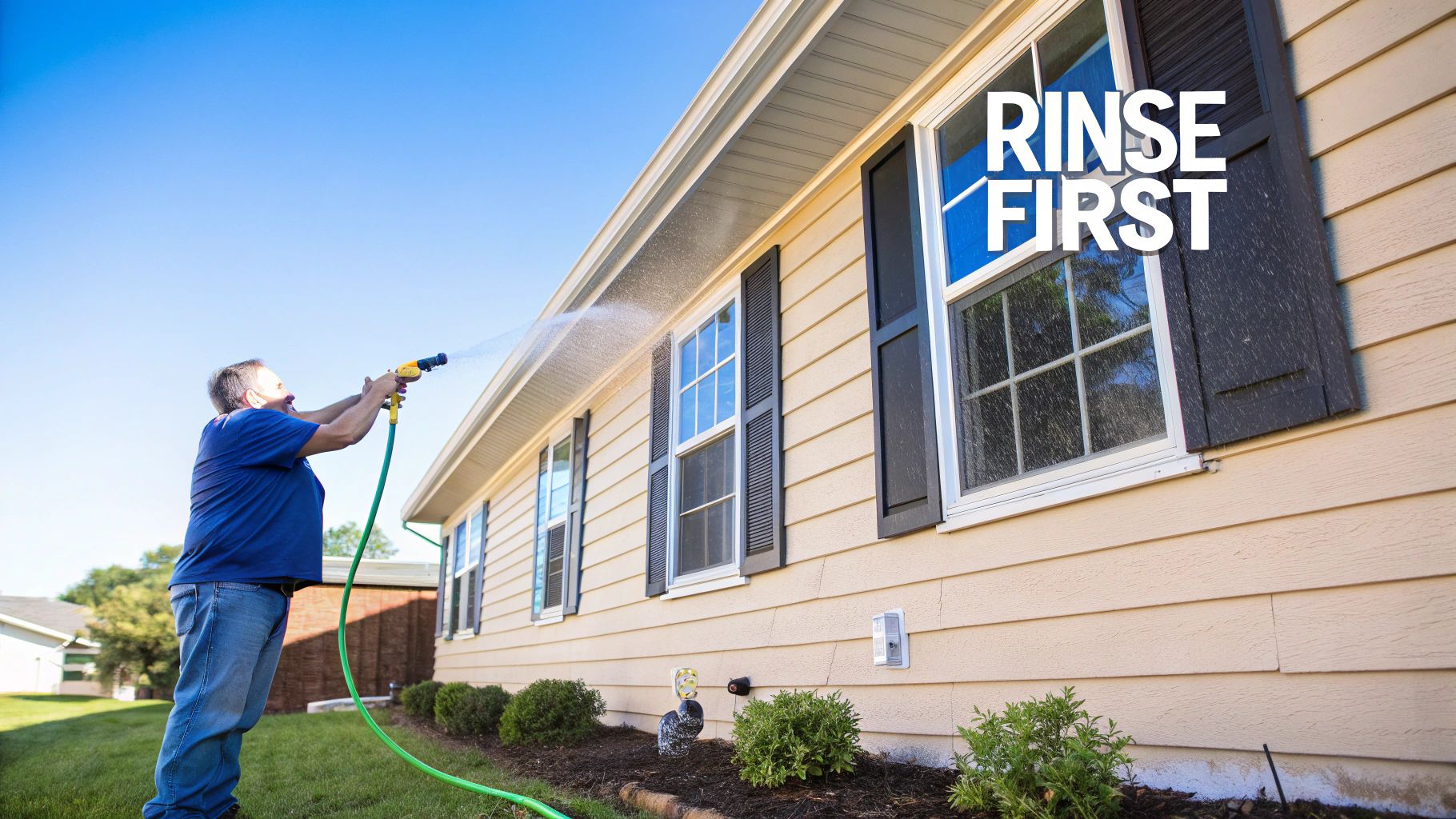
When you can reach the outside, a quick hose spray delivers powerful results.
1. Use Low-Pressure Water
- Attach a garden hose with adjustable nozzle.
- Set to jet or shower mode and avoid high-pressure settings.
- Stand 6–12 inches from the screen.
2. Spray from Outside In
- Rinse the screen surface, moving in horizontal or vertical sweeps.
- Let water flush dirt away naturally.
- For heavy buildup, repeat with mild soapy water first.
3. Dry or Squeegee Behind Screen
- If the glass behind is accessible, use a squeegee to remove water and prevent spots.
- Otherwise, let air dry in sunlight.
- Check frame for trapped water after drying.
Bonus: Some pros use dual-head attachments that clean glass and screen at the same time.
Pro Tips for Spot-Free, Long-Lasting Results
Use Distilled Water for Final Rinse
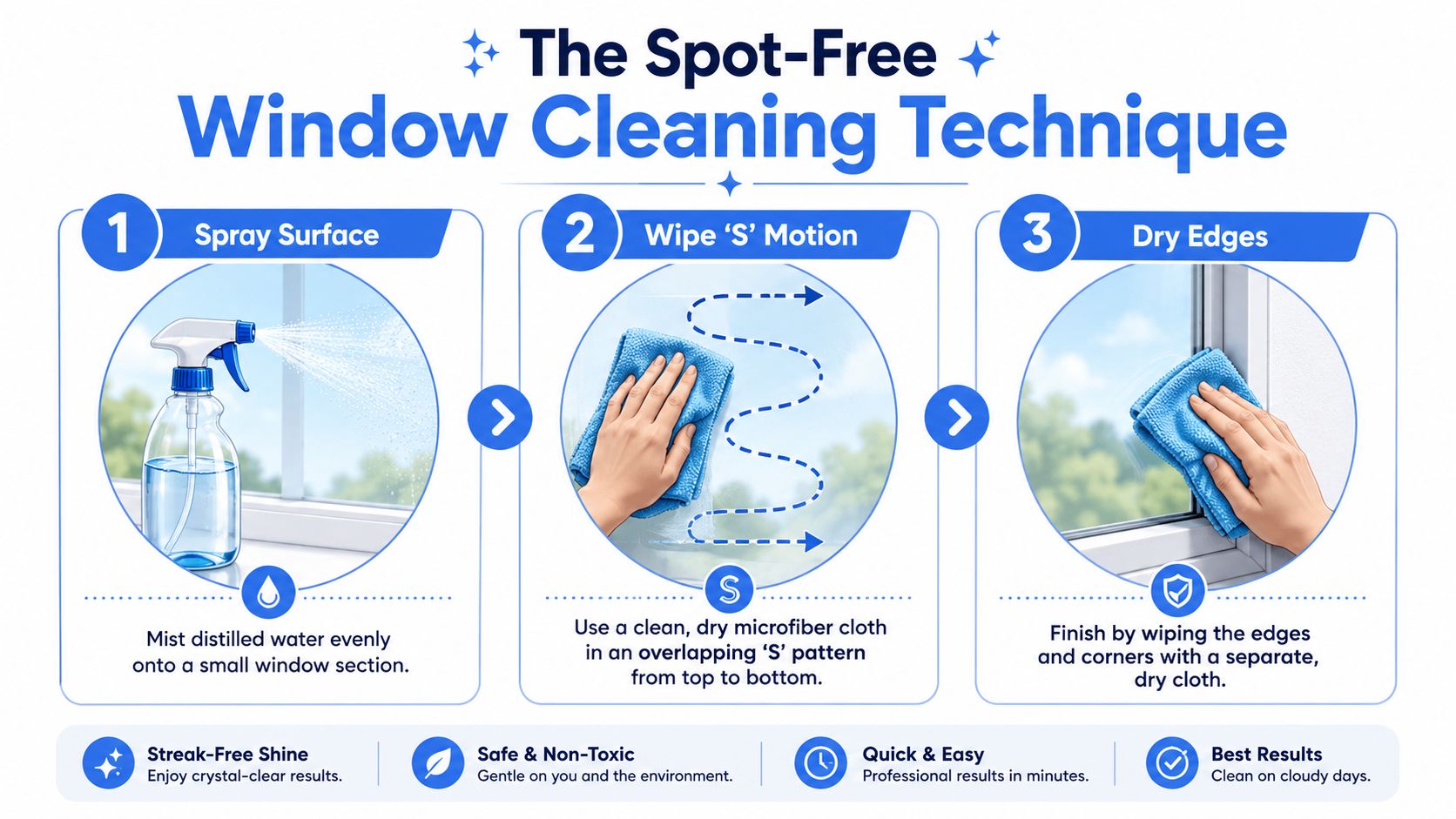
Tap water leaves mineral spots, especially in hard water areas (750+ ppm). For streak-free drying, use distilled or double RO water (0 ppm) in your spray bottle or rinse step.
Commercial Insight: Hotels and high-rises use RO water systems to avoid customer complaints about water spots.
Work Top to Bottom Always
Gravity is your ally. Starting at the top ensures dislodged dirt does not smear clean areas below. This rule applies to dry brushing, spraying, and wiping.
Clean Screens Twice a Year
Follow this schedule for optimal performance:
- Spring Clean: Removes winter salt and dust, preps for pollen season.
- Fall Clean: Clears summer debris before closing up for winter.
Add monthly vacuuming during high-pollen or dusty seasons to prevent buildup.
Troubleshoot Common Problems
Water Spots on Glass Behind Screen
Cause: Hard tap water drying on glass. Fix: Use distilled water for final rinse or squeegee immediately. If spots remain, wipe with vinegar-water mix (1:1), then rinse.
White Crusty Residue on Screen
Cause: Alkaline cleaner reacting with aluminum. Fix: Switch to pH-neutral dish soap. For existing residue, gently wipe with diluted white vinegar (test first), then rinse thoroughly.
Sagging or Warped Mesh
Cause: Aggressive scrubbing or heat exposure (nylon screens). Fix: Once warped, the screen usually needs replacement. Prevent by using soft tools and avoiding steam.
Moisture Trapped in Frame
Cause: Over-saturating during cleaning. Risk: Rot (wood), corrosion (aluminum), or loose spline. Fix: Use minimal water, wipe sills immediately, and air dry fully with window open.
Can Not Remove Security Locks
Common in rentals or hotels. Clean from available angle using long-handled microfiber tools or spray-and-rinse with spot-free water. Set expectations, as results may not be perfect.
When to Remove Screens Instead
While in-place cleaning works for most situations, removal is better when:
- Screens are heavily soiled with grease, mud, or sticky residue.
- You need to clean both sides thoroughly.
- The screen has deep-set mold or mildew.
- You are doing annual deep maintenance on a house.
Removal allows soaking, scrubbing, and full drying, but increases risk of damage. Reserve it for deep cleans, not routine care.
Frequently Asked Questions About Cleaning Window Screens Without Removing Them
Can you really clean window screens without taking them out?
Yes. For light to moderate dust and pollen, in-place cleaning with a vacuum, microfiber cloth, and mild soap works well. It reduces labor and avoids the risk of damaging tension clips or frames during removal.
What is the best tool to clean window screens in place?
A vacuum with a soft brush attachment paired with a microfiber cloth is the most versatile combination. For fine pollen on fiberglass, a lint roller is highly effective.
How often should you clean window screens without removing them?
Aim for a thorough clean twice a year (early spring and late fall). During high-pollen or dusty seasons, a quick vacuum pass every few weeks prevents heavy buildup.
Will water damage my window screen if I clean it in place?
Only if you over-saturate it. Use a damp, not soaking, approach and wipe the frame and sill immediately. Wood frames and aluminum frames are both vulnerable to excess moisture.
Can I use a pressure washer to clean window screens without removing them?
Standard high-pressure washers can tear mesh or force water into frames. If you use one, keep it on the lowest setting and maintain a safe distance. A garden hose with an adjustable nozzle is safer.
Is distilled water necessary when cleaning window screens?
It helps prevent mineral spots on the glass behind the screen, especially in hard water areas. For streak-free results, distilled or double RO water is the professional standard.
Final Thoughts on Cleaning Window Screens Without Removal
Cleaning window screens without removing them is a smart, safe, and efficient way to maintain airflow, reduce allergens, and improve curb appeal. By using the right tools, gentle techniques, and moisture control, you can keep screens looking great year-round. Focus on top-to-bottom cleaning, pH-safe solutions, and thorough drying to avoid damage.
For best results, clean twice a year and vacuum monthly during high-allergen seasons. Start with the dry-to-damp method for routine maintenance, and reserve the water-and-air blast for heavier buildup. With these methods, you will keep your screens clear, functional, and spot-free, all without the hassle of removal.