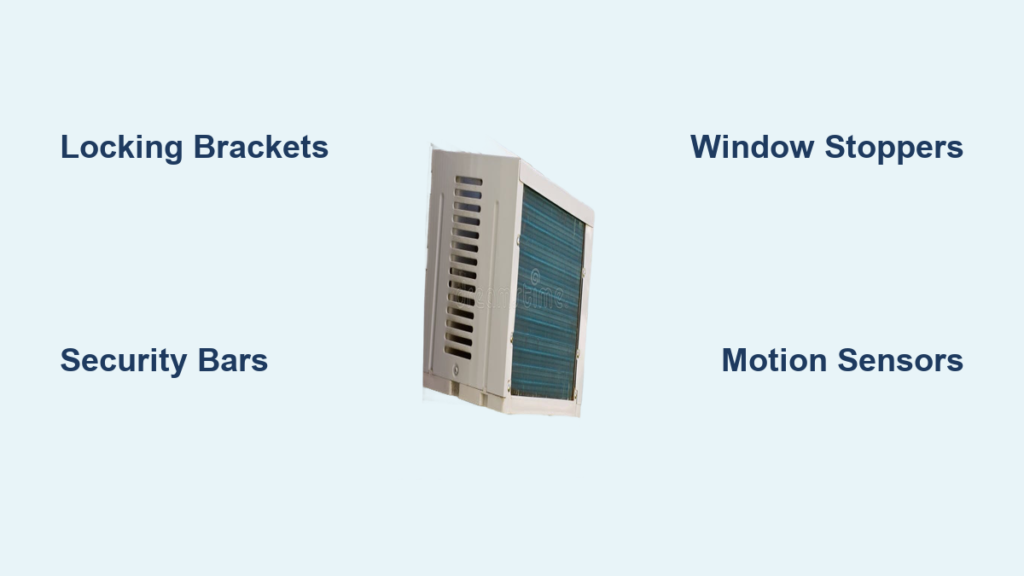
A window air conditioner brings welcome relief during hot summer months, but it can also create a serious security gap in your home. An improperly secured unit invites theft, provides an entry point for intruders, and poses safety dangers for children and pets. Learning how to secure a window air conditioner is essential for protecting your property, your family, and your peace of mind. This guide covers proven methods to lock down your AC unit using brackets, bars, locks, and environmental deterrents, while maintaining proper airflow and avoiding fire hazards.
Install Locking Brackets for Maximum Hold

Secure Unit with Steel Mounting Frames
Locking brackets are among the most reliable ways to prevent a window AC from being lifted or pushed out. These metal frames fit snugly around the unit and bolt directly into the window frame or wall studs. Heavy-duty steel models resist prying and tampering far better than lightweight alternatives.
- Bolt into solid structure: Anchor brackets into wood studs or masonry for maximum strength.
- Avoid soft materials: Never rely on drywall or vinyl frames alone; use threaded inserts in wood to prevent stripping.
- Preserve airflow: Confirm the bracket design does not block intake or exhaust vents.
Use Padlocks with Weather-Resistant Shrouds
After installing the bracket, lock it in place with a high-quality padlock.
- Opt for shrouded, hardened steel padlocks to resist bolt cutters.
- Choose weatherproof models with anti-corrosion coatings for outdoor durability.
- Position the lock so it is not easily accessible from outside.
Add Security Bars Across the Window

Block Removal with Adjustable Metal Bars
Security bars span the window opening and physically prevent the AC unit from being slid or lifted out. They work on both vertical and horizontal window styles.
- For vertical sliders: Install a bar across the top track to stop the upper sash from being raised.
- For horizontal sliders: Place the bar across the open section between the moving and fixed panels.
- Locking compatibility: Many bars include holes for padlocks to prevent tampering.
Choose Correct Size and Fit
An improperly sized bar will not provide real protection.
- Measure your window opening precisely before purchasing.
- Select adjustable models that expand with tension or screw mechanisms.
- Ensure the bar does not interfere with window closure or AC operation.
Reinforce with Custom Security Frames

Build a Metal or Wood Cage Around the AC
For high-risk locations or areas with frequent theft, a custom-built frame acts as a permanent cage around the unit.
- Construct from stainless steel, aluminum, or solid hardwood.
- Design it to enclose the sides and top while leaving front and back vents unobstructed.
- Anchor firmly to the window frame or exterior wall using lag bolts.
Prioritize Fire and Airflow Safety
Custom frames must never compromise safety.
- Use non-flammable materials only; avoid plastics or treated woods near hot exhaust areas.
- Leave at least a few inches of clearance around exhaust vents for proper heat dissipation.
- Inspect regularly for warping or rust that could weaken the structure.
Lock the Window Itself
Install Window Stoppers and Limiters
Prevent the window from opening wide enough to allow access or removal of the unit.
- Plastic or metal stops limit vertical sash movement to under 4 inches.
- These are inexpensive, tool-free solutions ideal for renters or temporary setups.
Use Sliding Window Locks
For horizontal windows, sliding locks add a critical layer of protection.
- Attach to the side track or meeting stile to prevent the panel from sliding open.
- Choose models with key or combination locks for added security.
- Some include secondary locking pins that engage even if the primary latch fails.
Secure Portable AC Units and Vents

Identify the Hidden Risk of Open Vent Holes
Portable ACs require exhaust hoses, which means leaving part of the window open and creating a security gap.
Build a Non-Flammable Mesh Frame
Create a secure vent cover using fire-resistant materials.
- Construct a wooden or metal frame that fits your window opening.
- Cover the vent area with stainless steel or fiberglass mesh.
- Ensure the mesh allows full airflow and is mounted away from the hot exhaust.
Avoid Dangerous Venting Methods
Some common hacks create serious fire hazards.
- Do not vent between storm and main windows; this traps heat and can ignite dust or insulation.
- Never replace storm windows with screens, as this reduces insulation and increases fire risk.
Use Commercial Venting Kits with Locks
Many kits include rigid panels and brackets for added security.
- Secure the panel to the window frame with screws or clamps.
- Add a padlock or zip tie through mounting holes to deter quick removal.
Use Heavy-Duty Fasteners and Straps
Bolt the AC to the Frame
For permanent installations, structural fasteners provide the strongest hold.
- Drive lag screws or carriage bolts through the AC chassis into the window sill or frame.
- In wood frames, use threaded inserts to prevent stripping over time.
- Seal around screw points with silicone to prevent water leaks.
Apply Straps for Renters or Temporary Use
If drilling is not allowed, heavy-duty straps offer a solid alternative.
- Wrap heavy-duty nylon or steel straps around the unit and anchor to a fixed point inside.
- Use ratcheting buckles or padlocks to keep tension tight.
- Check monthly for wear or loosening.
Address Child Safety and Elopement Risks
Prevent Children from Removing Units
Children with autism or elopement tendencies may try to dislodge ACs to escape. Standard latches may not stop a determined child.
- Install industrial window locks or bungee cord restraints that attach the unit to the frame.
- Use window stoppers to limit opening to less than 4 inches.
- Add visual cues like “No Climbing” signs with favorite characters to redirect attention.
Combine Physical and Behavioral Strategies
Security is not just about hardware.
- Place sensory bins or binoculars near the window to engage curiosity safely.
- Use visual schedules to signal outdoor time, reducing escape urges.
- Reward safe behavior with positive reinforcement to build routine.
Monitor with Indoor Cameras
Install a peephole camera or smart monitor pointed at the window.
- Get real-time alerts if tampering is detected.
- Allows supervision without constant presence.
- In high-risk cases, pair with GPS trackers on the child as a backup.
Add Environmental Deterrents
Install Motion-Sensor Lighting
Light is a powerful deterrent against intruders.
- Place floodlights with motion sensors below or beside the window.
- Set sensitivity to detect human movement, not animals.
- Automatic activation at night discourages loitering and break-in attempts.
Mount Security Cameras
Visible cameras significantly reduce risk.
- Use night-vision models aimed directly at the AC unit.
- Choose systems with cloud storage or local recording for evidence.
- Look for two-way audio to warn off intruders remotely.
Modify Outdoor Access
Eliminate climbing aids around your home.
- Keep ladders, furniture, and trash bins away from windows.
- Trim bushes or trees that provide cover or footholds.
- Consider installing spikes or angled shields on window sills where permitted.
Upgrade to Safer Alternatives
Switch to Mini-Split Systems
For long-term security and efficiency, consider replacing window units entirely.
- Ductless mini-splits mount high on walls with an outdoor compressor.
- No open window is required, eliminating the security gap.
- More energy-efficient and quieter than window models.
- Higher upfront cost, but pays off in safety and performance.
Conduct a Home Vulnerability Check
Assess your current setup objectively.
- Walk around your home and look for easy access points.
- Ask: Could someone reach the AC from the ground? Is the lock visible and reachable?
- Contact local police or security professionals for a free home safety audit.
Maintain and Inspect Regularly
Perform Monthly Security Checks
Even the best setup fails without routine maintenance.
- Look for: Loose screws, rusted brackets, worn straps, or signs of tampering.
- Test locks to ensure they still engage fully.
- Clean around the unit; debris can hide damage or block airflow.
Replace Worn Components Immediately
Do not wait for failure before replacing parts.
- Swap out corroded bolts or weak padlocks at the first sign of wear.
- Re-tighten brackets after seasonal temperature shifts.
- Update mesh or frames if bent or damaged.
Combine Layers for Ultimate Protection

Use a Multi-Method Defense Strategy
No single solution is foolproof. Layered security works best.
- Example Setup:
- Locking bracket with padlock
- Window stopper limiting sash movement
- Reinforced stainless steel mesh over vent
- Motion light and camera
- Indoor monitoring for child safety
This approach forces intruders to overcome multiple obstacles, increasing detection risk and deterring attempts.
Critical Safety Warnings
Never Block Airflow
Obstructed vents cause overheating and fire.
- Keep intake and exhaust grilles completely clear.
- Avoid placing furniture, curtains, or custom frames too close.
Avoid Flammable Materials
Heat from exhaust can ignite nearby items.
- Use only non-flammable mesh, metal, or hardwood for custom frames.
- Keep insulation, paper, or fabric at least 12 inches away from hot air outlets.
Confirm Structural Support
Ensure your window can handle the load.
- Older frames may sag or crack under AC weight plus security hardware.
- If the unit feels loose or the window warps, reinstall or upgrade the frame.
Frequently Asked Questions About Securing Window Air Conditioners
What is the best way to secure a window air conditioner from theft?
The most effective method is installing a heavy-duty steel locking bracket that bolts into the window frame or wall studs, combined with a weather-resistant padlock. Adding a security bar across the window opening provides a second physical barrier.
Can I secure a window AC unit without drilling?
Yes. Use heavy-duty nylon or steel straps with ratcheting buckles or padlocks to anchor the unit to a fixed point inside. Window stoppers and sliding locks also provide non-invasive security for renters.
How do I secure a portable air conditioner vent?
Build a custom frame using non-flammable materials like stainless steel or fiberglass mesh. Mount the frame at least 6 inches from the hot exhaust to prevent heat buildup. Avoid flammable materials and never vent between storm and main windows.
What window stopper size prevents child elopement?
Window stoppers should limit the sash opening to less than 4 inches. This gap is too small for a child to squeeze through or gain leverage to pull out the AC unit.
How often should I inspect my window AC security setup?
Perform a visual inspection monthly. Check for loose screws, rusted brackets, worn straps, and signs of tampering. Test all locks to confirm they engage fully and replace any compromised hardware immediately.
Is a mini-split system more secure than a window AC?
Yes. Mini-split systems mount high on interior walls with an outdoor compressor and require no open window. This eliminates the security gap entirely while offering better energy efficiency and quieter operation.
Key Takeaways for Securing Your Window Air Conditioner
Securing a window air conditioner requires a layered approach that combines physical barriers, locking hardware, and environmental deterrents. Start with a heavy-duty steel locking bracket bolted into solid structure, then add a security bar and window stopper to prevent removal from either direction. For portable units, build a non-flammable mesh vent cover and avoid dangerous venting methods that trap heat. Families with children should combine industrial locks with behavioral strategies and indoor monitoring for comprehensive safety. Finally, perform monthly inspections and replace worn components immediately. By stacking these defenses, you create a robust system that deters intruders, prevents theft, and keeps your loved ones safe all season long.