Nothing is more frustrating than windshield wipers that won’t stop, especially when the road is dry. Whether they’re stuck on continuous mode or running nonstop due to a glitch, knowing how to turn off windshield wipers properly is essential for driver safety. Most of the time, the fix is as simple as returning the control stalk to its neutral position. But when wipers malfunction and refuse to stop, you need more than the standard method.
This guide covers every scenario: from everyday operation to runaway wipers, manufacturer-specific quirks, and how to diagnose underlying electrical faults. Whether you’re dealing with a minor controls confusion or a full electrical failure, you’ll learn to regain control safely and efficiently.
Standard Wiper Control Methods
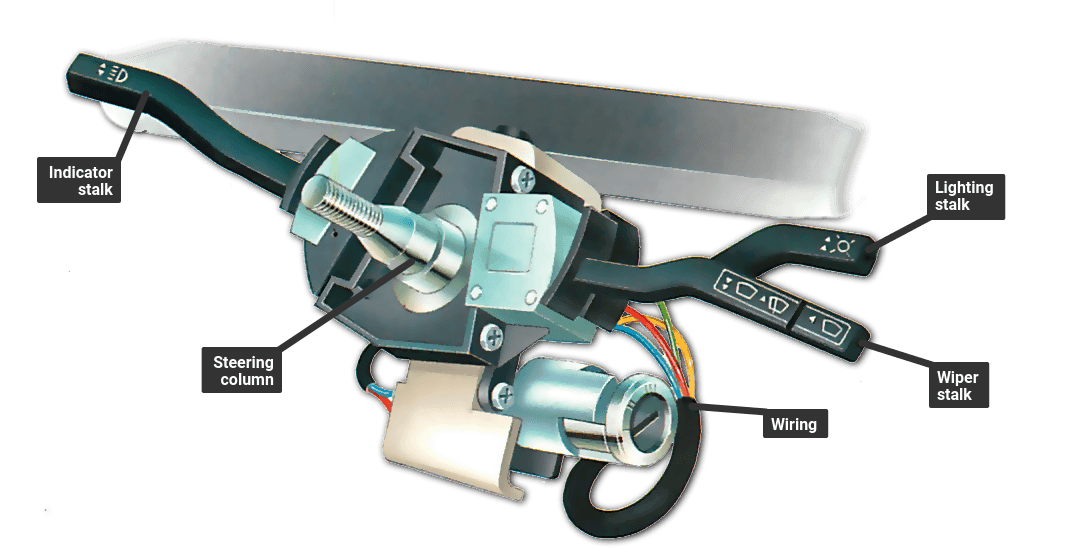
Most drivers interact with windshield wipers daily, but few understand the full range of control options. Knowing how to operate them correctly prevents misuse and reduces wear on components.
Lever-Based Stalk Operation
The majority of vehicles use a steering column stalk to control wiper functions. This lever usually sits on the right side of the steering wheel, though Lexus and some European models place it on the left.
To turn off the wipers using the stalk:
– If the lever was pushed up for low or high speed, return it to the topmost OFF position.
– If pulled down for mist mode, release it so it springs back to center.
– For intermittent mode, rotate the dial on the end of the stalk fully away from you until it aligns with “0” or “OFF.”
Pro Tip: The park function ensures wipers return to the bottom of the windshield before stopping. If they stop mid-windshield, a mechanical or electrical fault may exist.
Button and Dashboard Controls
Some modern vehicles use buttons or touch controls, especially for rear wipers or rain-sensing systems.
- Rear wiper: Press the dedicated button once to toggle it off if running.
- Rain-sensing AUTO mode: Move the stalk out of the AUTO position or press the dedicated button until the indicator light turns off.
Visual Cue: Look for the wiper symbol (angled line over a rectangle) on buttons or dash icons. Front and rear wipers have distinct symbols.
Rain Sensing Mode Deactivation
If your wipers keep activating automatically, they’re likely in rain-sensing mode.
- Push the wiper stalk down into the OFF position.
- Alternatively, press the AUTO button until the dashboard indicator disappears.
- In Lexus models, press the Rain Sensing button on the stalk to disable automatic detection.
Note: Some systems disable automatically when the transmission is in Neutral, such as during car washes (e.g., GM’s Rainsense).
Emergency Fixes for Runaway Wipers

When standard methods fail and your wipers won’t stop, you need immediate action. Here are the safest ways to disable them without risking damage.
Remove the Wiper Fuse
This is the recommended method to stop malfunctioning wipers quickly and safely.
- Locate the fuse box under the dashboard (driver’s side) or in the engine compartment.
- Find the wiper fuse by checking the owner’s manual or fuse box lid diagram. It’s usually labeled “WIPER,” “WASHER,” or “WIPER MOTOR.”
- Pull the fuse using the built-in fuse puller or small pliers.
- Confirm stoppage. The wipers should halt immediately.
✅ Why this works: Cutting power at the fuse isolates only the wiper system, preserving ECU settings, radio presets, and other electronics.
🛑 Avoid battery disconnection unless absolutely necessary. It resets critical vehicle systems and may cause more issues than it solves.
Disconnect the Wiper Motor
If you can’t find or access the fuse, go straight to the source.
- Open the hood and locate the wiper motor under the cowl grille at the base of the windshield.
- Unplug the electrical connector by pressing the locking tab and pulling it free.
- Verify wipers stop. No power means no movement.
⚠️ Caution: This requires physical access and may involve removing debris or covers. Only attempt when parked with the engine off.
Reset the Wiper Control Module
Sometimes the issue is a software glitch rather than hardware failure.
Try this reset procedure:
1. Turn ignition to ON (engine running or accessory mode).
2. Place the wiper lever in the OFF position.
3. Hold it there for 10–15 seconds.
4. Release and test.
📌 Success rate: Low, but worth trying before removing fuses. Works best after electrical disturbances like jump-starts or battery replacements.
Why Won’t My Wipers Turn Off?

If your wipers won’t stop despite correct control input, one of these internal failures is likely the culprit.
Faulty Wiper Switch
The control stalk contains switches for every wiper function.
- Symptoms: Wipers run nonstop, speed won’t change, or lever feels loose or stiff.
- Diagnosis: Try all settings. If none respond correctly, the switch is likely defective.
- Solution: Replace the wiper control switch assembly. In many vehicles, this requires removing the steering column cover.
🔧 Difficulty Level: Moderate. May require airbag disablement in some models.
Failed Park Switch
Even after turning off the wipers, the motor stays powered briefly to return blades to the parked position.
- Failure Mode: A stuck park switch keeps power flowing, so wipers keep running or stop mid-windshield.
- Expert Insight: ASE Master Technician Richard McCuistian notes that “a failed park switch causes wipers to park incorrectly, or not at all.”
- Solution: Replace the entire wiper motor assembly. The park switch is rarely replaceable on its own.
Stuck Wiper Relay
Relays act as high-current switches. When stuck closed, they bypass the control switch entirely.
- Location: In the main fuse box. Look for a small black relay labeled “WIPER.”
- Test: Swap it with a similar relay (like the horn) to see if the problem follows.
- Fix: Replace the faulty relay. It often costs under $20 and takes minutes.
✅ Quick Check: Listen near the fuse box when turning wipers off. A faint click means the relay is working. No sound suggests it’s stuck.
Damaged Wiring or Connectors
Worn, corroded, or shorted wiring can send unintended power to the motor.
- Common Issues:
- Wires melted from heat exposure
- Corrosion in connectors under the cowl
- Shorts caused by rodent damage
- Diagnosis: Use a multimeter to test for voltage at the motor when the switch is off.
- Fix: Repair or replace damaged wires, clean connectors, and secure harnesses.
🔍 Pro Tip: Inspect the wiring loom near the wiper motor. Moisture and debris accumulate here, leading to shorts.
Model-Specific Wiper Controls
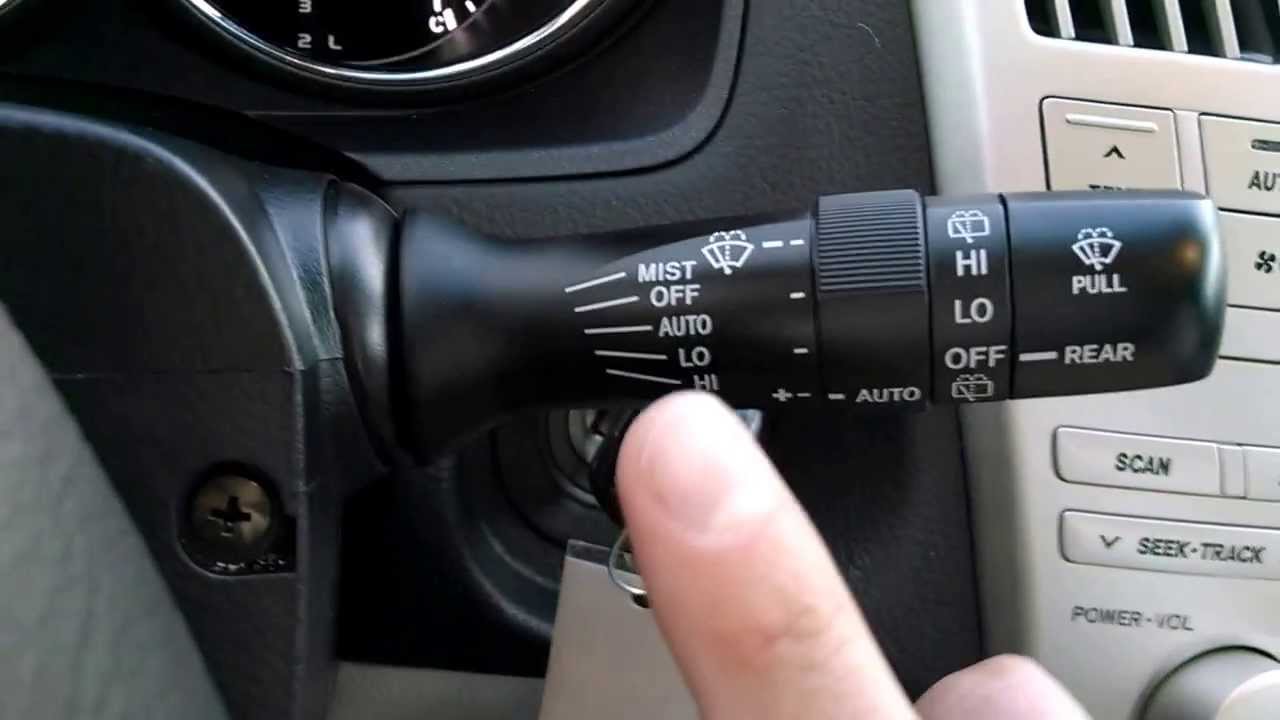
Not all vehicles work the same. Here’s how some brands differ.
Lexus: Left-Side Stalk Operation
- The control stalk sits on the left side of the steering column.
- Pull toward you to activate mist or continuous wipe.
- To turn off, return the stalk to the neutral position.
- Use the dedicated Rain Sensing button on the stalk to disable auto-wipe.
🔄 Unique Behavior: The rain-sensing indicator light turns off when the system is disabled.
GM Rainsense: Auto Mode Logic
- In AUTO mode, the system activates based on sensor input.
- If the shifter is in Neutral, Rainsense automatically disables as a safety feature for car washes.
- To disable manually, move the stalk out of AUTO.
⚠️ Note: The Driver Information Center (DIC) confirms when Rainsense is active.
Troubleshooting Flow: Step-by-Step Diagnosis
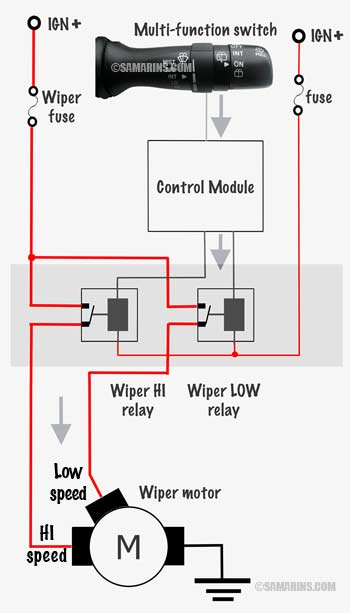
Use this sequence to identify the root cause when wipers won’t turn off.
Step 1: Check Control Input
- Is the lever in the OFF position?
- Did you exit AUTO mode?
- Try switching between speeds. Do they respond?
❌ No response? Likely a switch or relay issue.
Step 2: Inspect Fuse and Relay
- Remove and inspect the wiper fuse for a broken filament.
- Test or swap the wiper relay with a known-good one.
✅ If wipers stop after fuse removal, the circuit is intact and the problem is upstream.
Step 3: Test for Power at Motor
- With ignition on and wiper switch off, use a multimeter.
- Probe the motor terminals.
- Voltage present? Power is being sent incorrectly, pointing to a faulty switch, relay, or wiring.
- No voltage? The system is off. Check for intermittent faults.
Step 4: Inspect Motor and Park Switch
- If wipers stop mid-windshield every time, the park switch is likely failed.
- Replacement requires removing the wiper arms and cowl.
⏱️ Time Estimate: 1–2 hours for full motor replacement.
Safe Driving with Wiper Failure
If your wipers won’t turn off (or on) while driving, follow these steps.
Immediate Safety Actions
- Stay calm. Panic impairs judgment.
- Increase following distance to compensate for distraction and potential visibility issues.
- Turn on hazard lights to warn other drivers of a malfunction.
- Check mirrors frequently to maintain situational awareness.
- Pull over safely in a parking lot, rest area, or wide shoulder.
On-Site Fixes
Once stopped:
– Remove the wiper fuse to stop runaway blades.
– Reinsert the fuse only if needed for rain clearance.
– Do not drive long distances with disabled wipers.
🚫 Never drive with wipers stuck in motion. They reduce visibility, create distracting noise, and may damage the motor or linkage.
Maintenance Tips to Prevent Wiper Issues
Prevention is cheaper and safer than repair.
Avoid Dry Wiping
Running wipers on a dry windshield:
– Degrades rubber edges
– Increases motor strain
– Causes streaking and skipping
✅ Best Practice: Use washer fluid before wiping when the glass is dry.
Clean the Cowl Area
Debris like leaves, dirt, and ice can:
– Jam wiper arms
– Block drain tubes
– Damage motor gears
🛠️ Maintenance Tip: Clean the cowl grille every few months, especially in fall and winter.
Replace Worn Blades
Signs you need new blades:
– Streaking
– Chattering
– Uneven contact
🗓️ Recommended: Replace every 6–12 months.
Frequently Asked Questions About Turning Off Windshield Wipers
Why won’t my windshield wipers turn off even when the switch is off?
A stuck relay, failed park switch, or faulty control switch is the most likely cause. Power continues flowing to the motor despite the switch position. Start by removing the wiper fuse to stop them safely, then diagnose the underlying issue.
Can I disconnect my car battery to stop the wipers?
It’s not recommended. Disconnecting the battery resets your ECU, erases radio presets, and may disable learned transmission parameters. Removing the wiper fuse is a safer alternative because it isolates only the wiper system.
Where is the wiper fuse located?
The wiper fuse is typically in the fuse box under the dashboard on the driver’s side or in the engine compartment. Check your owner’s manual or the diagram on the fuse box lid for the exact location. It’s usually labeled “WIPER,” “WASHER,” or “WIPER MOTOR.”
How do I turn off rain-sensing wipers?
Move the stalk out of the AUTO position, or press the Rain Sensing button until the indicator light turns off. In Lexus models, press the dedicated Rain Sensing button on the left-side stalk. The indicator light will extinguish when the system is disabled.
What does it mean if wipers stop in the middle of the windshield?
This indicates a failed park switch inside the wiper motor assembly. The park switch controls power to return blades to their resting position. When it fails, the entire wiper motor usually needs replacement since the switch is rarely serviceable as a standalone part.
Will running wipers on a dry windshield damage them?
Yes. Dry wiping causes excessive friction that degrades the rubber blade edge quickly and strains the motor. Always spray washer fluid before wiping dry glass, and replace blades every 6–12 months to maintain optimal performance.
Key Takeaways for Turning Off Windshield Wipers
Knowing how to turn off windshield wipers in both normal and emergency situations empowers you to handle one of the most common yet disruptive vehicle malfunctions. In most cases, returning the stalk to OFF solves the issue instantly. But when wipers won’t stop, removing the wiper fuse is the safest and fastest fix.
Underlying causes like a faulty switch, stuck relay, or failed park switch require diagnosis and repair, but they’re manageable with basic tools and some knowledge. Always prioritize safety: pull over, disable the system, and address the root cause before continuing your journey.
Start by familiarizing yourself with your specific vehicle’s wiper controls today. Check your owner’s manual, locate your fuse box, and practice the standard shutoff procedure so you’re prepared if a malfunction ever occurs.