Doors that refuse to latch properly create daily frustration and compromise your home’s security. If you find yourself jiggling, lifting, or physically forcing your door closed, the problem likely stems from a misaligned or worn door latch. The good news is most latch issues can be resolved in under an hour using basic tools and proven techniques.
This guide walks you through diagnosing the exact cause, performing the lipstick test for precision alignment, adjusting the backset, realigning the strike plate, and knowing when replacement is the smarter choice. Every step is designed to be actionable, safe, and effective without replacing your entire hardware set unless absolutely necessary.
Diagnose the Latch Issue First
Before grabbing your tools, you need to understand whether the problem is mechanical or alignment-based. This distinction saves time and prevents unnecessary repairs.
Observe Latch Behavior
Close your door slowly and watch how the latch bolt interacts with the strike plate. Ask yourself these questions:
- Does the latch fail to retract when you turn the knob or lever
- Does it hit the strike plate but refuse to go in
- Is the satisfying “click” sound missing when the door closes
If the latch does not retract fully when the knob turns, the issue is likely internal wear. If it strikes the strike plate but will not engage, the problem is misalignment.
Perform the Lipstick Test
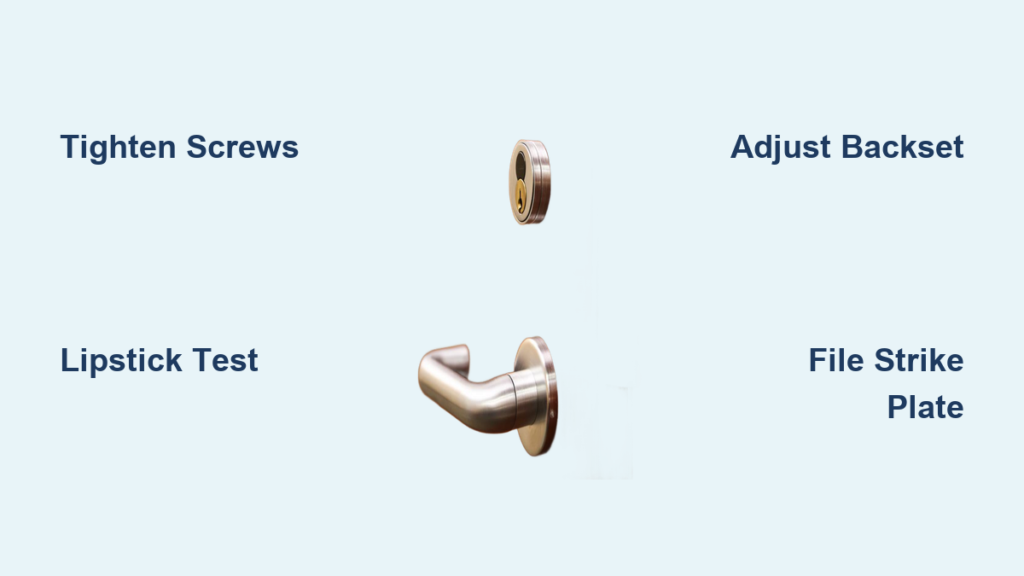
This simple diagnostic trick reveals exactly how far off your alignment is. Apply lipstick, crayon, or chalk to the tip of the latch bolt. Tape the strike plate with masking tape, then close the door gently and reopen it. Check where the mark transfers:
- Mark above the hole indicates the top hinge is loose or the door is sagging
- Mark below the hole points to a bottom hinge problem
- Mark left or right of the hole means lateral misalignment
This test gives you a visual roadmap for correction with no guesswork needed.
Tighten All Critical Screws
Loose hardware ranks as the most common cause of latch failure. Even slight movement from loose hinges can shift the entire door, causing misalignment that prevents proper latching.
Focus on These Areas
Check and tighten screws in these specific locations:
- Doorknob mounting screws on both interior and exterior sides
- Latch plate screws on the edge of the door
- Strike plate screws on the door jamb
- Hinge screws on both door and frame sides
Pro Tip: Always tighten the jamb-side hinge screws first. This stabilizes the frame before you adjust the door itself.
A wobbly knob or lever often means the latch is not retracting fully because the mounting is loose. Check those screws and watch the problem disappear.
Adjust the Backset

If your latch will not align with the strike plate, the backset may be incorrect. This is the distance from the edge of the door to the center of the knob bore hole.
Standard Backset Sizes
Most residential doors use one of two standard measurements:
- 2-3/8 inches, which is most common in homes
- 2-3/4 inches, used in commercial buildings and some exterior doors
How to Measure Your Backset
Measure from the door edge to the near edge of the bore hole, then measure to the far edge. Average the two numbers to find your backset. For example, 1.25 inches plus 3.375 inches equals 4.625 inches, divided by 2 equals 2.3125 inches, which is approximately 2-3/8 inches.
Adjust the Latch
Many modern latches feature an adjustment tab on top that allows you to change the backset without tools. Remove the latch from the door, then press down the adjustment tab while depressing the latch bolt inward. Slide the latch to set it:
- Push in for 2-3/8 inch setting
- Pull out for 2-3/4 inch setting
Release the tab to lock the position. If the latch will not slide, make sure both the tab is pressed and the latch is retracted. A small drop of light oil can help if the mechanism is stiff.
Fix Strike Plate Misalignment
Even a 1/8 inch gap can prevent latching. Here is how to correct it based on where the latch is hitting.
Minor Misalignment: File the Strike Plate
Use a half-round metal file or Dremel with a carbide bit. Work slowly and test after each pass:
- Latch hits the top of the hole: file the bottom edge
- Hits the bottom: file the top edge
- Hits left or right: file the corresponding side
Smooth any sharp edges with sandpaper when finished.
Major Misalignment: Relocate the Strike Plate
If filing is not enough, you need to move the strike plate to a new position. Close the door and mark where the latch hits the jamb. Remove the strike plate and chisel out a new mortise at the marked location. Fill the old screw holes with wood glue and toothpicks or tight-fitting dowels, then let dry for 24 hours before drilling pilot holes and reinstalling. Fill any gaps with wood filler, sand smooth, and repaint.
Shim Hinges to Correct Door Sag

Doors settle and shift over time. Shimming restores proper alignment without replacing hinges.
When to Shim Hinges
Consider shimming when the door drags on the floor, the latch hits high or low on the strike plate, or tightening screws did not resolve the issue.
How to Shim Correctly
Remove one hinge, starting with the top hinge if the door sags at the top. Place a cardboard shim or playing card behind the jamb-side hinge leaf. Shimming the top hinge lifts the door, while shimming the bottom hinge lowers it. Reattach the hinge and test. Adjust until the latch aligns perfectly with the strike plate.
Lubricate the Latch Mechanism
A dry or gummy latch sticks, retracts slowly, or fails to engage completely.
Best Lubricant Options
Dry graphite powder ranks as the best choice because it does not attract dust and will not gum up over time. Alternatives include 3-in-1 oil for quick relief or WD-40 to clear debris, though these are not long-term solutions.
How to Lubricate
Remove the latch if possible. Apply lubricant to the latch bolt spring, spindle contact points, and thumb lever pivot. Work the latch manually to distribute the lubricant, then reinstall and test.
Avoid over-lubricating, as excess oil attracts grime and creates more problems than it solves.
Test Full Latch Operation
After completing adjustments, verify everything works correctly. Open and close the door at least 10 times. Turn the knob fully and confirm the latch retracts completely. Check that the door closes smoothly without lifting. Listen for a clear “click” indicating secure engagement. Verify the door is securely latched and will not open without turning the handle.
If any issues remain, revisit the alignment steps or consider replacement.
When to Replace the Latch
Adjustment cannot fix worn-out internal components. Know when replacement is the better investment.
Signs Replacement Is Needed
Replace the latch if it will not retract even with a full knob turn, if the spindle is worn or wobbly, if internal parts are visibly damaged, or if the mechanism feels gritty after lubrication.
Replace Just the Latch
A single latch costs between $5 and $15 at most hardware stores. Simply remove two screws, pull out the old latch, and insert the new one. Ensure the backset matches your door specifications.
Replace the Entire Handle Set
Consider full replacement if the knob or lever is loose, the spindle is damaged, or multiple parts show wear. This provides long-term reliability and modern features like adjustable backset.
Prevent False Closure
A door may appear closed but not actually be latched, creating security risks in windy conditions or security-sensitive areas.
Solutions That Work
Install a door closer to ensure forceful, consistent closure every time. Upgrade to a beveled or extended strike plate that guides the latch more effectively. Add visual indicators like peepholes, colored tape on the strike area, or magnetic sensors connected to your alarm system.
Preventive Maintenance Tips
Avoid future problems with routine care performed every 6 to 12 months. Tighten all screws on knobs, hinges, and strike plates. Lubricate the latch with dry graphite powder. Inspect for signs of wear or misalignment. For exterior doors, perform checks more frequently due to weather exposure and reapply lubricant every six months.
Tools You Will Need
Having the right tools makes every adjustment easier. You will need a Phillips screwdriver for tightening screws, a flathead screwdriver for prying or adjusting, an adjustable wrench for removing knob sets, a chisel and hammer for moving strike plates, a half-round file for enlarging strike holes, graphite powder for clean lubrication, a flashlight for inspecting alignment, wood glue and toothpicks for fixing stripped holes, sandpaper for smoothing jamb interference, and safety glasses to protect your eyes during filing.
Quick Fix Guide by Symptom
Different symptoms point to different causes and fixes. If the latch will not retract, the cause is worn spindle or internal wear and the fix is replacing the latch or handle set. If it hits the strike but will not go in, the cause is misalignment and the fix involves filing or moving the strike plate. If the door needs lifting to close, the cause is sagging hinges and the fix is tightening or shimming the hinges. A loose knob requires tightening the mounting screws. A sticking latch needs lubrication with graphite. False closure indicates weak spring or soft close, requiring a door closer or sensor upgrade.
Frequently Asked Questions About Adjusting Door Latches
Why does my door latch stick when I try to close it?
Sticking usually results from lack of lubrication, debris buildup, or wood swelling due to humidity. Clean the mechanism and apply dry graphite powder for smooth operation.
Can I adjust the door latch without removing the doorknob?
Yes, many adjustments like tightening screws, lubricating the mechanism, and filing the strike plate can be done without removing the knob. Adjusting the backset or replacing the latch requires partial disassembly.
How do I know if my door latch is worn out versus just misaligned?
If the latch fails to retract fully even when you turn the knob completely, the internal mechanism is likely worn. If it retracts fully but hits the strike plate or fails to engage, the problem is misalignment.
What is the easiest way to fix a door that won’t latch?
Start by tightening all screws on the hinges, doorknob, latch plate, and strike plate. This single step resolves most latch problems. If that fails, use the lipstick test to diagnose alignment issues.
Should I replace the entire door handle or just the latch?
Replace just the latch if only the latch mechanism is worn. Replace the entire handle set if the knob, lever, spindle, or multiple components show wear, as this provides better long-term reliability.
How long does it take to adjust a door latch?
Most adjustments take 15 to 30 minutes. Strike plate relocation or hinge shimming may require an additional 15 to 20 minutes. Complete replacement of the latch or handle set takes approximately 20 minutes.
Key Takeaways for Adjusting Your Door Latch
Most door latch problems stem from loose screws, minor misalignment, or lack of lubrication, all of which you can fix with basic tools in under an hour. Start with the simplest solutions by tightening all hardware and lubricating the mechanism before moving to more involved adjustments like filing the strike plate or shimming hinges. Use the lipstick test to precisely diagnose alignment issues, then adjust the backset if needed to ensure the latch matches your door specifications. When internal components are worn or damaged, replace the latch or entire handle set rather than wasting time on temporary fixes. A properly adjusted door latch restores security, improves energy efficiency, and provides the peace of mind that comes with knowing your door will close and latch reliably every time.