Stale, sweltering air. Trapped heat. A room that feels like an oven despite the door being closed. If you’re dealing with a windowless space, whether it’s a basement bedroom, an interior office, or a converted closet, you know how quickly temperatures can spike. Without a window, there is no natural airflow, no way for hot air to escape, and no access to cooler outdoor breezes. But that does not mean you are stuck sweating through summer.
The key to cooling a room without a window is not one magic fix. It is a smart combination of mechanical cooling, airflow control, heat reduction, and personal comfort strategies. From high-efficiency ductless mini-splits to a simple fan blowing over ice, there are solutions for every budget, space, and situation. This guide breaks down the most effective, proven methods, from permanent installations to instant DIY hacks, so you can stay cool even in the most sealed-off room. You will learn how to vent portable ACs creatively, use evaporative cooling safely, optimize fan placement, and slash internal heat sources that make the problem worse.
Choose the Right Cooling Device for a Windowless Room
Not all cooling devices work in a sealed room. The best option depends on your budget, whether you can modify walls, and your climate. Here is how to pick the most effective solution.
Install a Ductless Mini-Split System
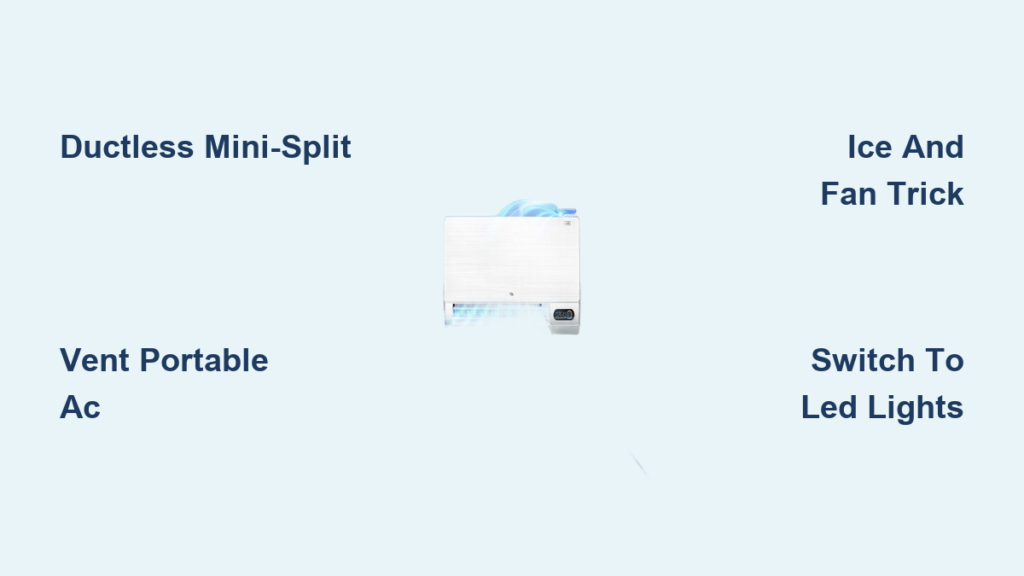
For long-term, efficient cooling, a ductless mini-split is the top-tier choice. It delivers powerful, quiet, and precise temperature control without needing a window. The system uses a small 3- to 4-inch hole drilled through an exterior wall to connect an indoor air handler (mounted on the wall) to an outdoor compressor. Refrigerant flows through the line, absorbing heat from the room and releasing it outside.
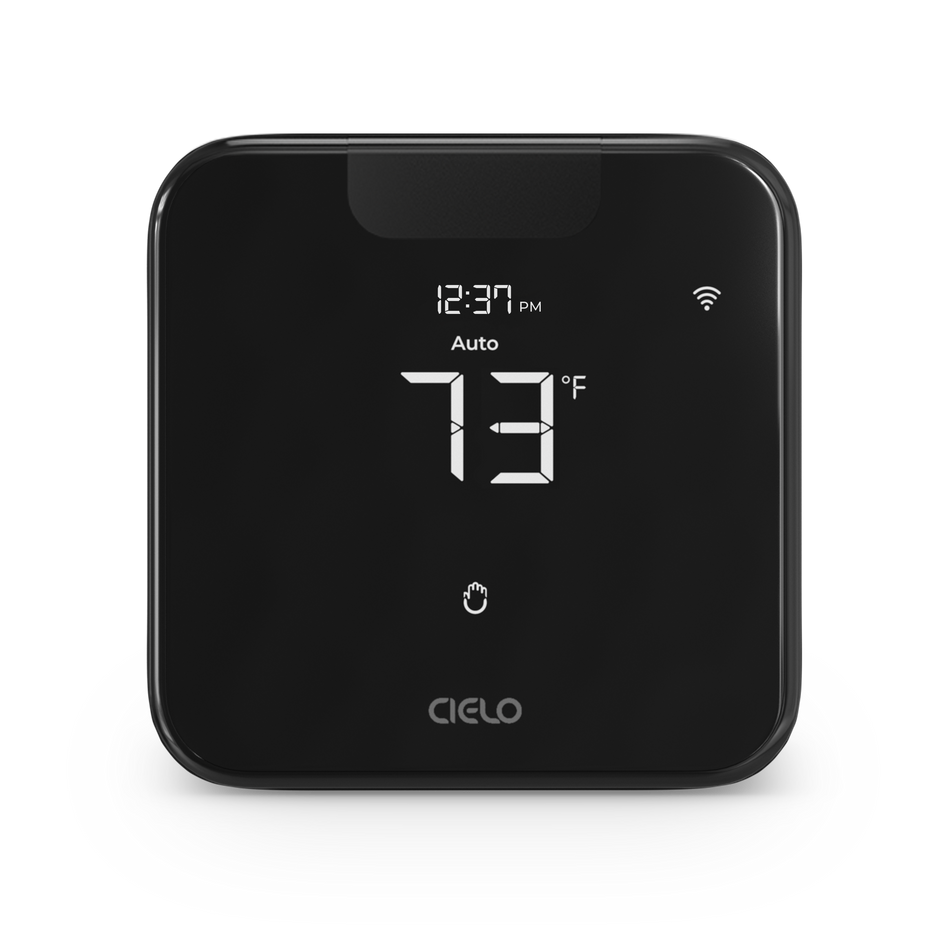
Mini-splits are 20% to 40% more efficient than portable units and do not lose cooling through ducts. They also dehumidify the air and often include smart thermostat compatibility, like the Cielo Breez Max, for automated scheduling. While professional installation is required and costs range from $1,000 to $3,000, the investment pays off in energy savings and comfort, especially for daily-use rooms like bedrooms or home offices.
Pro Tip: Use a mini-split with a zoning feature to cool only the windowless room, avoiding wasted energy on the rest of the house.
Use a Through-the-Wall Air Conditioner
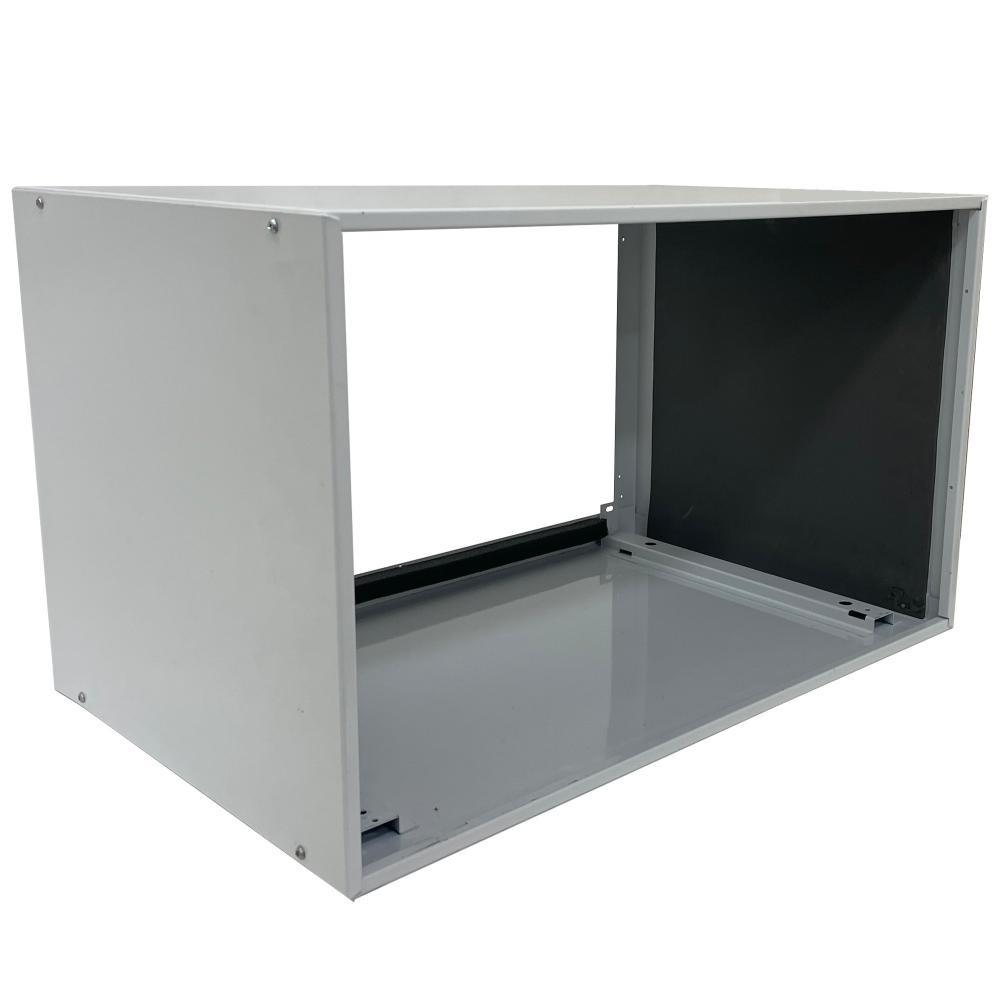
If your room has an exterior wall, a through-the-wall AC is a durable, high-performance option. Unlike window units that rely on flimsy seals, these are built into a metal sleeve permanently mounted in a wall opening, creating an airtight fit that prevents cool air leakage.
These units cool large spaces effectively and run quietly once installed. They require cutting a hole in the wall, typically 24×14 inches, but eliminate the hassle of window brackets or exhaust hoses. Prices range from $300 to $800, plus installation. Best for garages, guest rooms, or finished basements with external access.
Warning: Before drilling, check for hidden electrical wires, plumbing, or structural supports. Hire a professional if unsure.
Vent a Portable AC Creatively

Portable air conditioners are mobile and easy to set up, but they must vent hot air outside, or they will heat the room. In a windowless space, that means getting creative.
Options include:
– Drill a wall hole (3–4 inches) and route the exhaust hose outside.
– Vent through a drop ceiling into a ventilated attic or plenum space (common in basements or offices).
– Run the hose into a cooler adjacent room with a window (less efficient but workable).
Dual-hose models are better because they draw in outdoor air for condensation, avoiding negative pressure. Single-hose units pull room air for cooling, reducing efficiency. Expect to spend $300–$700, and remember: portable ACs are best for small to medium rooms and temporary use.
Common Mistake: Leaving the exhaust hose unsealed. Use foam, tape, or a wall sleeve to block hot air from re-entering.
Try a Ventless Evaporative Cooler
If drilling is not an option and humidity is low, a ventless evaporative cooler (or “swamp cooler”) can work. These units blow air over water-saturated pads or ice, cooling it through evaporation with no exhaust hose needed.
Personal models like Evapolar use just 7–12 watts and cool a 3- to 4-foot microclimate around you. Larger units can cover up to 800 sq. ft. but hold 10–15 gallons of water and add humidity.
Critical: Only use in dry climates (under 50% humidity). In humid areas, they make the air feel muggy and ineffective. Always keep the door slightly open to prevent moisture buildup.
Maximize Airflow and Circulation in a Sealed Room

Cooling is not just about lowering temperature. It is about moving air. In a sealed room, stagnant air feels hotter. Use fans and airflow tricks to create a breathable environment.
Use the Two-Fan Method
This DIY hack mimics cross-ventilation. Place one fan near the doorway, facing out, to push hot air into the hallway. Position a second fan across the room or in the hall, pointing in, to pull cooler air in.
This creates a push-pull loop that refreshes the air. For it to work, the hallway or adjacent space must be cooler. If it is not, you are just recycling hot air.
Pro Tip: Run this at night when outdoor temperatures drop. Pair it with an open door to a cooler part of the house.
Optimize Ceiling Fan Direction
Ceiling fans do not cool the air, but they make you feel 4 to 6°F cooler by creating a wind-chill effect. In summer, set the fan to spin counterclockwise (when viewed from below) so it pushes air straight down.
Run the fan only when the room is occupied. It uses 10–75 watts, less than a lightbulb, and can let you raise your AC thermostat by a few degrees, saving energy.
Warning: Running a fan in an empty room wastes electricity. It cools people, not spaces.
Install an Exhaust Fan
An exhaust fan actively removes hot air. A standard bathroom-style unit ($20–$80) can move 50–110 CFM and be mounted on a wall or ceiling. Vent it to the attic, outside, or a cooler room.
For stronger airflow, use an inline duct fan with flexible ducting. These can be routed through a small wall or ceiling hole to vent heat directly outdoors.
Manage Door Position Strategically
Your door is the main airflow control. When using a dedicated cooler (AC, evaporative unit), keep the door closed to isolate the room and prevent the unit from cooling the whole house.
When using fans to exchange air (like the two-fan method), leave the door open to allow airflow. If the hallway is cooler, propping the door open with a fan pointing in can passively cool the room.
Reduce Internal Heat Sources for Faster Cooling
The less heat you generate inside, the easier it is to cool the room. Many common items act like mini heaters. Fixing this is the fastest way to lower temperatures.
Switch to LED Lighting
Incandescent bulbs waste 90% of their energy as heat. In a small, sealed room, a few bulbs can act like a space heater. Replace them with LEDs, which use 75% less energy and produce 75% less heat.
For example, a 60W incandescent emits about 54W of heat. An equivalent LED uses only 9W, and most of that is not heat. This simple swap can drop room temperature by several degrees.
Turn Off Unused Electronics
Every device, including laptops, TVs, printers, and chargers, generates heat, even in standby mode. In a windowless room, this adds up fast.
Unplug or use a smart power strip to cut power to idle devices. Avoid running multiple high-heat appliances (like a desktop PC and gaming console) at once, especially during hot afternoons.
Choose Cooler Materials and Furnishings
Some materials trap and radiate heat. Leather, polyester, and dark fabrics absorb warmth and make the room feel hotter.
Cover sofas with light cotton sheets. Use ceramic floor tiles or cooling mats underfoot. Place phase-change material blankets on chairs because they absorb body heat and stay cool longer.
Use DIY Cooling Hacks for Instant Relief
When budget or space limits mechanical options, low-tech tricks can provide instant relief. These are perfect for renters, temporary setups, or emergency cooling.
Try the Ice and Fan Trick
Place a bowl of ice or frozen water bottles in front of a floor fan. As the fan blows air over the ice, it chills the air through conduction and evaporation.
Set the fan 8–12 inches from the ice for best results. Wrap bottles in a thin cloth to prevent condensation leaks.
Hang Damp Towels for Evaporative Cooling
Drape damp towels or sheets in the doorway or in front of a fan. As air passes through the wet fabric, water evaporates and absorbs heat.
This works best in dry climates. In humid areas, it adds moisture and may make the room feel stickier.
Block Heat with Reflective Barriers
If the room is under a hot roof or has sun-facing walls, external heat is a major factor.
Apply reflective insulation or foam boards to walls and ceilings. Paint exterior surfaces with white or reflective coating to reduce heat absorption. Plant trees or shrubs outside to shade the building because landscaping can lower ambient temperature by up to 6°F.
Cool Yourself, Not Just the Room
When ambient cooling is not possible, focus on personal thermal regulation. Lowering your body temperature makes a hot room feel more bearable.
Stay Hydrated and Wear Light Clothing
Drink cool water or hydrating fluids to lower your core temperature. Avoid alcohol and caffeine, which can dehydrate.
Wear loose, breathable fabrics like cotton or linen. Avoid synthetics like polyester, which trap heat and sweat.
Use Targeted Cooling on Pulse Points
Apply cold compresses or damp cloths to wrists, neck, and temples, which are areas where blood vessels are close to the skin. This cools the blood circulating through your body.
Run cool water over your wrists for 30 seconds. It is a quick, effective way to feel relief.
Take Lukewarm Showers
Avoid ice-cold showers because they can trigger your body to generate more heat. Instead, take lukewarm showers to gradually lower your temperature.
Cool your feet in a basin of water, or lie on a cool floor with a fan blowing over you.
Frequently Asked Questions About Cooling a Room Without a Window
What is the best way to cool a room with no windows?
The best method depends on your budget and whether you can modify the structure. A ductless mini-split offers the highest efficiency for permanent use. For renters or temporary setups, a portable AC with creative venting or an evaporative cooler in dry climates works well.
Can an evaporative cooler work in a windowless room?
Yes, evaporative coolers are ideal for windowless rooms because they do not require exhaust venting. However, they only work effectively in dry climates with humidity below 50%. In humid environments, they add moisture and make the room feel muggier.
How do you vent a portable air conditioner without a window?
You can vent a portable AC through a hole drilled in an exterior wall, through a drop ceiling into a ventilated attic or plenum, or into an adjacent room with a window. Always seal the hose connection with foam or tape to prevent hot air from leaking back in.
Do ceiling fans actually cool a room?
Ceiling fans do not lower the actual air temperature. They create a wind-chill effect that makes you feel 4 to 6°F cooler. For best results, run the fan counterclockwise in summer and only when the room is occupied.
How can I cool a room down quickly without an AC?
Place a bowl of ice or frozen water bottles in front of a floor fan to create a makeshift ventless cooler. You can also hang damp towels in front of a fan for evaporative cooling in dry climates. Switching off electronics and lights reduces internal heat buildup fast.
Is it safe to run a fan all night in a closed room?
Yes, running a fan in a closed room is generally safe, though it does not cool the air itself. For better results, combine the fan with an open door to a cooler area or use the two-fan method to exchange air with a hallway.
Key Takeaways for Cooling a Windowless Room
Cooling a room without a window is challenging but entirely possible with the right strategy. Start by eliminating internal heat sources. Switch to LED bulbs and unplug idle electronics to cut heat generation at the source. Next, choose a cooling method that fits your space and budget. A ductless mini-split delivers permanent, efficient comfort, while a portable AC with creative venting or an evaporative cooler offers flexibility for renters.
Boost airflow with fans and smart door management to keep air from stagnating. Use DIY hacks like the ice and fan trick for instant relief when temperatures spike. Finally, cool your body directly through hydration, light clothing, and targeted cooling on pulse points when the room itself stays hot.
Your next step: Audit your room tonight. Count the incandescent bulbs, identify heat-generating electronics, and check if your ceiling fan runs counterclockwise. These three quick changes can lower your room temperature before you invest in any equipment.