A semi circle window adds architectural charm, but finding the right covering often feels impossible. Standard blinds leave gaps at the top, while flat curtain rods create awkward triangular spaces where fabric sags away from the curve. The unique geometry demands treatments designed for arcs, not rectangles.
This guide walks you through proven solutions for covering semi circle windows, from budget-friendly DIY shades to elegant custom drapery. You’ll learn how to match your window’s exact shape, choose materials that perform, and install treatments that look built into the home. Whether your arch is perfect or slightly irregular, the right method transforms a tricky window into a finished design feature.
Match Your Window Shape to the Right Solution
Different curves require different approaches. A strict half-circle needs precise coverage, while an eyebrow arch benefits from soft, sweeping drapes. Choosing the wrong type leads to light gaps and an unfinished look.
Identify Your Arch Type
Before buying anything, determine which curve you’re working with. This single step prevents most fitting problems.
- Perfect half-circle: Height equals half the width. Best matched with trimmable pleated shades or custom-fit cellular blinds.
- Irregular or imperfect arch: Common in older homes. Requires DIY-adjustable pleated shades that trim to match slight warps.
- Fan-shaped or sunburst: Resembles a half-fan. Pairs with fan-patterned shades or custom fabric panels.
- Eyebrow or shallow arch: Flatter and elongated. Works with extended eyebrow shades or flexible curtain rods.
Always measure multiple points along the curve before selecting a product. Even small deviations in curvature cause noticeable light leaks.
Compare Blinds vs. Curtains
Each treatment type offers trade-offs in style, function, and ease of use.
| Feature | Blinds and Shades | Curtains |
|---|---|---|
| Light Control | Excellent, especially light-blocking pleated or cellular | Variable based on fabric weight |
| Privacy | High with custom-fit options | Good with blackout linings |
| Installation | Requires precision and possible trimming | Easier, since fabric drapes forgivingly |
| Aesthetic | Clean, modern, architectural | Soft, warm, decorative |
| Best For | Bedrooms, bathrooms, offices | Living rooms, foyers, dining areas |
Blinds offer tighter seals and better insulation. Curtains add texture and layer easily for versatile light control.
Install Trim-to-Fit Arch Shades

For a clean, modern look with strong light control, trimmable arch shades are ideal, especially for DIYers. These products arrive pre-shaped but adjust at home to match your window’s exact curve and width.
Use Redi Shade Pleated Options
Redi Shade Original Arch Shades rank as a top choice for semi circle windows because they balance precision with user-friendly adjustment.
- Light Blocking Fabric: Blocks 99% of light, ideal for bedrooms. Available in White and Natural.
- Light Filtering Pleated: Softens sunlight while maintaining privacy.
- Cellular (Honeycomb) Style: Adds insulation, which matters for large arched windows that lose heat.
The standard size measures 72 inches wide by 36 inches tall. Prices range from $19.99 for light filtering to $34.99 for cellular. Note that Natural Light Blocking often sells out, so order early.
Trim the Shade to Fit
Even “perfect” arches vary slightly. Trimming ensures a gap-free seal.
- Measure your window’s maximum width and height at the center.
- Lay the shade flat on a cutting mat.
- Use the included template or trace your window’s curve onto the shade.
- Cut slowly with sharp utility shears, following the curve carefully.
- Reinstall and check for a snug fit at all points.
Test fit before final mounting. Over-trimming ruins the seal and leaves the shade too small to use.
Hang Curtains with Curved Rods
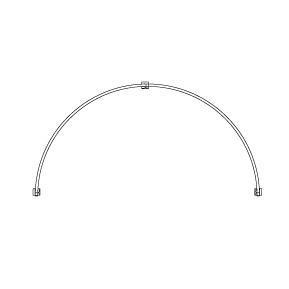
Curtains add softness and design flair to semi circle windows. The secret is using a rod that follows the curve. A straight rod causes fabric to sag or leave gaps at the top.
Install a Curved Curtain Rod
A curved rod mirrors the window’s arc, allowing fabric to drape evenly across the entire span.
- Pre-bent rods: Available in standard radii like 36, 48, and 60 inches. Match to your window’s curve.
- Flexible rods: Bend by hand to custom shapes, ideal for irregular arches.
- Mounting brackets: Space every 12 to 16 inches to prevent sagging, especially with heavy drapes.
Position the rod 2 to 4 inches above the window frame and extend it 6 to 12 inches beyond each side for full coverage when open. Drill pilot holes and secure brackets with screws, using wall anchors for drywall.
Choose the Right Fabric
Fabric weight affects both look and function.
- Sheer curtains: Let in light while diffusing glare. Ideal for front doors with half-round windows.
- Blackout or lined drapes: Add privacy and insulation. Use for living rooms or bedrooms.
- Layered look: Combine sheers with heavier drapes on double rods for maximum control.
Clip-on rings let you adjust drape height without sewing, which saves time during installation.
Try Hybrid and Creative Solutions
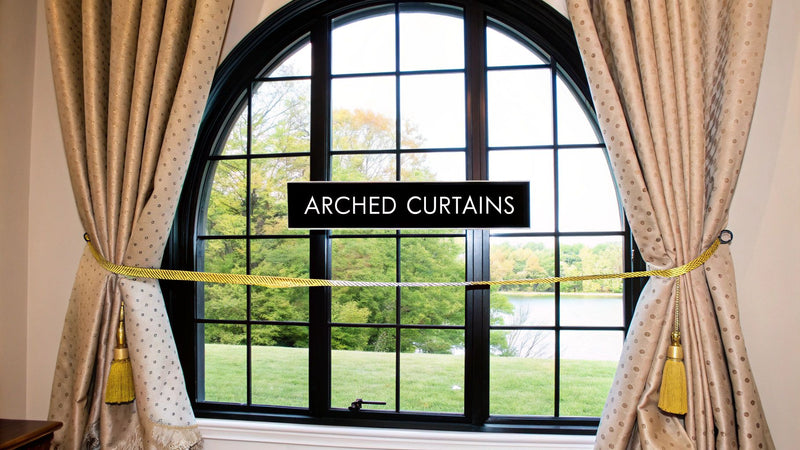
Sometimes the best look comes from combining treatments or thinking beyond traditional options. Hybrid methods offer both style and functionality in one setup.
Combine Curtains and Blinds
Use blinds for the curved top and curtains for the lower section if your window includes a rectangular base.
- Install a pleated arch shade on the semi circle, then hang floor-length curtains below.
- Blinds control light at the top while curtains add warmth and full-height coverage.
- Match curtain color to the shade for a seamless vertical line.
This approach works especially well in living rooms or entryways with transom-style arched windows.
Apply Decorative Window Film or Tint
For a minimalist, modern approach, skip fabric and use tint directly on the glass.
- Frosted or etched film: Adds privacy without blocking light. Great for bathrooms or front doors.
- UV-blocking tint: Reduces glare and protects furniture from sun damage.
- Easy application: Spray the surface with soapy water, peel the backing, and smooth on with a squeegee.
This option doesn’t provide insulation or full blackout. Pair it with another treatment for complete coverage.
Customize for Imperfect Arches
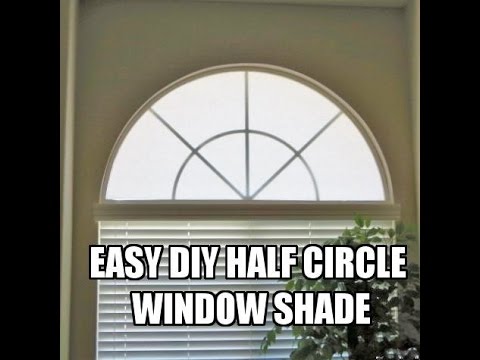
Not all semi circle windows are perfectly round. Older homes often have slightly distorted curves that throw off standard treatments.
Use DIY-Adjustable Shades
Pre-cut arch blinds won’t fit irregular shapes. Trimmable pleated shades like Redi Shade solve this problem.
- The flexible material shapes to match slight warps.
- Cut incrementally and test fit after each small trim.
- Focus on sealing the sides and center apex to prevent light leaks.
Avoid rigid faux wood blinds for imperfect arches. They cannot be adjusted and may not close fully against an uneven curve.
Build a Custom Frame
For total control, create a mounting frame that matches your window’s exact curve.
- Trace the window outline onto cardboard or thin plywood.
- Cut out the template and use it to shape a wooden or metal frame.
- Mount the frame to the wall, then attach a standard shade or fabric panel to it.
This method works well for large or uniquely shaped arches where off-the-shelf options fail.
Optimize for Light and Insulation

Beyond looks, your window treatment should improve comfort. Arched windows often contribute to heat loss in winter and solar gain in summer.
Boost Thermal Performance
- Cellular shades: Their honeycomb structure traps air and reduces heat transfer. Best for energy efficiency.
- Heavy drapes with liners: Block cold drafts and add R-value. Close them at night in winter.
- Seal gaps: Even small openings at the sides of blinds let in air. Use adhesive weatherstripping if needed.
Install shades inside the recess for tighter seals. Outside mounts work better for curtains.
Control Natural Light
- Morning sun: Use light-filtering shades to diffuse glare without darkening the room.
- Afternoon heat: Close light-blocking shades to keep rooms cool.
- Night privacy: Ensure no gaps at the top or sides where indoor light can escape.
Motorized shades let you adjust hard-to-reach windows with a remote or app, eliminating the need for ladders.
Measure Accurately Before Buying
One mistake can ruin the fit. Curved windows need more than one measurement to capture the full geometry.
Take Multi-Point Dimensions
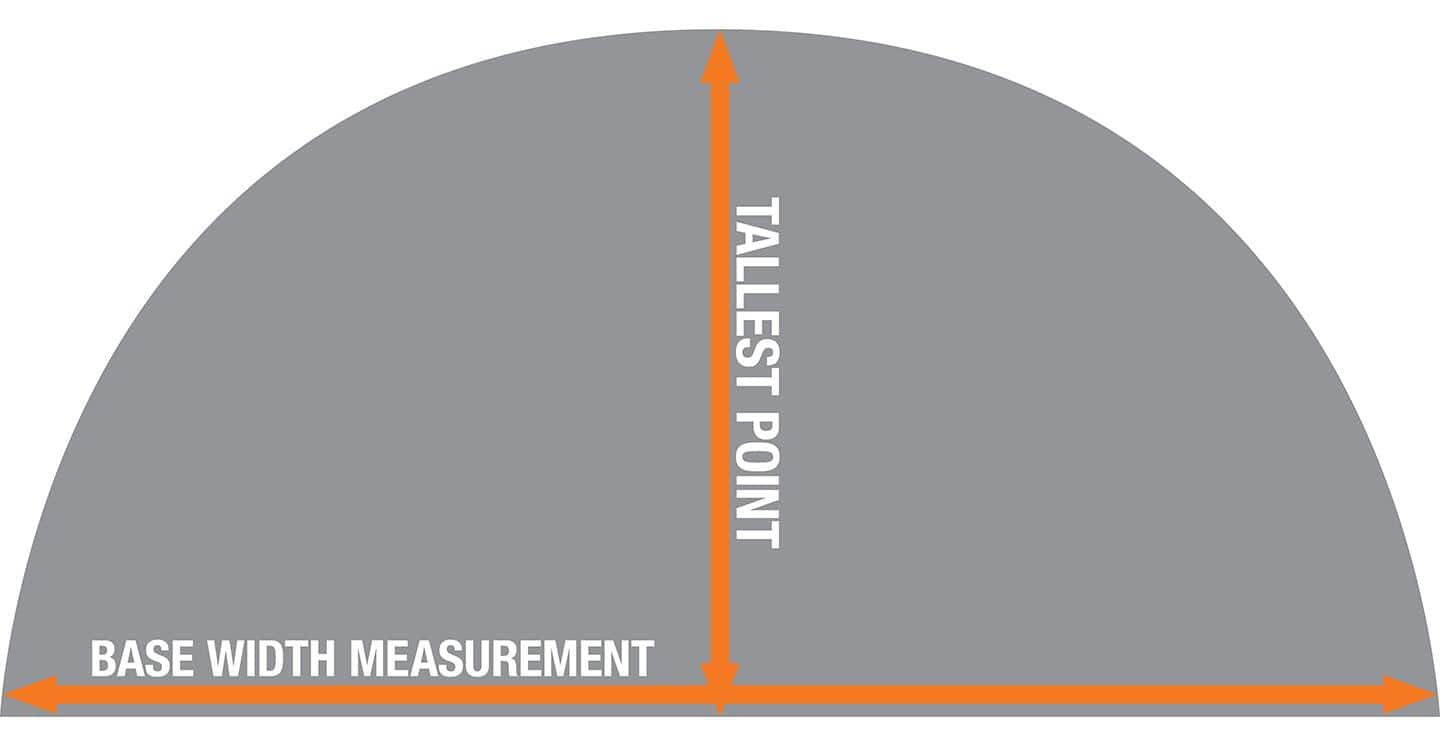
- Measure width at the base on the left, center, and right.
- Measure height at center and both sides.
- Note the smallest dimension as your max size for inside mounts.
- For radius, use a compass tool or online calculator with width and height.
Always measure twice. Many return policies don’t cover custom or opened shades.
Verify Curve Type
- Semi-circle: Height equals half the width.
- Quarter arch: Only the top corner curves.
- Eyebrow: A flatter, elongated curve.
Choosing the wrong type leads to poor fit. When in doubt, take a photo and compare it to product templates before ordering.
Frequently Asked Questions About Covering Semi Circle Windows
What is the best window treatment for a half-circle window?
Trimmable pleated shades like Redi Shade Original Arch Shades offer the best balance of fit, light control, and DIY-friendly installation. For a softer look, curved curtain rods with layered fabrics work well in living areas.
Can you put regular blinds on an arched window?
Standard rectangular blinds don’t follow the curve and leave gaps at the apex. You need either trimmable arch shades designed for curves or custom-fit blinds made to your window’s exact measurements.
How do you measure a semi circle window for blinds?
Measure the width at the base on the left, center, and right. Measure the height at center and both sides. Note the smallest dimensions for inside mounts. Use a compass tool or online calculator to determine the radius from width and height.
Are cellular shades good for arched windows?
Yes. Cellular (honeycomb) shades provide insulation along with light filtering. They’re especially useful for large arched windows that contribute to heat loss in winter or heat gain in summer.
How much do custom arch shades cost?
Trimmable Redi Shade options range from $19.99 (light filtering) to $34.99 (cellular). Fully custom-manufactured blinds cost more depending on size, material, and whether you choose motorized operation.
Can curtains cover a half-circle window without leaving gaps?
Yes, if you use a curved or flexible curtain rod that follows the window’s arc. A straight rod causes fabric to sag and creates triangular gaps at the top of the curve.
Key Takeaways for Covering Your Semi Circle Window
Covering a semi circle window successfully means respecting its shape rather than fighting it. Start by identifying your arch type, since perfect half-circles, eyebrow arches, and fan-shaped windows each call for different solutions. Trimmable pleated shades like Redi Shade offer the most precise fit for most homes, while curved curtain rods provide a softer, more decorative alternative. Measure at multiple points along the curve before buying, and always test fit before final mounting to avoid costly mistakes.
Your next step: grab a tape measure and a notepad. Record the width at three points along the base, the height at center and both sides, and snap a photo of the window. With those numbers in hand, you’ll know exactly which solution fits your space and your budget.