A car door that refuses to close properly is more than an annoyance. It creates a serious safety hazard, compromises your vehicle’s weather sealing, and can lead to costly repairs if ignored. Whether your door pops open unexpectedly, requires excessive force to shut, or simply will not latch, understanding the root cause saves you time and money. Most door closure problems stem from a handful of common issues that you can diagnose and fix at home with basic tools.
This guide walks you through every proven solution, from the simplest latch reset to more complex hinge and actuator repairs. You’ll learn exactly what to check, how to fix it, and when to call a professional. By the end, you’ll have the confidence to restore your door’s proper function without the guesswork.
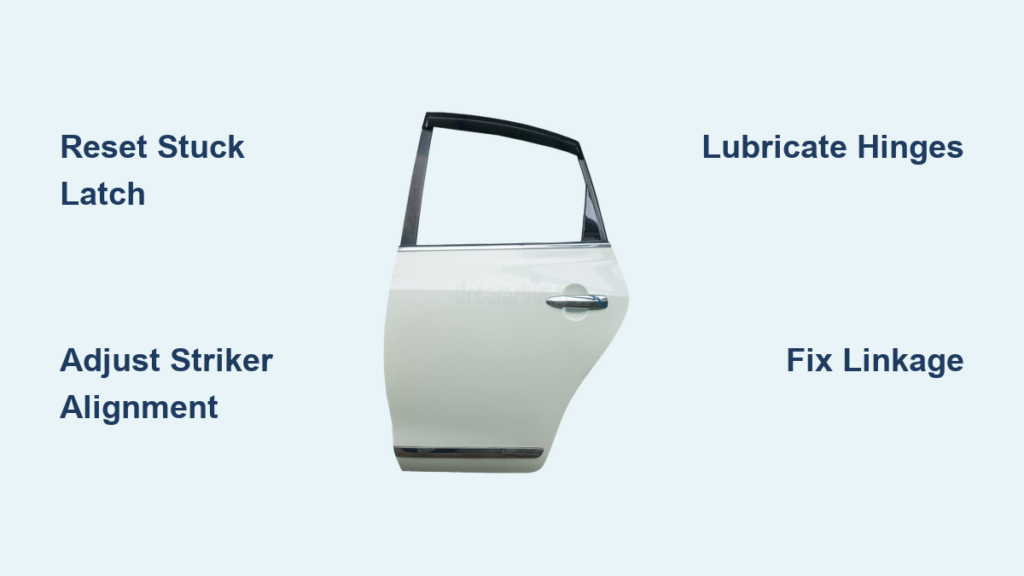
Reset a Stuck Door Latch
The number one reason a car door will not close is a latch that accidentally closed while the door was open. This happens during cleaning, when reaching inside, or even from normal handle movement. The latch mechanism has two positions: an open “C” shape and a closed “O” shape. When it closes in the open position, it blocks the striker from engaging.
You can identify this problem by looking at the latch through the gap between the door and frame. If it appears fully rotated instead of resting in the open position, this is your culprit. The door hits the striker but cannot latch, or you hear a clicking sound as it slides past.
To fix this, pull either the interior or exterior door handle to release tension on the linkage. While holding the handle open, insert a flathead screwdriver into the latch opening and gently rotate the latch claw back to the open “C” position. Release the handle and test the closure. On older GM vehicles like the Yukon, the interior handle provides better leverage due to how the cable routes through the door.
Never force the door shut when the latch is stuck in the closed position. This damages the latch mechanism, striker, and hinges. Users have reported shattering entire latch assemblies by slamming the door repeatedly.
Adjust a Misaligned Door Striker
Even with a working latch, a misaligned striker prevents proper closure. The striker is the metal anchor mounted on your vehicle’s B-pillar that the latch engages. Over time, vibrations and normal wear cause it to shift, resulting in uneven gaps and doors that pop back open.
Signs of misalignment include a door that almost closes but then bounces open, visible scratches on the striker from repeated impact, and gaps that are wider at the top or bottom of the door. Close the door slowly and watch how the latch meets the striker to confirm this issue.
Adjusting the striker requires loosening its two mounting bolts and shifting it in small increments. Use a socket wrench with 10 to 14mm sockets. Move the striker up or down to fix vertical gaps, in or out to adjust how deeply the latch engages, and forward or backward to change the timing of engagement. Make adjustments in tiny increments, roughly one-sixteenth of an inch at a time, then retighten bolts and test.
Apply anti-seize compound to the striker threads before reassembly to prevent corrosion and make future adjustments easier. Also inspect any rubber bumpers on the striker, as compressed or cracked bumpers affect alignment.
Repair Worn or Sagging Door Hinges

Door hinges bear the full weight of the door and undergo constant stress from opening and closing. On high-use doors like the driver side, hinges wear out over time, causing the door to sag and misalign. This throws off the entire closing mechanism.
Diagnose worn hinges by opening the door and grabbing the handle. Lift upward. If there is vertical movement, the hinges are worn. Compare the gap at the bottom of the door to the passenger side. A larger gap indicates sag. You might also notice the door rubbing against the fender or rocker panel, or hear creaking sounds.
For minor wear, lubricating the hinges often helps. Spray white lithium grease or silicone lubricant into the hinge pivot points, then open and close the door several times to work in the lubricant. For more significant sag, consider weld-on shims or hinge replacement. Professional alignment is recommended for major damage due to the precision required.
Removing a door for hinge work requires proper support, such as a door dolly. Without it, you risk damaging the door or injuring yourself.
Fix Broken Door Handle Linkage
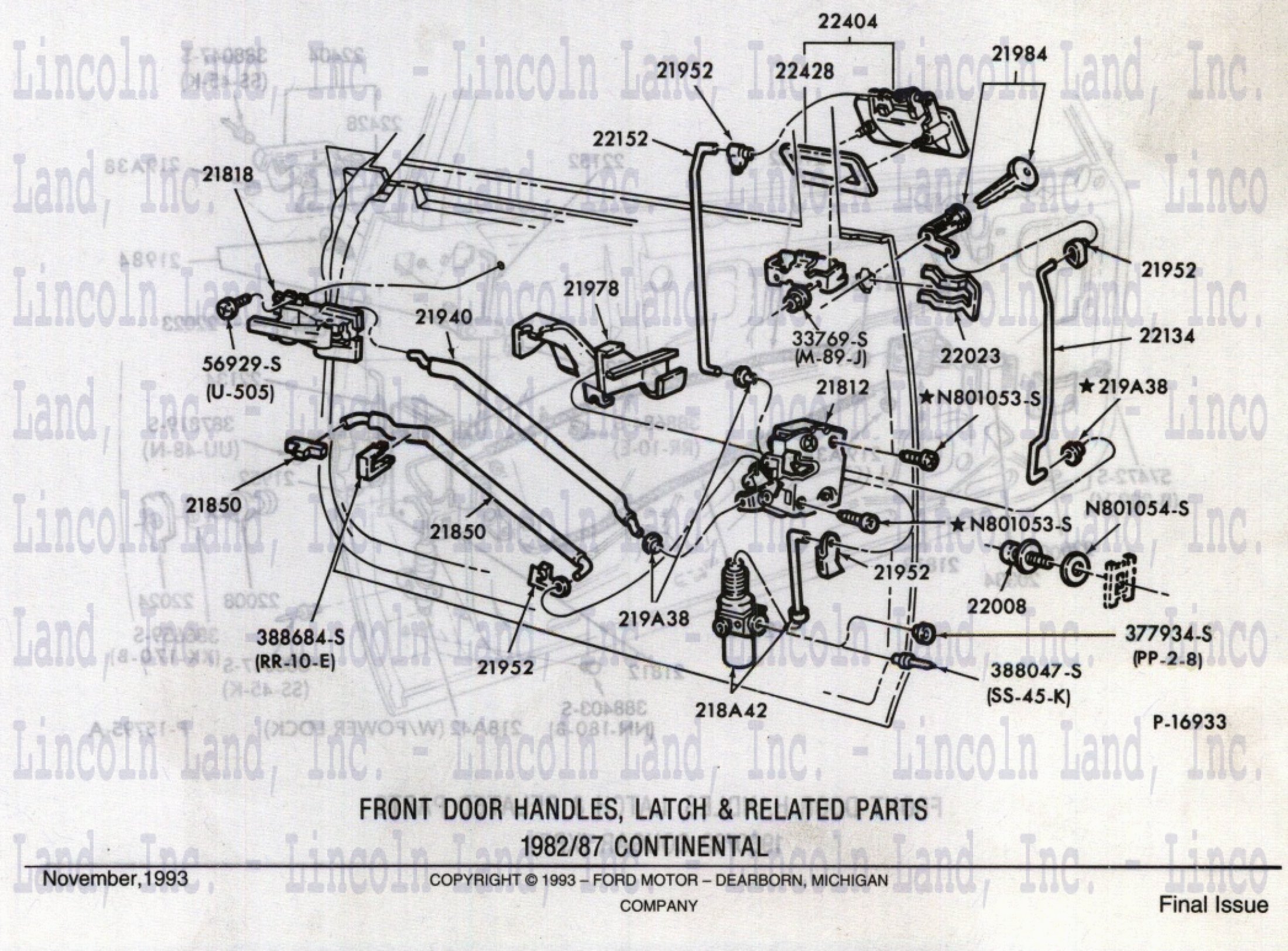
The door handle connects to the latch through metal rods or cables. These linkages can become disconnected, bent, or broken, preventing the latch from releasing when you pull the handle. This leaves you unable to open or properly close the door.
Symptoms include a handle that feels loose or spongy, one handle working while the other does not, and no latch movement when the handle is pulled. If the interior and exterior handles fail to release the latch, the linkage is the culprit.
To repair this, remove the door panel to access the internal components. Locate the metal rod connecting the handle to the latch mechanism. Check if the rod has disconnected or if the plastic clip has cracked. Reattach using a new retainer clip or cotter pin. Lubricate pivot points with dry silicone spray before reassembling.
The plastic clip at the handle end commonly fails due to age and stress. Keep spare clips on hand for quick repairs.
De-Ice a Frozen Door Latch
In freezing temperatures, moisture infiltrates the latch mechanism and freezes, locking the latch in place. This commonly occurs after washing the car in cold weather or during heavy rain followed by a temperature drop.
A frozen latch feels completely immobile, and you may see ice around the lock cylinder or striker. The door simply will not close no matter how carefully you position it.
Several methods work quickly. Spray de-icer fluid directly into the latch mechanism. WD-40 also works well because its water-displacing formula breaks down ice and prevents refreezing. Another trick involves coating your key with alcohol-based hand sanitizer, inserting it into the lock, and wiggling gently. Wait 30 to 45 seconds for the alcohol to melt the ice.
Never use boiling water on a frozen door, as it can crack glass or damage paint. For prevention, apply silicone-based lubricant to the latch and striker before winter arrives.
Replace a Faulty Power Door Lock Actuator
In vehicles with power door locks, the actuator is an electric motor that controls locking and unlocking. When it fails, it can stick in the locked position, preventing the door from closing even when you manually unlock it.
Symptoms include partial or complete failure to lock or unlock, a clicking noise without any movement, and doors that will not close despite being unlocked manually. Check the fuses related to door locks first, referring to your owner’s manual for the exact location.
A temporary fix involves smacking the door panel near the latch with your palm while attempting to unlock. This can free a stuck motor. For a permanent solution, remove the door panel, disconnect the battery, unplug the old actuator, and install a new one. A shorted switch or wiring can cause repeated failures, so test with a multimeter if problems return.
Clean and Lubricate the Door Latch
Dirt, rust, and dried grease accumulate in the latch mechanism over time, causing sluggish operation or complete failure. This is especially common in older vehicles or those exposed to harsh weather conditions.
Symptoms include a latch that feels stiff, requires multiple attempts to close, and produces squeaking or grinding noises. The door may close but not fully latch.
Clean and lubricate by spraying penetrating oil like WD-40 into the latch. Wait 5 to 10 minutes for it to dissolve rust and loosen debris. Wipe away the grime with a clean cloth, then apply white lithium grease or dry silicone spray for long-term lubrication. Operate the door handles several times to distribute the lubricant evenly.
Perform this maintenance every 6 to 12 months as part of regular vehicle care. Avoid petroleum jelly or thick grease, as these attract dirt and create more problems.
Access Internal Components by Removing the Door Panel
Some repairs require removing the door panel to access the latch, linkage, or actuator. This process is straightforward with the right tools.
You need a trim removal tool, Phillips and flathead screwdrivers, a socket set, and optionally a panel clip extractor. Start by removing screws from the interior door handle, armrest, door pull, and any trim bezels. Insert the trim tool at the bottom edge and gently pry upward to release the plastic clips. Lift the panel upward to clear the window channel, then disconnect any electrical connectors for windows, locks, or mirrors.
Handle plastic clips carefully, as they break easily. Keep spare clips on hand. Avoid excessive force near the glass to prevent cracking.
Prevent Future Door Closure Problems
Regular maintenance prevents most door closure issues from developing. A few simple steps keep your doors operating smoothly for years.
Lubricate the latch, striker, hinges, and lock cylinder every three months using dry silicone spray. Inspect door alignment annually, looking for gaps, sag, or uneven wear. Avoid slamming doors, as this damages the latch, hinges, and weather seals. Clean door seals regularly to prevent water ingress and freezing. Before cold weather arrives, treat locks and latches with de-icer to prevent ice buildup.
These habits extend component life and keep your doors functioning properly.
Vehicle-Specific Considerations
Certain vehicles have unique quirks worth knowing. Toyota Premio and Corona models have sensitive latch mechanisms where accidental closure is common. Reset using the interior handle and a screwdriver. GM vehicles like the Yukon and G8 often respond better to interior handle manipulation during latch resets due to their cable routing. Older vehicles may have manual child safety locks or latch overrides that must be in the correct position before troubleshooting.
Quick Fix Reference Table
| Cause | Solution | Tools Required | Difficulty |
|---|---|---|---|
| Stuck latch | Reset with screwdriver while pulling handle | Flathead screwdriver | Easy |
| Misaligned striker | Adjust position with socket wrench | Socket set, torque wrench | Moderate |
| Worn hinges | Lubricate or replace | Grease, wrench | Moderate to Hard |
| Broken linkage | Reconnect or replace rod | Trim tool, clips | Moderate |
| Frozen latch | De-ice with WD-40 or hand sanitizer | Spray, key | Easy |
| Faulty actuator | Replace motor | Screwdrivers, multimeter | Moderate |
| Dirty latch | Clean and lubricate | WD-40, rag, grease | Easy |
Frequently Asked Questions About Car Door Closure Issues
Why does my car door keep popping open after I close it?
This typically indicates a misaligned striker. The metal anchor on the B-pillar is not properly positioned to catch the latch. Loosen the striker bolts and adjust its position in small increments until the door closes securely.
Can I drive with a door that will not close properly?
No. A door that will not stay closed creates a serious safety risk, compromises weather sealing, and may violate vehicle regulations. Address the issue before driving.
How much does it cost to fix a car door that will not close?
Simple fixes like resetting the latch or lubricating components cost nothing beyond basic tools. Striker adjustment is free with basic tools. Actuator replacement costs $100 to $300 for parts, while hinge replacement runs $150 to $400. Professional alignment ranges from $200 to $500.
Why will only one door not close?
This usually points to a specific component problem on that door, such as a stuck latch, misaligned striker, or worn hinge. Compare the problematic door to others to identify the difference.
How do I know if my door hinges are bad?
Look for sagging where the bottom gap is larger than other doors. Listen for squeaking or creaking. Lift the door at the handle while open. If vertical movement occurs, the hinges are worn.
Is a car door latch easy to replace?
Yes, the latch itself is straightforward to replace once you remove the door panel. The challenge is properly aligning the new latch with the striker. Expect to spend 30 to 60 minutes for the job.
Final Thoughts on Fixing Your Car Door
Most car door closure problems stem from a simple latch that closed accidentally, and these resolve in under a minute with a screwdriver and handle pull. The key is proper diagnosis. Work through the causes in order, starting with the latch position, then striker alignment, then hinges and linkage.
Keep basic tools and lubricants in your garage. Spare door panel clips and a can of silicone spray handle most situations. For structural or electronic issues you are not comfortable with, consult a professional immediately. A properly closing door protects your safety, keeps out the elements, and maintains your vehicle’s value.