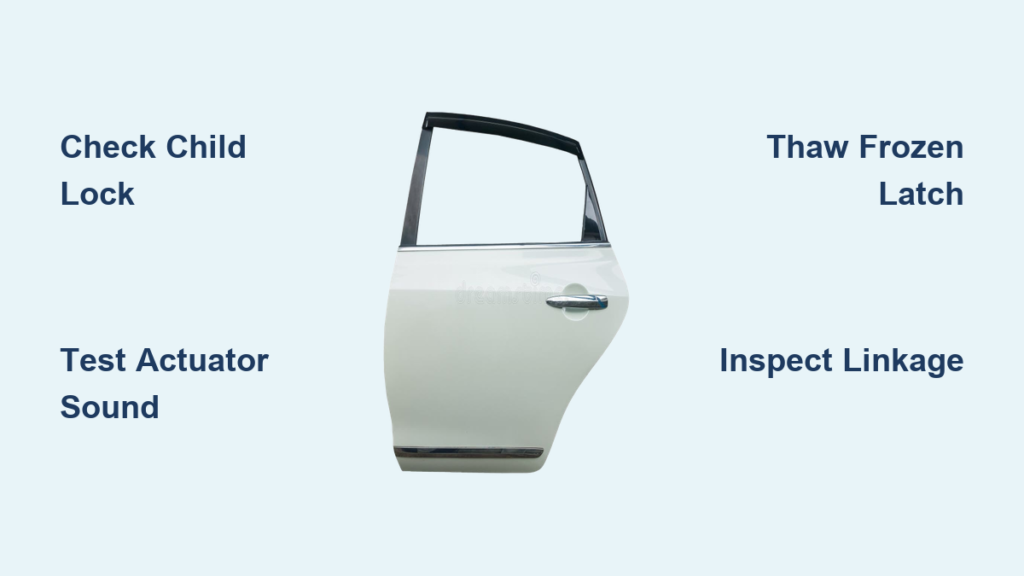
A car door that won’t open is more than just an inconvenience. It can leave you stranded, compromise your safety, and signal deeper mechanical or electrical problems. Whether the issue affects your driver’s side, passenger door, or rear doors, it often stems from a failure in the locking mechanism, latch system, wiring, or environmental factors like freezing temperatures. The good news is that most stuck car doors can be fixed with the right diagnosis and basic tools.
This guide covers every possible cause of a non-opening car door, from mechanical failures and electrical faults to cold weather issues. You’ll learn step-by-step fixes, from quick emergency access methods to permanent repairs. We’ll also show you how to prevent the problem from happening again.
Diagnose the Problem First
Before tearing apart your door, you need to pinpoint the root cause. A stuck door may feel like a total failure, but subtle clues reveal whether it’s mechanical, electrical, or simply user error.
Check for Child Safety Lock
If a rear door won’t open from the inside, the first suspect is the child safety lock. It’s a simple mechanical switch on the edge of the door near the latch, often marked with a child icon or the word “LOCK.”
Open the door from the outside. Look at the vertical edge of the rear door. Toggle the switch to the “OFF” position. Test the interior handle.
This is the most overlooked fix, especially in family vehicles. One user spent hours troubleshooting electronics only to find the safety lock had been accidentally engaged.
Test Interior vs. Exterior Handles
Try both handles to narrow down the problem. If the interior handle works but the exterior doesn’t, you likely have a broken rod or cable connecting the outer handle. If neither handle works, the issue points to the latch, actuator, or lock mechanism itself. If both handles feel loose, the linkage is probably disconnected.
Listen for Actuator Sounds
Have someone press the unlock button while you press your ear against the door panel. A clicking or buzzing sound means the actuator is receiving power but may be failing mechanically. No sound could indicate a dead actuator, blown fuse, or wiring problem. If all doors click except one, that specific door’s actuator or wiring is the culprit.
Use the Mechanical Key
Many modern cars hide a physical key slot in the driver’s door handle. Remove the plastic cap to access it, then insert the key and turn. If the door unlocks, the electronic system is at fault. If it doesn’t turn, the lock cylinder or latch itself is jammed.
Fix Common Electrical Issues

When the door won’t respond to the fob or interior switch, the issue often lies in the vehicle’s electrical system rather than the door itself.
Replace the Key Fob Battery
A weak fob battery can cause intermittent or complete failure to unlock the doors. Swap in a fresh CR2032 battery and test the fob again. Hold it close to the door handle or start button, as some cars support proximity unlock when the fob battery is low.
A dead fob doesn’t always mean a dead battery, but it’s the easiest fix, so try this first.
Check the Fuse Box
A blown fuse can cut power to the entire door lock system. Consult your owner’s manual for fuse locations. Look for fuses labeled “DOOR LOCK,” “BCM,” or “INTERIOR ACCESSORIES.” Use a fuse puller to inspect 10-amp to 15-amp fuses. Replace any blown ones, which typically show a blackened filament.
Retest the locks after replacement. If the fuse blows again, there’s a short circuit somewhere in the wiring, and you’ll need professional help.
Test Voltage at the Actuator
For a definitive electrical diagnosis, use a multimeter. Remove the door panel first, then locate the actuator connector, which usually has 2-3 wires. Set your multimeter to DC voltage and have someone press the unlock button while you test the connector. You should see a 12-volt pulse.
No voltage indicates a problem with the wiring, BCM, or fuses. Voltage present but no movement means the actuator is dead or mechanically jammed.
Access the Door Panel Safely
To reach internal components like the actuator, linkage, and latch, you must remove the interior door panel, even if the door is closed.
Remove Screws and Trim First
Most panels are held by screws behind the pull handle, clips around the edges, and sometimes bolts under the armrest or speaker grilles. Remove visible screws first. Then use a trim removal tool to gently pry off the panel, starting at the bottom corners and working upward to avoid breaking clips.
If rear door screws are hidden behind the door jamb, remove the front seat or kick panel trim to access them.
Pull Back the Vapor Barrier
Once the panel is loose, carefully peel back the plastic vapor barrier. Don’t tear it if you plan to reuse it. This gives you access to the rods, actuators, and latch inside the door. Use a flashlight to locate moving parts, and wear gloves because sharp metal edges are common.
Repair the Door Lock Actuator
The actuator is the small motor that moves the lock rod when you press unlock. It’s one of the most common causes of electrical door lock failures.
When to Replace It
Replace the actuator if you hear no sound during unlock attempts, if the motor runs but the lock doesn’t move, or if operation is intermittent and getting worse.
Step-by-Step Replacement
Disconnect the battery first to prevent electrical shorts. Remove the door panel as described earlier. Unplug the actuator’s electrical connector. Unscrew the 2-3 mounting bolts holding it in place. Detach the linkage from the old actuator, which may be a plastic clip or metal rod. Install the new actuator, transferring the linkage exactly as it was attached. Test the door before reassembling the panel.
Expect to pay $80 to $200 for an OEM or quality aftermarket actuator. Consider replacing both front actuators at the same time, since failure often follows on the other side.
Fix Broken or Disconnected Linkage
Handles that feel loose or dead usually indicate linkage failure. Plastic clips break, rods pop out, and cables snap over time.
Reconnect the Exterior Handle Rod
Locate the rod connecting to the outer handle, which is usually metal and attached to the latch. Check if it’s detached from the lever. Reattach it using the plastic clip or pivot pin. Test the handle afterward. It should have resistance and trigger the latch when pulled.
Replace Plastic Clips
These cheap parts fail often. Replacement clips cost under $1 but require labor-intensive access to install. Consider upgrading to metal-reinforced clips if available for your vehicle. Use needle-nose pliers to retrieve any parts that drop into the door cavity.
Forcing the handle can bend or break the latch, so always inspect the linkage first before applying more force.
Free a Stuck or Frozen Latch
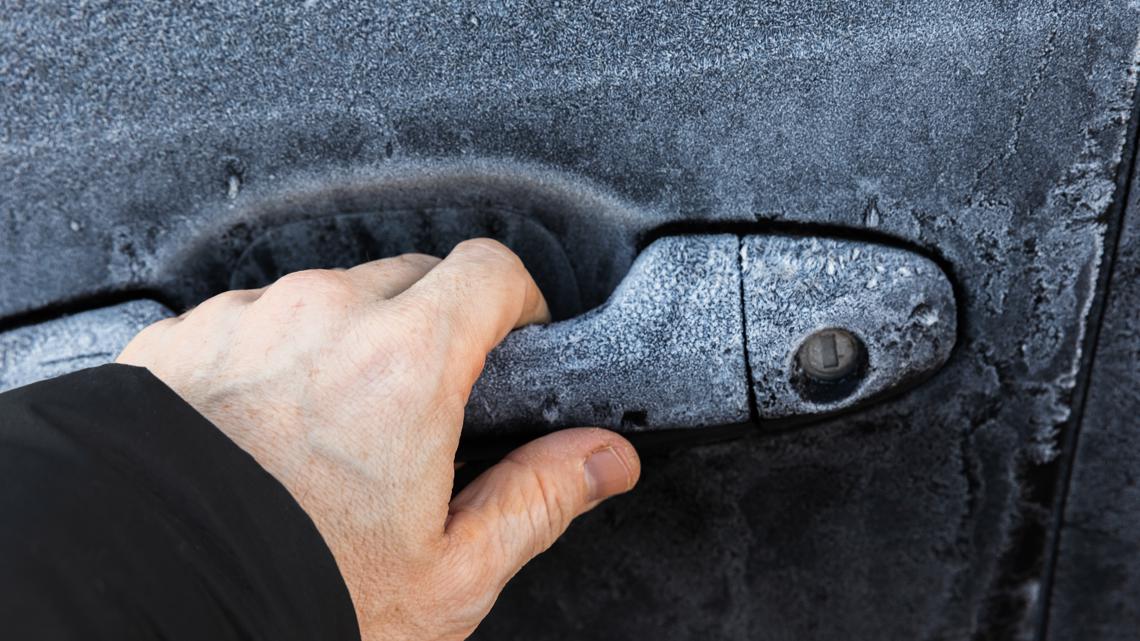
Cold weather is a top cause of stuck doors. Moisture enters the door, freezes, and locks the latch in place.
Thaw with Hot Water
Pour hot, not boiling, water along the door edge near the latch. Avoid direct contact with the glass to prevent cracking. Work the handle while thawing to help free the mechanism.
A 2014 Seat Leon owner freed a frozen latch this way and then replaced damaged weather stripping to prevent recurrence.
Use De-Icer Spray
Spray a commercial de-icer like CRC Freeze-Off around the lock cylinder, along the door seal, and into the latch area if accessible. Avoid water-based sprays in sub-zero temperatures, as they can refreeze and make the problem worse.
Lubricate the Latch After Thawing
After thawing or cleaning the latch, remove it from the door (usually 2-3 bolts). Clean it with carburetor cleaner. Dry with compressed air. Lubricate with white lithium grease or PTFE dry lubricant.
Avoid WD-40 for permanent lubrication, as it’s only temporary. Also avoid silicone spray, which gums up over time, and heavy oils, which attract dirt.
Adjust or Replace the Latch and Striker
A misaligned door or worn latch can prevent release, even when the door is unlocked.
Inspect the Latch Mechanism
With the door open, operate the latch manually with a screwdriver. It should snap shut and release smoothly. If it feels stiff or stuck, clean and lubricate it, or replace the entire assembly if necessary. OEM latch replacement typically costs $120 to $300.
Adjust the Striker Plate
If the door closes with excessive force or requires a jolt to open, the striker plate may be misaligned. Loosen the striker plate bolts on the door frame. Reposition it slightly, trying moving it back or down. Test the door opening and closing. Tighten the bolts when alignment feels smooth.
Door gaps should be even all around the perimeter when properly aligned.
Emergency Access Methods
When you’re locked out and need in fast, try these proven techniques.
Use a Slim Jim
A slim jim is a thin metal strip inserted between the window and weather stripping to hook the lock rod and manually unlock. This tool is best left to locksmiths or AAA professionals, as it can damage wiring or clips if used incorrectly.
This method may be illegal in some areas if used without proof of ownership. Police may assist in emergencies.
Try a Long Screwdriver or Coat Hanger
If there’s a small gap around the door, insert a long, thin screwdriver. Aim for the latch release lever or lock rod. One user opened a door by tripping the inner lock mechanism with a screwdriver through a gap.
Hit and Pull Technique
Hold the exterior handle in the open position. Strike the door near the latch with your fist or a soft mallet. The vibration can free a stuck latch. This works best on older models with mechanical latches.
Cut an Access Hole as Last Resort
When all else fails, use a hole saw or razor blade to cut through the door panel. Reach in to manually trigger the latch or actuator. Replace the panel later with a used unit from a junkyard. This is destructive, so only use it when non-invasive methods have failed.
Advanced Fixes for Tough Cases
Some situations require more than basic repairs.
Remove the Door Entirely
If the panel can’t be removed and you need internal access, support the door as it weighs 30-50 pounds. Remove the hinge bolts from the fender side, which may require removing the front wheel and fender liner for better access. Lift the door off and work on the latch and mechanism freely.
Use alignment marks before removal to make reinstallation easier.
Reprogram the Body Control Module
Modern cars from BMW, Mercedes, Lexus, Audi, and other luxury brands may suffer software glitches after battery replacement. Symptoms include doors that lock and unlock randomly or don’t respond at all. Fixing this requires dealer-level diagnostics with specialized tools like ISTA for BMW, VCDS for VW, or Techstream for Toyota.
One user with all doors refusing to open from outside needed a car electronics technician, not a mechanic.
Prevent Future Door Failures
Avoid repeat issues with simple maintenance performed every six months.
Lubricate Moving Parts
Apply graphite lubricant to key cylinders. Use silicone grease on seals and the latch mechanism. Lubricate hinges and striker plates with white lithium grease. Apply dielectric grease to electrical connectors.
One Jeep owner used rubbing alcohol to dry moisture, then applied lithium grease, ending recurring freeze-ups.
Clear Drain Holes
Locate the drain holes at the bottom of each door. Clear them with a pipe cleaner or compressed air every six months. Clogged drains let water pool, causing rust and freeze damage.
Inspect Weather Stripping
Cracked or torn seals let in moisture. Replace damaged weather stripping and condition it with silicone-based seal protector to extend its life.
Test Handles Weekly
If your car sits idle for extended periods, operate all handles weekly. This keeps mechanisms free-moving and catches stiffness early before it becomes a bigger problem.
When to Call a Professional
Seek professional help when you have no access after multiple attempts, electrical faults involving wiring or the BCM, software issues common in luxury brands, water damage affecting multiple systems, or structural misalignment.
Locksmiths excel at non-invasive entry using slim jims or air tools. AAA and roadside assistance often include lockout help. Auto body shops handle realignment and latch repair. Dealerships provide electronic and software fixes for modern vehicles.
Frequently Asked Questions About Car Doors That Won’t Open
Why won’t my car door open from the inside but opens from the outside?
This usually indicates a problem with the interior handle linkage. The plastic clips or rods connecting the interior handle to the latch may be broken or disconnected. Remove the door panel to inspect and reconnect the linkage.
Can a frozen door latch cause permanent damage?
Yes, if force is applied repeatedly, you can bend or break the latch mechanism. It’s better to thaw the latch with hot water or de-icer spray rather than force the door open.
How much does it cost to replace a door lock actuator?
Replacement costs range from $80 to $200 for parts, depending on your vehicle make and whether you choose OEM or aftermarket. Labor adds to the cost if you don’t install it yourself.
Why does my car door only stick in winter?
Cold weather causes moisture to freeze inside the latch mechanism. Damaged weather stripping and clogged drain holes allow water to enter the door cavity. Prevent this by lubricating the latch before winter and checking weather stripping for damage.
Can a weak car battery affect door locks?
Yes, low voltage can prevent the door lock actuator from fully engaging. The doors may appear to unlock (the signal is sent) but the mechanical release doesn’t occur. Check your battery voltage and the key fob battery.
Is it safe to use a slim jim to unlock my car door?
Slim jims can damage door seals, wiring, and clips inside the door. They’re best used by professionals. If you’re locked out, calling a locksmith or roadside assistance is safer and often cheaper than repairing damage.
Key Takeaways for Fixing a Car Door That Won’t Open
A car door that won’t open is rarely a single-issue problem. It could be a frozen latch, broken plastic clip, dead actuator, or software glitch in modern vehicles. Start with simple checks like the child safety lock and key fob battery before moving to more complex diagnostics. Always disconnect the battery before working on electrical components inside the door panel. For recurring issues, establish a preventive maintenance routine with regular lubrication and weather stripping inspection. If you’ve tried multiple fixes without success, especially on a modern vehicle with electrical issues, consult a professional car electronics technician rather than a general mechanic.
Whether you’re dealing with a 1996 Buick or a 2025 BMW, the diagnostic principles remain the same: listen, test, access, repair, and maintain.