A squeaky, stiff garage door isn’t just annoying. It’s a warning sign that your door needs attention. If your garage door groans every time it opens or the motor strains under load, dry, unlubricated components are likely the culprit. The good news is that lubricating a garage door is a simple, low-cost maintenance task that takes less than 30 minutes and can extend the life of your system by years. Most homeowners overlook this crucial step until problems arise, but regular lubrication prevents wear, reduces noise, improves efficiency, and enhances safety.
In this guide, you’ll learn exactly which parts to lubricate, what products to use, and how to do it safely and effectively. We’ll cover the best lubricants, a complete step-by-step process, and maintenance schedules to keep your garage door running smoothly.
Why Lubrication Extends Garage Door Life
Reduce Friction and Prevent Wear
Every time your garage door moves, metal parts like rollers, hinges, and springs rub against each other under tension. Without lubrication, this constant friction causes premature wear. Over time, unlubricated rollers can seize, hinges stiffen, and cables fray, leading to costly repairs. Proper lubrication creates a protective film between moving surfaces, minimizing direct contact and extending component life significantly.
Eliminate Squeaking and Grinding Noises
One of the most common reasons homeowners finally lubricate their doors is the noise. A loud, squealing garage door disrupts mornings and echoes through the house, especially in attached garages. Lubricating pivot points and bearings eliminates metal-on-metal contact, silencing squeaks instantly. Most users report near-silent operation after a proper lubrication job.
Protect Against Corrosion in Harsh Climates
In humid, coastal, or snowy regions, moisture accelerates rust on steel components. Lubricants like silicone spray or lithium grease form a barrier that repels water and prevents corrosion, which is critical for torsion springs and cables. Regular application in these environments can double the lifespan of vulnerable parts.
Best Lubricants for Garage Door Maintenance
Silicone-Based Spray for General Use
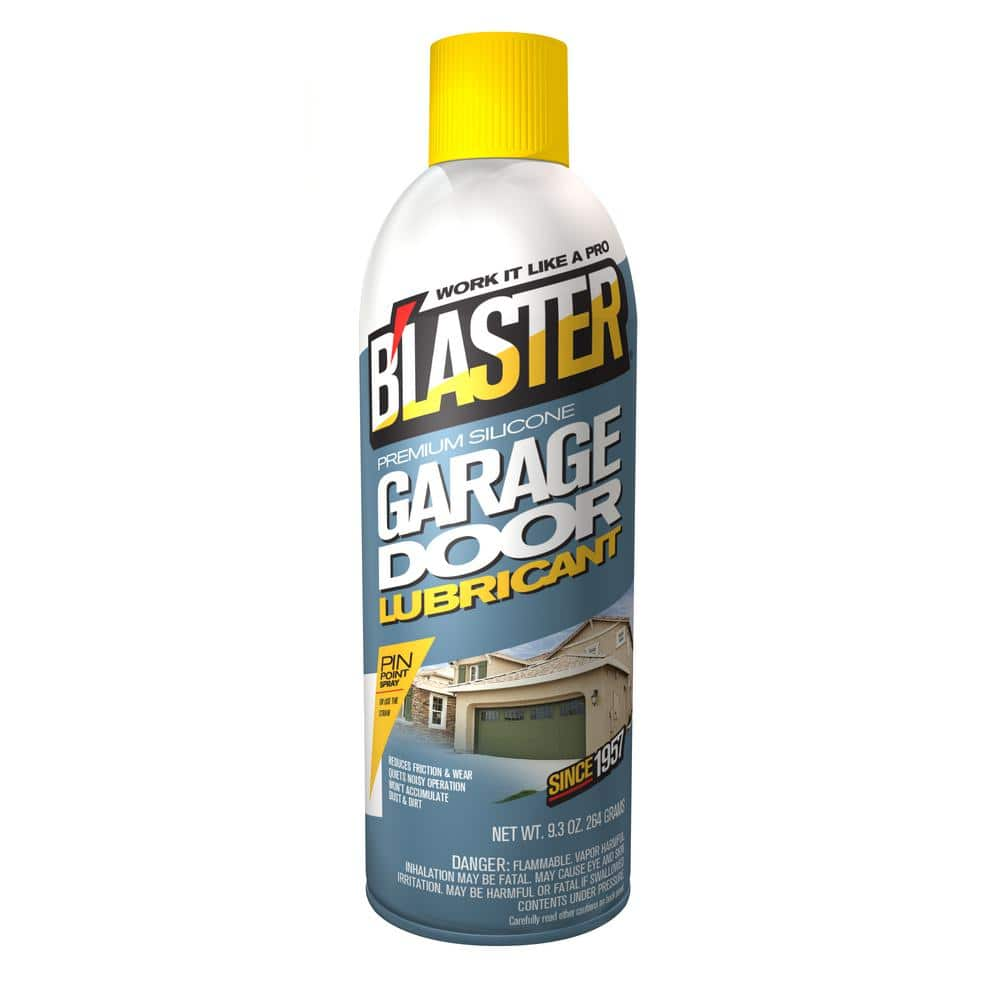
Silicone spray is ideal for most garage door components. It’s lightweight, non-greasy, and dries quickly without attracting dust. Safe for metal, rubber, and plastic, it works well on hinges, rollers, and pulleys.
Recommended products include:
• Blaster Garage Door Silicone Lubricant
• CRC Heavy Duty Silicone Lubricant
• Three-in-One Garage Door Lube (WD-40 brand, silicone-based)
Pro tip: Choose 100% silicone for cleaner application with less dripping and no stains on your car or driveway.
Lithium-Based Grease for Heavy-Duty Protection
For metal-to-metal joints with high stress, white lithium grease sticks better and lasts longer. Use it on roller stems, bearings, and hinge sleeves where friction is highest.
Lithium grease works best for:
• Roller stems
• End bearing plates
• Drum bearings
Apply with a precision nozzle or grease gun to avoid mess and ensure targeted coverage.
Lubricants to Avoid
Not all products are safe for garage doors. Using the wrong lubricant can damage parts or create hazards.
Avoid these products:
• Standard WD-40 (not a lubricant, designed to displace water, can degrade rubber seals)
• Motor oil or grease (attracts dirt and grime, increasing friction over time)
• Degreasers (strip away existing protection and accelerate wear)
• Dry or graphite lubes (short-lived and messy, not suitable for high-load areas)
Myth busting: While WD-40 may quiet noise temporarily, it offers no lasting protection. Use silicone spray instead.
Garage Door Parts That Need Lubrication
Rollers and Roller Stems
Target the inner bearings and metal stems, not the outer wheel surface. Plastic rollers with sealed bearings are usually maintenance-free, but metal rollers or those with exposed bearings need attention.
To lubricate rollers:
1. Spray silicone into the center of the roller where the bearing sits
2. For metal stems, apply a small amount of lithium grease where the stem slides through the hinge
3. This reduces internal friction and prevents binding in the track
Hinges and Pivot Points
Hinges connect door panels and pivot with every movement. Dry hinges are a top cause of squeaking.
Application tips:
• Spray silicone along the hinge pin
• Focus on joints rather than coating the entire hinge
• Work the door up and down to distribute the lubricant
Torsion Springs
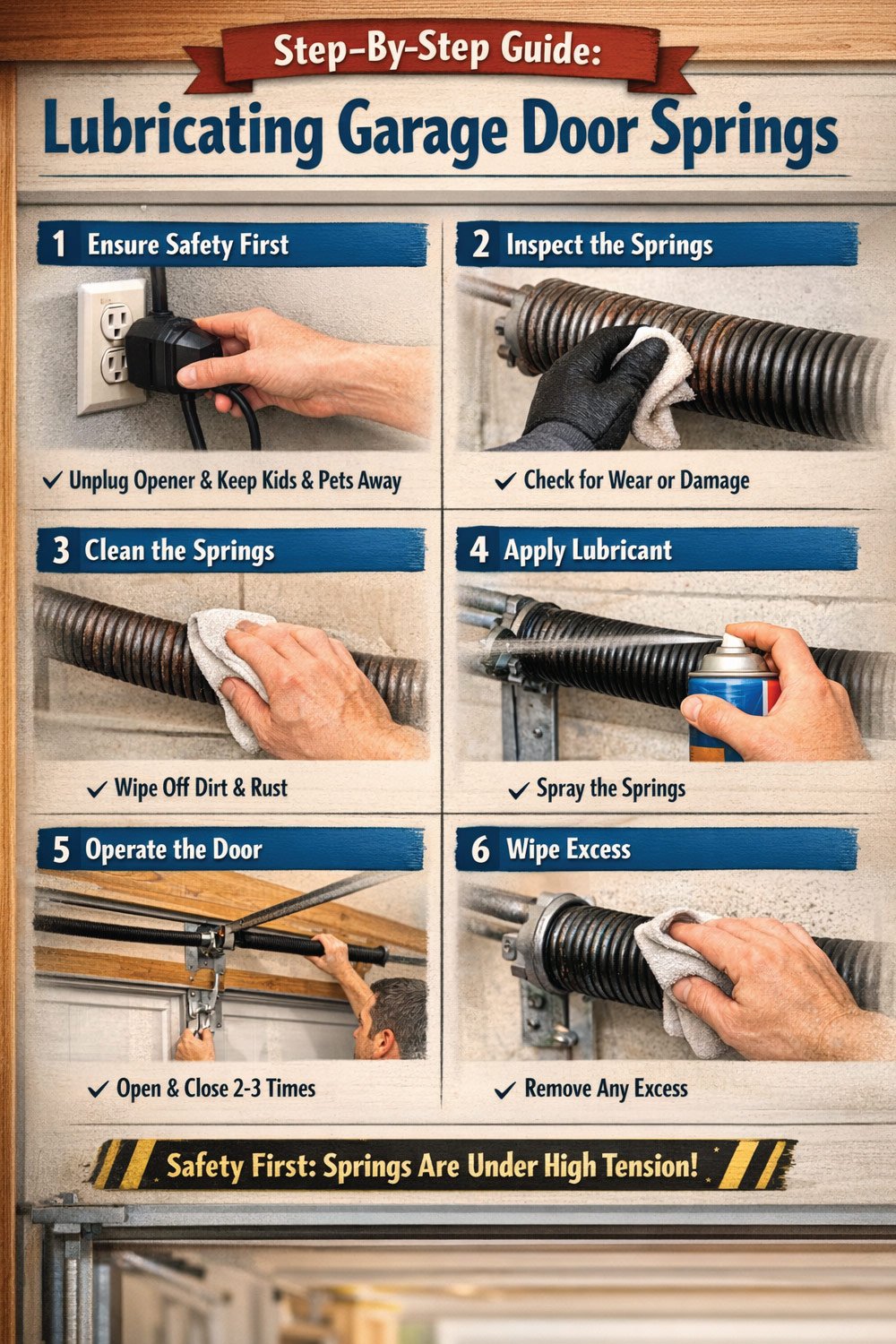
Located above the top panel mounted on a shaft, torsion springs are under extreme tension. Lubricating them reduces metal fatigue and prevents rust.
How to apply:
• Lightly spray silicone along the full length of the coil
• Use cardboard behind the spring to catch overspray
• Wipe excess from the ends to prevent flinging
Critical safety note: Never attempt to adjust or replace torsion springs yourself. Leave that to professionals.
Pulleys, Drums, and Cables
Pulleys at top corners guide cables, while drums are spools at the end of the torsion shaft that wind the cables. Both contain bearings that benefit from lubrication.
Steps for pulleys and drums:
• Spray silicone into the center of the pulley bearing
• Apply generous lubricant to the drum surface to help the cable wind smoothly
• Rotate the drum by hand with the door closed to work in the lubricant
• For cables, only lubricate contact points where they run over drums and pulleys
Garage Door Opener Components
Chain or screw drives need lubrication every 6 to 12 months. For chain drives, use garage door-specific lubricant and apply evenly along the chain. For screw drives, lubricate the screw rod with a manufacturer-approved product.
Also lubricate the rail underside where the trolley wheel rides along the contact path. Spray silicone along the full contact area after wiping it clean if dusty or grimy.
Parts You Should Never Lubricate
Tracks (Vertical and Horizontal)
Lubricant attracts dirt and can cause rollers to slip or jump the track. Instead, clean tracks with a dry or slightly damp cloth and remove debris, pebbles, or ice buildup. Never spray oil or grease inside the track channel.
Plastic Sealed Rollers
These rollers have built-in bearings and require no maintenance. Lubrication won’t help and may degrade the plastic or seals. Replace them if cracked, wobbly, or noisy.
Stationary Brackets and Electrical Parts
Mounting brackets, hinges without movement, and wall anchors don’t need lubricant. Never spray near sensors, wiring, or the opener motor due to risk of short circuits or system failure.
Step-by-Step Lubrication Process
Safety Preparation
Before applying any lubricant:
1. Disconnect the opener at the power source or unplug it
2. Ensure the door is fully closed and resting on the ground
3. Use a stable ladder to reach springs, drums, and pulleys
4. Wear gloves and safety glasses to protect against drips and metal fragments
5. Keep kids and pets away during maintenance
Critical warning: Torsion springs store dangerous levels of energy. Do not touch, adjust, or pry them.
Clean Before Lubricating
Dirt and old grease reduce lubricant effectiveness. Wipe rollers, hinges, springs, and drums with a dry cloth. Use a slightly damp rag for stubborn grime, then dry thoroughly before lubricating. Vacuum debris from track ends. Clean parts ensure better adhesion and longer-lasting protection.
Apply Lubricant to Moving Parts
Work in this order:
1. Start at the bottom: Lubricate rollers and hinges on each panel
2. Move upward: Hit roller stems, end bearings, and hinges
3. Top components: Apply to torsion springs, pulleys, and drums
4. Opener system: Lube chain or screw drive and rail underside
Application tips:
• Hold spray 2 to 4 inches from target
• Use short bursts rather than soaking parts
• For grease, apply pea-sized drops at stem and bearing points
• Slide cardboard behind the spray zone to protect walls and cars from overspray
Work the Lubricant In
After application, manually open and close the door 3 to 4 times. Let moving parts distribute the lubricant naturally. Listen for quieter operation and smoother motion.
Wipe Off Excess
Too much lubricant attracts dirt and drips onto cars. Wipe springs, drums, and tracks with a dry rag. Remove drips from walls or ceiling. Check the floor for stains, especially with grease.
Reconnect and Test
- Plug in the opener or restore power
- Test automatic operation by opening and closing 2 to 3 times
- Check for smooth, quiet movement with no grinding or sticking
- Verify proper alignment
If noise persists, inspect for worn rollers or misaligned tracks.
Maintenance Schedule and Frequency
Standard Schedule for Average Use
For average use (1 to 2 cycles per day), lubricate twice a year. Spring application works well in March or April, with fall application in September or October. Align this with other seasonal home maintenance like HVAC checks and gutter cleaning.
More Frequent Lubrication in Harsh Conditions
If you live in snowy or icy climates, coastal or humid areas, or high-use settings like workshops, lubricate every 6 months with a moisture-resistant product like silicone spray.
Lubricate After Any Repairs or Cleaning
Always re-lubricate components after replacing rollers or cables, cleaning tracks or hardware, or performing any mechanical work. Fresh lubrication protects new or cleaned parts from immediate wear.
Signs of Successful Lubrication
Immediate Noise Reduction
If squeaks, squeals, or grinding stop after lubrication, you’ve succeeded. Most users notice a dramatic difference in sound levels.
Smoother Manual Operation
With the opener disconnected, lift the door halfway. It should feel balanced, move smoothly, and stay in place when released. Stiffness or jerking indicates unresolved issues.
Reduced Opener Strain
A well-lubricated door reduces strain on the opener. The motor runs more quietly and efficiently, extending the life of your opener system.
When Lubrication Isn’t Enough

Check for Worn Rollers
If rollers still rattle or squeak after lubrication, inspect them for cracks, wobble, or flat spots. Replace if plastic is chipped or bearings feel gritty.
Look for Cable Damage
Frayed or kinked cables are safety hazards. Do not attempt repair. Call a professional immediately.
Assess Track Alignment
Misaligned tracks cause binding and uneven movement. If the door jerks or sticks, check for bent sections and ensure tracks are securely fastened. Clean debris from track ends.
Warning: Never ignore a loud bang. It could mean a broken torsion spring, which is dangerous and requires expert repair.
Frequently Asked Questions About Garage Door Lubrication
How often should I lubricate my garage door?
For average use, lubricate your garage door twice a year, ideally in spring and fall. If you live in a harsh climate or use your door frequently, lubricate every 6 months to prevent moisture damage and excessive wear.
What is the best lubricant for garage door hinges?
Silicone-based spray is best for hinges because it’s lightweight, doesn’t attract dirt, and works well on pivot points. Apply directly to the hinge pin and work the door open and closed to distribute the lubricant.
Can I use WD-40 on my garage door?
No, avoid standard WD-40. While it may quiet squeaks temporarily, it’s not a true lubricant and can degrade rubber seals. Use silicone spray or lithium grease instead for lasting protection.
Should I lubricate garage door tracks?
No, never lubricate the tracks. Lubricant attracts dirt and can cause rollers to slip or jump the track. Clean tracks with a dry or slightly damp cloth instead.
Why is my garage door still noisy after lubrication?
If noise persists after proper lubrication, check for worn rollers with cracked plastic or gritty bearings. Misaligned tracks can also cause binding and noise. Inspect cables for fraying, and consider calling a professional if the problem continues.
Key Takeaways for Lubricating Your Garage Door
Lubricating a garage door is a quick, inexpensive task that pays off in quieter operation, longer lifespan, and fewer repairs. Use silicone spray for general components like hinges and pulleys, and apply lithium grease to high-stress areas like roller stems and bearings. Focus on moving parts only, avoiding tracks, sealed plastic rollers, and electrical components. Work the door manually several times after applying lubricant to ensure even distribution, then wipe away excess to prevent dirt buildup.
Schedule lubrication twice a year for standard use or every 6 months in harsh climates. If noise persists after proper lubrication, inspect for worn rollers, damaged cables, or misaligned tracks rather than applying more lubricant. For any signs of spring damage or major issues, stop using the door and call a certified garage door technician immediately.