You’re replacing a door but unsure where to start? One wrong measurement can mean a costly return, a crooked fit, or weather leaks. Whether you’re installing a prehung unit or just replacing a slab, how to measure a door frame correctly is the foundation of a seamless installation. Most DIYers make the mistake of measuring the old door big error. The real starting point is the rough opening for prehung doors, or the inside of the jamb if reusing the frame.
This guide walks you through every critical step. You’ll learn exactly what to measure, where to measure it, and how to avoid the seven most common mistakes. By the end, you’ll be able to confidently order the right door, no guesswork needed.
Measure the Rough Opening First
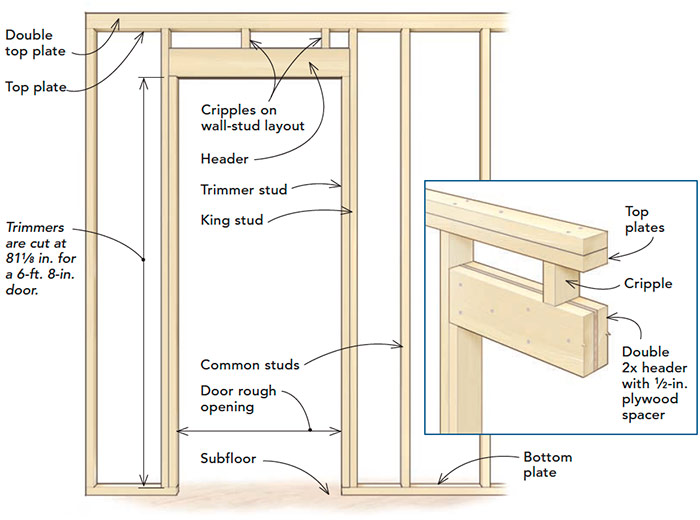
For prehung doors, skip the existing jamb and go straight to the structure. You need the rough opening, which is the raw space framed in your wall. This is the only reliable way to ensure your new prehung unit fits without forcing or gaps.
Remove Interior Casing Before Measuring
Cut through paint lines with a utility knife to prevent wall damage, then gently pry off the interior trim using a flat bar. This exposes the jack studs, header, and sill, which are the actual boundaries of the rough opening. Leaving casing on leads to inaccurate readings because trim thickness and paint buildup can add up to 1/8 inch or more per side.
Once removed, inspect the rough opening for damage, warping, or moisture, especially on exterior walls. If the frame looks compromised, address structural issues before measuring.
Measure Width at Top, Middle, Bottom
Use a retractable 25 foot tape measure to record the distance between the inside faces of the jack studs at three points: top, middle, and bottom. Walls are not always straight, so differences are common.
Write down all three numbers. Then use the smallest or narrowest measurement to ensure your prehung door will fit even if the opening is out of square.
For example:
• Top: 34.5 inches
• Middle: 34.25 inches
• Bottom: 34.125 inches
Use 34.125 inches as your effective width. Allow 1/2 to 3/4 inch total clearance between the jamb and rough opening for shims.
Measure Height at Left, Center, Right
From the subfloor or rough sill up to the bottom of the header, take three vertical measurements: left, center, and right. Again, use the shortest of the three to avoid binding at the top.
Standard prehung door heights are 80, 84, or 96 inches. If your shortest height is 79.25 inches, round up to 80 inches. If it is 95.5 inches, go with 96 inches.
Critical tip: Account for finished flooring. If you are adding tile or carpet, leave 1/2 to 3/4 inch between the bottom of the door and the finished floor. Measure from the rough sill, then subtract the thickness of your new flooring to determine final clearance.
Measure for a Replacement Door Slab
If you are keeping the existing jamb and hinges, do not measure the old door because it may have warped or shrunk. Instead, measure the inside of the jamb where the new slab will sit.
Measure Jamb Inside Width at Three Points
Take width measurements at the top, center, and bottom of the jamb interior. Use the smallest value.
For example:
• Top: 31.75 inches
• Center: 32 inches
• Bottom: 31.5 inches
Use 31.5 inches, then round up to the next standard size: 32 inches. Never round down because factory doors come in fixed widths.
Measure Jamb Inside Height at Three Points
Check the vertical space from the top of the jamb to the floor at left, center, and right. Use the shortest measurement and round up to the nearest standard height: 80, 84, or 96 inches.
Example:
• Left: 79.25 inches rounds up to 80 inches
• Right: 83 inches rounds up to 84 inches
If one side is significantly shorter, your floor may be uneven. Consider leveling during installation or adjusting the jamb.
Confirm Door Thickness
Measure the edge of the current slab. Interior doors are usually 1-3/8 inches or 1.5 inches. Exterior doors are typically 1.75 inches or thicker.
Check the gap between the jamb stops. If the old door fits snugly, the new slab must match that thickness exactly.
Determine Jamb Depth for Wall Thickness

The jamb must match your wall total thickness, or trim will sit unevenly and gaps will show. This is often overlooked but critical for a clean finish.
Measure from Drywall to Exterior Sheathing
Use a tape measure from the interior drywall surface to the exterior sheathing or siding. Standard depths include 4-9/16 inches or 4.625 inches for 2×4 stud walls, and 6-5/8 inches or 6.625 inches for 2×6 stud walls.
For exterior doors, measure from brick, stone, or siding face to drywall if possible. Mismatched depth makes it hard to install brick mold and can leave visible gaps.
Match Jamb to Wall Exactly
Order a prehung door with a jamb depth that matches your wall. Most retailers offer both 4.625 inch and 6.625 inch options. If you are in between, go slightly larger because shims can adjust, but you cannot stretch a jamb.
Check for Plumb and Level
A door hung in a frame that is out of alignment will swing open or closed on its own, or rub against the jamb.
Use a 24 Inch Level on Side Jambs
Place a long level against both vertical jambs. If the bubble is not centered, the jamb is out of plumb. Note the deviation because minor issues can be fixed with shims, but major misalignment may need framing correction.
Test Header for Level
Lay the level across the head jamb. If not level, the header may have settled. This affects how the door closes and seals.
Measure Diagonals for Square
From top-left to bottom-right and top-right to bottom-left, measure corner to corner. If the numbers differ by more than 1/2 inch, the opening is significantly out of square. Plan to use shims or consult a professional.
Determine Door Handing and Swing Direction
Get this wrong, and you will face return delays or a door that swings into a wall.
Stand Outside the Room
Face the door so it opens away from you. Now observe the hinge placement. Hinges on the left means a left-hand door. Hinges on the right means a right-hand door.
Alternative method: If the door opens toward you, hinges on the left equals right-hand reverse, and hinges on the right equals left-hand reverse. Many prehung doors are sold by swing direction, so always specify when ordering.
Follow Standard Rounding Rules
Factory doors come in standard sizes. Never custom unless you want to pay more.
Always Round Up
| Measured | Round Up To |
|---|---|
| 27.5 inches | 28 inches |
| 29.75 inches | 30 inches |
| 35.75 inches | 36 inches |
| 79.25 inches | 80 inches |
| 83 inches | 84 inches |
| 95.5 inches | 96 inches |
Rounding up allows minor trimming. You cannot add material to a door that is too small.
Avoid These 7 Common Mistakes
1. Measuring the Old Door Instead of the Frame
Warped, shrunken, or improperly hung doors give false readings. Always measure the jamb or rough opening, not the slab.
2. Forgetting to Remove Trim
Interior casing hides the true rough opening. Failing to remove it leads to undersized measurements and a door that will not fit.
3. Measuring Only Once
Walls shift and floors settle. Always take three measurements per dimension and use the smallest.
4. Rounding Down
A 31.75 inch width does not mean a 31.75 inch door exists. Round up to 32 inches because standard sizes only.
5. Ignoring Jamb Depth
A 4.625 inch jamb on a 6.625 inch wall leaves a 2 inch gap. Trim will not cover it. Match depth exactly.
6. Assuming All Doors Are 80 Inches Tall
Older homes may have 78, 82, or even 86 inch doors. Measure first and assume nothing.
7. Skipping Handing Check
Ordering a left-hand door when you need right-hand means returns, delays, and frustration. Always verify swing direction.
Use the Right Tools
Essential Measurement Tools
• Tape measure, 25 foot retractable with clear markings
• Utility knife for scoring paint before trim removal
• Pry bar to safely remove casing
• 24 inch level for checking plumb and level
• Notepad and pencil to record all values
• Sketch paper for patio or complex doors
Installation Materials
• Polymer shims, snap-off type, easier than cedar for beginners
• 3 inch casing nails or screws for securing jamb
• Caulk to seal exterior gaps
• Expanding foam to insulate and stabilize exterior units
• Weatherstripping for energy efficiency
Pro tip: Bring your tape measure to the store. Many retailers let you test-fit display models to confirm size.
Final Tips for Accuracy
Label Every Measurement
Write clearly: Left Height: 81.25 inches, Top Width: 34.5 inches to avoid confusion later.
Account for Flooring
If installing new carpet or tile, factor in thickness. A 1/2 inch tile underlayment changes your height clearance.
Visit a Millwork Dealer for Non-Standard Jobs
For historic homes or odd sizes, a professional supplier can help source or build custom doors.
Buy Shims with the Door
Polymer shims are beginner-friendly. They clean break after adjustment and do not split like cedar.
Frequently Asked Questions About Measuring Door Frames
What is the rough opening on a door frame?
The rough opening is the structural framed space in your wall bounded by jack studs on the sides, the header on top, and the subfloor or sill at the bottom. This is where a prehung door unit fits. For accurate measurements, you must remove interior trim to expose this opening.
How do I measure a door frame for a prehung door?
Remove the interior casing first. Then measure the width between jack studs at top, middle, and bottom, using the smallest measurement. Measure height from subfloor to header at left, center, and right, again using the smallest. Add 1/2 to 3/4 inch total clearance for shimming.
Should I measure the existing door or the frame?
Never measure the existing door slab. Doors can warp or shrink over time, giving false readings. For prehung units, measure the rough opening. For slab replacements, measure the inside of the existing jamb.
What is the standard door frame depth?
Standard jamb depths are 4-9/16 inches for 2×4 stud walls and 6-5/8 inches for 2×6 stud walls. Measure from interior drywall to exterior sheathing to determine your exact requirement.
How do I determine door handing?
Stand outside the room so the door opens away from you. If hinges are on the left, it is a left-hand door. If hinges are on the right, it is a right-hand door. Specify this when ordering.
Can I use my measurements to cut a door to size?
You can trim a door slightly, but never extend it. Always round up to the nearest standard size. Standard widths are 24, 28, 30, 32, and 36 inches. Standard heights are 80, 84, and 96 inches.
Key Takeaways for Measuring Your Door Frame
Measuring a door frame is not just about numbers. The rough opening, jamb depth, swing direction, and floor finish all matter. Whether you are replacing a slab or a full prehung unit, following these steps ensures a perfect fit, smooth operation, and a professional finish.
Remember these critical points. Always measure the frame or rough opening, never the existing door. Take three measurements per dimension and use the smallest. Round up to standard sizes. Match jamb depth to your wall thickness. Verify door handing before ordering.
Measure with precision, round up wisely, and double-check handing. Your future self will thank you when the door fits perfectly on the first try.