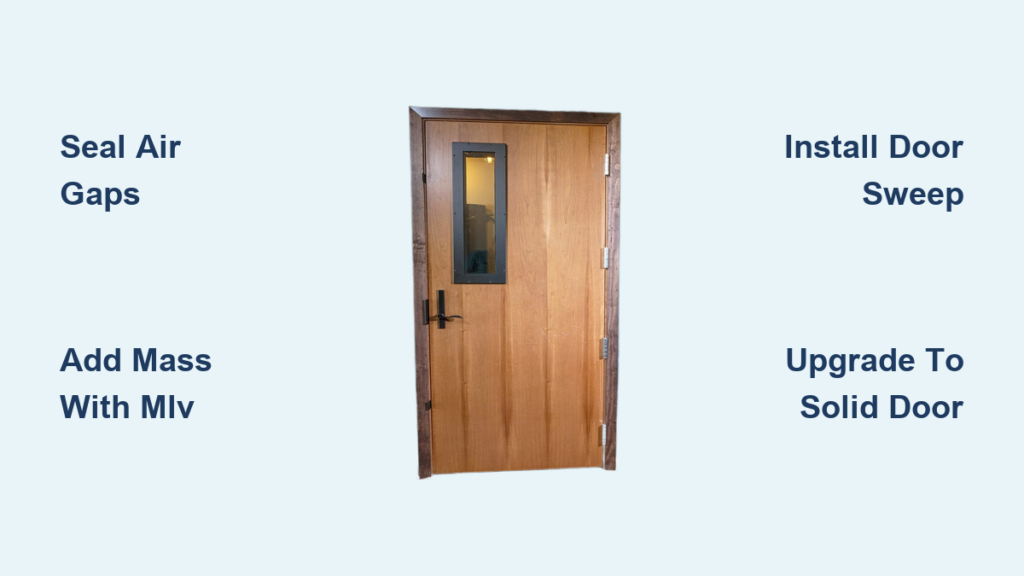
If your bedroom door lets in hallway noise, or your home office door fails to block street sounds, you’re not alone. A standard interior door, especially a hollow-core model, can allow up to 75% of sound to leak through, turning privacy into an illusion. The truth is: even a 1% gap around a door can cut its sound-blocking performance by half. But the good news? You don’t need to rebuild your walls. With the right approach, you can dramatically reduce noise transmission using affordable, proven methods.
This guide reveals exactly how to soundproof a door, step by step, from quick fixes to permanent upgrades. Whether you’re a renter, a homeowner, or building a recording studio, you’ll find actionable solutions that fit your budget and situation.
Identify Your Door Type
Before applying any fix, determine what kind of door you’re working with. The type dictates your best soundproofing strategy.
Hollow vs. Solid-Core: Know the Difference
Hollow-core doors are lightweight, typically weighing 15 to 35 pounds, and are common in older homes. They act like drums, amplifying sound. A knock produces a hollow echo. Solid-core doors weigh 60 to 100 pounds or more, block significantly more noise, and are ideal for bedrooms or offices.
Quick Test: Knock on the door. A solid thud means solid-core. A hollow boom means it’s likely hollow-core.
Magnet Check: Hold a magnet to the surface. If it sticks, the door may have a steel layer, common in exterior or fire-rated models.
Seal All Air Gaps First

Most sound leaks through air gaps, not the door itself. Even a 1/8-inch crack can let in more sound than the entire door slab. Fixing leaks is the most cost-effective step.
Close Side and Top Gaps with Weatherstripping
Air escapes around the sides and top of the door frame. Seal these with compressible gaskets.
Choose the Right Weatherstripping
V-strip, also called door shoe, features metal with flexible vinyl flaps. It’s durable, self-aligning, and lasts 5 years or more.
Foam tape is cheap and easy to install but tends to flatten over time.
Silicone or neoprene gaskets offer the best long-term use. They resist UV, moisture, and compression.
Installation Tip: Clean the frame with isopropyl alcohol first. Apply a continuous strip with no gaps. Ensure the door compresses the seal fully when closed.
Pro Test: Close the door on a dollar bill at various points. If it slides out easily, the seal needs adjustment.
Block the Bottom Gap Effectively
The space under the door is the largest flanking path. A 1/4-inch gap can reduce a 30 dB door’s performance to just 15 dB.
Best Bottom Seal Options
| Type | Best For | dB Reduction |
|---|---|---|
| U-Shaped Draft Stopper | Renters | 5 to 8 dB |
| Screw-On Sweep with Rubber Blade | Homeowners | 8 to 10 dB |
| Automatic Drop-Down Seal | Hardwood or tile floors | 10 to 12 dB |
Critical Rule: The sweep must make firm contact with the floor. Avoid soft plastic fins because they bend and fail.
Threshold Tip: If your floor is uneven, install a ramp-style threshold to create a level sealing surface.
Seal Hardware and Frame Gaps
Don’t overlook small openings.
Keyholes: Install a keyhole cover or fill with acoustic putty.
Letterboxes: Use a soundproof letterbox insert or seal it temporarily.
Frame-to-wall gaps: Apply acoustic caulk, which is non-hardening and flexible, around the entire frame.
Product Pick: OSI Pro-Series SC-175 acoustic sealant sticks to wood, metal, and drywall, stays flexible, and blocks sound effectively.
Add Mass to the Door
Once sealed, increase the door’s mass to block more sound waves. Heavier materials resist vibration better.
Use Mass Loaded Vinyl (MLV)
MLV is a flexible, dense material weighing 1 pound per square foot. It blocks sound by converting vibrations into heat.
How to Install MLV
Cut to size, making it slightly smaller than the door.
Attach with construction adhesive or thin nails.
Seal all edges with acoustic caulk.
Performance Gain: Adds 5 to 10 dB of sound isolation when combined with sealing.
Avoid: Overloading hollow-core doors. Excess weight can warp the door or damage hinges.
Hang a Soundproof Blanket or Curtain
For renters or temporary setups, a heavy moving blanket or acoustic curtain works well.
Maximize Effectiveness
Use a ceiling-mounted track to extend the curtain beyond the door frame.
Attach edges to the wall with hook-and-loop tape to seal sides.
Choose curtains with a Mass Loaded Vinyl core for best results.
Note: Blankets absorb echo but do not block bass. They work best for mid-frequency noise like voices.
Upgrade to a Solid-Core Door
:max_bytes(150000):strip_icc()/hollow-core-vs-solid-wood-doors-1821449_V4-da1e089ff7e04a31980862313e474a3b.png)
If your current door is hollow-core, replacing it is the single most effective upgrade.
Why Solid-Core Wins
Solid-core doors have an STC rating of 30 to 35, compared to 20 to 25 for hollow-core.
They add 10 to 15 dB of noise reduction.
They feel more substantial and improve room insulation.
Installation Tips
Use three heavy-duty hinges to prevent sagging.
Ensure the door fits snugly with minimal play in the frame.
Rehang if misaligned to ensure proper seal contact.
Cost: Expect to pay $150 to $300 for a standard 6-panel solid-core door.
Install Full Perimeter Acoustic Seals
For long-term, high-performance sealing, replace adhesive tapes with rigid acoustic gasketing.
Use Adjustable Perimeter Seals
PrivacyShield or Quiet Door systems use aluminum tracks with silicone seals. Screw into the frame rather than using adhesive.
Adjustable for perfect compression.
Advantage: Lasts 10 years or more, maintains consistent pressure, and resists wear.
Time: Less than 30 minutes to install.
Fix Problematic Door Types
Different doors need tailored solutions. Apply the right method for your model.
Soundproof a Hollow-Core Door
You cannot make it solid, but you can improve it.
Fill internal cavities with spray foam or cut-to-fit mineral wool.
Attach MLV to one side.
Seal all edges with weatherstripping and a bottom sweep.
Warning: Do not attach rigid panels because they risk hinge failure or warping.
Handle Glass or Sliding Doors
Glass doors transmit sound easily due to low mass and track gaps.
Solutions
Apply acoustic window film.
Install brush seals in the track.
Hang floor-to-ceiling acoustic curtains with side overlaps.
Add a secondary glazing panel or storm door.
STC Boost: From 20 to 30 or higher with film and curtains combined.
Treat Metal Doors
Metal resonates and conducts sound. Dampen it.
Apply MLV with construction adhesive.
Use acoustic caulk around the frame.
Install a threshold sweep.
Avoid: Drilling holes unless necessary because it can compromise structural integrity.
Apply Advanced Techniques
For maximum noise reduction, go beyond basic fixes.
Build a Double-Door System
Two doors with a 1 to 2 inch air gap between them can achieve STC 60 or higher.
Use solid-core or acoustic doors.
Seal both perimeters.
Decouple frames if possible.
Best For: Home studios, medical rooms, or urban bedrooms.
Use Cam Lift Hinges
These hinges slightly raise the door as it closes, ensuring full contact with seals.
Prevents dragging on the floor.
Improves sweep contact.
Ideal for automatic drop-down seals.
Install on all three hinges for balanced lift.
Avoid Common Mistakes
Even small errors can ruin your results.
Do Not Ignore Flanking Paths
Sound bypasses the door via walls, floors, and ceilings. Thin drywall conducts noise. Gaps under baseboards or attic access create paths. HVAC vents transmit sound.
Fix: Insulate walls, seal outlets with acoustic putty pads, and block unused ducts.
Never Skip the Test Phase
Before permanent installation, tape a towel under the door to test bottom seal impact. Hang a blanket temporarily to gauge mass effect.
Benefit: Identify the biggest noise source before spending money.
Maintain Airflow
A completely airtight door can cause stuffy air, especially in bedrooms.
Solutions
Use a removable door sweep.
Install a passive acoustic vent that allows air but blocks sound up to 30 dB.
Vent Tip: Place high on the wall, away from direct sound paths.
Compare Solutions by Cost and Impact
Not all methods are equal. Choose based on budget and noise level.
| Method | Cost | Noise Reduction | Best Use |
|---|---|---|---|
| U-Shaped Sweep | $10 to $20 | 5 to 8 dB | Renters, quick fix |
| Weatherstripping | $10 to $15 | 3 to 6 dB | Side and top gaps |
| Acoustic Curtain | $20 to $50 | 3 to 6 dB | Voices, TV noise |
| MLV Panel | $50 to $100 | 5 to 10 dB | Added mass |
| Solid-Core Door | $150 to $300 | 10 to 15 dB | Permanent upgrade |
| Full Acoustic System | $3,500 or more | 40 to 50 plus dB | Studios, extreme noise |
Real-World Result: A user reduced hallway noise from 48 dB to 38 dB using a U-sweep and weatherstripping, making it half as loud to the ear.
When to Hire a Professional
DIY works for most homes. But consider pros if you need STC 50 or higher, such as for recording studios. Also consider hiring if you’re installing double walls or heavy doors, if previous attempts failed, or if building codes apply.
Expert Value: Professionals identify hidden flanking paths and design whole-room solutions.
Maintain Your Soundproofing
Seals wear out. Hinges loosen. Performance fades.
Maintenance Checklist
Every 3 to 6 months: Inspect sweeps and weatherstripping.
Annually: Re-tighten hinges, clean sweep mechanisms.
As needed: Reapply acoustic caulk if cracked.
After moving furniture: Re-check door alignment.
Set a reminder to ensure long-term quiet.
Frequently Asked Questions About Soundproofing a Door
Does weatherstripping actually reduce sound?
Yes. Weatherstripping seals the gaps around the sides and top of the door, which are major paths for sound leakage. It typically reduces noise by 3 to 6 dB and is one of the most cost-effective first steps.
What is the cheapest way to soundproof a door?
A U-shaped door sweep costs $10 to $20 and blocks the largest gap under the door. Combined with basic weatherstripping for the sides and top, you can achieve noticeable noise reduction for under $30.
Can I use acoustic foam panels on my door?
No. Acoustic foam panels are designed to absorb internal room reflections, not block external sound. They provide zero measurable reduction in airborne sound transmission through the door.
How much does a solid-core door improve soundproofing?
Replacing a hollow-core door with a solid-core door adds 10 to 15 dB of noise reduction. This is the single most effective permanent upgrade for most residential situations.
Do soundproof curtains work on doors?
Soundproof curtains work as sound absorbers rather than true barriers. They reduce mid-frequency sounds like voices and TV noise but do not effectively block low-frequency bass. For best results, seal all edges with hook-and-loop tape.
Key Takeaways for Soundproofing Your Door
Soundproofing a door is about layered defense, not one magic fix. Start by sealing all air gaps around the sides, top, and bottom. This is the most cost-effective step and often delivers the biggest improvement. Add mass with MLV or a heavy blanket if additional reduction is needed. Upgrade to a solid-core door for permanent, high-performance results. Test as you go using temporary solutions before committing to permanent changes. Address flanking paths through walls, floors, and vents to avoid wasting effort on the door alone. Combine methods for cumulative gains. With the right approach, your door can finally do its job: keeping noise out and peace in.